Midjourney's Multi-Industry Expansion: The Cross-Domain Logic Behind Its Move from AI Art to Healthcare and Astrology

Midjourney's expansion into healthcare and astrology reveals generative AI's powerful cross-industry penetration logic.
Midjourney has expanded far beyond AI image generation into medical scanning, wellness, and astrology apps. While seemingly chaotic, this diversification follows clear technical logic: the company's deep image modeling capabilities naturally extend to medical imaging analysis, while its generative AI core enables personalized content creation across emotional and content-intensive verticals. Its bootstrapped model provides strategic freedom for unconventional moves.
An AI Company's Identity Crisis
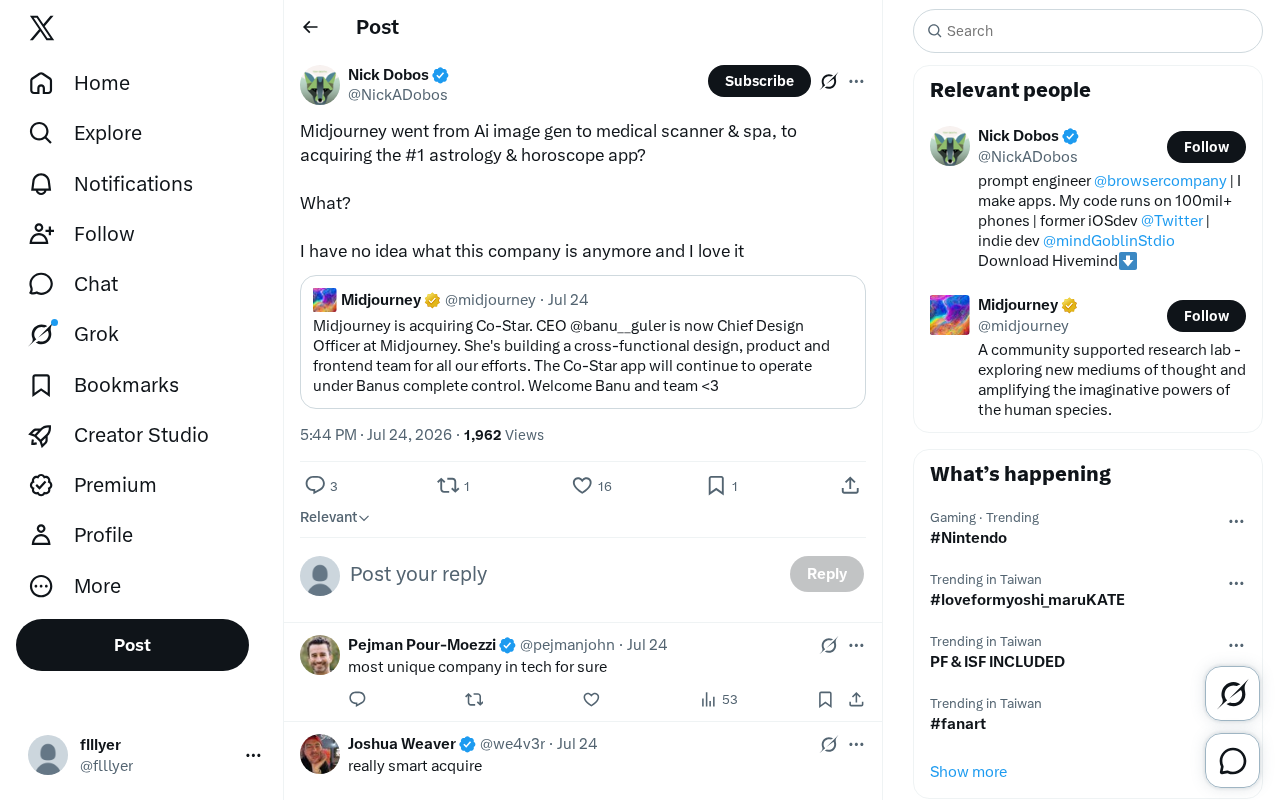
When people hear Midjourney, the overwhelming majority think of that globally popular AI image generation tool. With its outstanding artistic style and high-quality output, it carved out a significant position amid competition from Stable Diffusion, DALL·E, and other rivals. However, a recent observation from a Twitter user sparked widespread discussion:
"Midjourney went from AI image generation to medical scanners and spas, and now they've acquired the #1 astrology app? What? I have absolutely no idea what this company does anymore — but I love it."
This half-joking, half-admiring remark perfectly captures the confusion many feel about Midjourney today: why would a company that started with AI art extend its reach into seemingly unrelated fields like healthcare, wellness, and astrology?
From Image Generation to a Diversified Empire: Midjourney's Expansion Path
The Starting Point: AI Image Generation
Midjourney's original positioning was crystal clear — a Discord-based AI image generation service. Users simply typed prompts in a chat window and received highly artistic images. This low-barrier, high-quality product experience quickly built a massive user base and impressive revenue.
Midjourney's choice of Discord as its product platform was considered unconventional at the time but proved strategically brilliant in hindsight. Discord is an instant messaging platform with over 150 million monthly active users, originally known for gaming communities but gradually evolving into a comprehensive platform covering art, programming, education, and various interest groups. By leveraging Discord's social sharing mechanisms — allowing users to generate images in public channels where others could watch and learn in real time — this "spectating as marketing" effect far outperformed traditional advertising.
Notably, Midjourney has maintained an extremely lean team and a bootstrapped operating model. Without external investors imposing constraints on growth trajectories, the company has gained greater strategic freedom to experiment with directions that might seem like distractions. The bootstrap model means the company relies entirely on its own revenue to sustain operations and growth, rejecting venture capital. This is exceptionally rare in the AI space — during the same period, OpenAI accumulated over $10 billion in funding, and Stability AI secured hundreds of millions in investment. The core advantage of self-funding is that founders retain complete decision-making authority, free from board or investor pressure tied to quarterly growth metrics, enabling longer-term, more contrarian strategic positioning.
The Technical Logic Behind Cross-Industry Moves
The extension from AI image generation to "medical scanners" follows solid technical logic. Computer vision and image recognition technology are already at the core of medical imaging analysis. A company that has accumulated deep model capabilities in image generation moving toward image understanding and analysis isn't a technological leap — it's a natural extension of the tech stack.
Specifically, modern AI image generation is primarily based on Diffusion Model architecture, whose core principle involves learning the distribution of noise in images and progressively denoising to restore them. This process requires the model to have an extremely fine-grained understanding of image textures, structures, and hierarchical relationships. Medical imaging analysis — whether interpreting CT scans, MRIs, or X-rays — similarly relies on precise identification of microscopic image features, such as detecting nodules only a few millimeters in diameter in lung CTs, or distinguishing normal tissue from abnormal proliferation in pathology slides. In fact, image generation and image understanding share numerous underlying components in deep learning frameworks, including Convolutional Neural Networks (CNN), Vision Transformers (ViT), and U-Net architectures. Tech giants like Google and Microsoft are also driving similar technology transfers, applying multimodal large model capabilities to medical imaging-assisted diagnosis. Midjourney's extension into healthcare is essentially redirecting its deep modeling capabilities in image space from "creating images" to "understanding images."
The "spa center" and "astrology app" represent Midjourney's exploration of content consumption and emotional experience application scenarios. These fields share common characteristics: heavy dependence on personalized content generation, emphasis on emotional user connections, and stable willingness to pay. For a company that commands core generative AI capabilities, these are precisely the markets ripe for deep AI-driven transformation.
How Powerful Is Generative AI's Horizontal Penetration Capability?
One Technical Framework Unifying Diverse Scenarios
Midjourney's cross-industry expansion reveals a key characteristic of generative AI technology — its extremely strong horizontal penetration capability. Once a company masters powerful multimodal generation and understanding models, it possesses the technical foundation to expand into virtually any content-intensive industry.
"Multimodal" refers to a model's ability to simultaneously process and correlate multiple types of information — text, images, audio, video, structured data, and more. Multimodal large models represented by OpenAI's GPT-4o and Google's Gemini have already demonstrated the ability to seamlessly switch between different information modalities. For Midjourney, its initial core capability was "text-to-image" cross-modal generation, which requires the model to simultaneously understand natural language semantics and visual spatial expression. When this cross-modal understanding capability becomes sufficiently powerful, it's no longer limited to "drawing pictures" — it becomes a general-purpose foundational ability to "understand the world and generate content." This capability can be transferred to text-image correlation analysis in medical reports, generation of personalized health recommendations, and even emotionally-driven content creation based on user profiles. It's precisely this universality of underlying capabilities that makes AI companies' business boundaries far more blurred than those of traditional software companies.
Astrology apps require large volumes of personalized horoscope copy; health and spa services need customized recommendation content; medical imaging requires precise image analysis. These seemingly disparate scenarios are unified under a single technical framework when viewed through the lens of "AI-generated and AI-understood content."
Acquiring Mature Apps: Rapidly Validating Commercial Value
Acquiring the top-ranked astrology app is a move worth careful consideration. Compared to building a user base from scratch, directly acquiring an application that already has massive users and a mature monetization model allows Midjourney to rapidly validate the commercial value of its AI capabilities in vertical scenarios.
Astrology apps have enormous and highly active user bases globally. Leading astrology apps represented by Co-Star and The Pattern have accumulated tens of millions of downloads with substantial subscription revenue. The core product logic of these apps generates personalized daily horoscopes, relationship analyses, and life advice based on users' birth time, location, and other information. Traditionally, this content relied on preset templates and manually written astrological interpretations, limiting production efficiency and personalization depth. Generative AI intervention can fundamentally change this dynamic: Large Language Models (LLMs) can generate highly customized horoscope content in real time based on each user's unique natal chart data, with language styles tailored to user preferences, while AI image generation capabilities can provide personalized visual elements for each push notification. This "AI-native content production" model can reduce marginal content costs to near zero while dramatically increasing user immersion and willingness to pay. More importantly, astrology app users proactively open the app daily to check their horoscopes — this daily active frequency is extremely precious among consumer applications, providing a stable data flywheel for continuous AI training and optimization.
This also reflects a clear trend: AI foundational capability companies are shifting from "providing tools" to "directly owning end-user applications and users." Controlling the user entry point means controlling continuous data feedback and monetization channels. In the early stages of AI development, industry division of labor was relatively clear: foundation model companies provided APIs, middleware companies offered fine-tuning and deployment tools, and application layer companies built end-user-facing products. But as competition intensifies, boundaries between layers are breaking down. OpenAI launched ChatGPT directly targeting consumers, and Google integrated Gemini into its own product matrix — both examples of vertical integration. The driving force behind this trend is that companies providing only underlying technology APIs face severe "commoditization" risk — when model capabilities converge, pricing power erodes rapidly. Owning end-user applications means owning user relationships, usage data, and brand premium — key elements for building lasting competitive moats. Midjourney's choice to acquire rather than build applications in-house is a more efficient path — gaining a mature user base while avoiding the lengthy cold-start period.
Clear Strategic Logic Behind the Chaos
"Incomprehensible" Is the New Normal in the Generative AI Era
The Twitter user's comment — "I have no idea what this company does anymore, but I love it" — seems contradictory but actually articulates a new paradigm for AI company development.
In traditional business logic, companies should focus on core competencies and establish clear category positioning. But in the generative AI era, the universality of underlying technical capabilities means that "focusing on a single track" might actually become self-limiting. Midjourney's bootstrapped model means it doesn't need to prove to investors that it belongs to any particular category, freeing it to deploy AI capabilities into any scenario with value.
This "multi-point betting" strategy is essentially about exploring the maximum boundaries of generative AI commercialization.
Implications and Risks for the AI Industry
Midjourney's diversified expansion provides an important observation case for the entire industry: When core technology is sufficiently powerful and general-purpose, company boundaries become blurred. In the future, we'll likely see more AI companies evolving from single-tool providers into "AI capability platforms" spanning multiple vertical domains.
Of course, this expansion carries undeniable risks. Overextended battle lines can lead to scattered resources, and lack of focus may weaken brand recognition. History offers plenty of cautionary tales — Google ventured into social networking (Google+), smart glasses (Google Glass), modular phones (Project Ara), and numerous other directions, ultimately having to retrench and refocus on core businesses. For Midjourney, with a team far smaller than tech giants, how to simultaneously advance multiple business lines with limited personnel and resources is an even more severe challenge. Whether Midjourney can find balance between "doing everything" and "doing everything well" remains to be proven over time.
Conclusion
Midjourney's cross-domain journey from AI image generation to healthcare, wellness, and astrology may appear wildly imaginative, but it actually aligns with the technical logic of generative AI's horizontal penetration. It represents a growth path for an emerging class of AI companies: using powerful foundational models as the core, penetrating any content-intensive or emotion-intensive scenario, and rapidly closing the commercial loop through acquiring mature applications.
This company may truly have reached a point where it "can't clearly explain what it does anymore," but as that netizen observed — this chaos full of possibilities is precisely what makes the AI era so fascinating.
Related articles
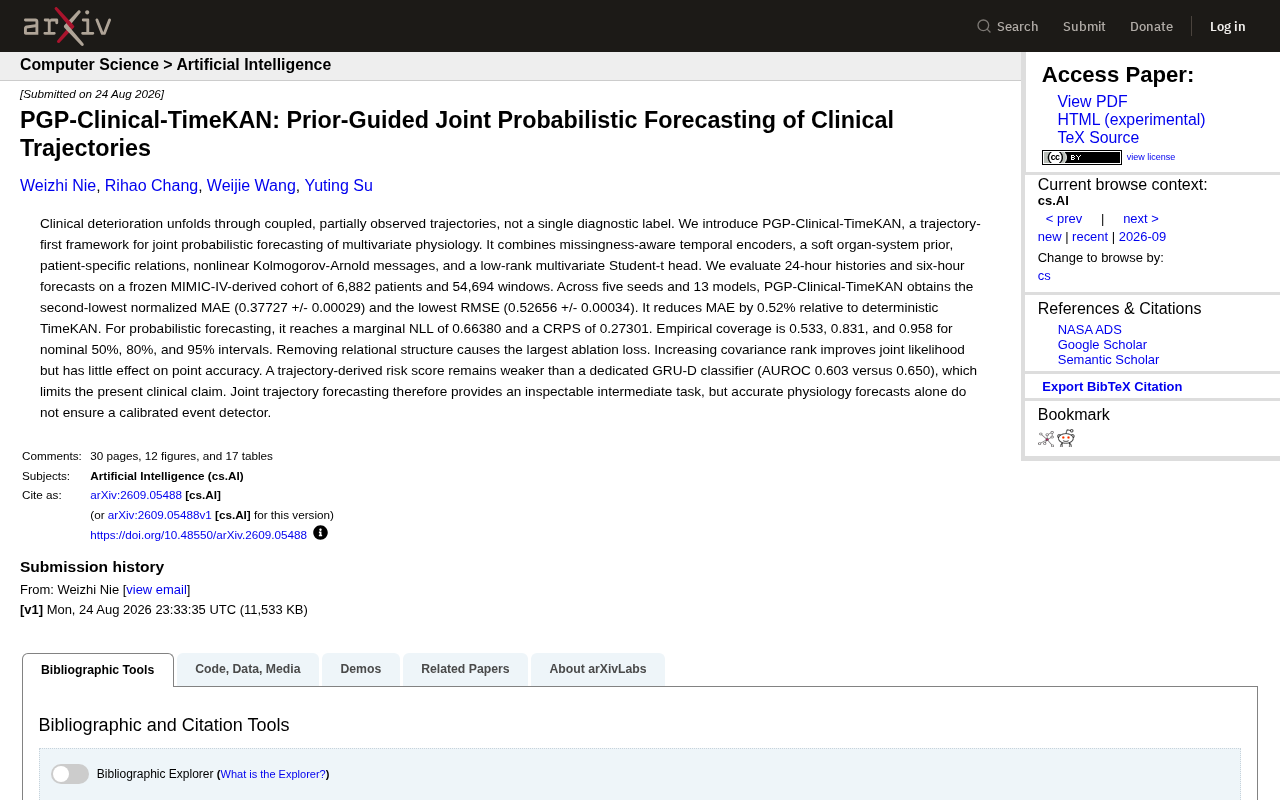
PGP-Clinical-TimeKAN: A Detailed Guide to the Multivariate Physiological Indicator Joint Prediction Framework
An in-depth analysis of the PGP-Clinical-TimeKAN framework for joint probabilistic prediction of multivariate physiological indicators, covering trajectory-first paradigm, KAN message passing, MIMIC-IV validation, and ablation studies.
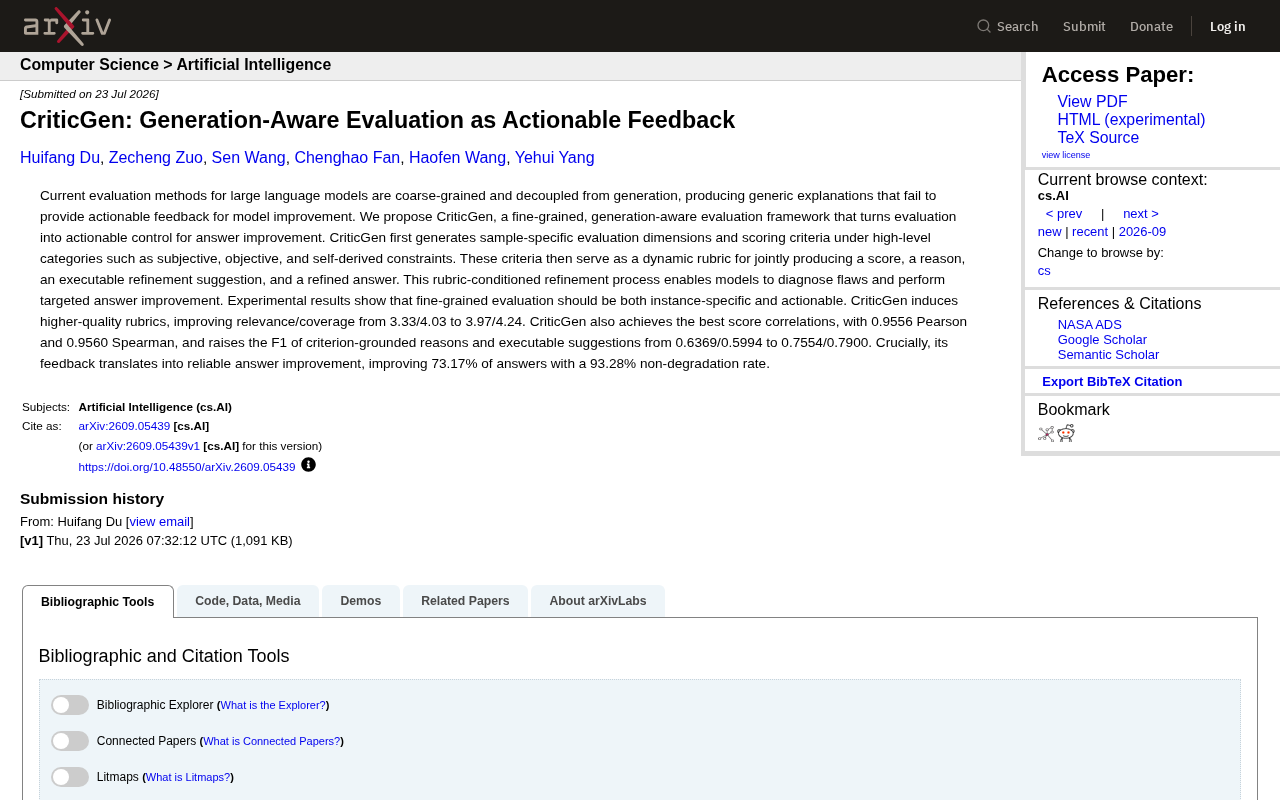
CriticGen: A New Framework That Transforms AI Evaluation into Actionable Improvement Feedback
CriticGen proposes a generation-aware evaluation framework that transforms AI assessment from passive scoring to an active optimization loop, achieving 73.17% answer improvement and 93.28% non-degradation rate.

Vercel AI SDK workflow-harness Update Analysis
Deep analysis of Vercel AI SDK workflow-harness 1.0.107 update: architecture design, engineering practices, and developer value for building reliable AI apps.