Migrating a Production AI Agent to GPT-5.6: 2.2x Faster, 27% Cheaper — Engineering Lessons Learned
Migrating a Production AI Agent to GPT…
How one team migrated a production AI Agent to GPT-5.6 and achieved 2.2x speed gains with 27% cost savings.
This article unpacks a real-world AI Agent migration to GPT-5.6 that delivered 2.2x faster responses and 27% lower costs. It explains the technical drivers behind these gains — including token compression and improved inference efficiency — while covering the three core engineering challenges: prompt compatibility, building quantitative eval sets, and canary release strategies.
AI Agent Model Migration: More Serious Than You Think
For any AI Agent running in production, a model upgrade is a balancing act full of trade-offs. More capable models often mean higher costs and slower responses, while chasing pure cost-efficiency can sacrifice output quality.
Recently, a post-mortem from a frontline engineering team sparked widespread discussion on Hacker News: after migrating their production AI Agent from an older model to GPT-5.6, the team achieved a 2.2x speed improvement and a 27% cost reduction.
These numbers deserve a closer look, because they challenge the conventional wisdom that "more powerful models are always more expensive and slower." This article breaks down the technical reasoning and engineering practices behind AI Agent model migration, using this case as a reference.
Breaking Down the Numbers: How Speed and Cost Improve Together
What a 2.2x Speed Improvement Actually Means
In Agent applications, response speed directly determines the ceiling of user experience. To understand why, you need to appreciate what makes AI Agents fundamentally different from ordinary LLM calls — the ReAct Loop (Reasoning-Action Loop). Each cycle involves three phases: model reasoning, tool invocation, and result retrieval. Latency compounds at every step. Take an Agent that queries a database, calls an external API, and synthesizes a final response — if the average per-step latency is 2 seconds, a 6-step loop results in 12 seconds of end-to-end delay. This cumulative latency effect is precisely why speed gains are so much more impactful in Agent contexts.
A 2.2x speed improvement typically comes from three layers:
- Model architecture upgrades: Structural throughput improvements in next-generation inference architectures
- Higher token generation efficiency: More tokens per second directly compresses per-step latency
- More accurate task comprehension: The model gets it right the first time, reducing unnecessary back-and-forth
For complex Agents requiring five to six tool calls on average, compressing per-step latency creates a perceptible leap in overall experience.
The Business Value of a 27% Cost Reduction
In production environments, an Agent may handle millions of requests per day. A linear drop in cost translates directly into gross margin improvement — and 27% is far from negligible.
What you might have missed: this cost optimization isn't purely the result of a lower model unit price. The deeper driver is overall token efficiency. LLMs are typically billed on total input + output token volume. A smarter model can complete tasks in fewer reasoning steps and produce less redundant output during the "thinking process." This mechanism is known as the "token compression effect" and is one of the primary sources of cost reduction in next-generation models. When a model can accomplish the same task with fewer reasoning steps and more concise outputs, total token consumption drops significantly — even if the unit price stays the same.
This also explains why speed gains and cost reductions can happen simultaneously — both fundamentally benefit from the model "thinking more efficiently."
Three Unavoidable Challenges in AI Agent Migration
Prompt Compatibility Validation
Model migration is never as simple as swapping an API endpoint. Here's an engineering reality that's often overlooked: a prompt is essentially "software" written for the behavioral patterns of a specific model, and it is deeply coupled to the model version. Differences in RLHF training data and instruction fine-tuning strategies between model versions can cause identical prompts to produce vastly different outputs. For example, an older model might handle the instruction "reply in JSON format" with higher tolerance for ambiguity, while a newer model enforces format constraints more strictly and may throw edge-case errors. This phenomenon is called "prompt drift" — the most hidden and hardest-to-predict risk in any migration.
Key workflows to validate during migration include:
- Whether tool calls trigger reliably and consistently
- Whether JSON output continuously conforms to the predefined schema
- Whether edge cases and abnormal inputs are handled without regression
These seemingly minor engineering details are often what determine whether a migration succeeds or fails.
Building a Rigorous Quantitative Evaluation Framework
Claiming "faster and cheaper" is easy. Proving that output quality hasn't degraded is the real challenge. Mature teams typically build an eval set drawn from real business scenarios. The industry-standard approach follows the "golden dataset" principle: sample from actual production traffic, cover high-frequency scenarios, edge cases, and known failure cases, and use human-annotated "expected outputs" as ground truth. Evaluation frameworks like OpenAI Evals and LangSmith provide automated comparison tooling to efficiently run multi-dimensional pre/post-migration comparisons.
Key metrics to compare before and after migration:
- Task completion rate
- Output accuracy
- Hallucination rate
- Edge case coverage
It's worth noting that metric selection must align with business goals — for a customer service Agent, task completion rate takes priority; for a code generation Agent, syntactic correctness and execution success rate matter more. Speed and cost improvements only carry real business value when quality metrics remain at least stable, if not improved.
Canary Releases and Rollback Mechanisms
No matter how thorough the offline evaluation, it can never fully capture the diversity of real-world traffic. In LLM services, canary releases are typically implemented via traffic splitting at the API gateway layer — for example, routing 5% of requests to the new model while keeping 95% on the original. Beyond standard error rate and latency monitoring, you'll also need to track LLM-specific signals like "hallucination rate" and "format compliance rate."
Some teams also adopt the more conservative "Shadow Mode" strategy — the new model processes all requests in parallel but does not return results, operating only for offline quality evaluation. Traffic is only switched once metrics meet the bar, minimizing migration risk to the absolute minimum. Always maintain a fast rollback capability to ensure service can be restored within minutes if something goes wrong.
Practical Takeaways for AI Developers
Treat Model Upgrades as Routine Technical Debt Management
This case is a reminder that foundation models iterate at a rapid pace. Staying on an older model may mean continuously paying a premium for inferior performance. Developers should establish regular evaluation cadences and treat model upgrades alongside everyday technical debt management — rather than waiting for performance problems to surface before reacting.
Build a Reusable, Standardized Migration Pipeline
For teams running AI Agents long-term, it's worth investing early in standardized migration infrastructure:
- Automated evaluation pipelines: Trigger comparative tests with a single command whenever a new model is released
- A/B testing frameworks: Support parallel dual-model validation on live traffic
- Canary release mechanisms: Gradually shift traffic by percentage to reduce migration risk
With this in place, every new model release becomes a fast, low-risk validation and cutover process — continuously converting model upgrade gains into competitive advantage.
Keep a Rational Perspective on Single Case Data
One caveat worth raising: the 2.2x and 27% figures are highly dependent on the specific application scenario, task type, and degree of optimization. Other teams may not be able to reproduce the same results. The core value of case studies like this lies in providing methodological reference, not conclusions to be applied wholesale. Always conduct an independent evaluation based on your own business context before migrating.
Conclusion
This migration case shows that AI Agent engineering is maturing — it's no longer about simply calling the most powerful model, but about dynamically balancing speed, cost, and quality. As foundation models continue to iterate, teams with the ability to evaluate and migrate quickly will maintain a persistent edge in the competitive AI application landscape.
Perhaps the most practical takeaway from this case is simple: treat model upgrades as a normalized engineering practice.
Key Takeaways
Related articles
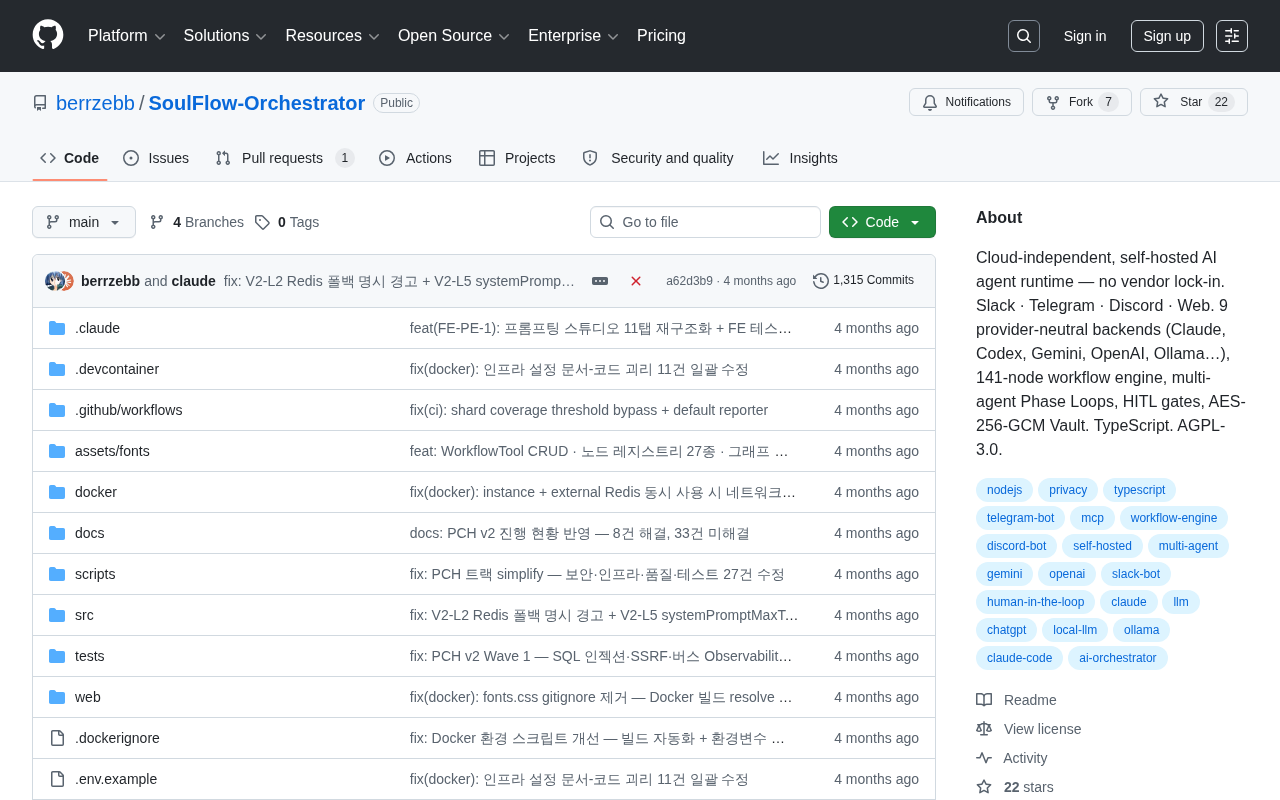
SoulFlow-Orchestrator: A Self-Hosted, Vendor-Lock-In-Free AI Agent Runtime
SoulFlow-Orchestrator is an open-source, self-hosted AI agent runtime with no vendor lock-in. Supports 9 neutral backends (Claude, OpenAI, Ollama), 141-node workflow engine, multi-agent loops, and HITL gates.
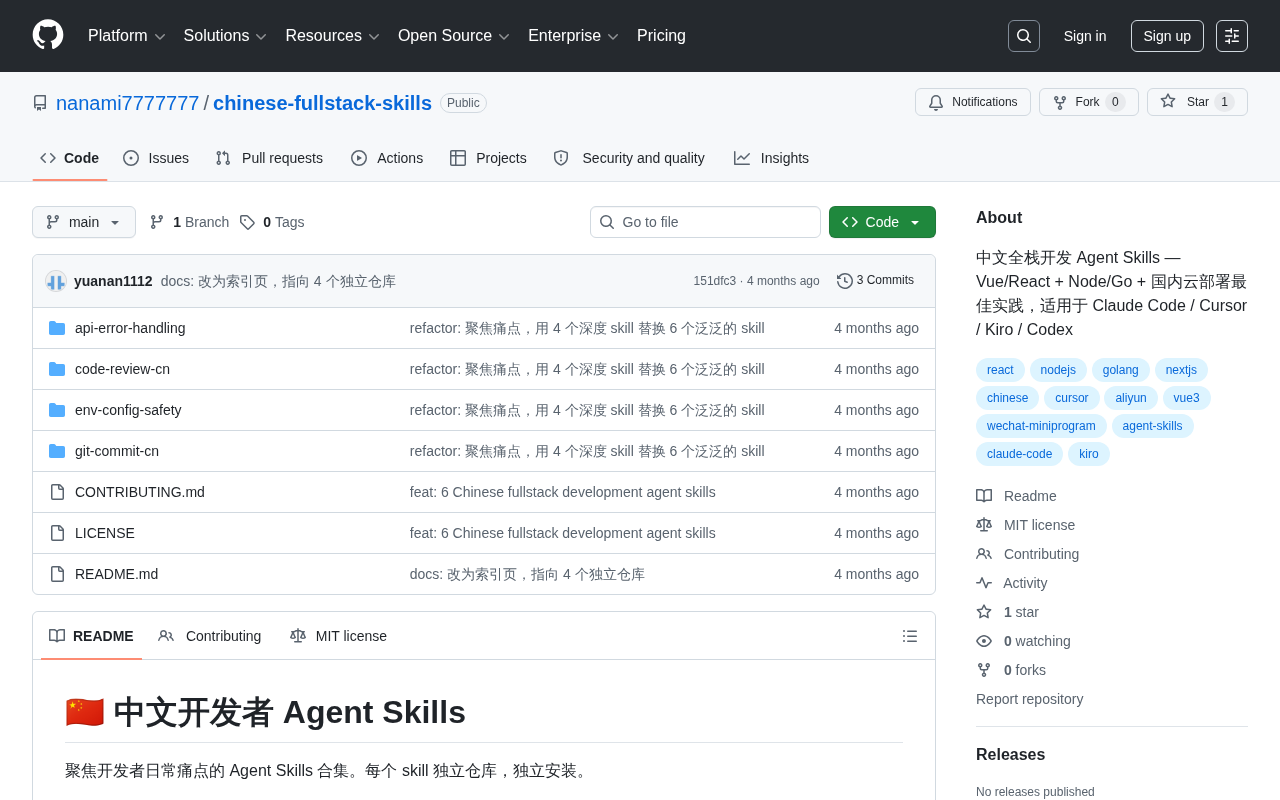
Chinese Full-Stack Agent Skills: A Skill Library Tailored for Domestic AI-Assisted Development
chinese-fullstack-skills is an Agent Skills library for Chinese full-stack development, covering Vue/React, Node/Go, and domestic cloud deployment best practices. Compatible with Claude Code, Cursor, Kiro, and Codex.
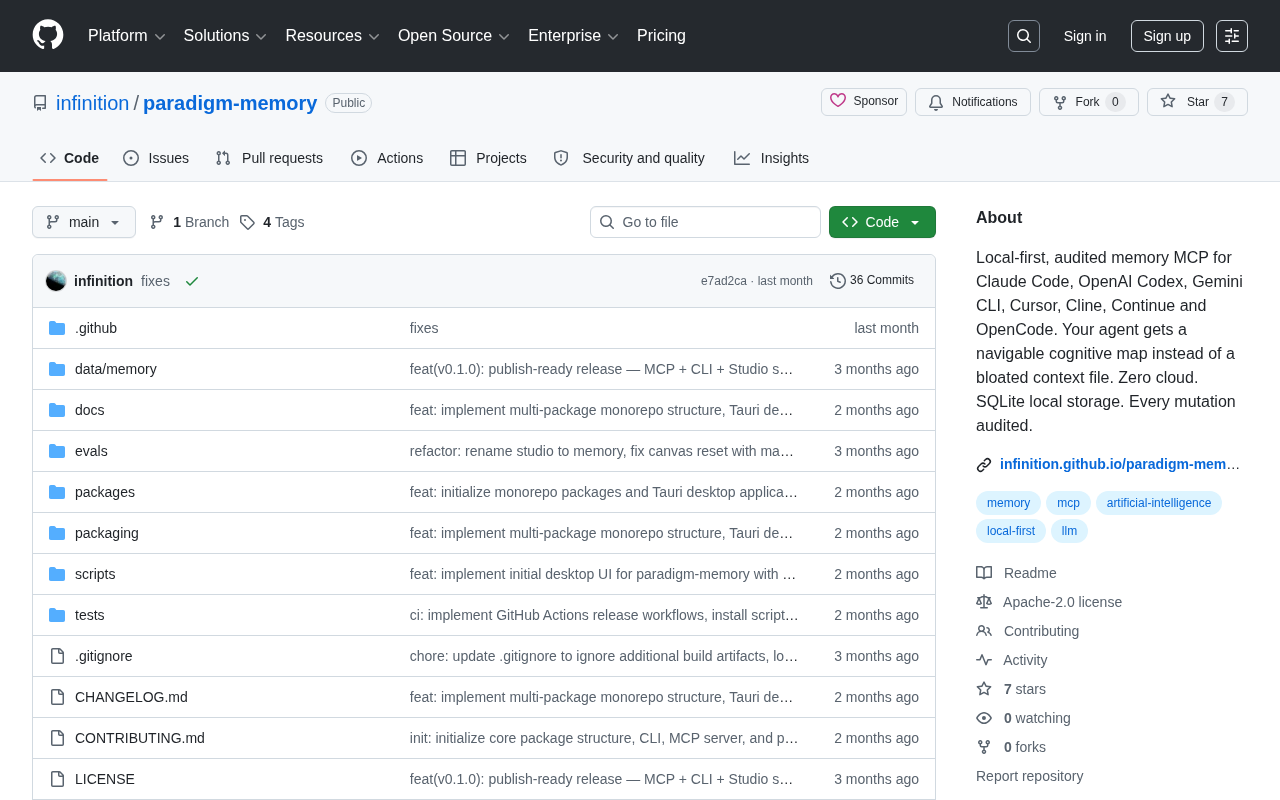
Paradigm Memory: A Local-First Memory System for AI Coding Assistants
paradigm-memory is a local MCP memory tool for Claude Code, Cursor, and Cline. It uses SQLite local storage, zero cloud, full audit trails, and a navigable cognitive map instead of bloated context files.