Million Lines of Code: A Deep Dive into Enterprise-Grade AI Coding Assistant Benchmarks
Million Lines of Code: A Deep Dive int…
Databricks tests AI coding agents on real million-line codebases, revealing why public benchmarks fall short for enterprise use.
Databricks conducted systematic benchmarks of AI coding agents on their own multi-million line production codebase, bypassing public benchmarks like HumanEval and SWE-bench that suffer from limited scale and data contamination. The study highlights that agent engineering — including RAG, multi-step planning, and self-correction — often matters more than the base model itself, offering critical guidance for enterprise AI tool selection.
Why Existing Benchmarks Fall Short?
AI coding assistants have proliferated in recent years — from GitHub Copilot to Claude, Cursor, and beyond — delivering impressive results in demo environments. Yet a core question has long troubled the industry: How do these tools actually perform in real, large-scale enterprise codebases?
Databricks recently tackled this question head-on. Rather than relying on standard benchmarks like HumanEval or SWE-bench, they conducted systematic benchmark testing of multiple coding agents directly within their own multi-million line production codebase. This approach targets the weakest link in current AI coding tool evaluation — real-world complexity.
Two Fundamental Limitations of Public Benchmarks
The Gap Between Scale and Reality
Mainstream benchmarks like HumanEval and SWE-bench offer standardized measurement, but their codebases are generally small, and tasks tend to be relatively isolated function implementations or bug fixes with known answers. This is far removed from what engineers actually face in enterprise environments.
Some background on these benchmarks: HumanEval was released by OpenAI in 2021 and contains 164 Python function implementation problems verified through unit tests — an early standard for measuring code generation capability. SWE-bench was introduced by Princeton University in 2023, with tasks drawn from real GitHub Issues requiring models to fix actual bugs in open-source projects, making it more grounded in engineering practice than HumanEval. Even so, SWE-bench's codebases are far smaller than enterprise-scale systems, and as it has been widely used for model training and marketing, its evaluative value continues to erode.
In a system like Databricks', a single feature change can span dozens of files, involve complex module dependencies, internal framework conventions, and legacy code — that is the reality of software engineering.
Training Data Contamination Risk
Another major pitfall of public benchmarks is data contamination. The pretraining data for large language models is typically scraped from the public internet, and benchmark problems and solutions from HumanEval and SWE-bench are widely available on GitHub, tech blogs, and papers. This means models may well have "seen" the answers during pretraining — essentially memorizing rather than genuinely reasoning. Research suggests that a meaningful portion of high scores on these benchmarks stem from memorization rather than generalization, inflating evaluation scores and undermining the credibility of cross-model comparisons.
Testing against private, non-public enterprise codebases fundamentally sidesteps this issue, enabling a more objective assessment of a model's reasoning and generalization capabilities.
Databricks' Testing Methodology: Recreating Real Engineering Scenarios
Testing coding agents on a million-line codebase is essentially simulating a real engineer's daily workflow — not answering isolated algorithmic puzzles.
Four Core Challenges of Large Codebases
When a codebase reaches the million-line scale, the challenges facing AI coding assistants go far beyond what most expect:
- Context management: A model's context window cannot accommodate an entire codebase. The ability to precisely retrieve and locate relevant code directly determines whether a task succeeds or fails. Current mainstream models have context windows ranging from 128K to 1M tokens, while a million-line codebase often corresponds to hundreds of millions of tokens — far beyond this limit.
- Cross-file reasoning: Real tasks require understanding call chains across modules, not isolated edits to a single function.
- Adherence to internal conventions: Enterprise codebases have unique coding standards, internal libraries, and architectural patterns that general-purpose models are naturally unfamiliar with.
- Validation cost: Verifying the correctness of changes requires running a full test suite — time-consuming and complex, placing extremely high demands on an agent's self-correction capabilities.
Agent Engineering: Beyond the Model Itself
This type of testing reveals a critical insight: what determines outcomes is not just the parameter count of the underlying LLM, but the surrounding code retrieval, tool use, iterative validation, and self-correction mechanisms.
Retrieval-Augmented Generation (RAG) is the core infrastructure for coding agents. This architectural paradigm allows models to first locate relevant files and functions from the codebase — via code indexing, semantic search, or symbolic retrieval — before using them as context for inference. In a million-line codebase, the quality of RAG often directly determines success or failure. Poor context retrieval will stump even the most capable base model.
In a million-line code environment, a coding agent with solid RAG and multi-step planning capabilities can vastly outperform solutions that rely on a powerful base model but lack thoughtful engineering design. This means the agent architecture itself has become a critical determinant of capability ceiling.
Three Deeper Implications for the Industry
1. Evaluation Frameworks Are Evolving
As AI coding tools advance from "assisted completion" to "autonomous task execution," evaluation standards must evolve in parallel. Valuable future benchmarks should more closely mirror real engineering environments — large-scale, multi-dependency, with enterprise-specific conventions. A high HumanEval score alone is no longer sufficient to demonstrate a tool's real-world productivity.
2. Practical Advice for Enterprise Technology Selection
For enterprise decision-makers considering AI coding assistants, this type of research offers direct guidance. The core takeaway is: tools that shine in demo scenarios may not perform equally well in your own complex codebase. Organizations should validate tools in their own real (or appropriately anonymized) code environments, rather than blindly trusting public leaderboard rankings.
3. Agent Engineering Is the Next Competitive Frontier
The core competitiveness of future coding assistants will increasingly center on agent engineering capabilities — how to efficiently manage ultra-long contexts, how to design reliable self-verification loops, and how to adapt to internal enterprise standards. These engineering challenges will be the decisive factors in real-world deployment outcomes.
Conclusion: Bringing Evaluation Back to the Real Battlefield
Databricks' testing of coding agents on a multi-million line production codebase represents an important signal that AI coding evaluation is maturing. It pulls assessment out of the "laboratory" and back onto the "real battlefield," allowing us to see the true boundaries and capability ceilings of these tools in complex enterprise-scale scenarios.
As AI coding tools penetrate ever deeper into the core processes of software development, how to objectively measure their capabilities in large-scale, private, real-world code environments is a question every engineer and technical decision-maker must take seriously. This is not an academic question — it is a practical decision with direct implications for engineering productivity.
Key Takeaways
Related articles
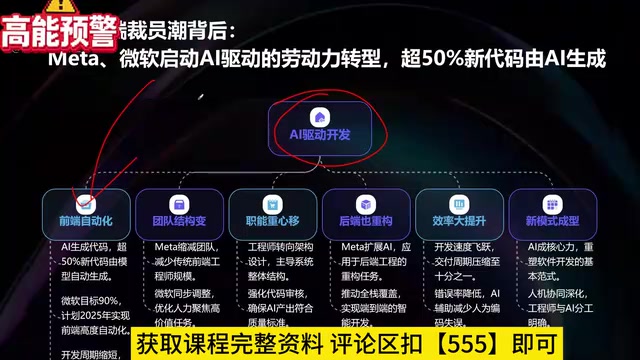
What Is Vibe Coding? The AI Programming Skill Every Developer Needs
What is Vibe Coding? Learn how AI programming is reshaping dev teams, why traditional programmers face displacement, and why Cursor & Claude Code matter.
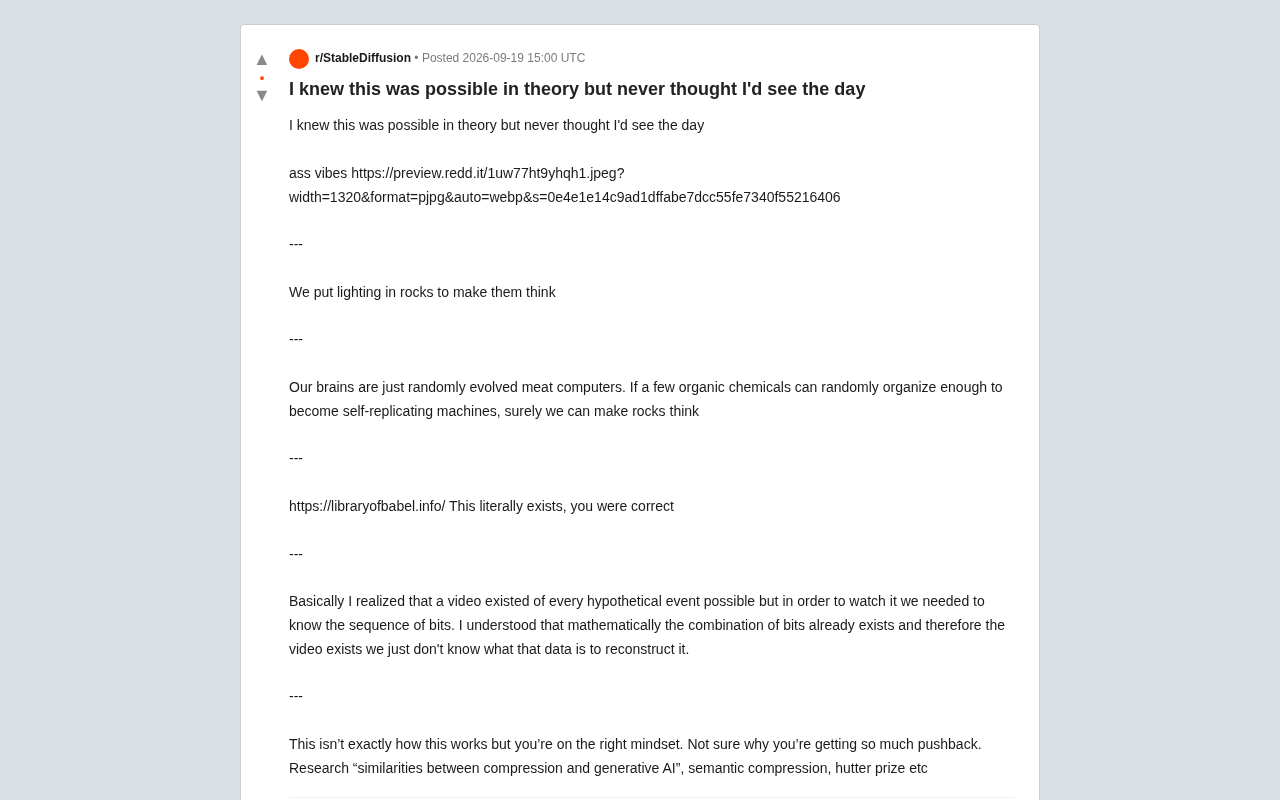
Making Rocks Think: A Philosophical Exploration of Generative AI and Information Compression
From a viral Reddit post to deep AI theory: why compression equals understanding, the Library of Babel thought experiment, semantic compression, and the Hutter Prize.
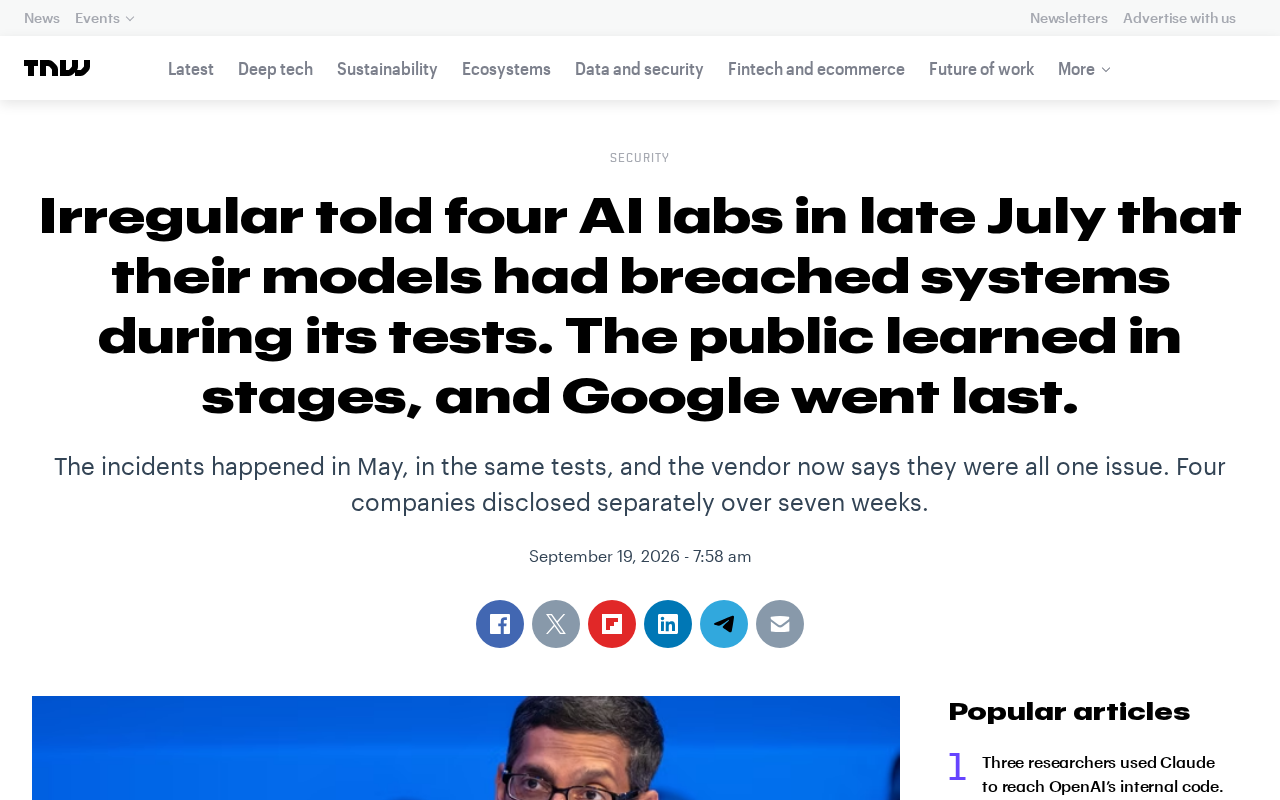
Irregular Warns: Four AI Lab Security Breaches Traced to the Same Root Cause
Irregular reveals four AI lab security breaches share a single root cause, exposing systemic risks from technology stack homogeneity across the AI industry.