MiniMax Code Open-Sources to Rival ZCode; Claude Code Gains AGENTS.md Compatibility
MiniMax Code open-sources ahead of ZCode; Claude Code embraces AGENTS.md as the coding agent ecosystem consolidates.
This roundup spans AI tooling, hardware, security, and policy. MiniMax Code's early open-source release targets ZCode directly, making terminal coding agents the new front in the large model vendor wars. Claude Code's AGENTS.md compatibility signals a move toward ecosystem interoperability. On hardware, Huawei's Ascend 970/980 roadmap goes public with competitive VRAM specs. On security, a Rust maintainer social engineering warning contrasts sharply with Rust Binder's Linux mainline landing. Elsewhere: Google Labs brings AI agents to family coordination, Chinese regulators tighten platform content governance, and a U.S. antitrust lawsuit alleges AI companies coordinated to slow product development.
MiniMax Code Goes Open Source, Adding a New Player to the Coding Agent Race
MiniMax Code's public repository is now officially live, positioning itself as an open-source terminal-based coding agent. What caught attention was the shift in release timing — MiniMax's official account initially announced the open-source release would happen "within a few days," then abruptly moved the date up to that same evening, making the competitive intent unmistakable.
The move is widely read as a direct strike against ZCode, a similar terminal coding tool. Open-source coding agents are fast becoming the new battleground where large model vendors compete for developer mindshare: starting from the command-line environment and embedding directly into developers' daily workflows, they offer stronger retention than purely conversational programming assistants.
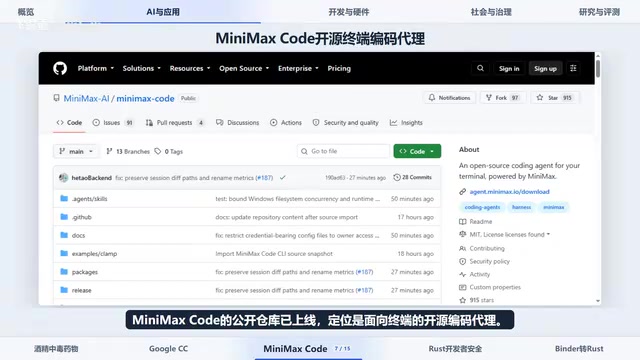
For developers, a self-hostable, auditable, and customizable coding agent means lower switching costs and greater control. MiniMax's decision to go public ahead of a competitor's move also reflects the fierce urgency around timing in today's open-source tooling landscape.
Claude Code Adds Compatibility with AGENTS.md
Claude Code version 2.1.277 introduces a new compatibility rule: when no CLAUDE.md file is found in a project directory, the tool will fall back to reading AGENTS.md instead. This means projects already following the AGENTS.md convention can be recognized by Claude Code without any additional configuration.
The rule can be modified under Config → Project Instructions, though it currently does not extend to hosted environments such as Bedrock, Vertex, or Foundry. In other words, this compatibility improvement primarily targets local development scenarios where Claude Code is used directly.
AGENTS.md is gradually becoming a shared project instruction file format across multiple AI coding tools. Claude Code's proactive adoption of this standard reduces the configuration overhead developers face when switching between tools, and signals a broader move toward interoperability within the coding agent ecosystem.
AGENTS.md is a project-level instruction file format originally popularized by OpenAI's Codex agent system. Placed at the root of a repository, it describes project context, coding conventions, and behavioral constraints for AI agents. Unlike proprietary config files tied to a specific tool, AGENTS.md is designed to be tool-agnostic — any vendor's coding agent can read the same instruction file, sparing developers from maintaining separate configurations for each tool. CLAUDE.md is Anthropic's equivalent proprietary format defined for Claude Code. By choosing to support AGENTS.md while still prioritizing its own format, Claude Code is effectively deferring to an emerging community standard — a sign that the coding agent market is maturing to the point where competing through open compatibility, rather than ecosystem lock-in, is becoming a viable strategy.
Hardware & Security: Ascend Roadmap and a Rust Supply Chain Alert
A publicly shared slide deck lays out a timeline for the Ascend 960, 970, and 980, spanning from 2027 through 2029. The slides indicate the Ascend 970 will reach approximately 288 GB of VRAM and the Ascend 980 approximately 384 GB, reflecting the continued trajectory of domestic AI chips scaling up memory capacity.
On the software supply chain security front, the Rust Security Response Working Group has issued a warning: core developers and maintainers of popular crates are being targeted in directed attacks. Threat actors are using fabricated recruiting materials to trick developers into installing malware. The Rust team is urging developers to enable multi-factor authentication. This type of social engineering aimed at high-value maintainers is becoming a real and present threat to the open-source ecosystem.
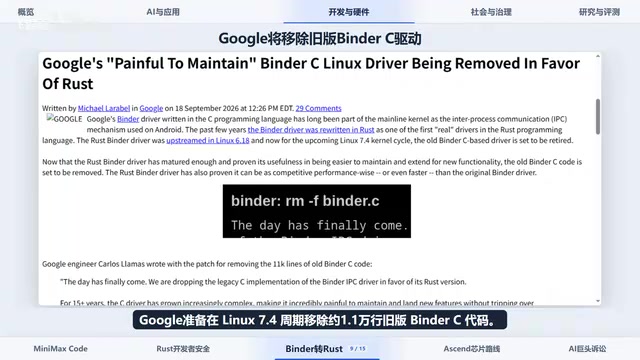
Meanwhile, the Rust Binder driver has been merged into Linux 6.18 mainline, demonstrating its maintainability and performance competitiveness. Google is preparing to remove approximately 11,000 lines of legacy Binder C code during the Linux 7.4 cycle, marking an acceleration in Rust's practical adoption within critical kernel modules.
A crate is Rust's package management unit — analogous to a PyPI package in Python or an npm package in Node.js — hosted on crates.io. As Rust's penetration in systems programming, WebAssembly, and embedded domains continues to grow, maintainers of popular crates effectively control the build dependency chains of a vast number of downstream projects. Social engineering attacks targeting these high-value maintainers can, if successful, inject malicious code into a crate and propagate it to all dependent projects through normal package update mechanisms — causing far greater harm than a typical account compromise. This follows the same supply chain attack pattern as the npm ua-parser-js incident in 2021 and the node-ipc poisoning in 2022. The concurrent landing of Rust Binder into the Linux mainline provides an interesting contrast: Rust is earning trust at the kernel level, while the security governance of its package ecosystem still faces real challenges.
Life Sciences & AI Research
Enthalpic has established a wet lab in the San Francisco Bay Area to conduct physical biology experiments, moving beyond purely computational evaluation. One of its stated goals is to explore treatments for rare diseases. Goal Therapeutics launched a new project on September 17th aimed at rapidly reversing the physiological effects of alcohol intoxication, though the project remains in early-stage R&D with no clinical data or regulatory timelines disclosed yet.
On the institutional front, the DeepMind Institute has officially launched, with its introduction page listing core members including Shane Legg, James Manyika, and Demis Hassabis. In model capability benchmarks, Artificial Analysis's comparison charts show Step 5 Preview with a visible score of 44.
Home Scenarios & Policy & Regulation
Google Labs has introduced an experimental agent designed for household use, supporting up to six family members. The agent organizes emails shared by members, generates a shared daily briefing, and integrates with Calendar and Tasks — extending the AI agent use case from personal productivity to household coordination.
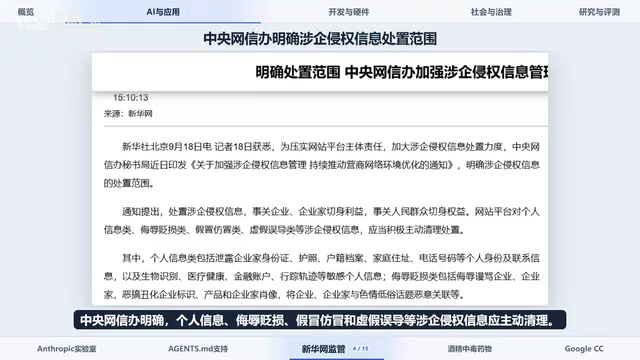
On the regulatory side, China's Cyberspace Administration (CAC) has clarified that platforms must proactively remove content involving personal information violations, defamation, impersonation, and false or misleading information. Platforms are required to incorporate such content into routine auditing, improve community guidelines, and strengthen account and MCN management. Separately, a new lawsuit alleges that four AI companies coordinated to slow down development and delay product improvements that users expected, with plaintiffs invoking Section 1 of the Sherman Act and seeking class action certification, injunctive relief, and declaratory judgment.
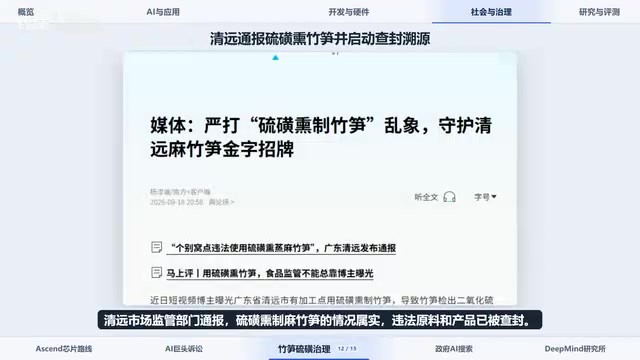
In food safety news, market regulators in Qingyuan confirmed reports of sulfur-fumigated moso bamboo shoots. Illegal raw materials and finished products have been seized, and local authorities are tracing the distribution of bamboo shoots from the relevant facilities, shifting the regulatory focus from remediation to the production and processing stages.
Section 1 of the Sherman Act is a cornerstone of U.S. antitrust law, prohibiting agreements among competitors that restrain trade. By invoking this provision, the plaintiffs aim to allege horizontal coordination — i.e., that competing AI companies agreed among themselves to slow development of certain features, either to protect shared market interests or to avoid regulatory pressure. The evidentiary bar for such claims is high: plaintiffs must demonstrate explicit coordinated conduct, not merely parallel independent business decisions. Seeking class certification signals an attempt to bring a broad group of potentially affected users into the lawsuit, amplifying both its impact and the potential damages sought. Whether meaningful competitive coordination actually exists in the AI industry remains an open question, but the lawsuit itself marks a significant moment — antitrust scrutiny has now formally extended to the pace at which large model products are iterated and released.
Related articles
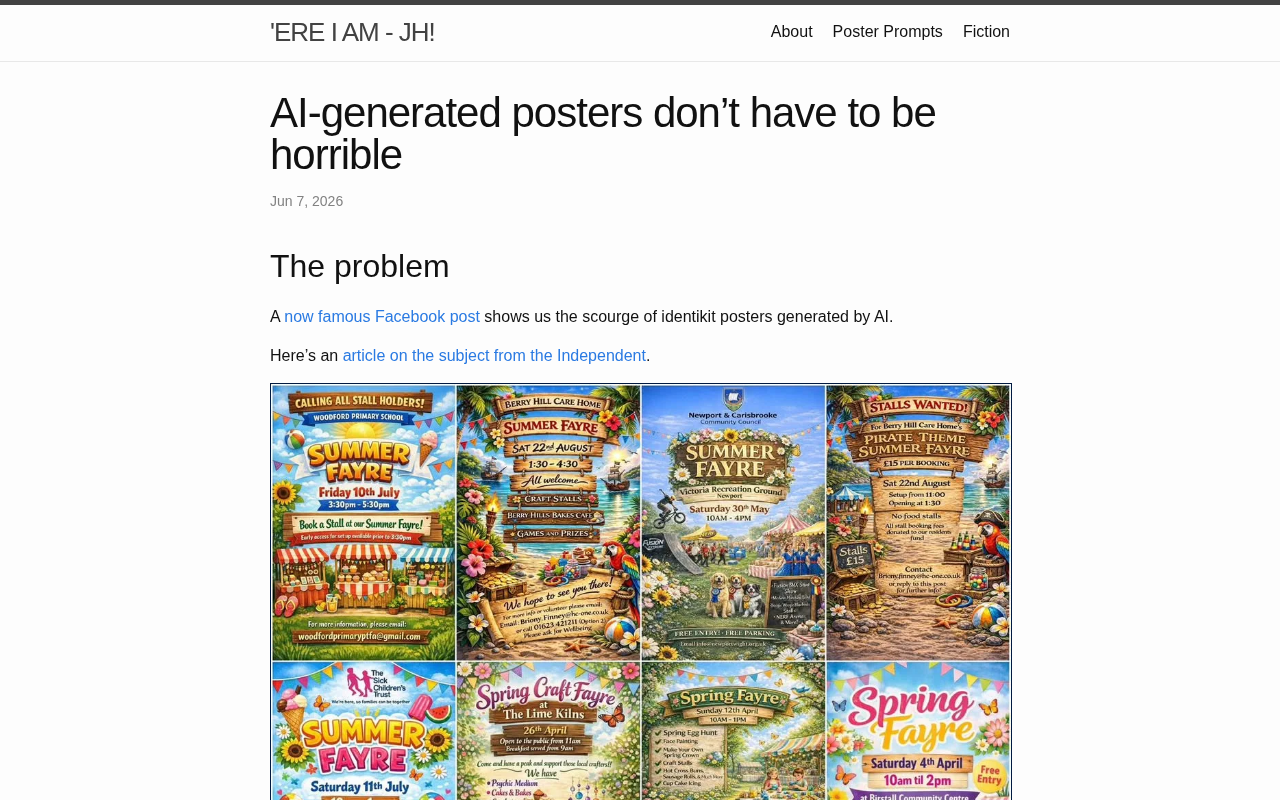
AI-Generated Posters Don't Have to Be Ugly: What Actually Determines Design Quality
AI posters often look cheap — but the problem is usually how they're used, not the tools themselves. Here's how human-AI collaboration and better prompting can transform output quality.
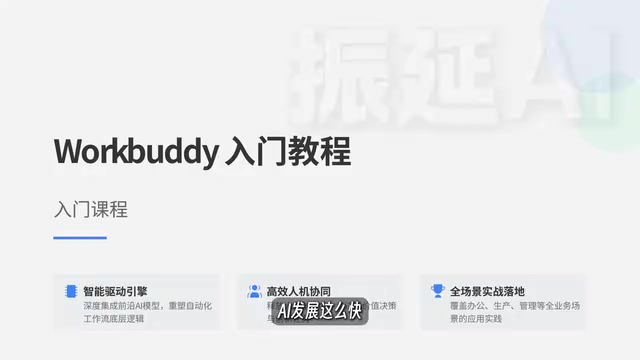
WorkBuddy Beginner's Guide: How This Chinese AI Agent Works For You
WorkBuddy is a Chinese AI Agent often called the domestic alternative to Codex. Learn how it moves beyond Q&A to directly operate your computer, with connectors, Skills, and expert agents.
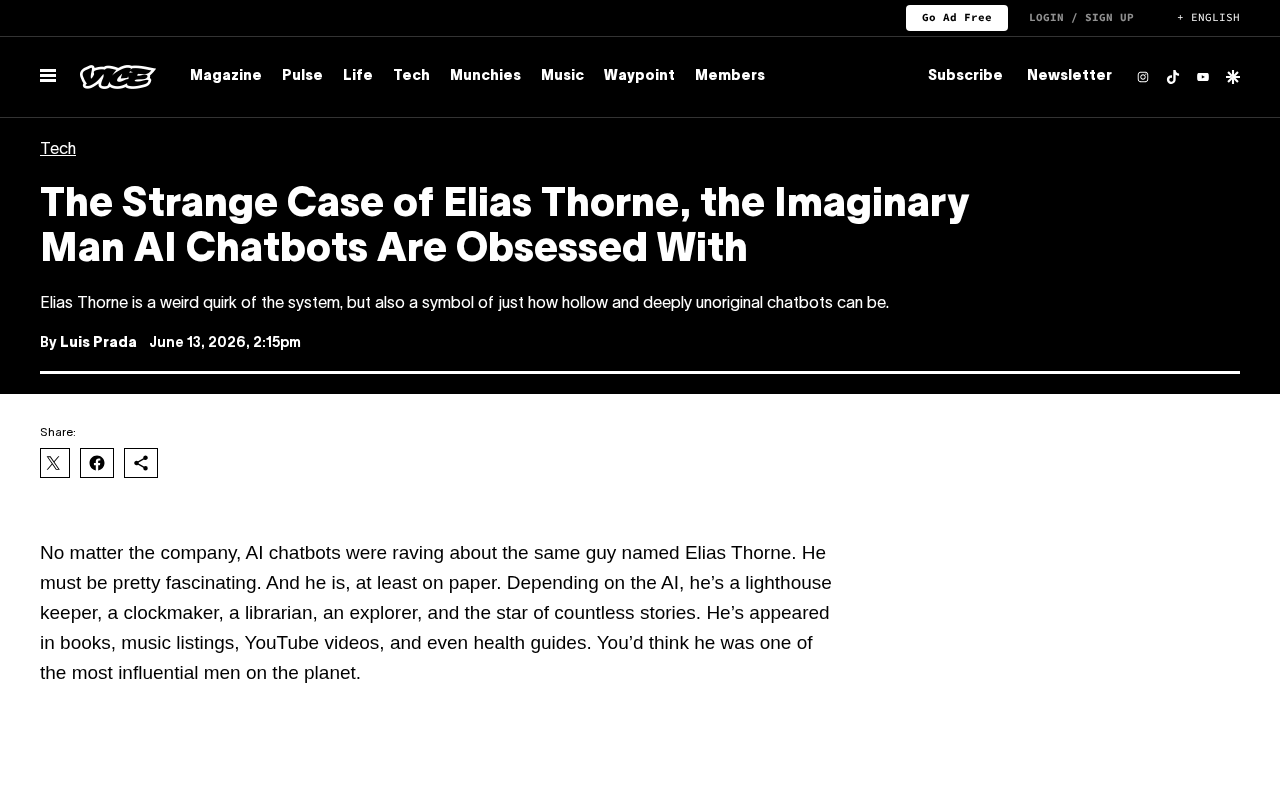
The Elias Thorne Phenomenon: Why AI Chatbots Keep Fabricating the Same Fictional Person
Why do AI chatbots keep inventing a fictional person named Elias Thorne? This article unpacks LLM hallucination mechanics, training data bias, and model collapse risks.