The Elias Thorne Phenomenon: Why AI Chatbots Keep Fabricating the Same Fictional Person
The fictional name Elias Thorne keeps appearing in AI responses, exposing the statistical roots of LLM hallucinations and model collapse.
Multiple users have noticed that different AI chatbots repeatedly generate the name "Elias Thorne" — a person who doesn't exist — when asked to invent characters. This isn't random: it reflects the probabilistic nature of LLMs, which favor statistically high-frequency name combinations, compounded by the convergence effects of sampling parameters like temperature. More worryingly, as AI-generated content floods the internet and re-enters training datasets, this bias may self-reinforce through model collapse, driving outputs toward increasing homogeneity. The phenomenon reminds users to verify any names or citations AI provides, and gives researchers a window into structural training data problems.
A Name That Doesn't Exist — Yet Keeps Appearing in AI Responses
When you ask an AI chatbot certain open-ended questions, you may encounter a name that keeps coming up: Elias Thorne. This person doesn't exist, yet they haunt the responses of multiple AI models like a ghost. The phenomenon has sparked community discussion and once again put the spotlight on the "hallucination" problem in large language models.
A quick note: this article is based on a Hacker News thread (which received 13 upvotes and 3 comments), so the source material is limited. This piece is more of an exploration and technical speculation about the phenomenon itself, rather than a definitive research finding.
What Is the Elias Thorne Phenomenon?
Elias Thorne is a prime example of an "AI-preferred fictional name." When a model is asked to invent a character, provide an example, or fill in details without a clear factual basis, it tends to gravitate toward certain high-frequency names. Elias Thorne is one such combination that multiple users have independently noticed appearing again and again.
Names like this tend to share a few traits: they sound refined and literary, feel "credible" in an English-language context, yet don't point to any real public figure. "Elias" is a classical name with a slight religious undertone, while "Thorne" is a surname commonly found in fiction. Together, the combination may appear with statistically notable frequency in training corpora.
Why Do Models "Favor" Certain Names?
At its core, a large language model is a probability prediction engine — it predicts the next most likely token based on context. When a model needs to generate a fictional name, it doesn't draw randomly; it selects combinations that rank highest in the probability distribution of its training data.
Hidden Biases in Training Data
Certain name combinations may appear repeatedly in novels, creative writing examples, or even previously AI-generated content. As AI-generated text floods the internet, models in subsequent training rounds may "ingest" content they previously produced themselves, creating a self-reinforcing loop. This concern — known as model collapse — is exactly what researchers have been warning about.
Model collapse refers to the process by which a model, repeatedly trained on large volumes of AI-generated content, sees its output distribution gradually narrow toward high-probability regions, while low-frequency but genuine knowledge is marginalized and eventually forgotten. Researchers have likened it to "informational inbreeding": each generation of models digests the outputs of the previous generation, causing errors and biases to compound, while the diversity of real-world data is diluted. Since 2023, as AI-generated text has flooded the internet at scale, this theoretical concern has become an observable, real-world threat. The frequent appearance of names like Elias Thorne can be seen as a micro-signal of model collapse — when a fictional name gets used repeatedly in AI writing examples and cycles back into training data via the internet, the model "memorizes" and reproduces it with ever-increasing confidence.
The Convergence Effect of Sampling Mechanisms
Even with randomness parameters like temperature in place, models still exhibit a strong tendency toward a small number of high-probability outputs in certain contexts. This explains why different users asking similar questions at different times might receive the same fictional name — it's not coincidence, but an inevitable consequence of the probability distribution.
Temperature is the core parameter controlling the randomness of a language model's output. A lower temperature makes the model more likely to select the highest-probability token, pushing output toward determinism; a higher temperature gives lower-probability options a better chance of being sampled, producing more variety but also more errors. In practice, many products set temperature to a lower range to ensure fluency and a sense of "professionalism," which objectively reinforces the convergence effect. Temperature is often used alongside strategies like Top-p (nucleus sampling), which filters out extremely low-probability outputs by truncating the long tail of the distribution. The combined effect of these mechanisms is that when generating fictional content, the model's actual "candidate vocabulary space" is far narrower than it appears — causing a small set of high-frequency combinations to be selected over and over again.
What Does This Phenomenon Reveal?
On the surface, Elias Thorne is a fun, urban-legend-style AI curiosity. But the issues it points to run much deeper.
First, it vividly illustrates the predictability of AI hallucinations. Hallucinations are not entirely random noise — they are systematic behaviors with statistical roots. Understanding these patterns can help develop better detection and correction methods.
Second, it warns us about the homogenization of AI-generated content. As more and more models converge on the same outputs, the diversity of content on the internet may erode, creating a kind of invisible "cultural convergence."
Third, in contexts that rely on AI-generated content — such as creative writing, education, or information retrieval — this predictable bias can have unexpected consequences. A fictional "expert," for instance, might be cited repeatedly until they're mistaken for a real person.
How Should We Respond?
For everyday users, the Elias Thorne phenomenon serves as a useful reminder: any specific names, citations, or data points provided by an AI should be independently verified. A model's "confidence" does not equal correctness.
For developers and researchers, phenomena like this offer a valuable entry point for studying a model's internal mechanisms. Tracing why certain tokens appear with unusually high frequency can help expose structural problems in training data, and inform strategies to combat model collapse and improve output diversity.
Elias Thorne — a person who never existed — has, in a sense, become a mirror for understanding the limitations of contemporary AI. They quietly remind us: these systems that appear to know everything are, at their core, still sophisticated probability machines, leaving their own unique "fingerprints" in the gaps of their training data.
Related articles
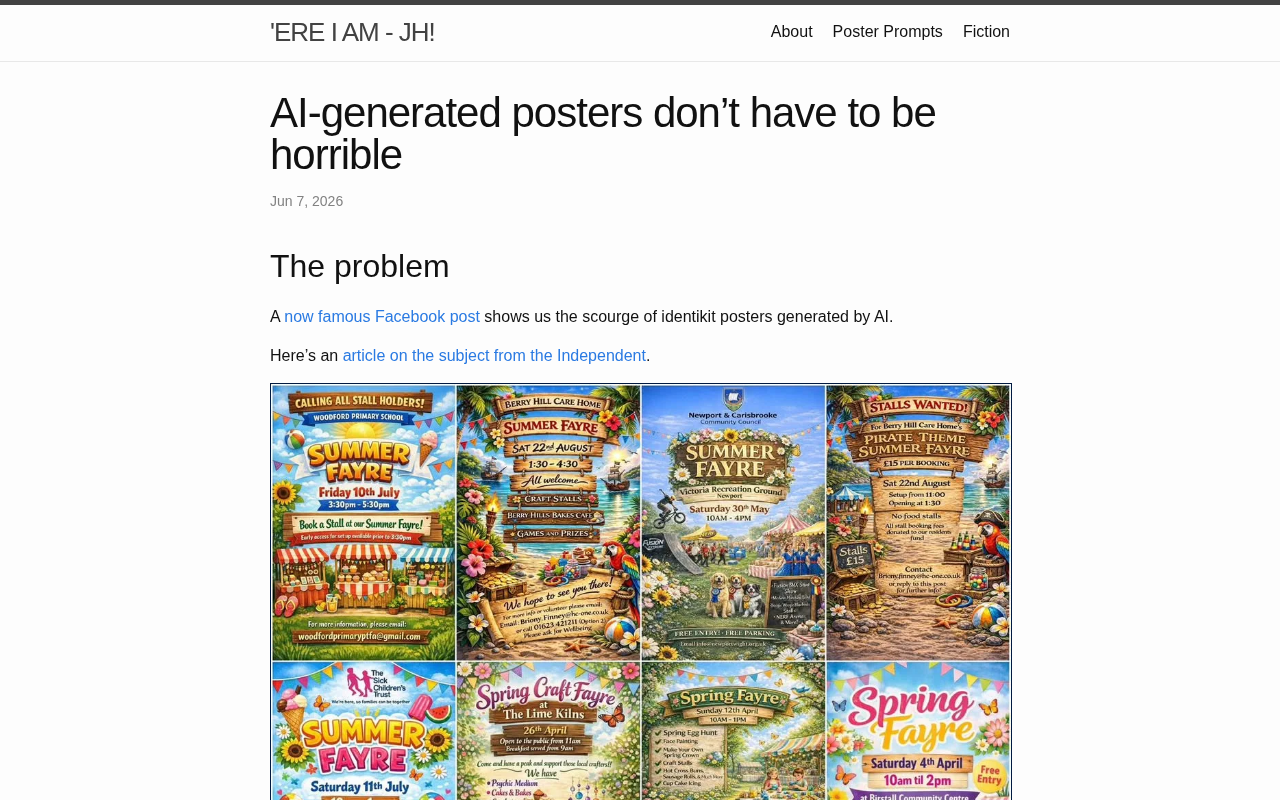
AI-Generated Posters Don't Have to Be Ugly: What Actually Determines Design Quality
AI posters often look cheap — but the problem is usually how they're used, not the tools themselves. Here's how human-AI collaboration and better prompting can transform output quality.

WorkBuddy Beginner's Guide: How This Chinese AI Agent Works For You
WorkBuddy is a Chinese AI Agent often called the domestic alternative to Codex. Learn how it moves beyond Q&A to directly operate your computer, with connectors, Skills, and expert agents.

MiniMax Code Open-Sources to Rival ZCode; Claude Code Gains AGENTS.md Compatibility
MiniMax Code open-sources to rival ZCode; Claude Code 2.1.277 adds AGENTS.md compatibility. Daily roundup covering AI coding tools, Ascend chip roadmap, and Rust supply chain security.