Mistral Closes €3 Billion Series D: The Largest Equity Raise in European Tech History

Mistral closes Europe's largest-ever €3B Series D, cementing its role as the continent's AI sovereignty flagship.
French AI company Mistral has announced the close of a €3 billion Series D round, setting the record for the largest equity financing in European tech history — just three years after the company's founding. The significance goes beyond the capital itself: with OpenAI and Anthropic dominating the frontier model landscape, Mistral is seen as Europe's core contender for influence in AI infrastructure, closely aligned with the continent's strategic push for AI sovereignty. The funding will primarily address the intense compute demands of frontier model development. Investor composition, company valuation, and specific use of funds have yet to be disclosed — details that will further shape market assessments of the round's true significance.
Mistral Sets a European Tech Fundraising Record
French AI startup Mistral has announced the close of a €3 billion Series D round — officially the largest equity financing ever raised by a European tech company. What makes this milestone even more striking is that the company achieved it in just three years since its founding.
For a company this young to raise capital at this scale speaks volumes about sustained investor enthusiasm for generative AI, as well as growing confidence in homegrown European AI capabilities. At a time when American companies like OpenAI and Anthropic dominate the conversation around frontier models, Mistral is widely regarded as Europe's most credible challenger in the large language model space.
Why This Round Matters
The symbolic weight of this fundraise may actually exceed the capital itself. European tech has long struggled to match US fundraising volumes, with large private rounds largely dominated by Silicon Valley players. Mistral's €3 billion record signals that European capital is now placing serious bets on domestic AI infrastructure.
From a competitive standpoint, training and operating frontier large language models demands enormous compute investment. GPU procurement, data center buildout, and recruiting top research talent are all capital-intensive endeavors. This funding gives Mistral considerably more firepower in the compute arms race against leading US labs.
The so-called "compute arms race" centers on the extreme dependence of large-parameter language model training on GPU clusters. Training a model at the scale of GPT-4, for instance, typically requires thousands of high-end GPUs running continuously for months, with cost estimates ranging from tens of millions to hundreds of millions of dollars. NVIDIA's H100/H200 series GPUs have remained in chronic short supply, and US export controls on chips to China have further intensified global procurement competition — making compute access one of the core barriers to frontier AI research. For a non-US company like Mistral, establishing or leasing a sufficiently large GPU cluster in Europe while navigating geopolitical supply chain risks is one of the most immediate practical challenges this €3 billion is meant to address.
A Signal for European AI Sovereignty
Mistral's rise is also deeply intertwined with Europe's strategic push for "AI sovereignty." On issues ranging from data compliance and regulatory frameworks to domestic supply chains, Europe has consistently sought capabilities that don't depend on US tech giants. A European company capable of independently training and deploying frontier models fits squarely within both the policy agenda and the industrial strategy.
Mistral built its early reputation through an open strategy, gaining strong traction in the developer community with several open-weight model releases. Now, following this major fundraise, how the company balances commercial ambitions against its open-source roots will be a closely watched question.
"Open-weight models" refer to models whose parameters can be freely downloaded and deployed by developers, though the licensing terms don't necessarily permit unrestricted commercial use — a subtle but important distinction from fully open-source software. Mistral's early releases, including Mistral 7B and Mixtral 8x7B, followed this approach, allowing developers to run and fine-tune models locally. This proved especially appealing to European enterprise users with strong data privacy requirements, helping Mistral build significant stickiness in that segment. As the company scales up its funding, it has also launched commercial products like Le Chat and API services — and the tension between open and commercial is intensifying. After all, training frontier models can cost hundreds of millions of dollars; relying entirely on the open-source community to sustain that level of R&D spending simply isn't viable long-term.
What to Watch Next
Worth noting: the publicly available information so far comes primarily from a brief statement Mistral posted on social media. Details about the investor composition, the company's latest valuation, and the specific intended use of funds have not yet been disclosed — all of which will significantly shape how the market evaluates the quality of this round.
Regardless, a €3 billion Series D is a major shot of confidence for the European AI ecosystem. It marks a milestone in Mistral's own growth story, and may well become a landmark moment signaling renewed confidence in European tech capital markets more broadly.
Related articles

M&M's Spent Millions Replacing Artificial Blue Dye — Why Is It So Hard?
Mars spent millions trying to replace artificial blue dye in M&M's with spirulina, but thick material clogs pipes and residue risks mold, forcing a full production-line rebuild. Here's the engineering behind the reformulation.
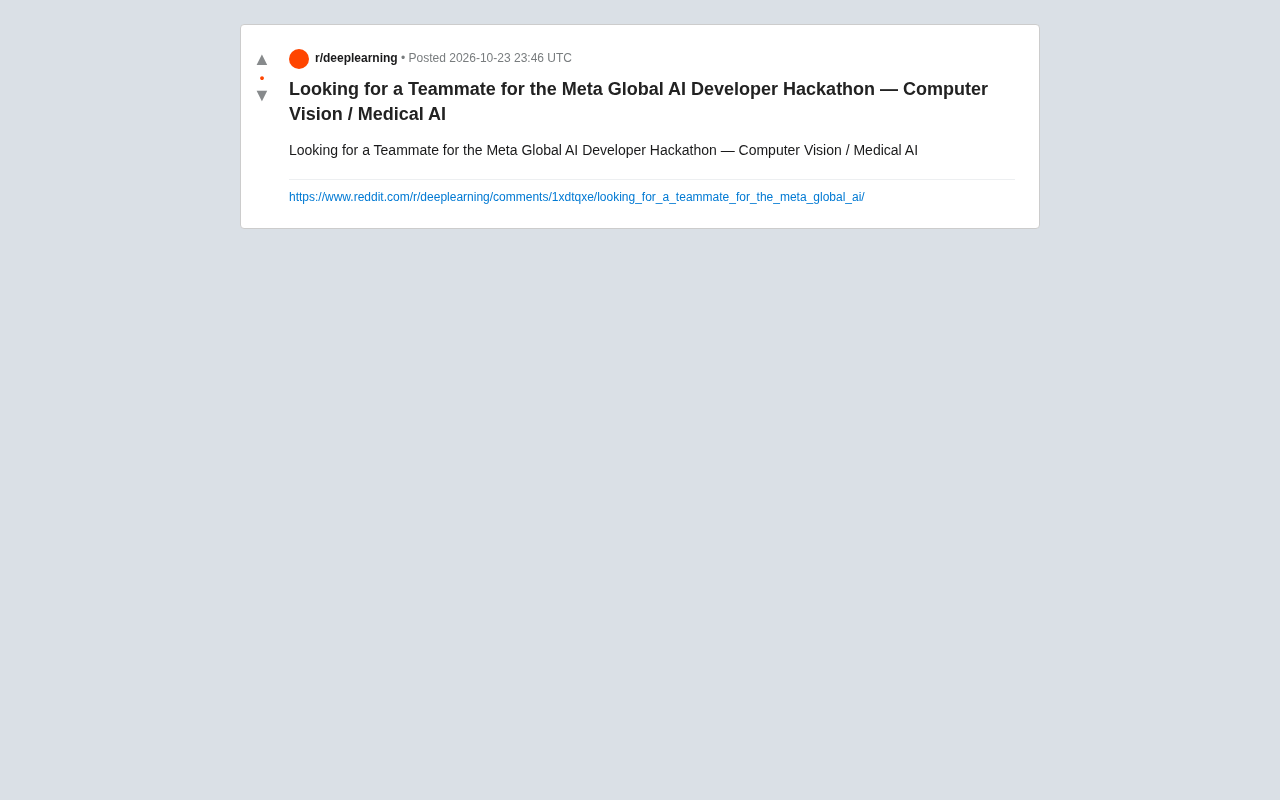
Teammate Wanted for Meta Global AI Developer Hackathon: Computer Vision & Medical AI
A Reddit developer seeks teammates for the Meta Global AI Developer Hackathon, focusing on computer vision and medical AI. This article analyzes the track logic, skills-complementarity needs, and topic selection strategy behind this teaming signal.
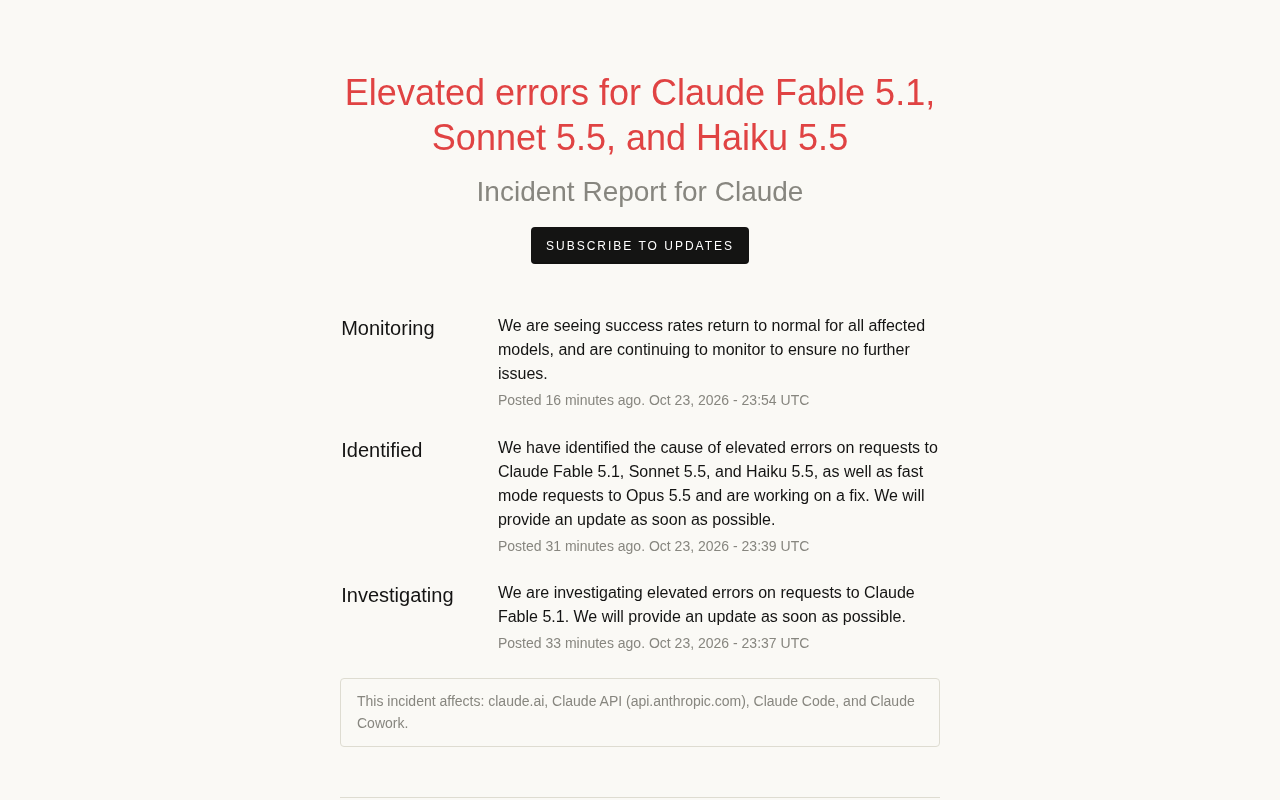
Multiple Claude Models Hit by Errors: A Postmortem of Fable 5.1, Sonnet 5.5, and Haiku 5.5
Claude Fable 5.1, Sonnet 5.5, Haiku 5.5, and Opus 5.5 fast mode saw elevated errors; Anthropic identified and resolved the issue in 17 minutes. This postmortem covers the timeline, the technical reasons for the multi-model cascading failure, and practical lessons for retry and degradation strategies.