Mistral Large 4 (LeChonk): Europe Returns to the Front Lines of Open-Source AI

Mistral's 1T-parameter open-weight model puts Europe back in the AI race via cybersecurity strength and compliance advantages.
French AI company Mistral has released Mistral Large 4, a 1 trillion-parameter MoE open-weight model that activates only 49B parameters per inference, claiming the top spot among open-weight models outside China. Benchmarks show middling overall rankings but genuine frontier-level performance in cybersecurity (CTF Speedrun). Real-world testing reveals concise but sycophantic responses, and a ChatGPT clone task where it was outperformed by Kimi K3. Its true value lies in European sovereignty: trained entirely in European data centers with ~3,800 GPUs and fully EU AI Act-compliant, making it highly attractive for European enterprises. Weights release expected October 31, backed by a €3B Series D.
Europe appears to be back at the AI table, and Mistral is at the center of that resurgence. The French company has released Mistral Large 4, codenamed "LeChonk" (French slang for "big boy"), claiming it to be the strongest open-weight model outside of China — meaning the best among all open-source models from Europe and the US combined.
That's an enticing claim, but it warrants some sober perspective: the strongest closed-source models still come from the US, and the strongest open-weight models still come from China. Europe isn't leading that race. That said, for a European company, this is still a genuinely impressive move.
Core Specs and Pricing
Mistral Large 4 uses a Mixture of Experts (MoE) architecture with a total of 1 trillion parameters, but only approximately 49 billion are activated per token generation. This means the model requires substantial VRAM to load all weights, but the actual inference computation is far lighter than a dense model of equivalent scale — resulting in faster inference speeds.
One caveat: while it's described as an open-weight model, the weights aren't available for download yet. The Hugging Face page shows a countdown timer, with weights expected to drop around October 31. This is actually common in open-source model releases — announcing open-source doesn't mean you can download it on day one.
On pricing, input costs approximately $1.36 per million tokens and output approximately $4.18 per million tokens. Given its actual performance, this isn't cheap — it could even be considered on the pricier side.
The Mixture of Experts (MoE) architecture is one of the dominant approaches in large model development today. The core idea is to split the model into multiple "expert" sub-networks, with a lightweight "router" dynamically selecting a small subset of experts to handle each input — rather than activating all parameters. The benefit: total parameter count (representing knowledge capacity) can be enormous, while the actual compute per inference (FLOPs) only corresponds to the activated parameters. Mistral Large 4's 1 trillion total vs. 49 billion active parameters means each inference consumes roughly 1/20th the compute of a dense model at equivalent scale. This design offers clear advantages in inference speed and cost, but at the expense of needing all 1 trillion parameter weights loaded into VRAM simultaneously — placing extremely high memory demands on deployment hardware. Meta's Llama 3.1 series, Google's Gemini 1.5, and the DeepSeekAd series all employ similar MoE design philosophies.
Benchmarks: Cybersecurity Is the Real Strength
The most eye-catching showcase on the official page is CTF Speedrun — a speed comparison across 19 cybersecurity challenges. In the accelerated playback, Mistral Large 4 solves challenges the fastest and completes 18 out of 19, slightly outpacing second place.
Cybersecurity is arguably the only domain where this model can go head-to-head with frontier closed-source models like Opus or the GPT series. In Mistral's own published benchmarks, it falls behind Kimi K3 on Deep Software Engineering but edges out GLM 5.3; on Terminal Bench it's above Kimi K3 but below GLM 5.3; while on Cyber-related benchmarks it matches GLM 5.3 Flash and stands as a genuine frontrunner.
That said, benchmark data on model launch pages tends to be carefully curated to highlight strengths — that's standard marketing practice, not evidence of manipulation. A more neutral reference is data from Artificial Analysis. In their overall intelligence rankings, Mistral Large 4 Preview lands in a respectable middle position — nothing breathtaking, but legitimately the strongest open-weight model outside of China.
Worth noting is the word "Preview" in the name — it signals that training isn't complete, with reinforcement learning still in progress, meaning final scores could theoretically improve.
On Arena AI's blind ELO rankings (coding and web development), Claude Opus 5.5 Max sits firmly at the top. Mistral Large 4 ranks 45th, which sounds modest, but its performance roughly corresponds to Opus 4.8, Sonnet 4.6, or GPT-5.6 level — and achieving that with a European open-source model carries significant weight for European technological sovereignty.
CTF (Capture The Flag) is the standard competitive format in cybersecurity, where participants must use reverse engineering, vulnerability exploitation, cryptography, web penetration, and similar techniques to find hidden "flag" strings within a time limit. CTF Speedrun as a benchmark measures a model's ability to independently complete these security challenges under time pressure, offering a direct gauge of the model's mastery of low-level system knowledge, code debugging, and vulnerability analysis. Unlike code generation or mathematical reasoning benchmarks, CTF challenges typically require multi-step logical chains and precise judgment about edge cases — placing higher demands on the model's practical "hands-on" capabilities. Mistral's advantage here may be related to training data containing significant material from European cybersecurity communities, or may reflect specific optimization for structured problem decomposition.
Sovereignty Matters More Than Raw Performance
No point sugar-coating it: Mistral Large 4 is not a pivotal player at the frontier, and even after reinforcement learning training completes, it likely won't crack the top 10 or even top 15. But its real value lies in the dimension of "European sovereignty."
This model was trained entirely in European data centers (hardware is still American — Nvidia), and it was accomplished with only approximately 3,800 GPUs — far fewer than what most other companies can mobilize. That in itself demonstrates the Mistral team's technical caliber.
More critically, there's a compliance advantage. For European companies handling sensitive data, using a model trained in European data centers under European regulation (including the AI Act) is clearly the safer compliance choice. As long as this model is close enough to usable, European enterprises are likely to adopt it at scale.
Mistral has also made clear this is just the first milestone on a roadmap backed by their €3 billion Series D round, signaling continued compute expansion and additional model releases. Combined with recent releases from ALF Alpha (Germany's Calibri), Black Forest Labs (Flux 3), UK's 11v4, and others, the entire European AI ecosystem is visibly heating up.
The EU AI Act came into force in 2024 as the world's first comprehensive AI regulation. It classifies AI systems by risk level, imposing mandatory requirements around data governance, transparency, and human oversight for high-risk applications (such as healthcare, law enforcement, and critical infrastructure). It also establishes additional compliance obligations for General Purpose AI (GPAI) models offered in the EU market, including submitting technical documentation, respecting copyright, and disclosing training data summaries. For European companies, using a model trained in European data centers and operated by a European company not only makes it easier to satisfy data sovereignty requirements and cross-border transfer restrictions (such as GDPR prohibitions on transferring data to third countries), but also keeps audit and accountability chains clean. This is precisely the business logic behind Mistral positioning "European-native training" as a core selling point — reduced compliance costs are a real and concrete competitive advantage.
Real-World Testing: Wordy, But Not Bloated
Beyond the benchmarks, the video author also evaluated the model using a custom "Neural Yap Benchmark" (measuring how much a model "yaps," currently still at alpha v0.1). The test scores across four dimensions: filler phrases (e.g., "You're right," "You have reason to question this"), typographic symbols (AI's characteristic em-dashes, etc.), formatting density (Markdown headings, emojis, etc.), and response length — lower scores mean more concise output.
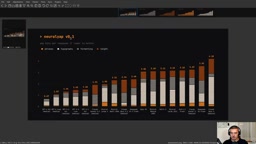
Mistral Large 4 scores low on overall yap, noticeably better than previous Mistral generations. Its main deductions come from typographic symbols — heavy use of AI-style em-dashes — but that's arguably the most benign category. On response length, it's actually one of the most concise models in the test.
The issue is filler phrases: Mistral Large 4 frequently deploys lines like "You're right, my previous solution was over-engineered, let me reconsider" — second only to DeepSeek V4 Flash in this regard. The author confirmed this in a real-world project test (a deliberately misleading question about a data model change) — the model produced a lengthy analysis laced with obvious sycophantic phrasing, a pattern the author finds particularly off-putting.
Building a ChatGPT Clone: Head-to-Head Test
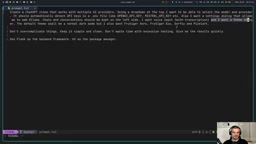
The author also tasked multiple models with building a ChatGPT clone using the same complex prompt — one supporting multiple AI providers, voice input, and multi-theme switching — comparing DeepSeek V4, GLM 5.3, GPT-6 Soul, Kimi K3, Mistral Large 4, and Opus 5.5.
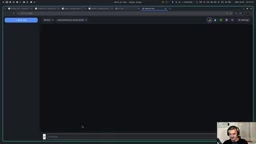
The results were surprising: Kimi K3 came out on top, with excellent design, functional real-time voice input, and solid renditions of each theme (Frutiger Aero, Dorfic, pixel style). Meanwhile, the author's usual favorite Opus 5.5 stumbled badly — poor interface, no model selection, basic conversation broke down entirely, and voice input failed.
Mistral Large 4's output was mediocre — icons used instead of text, an unattractive microphone button, the Dorfic theme wasn't quite right — landing somewhere between DeepSeek and GLM 5.3, better than the latter but not close to Kimi K3.
Conclusion
Taken together, Mistral Large 4 doesn't redefine the performance ceiling — its position on leaderboards is decidedly limited. But for Europe, this is a meaningful win: a fully European-trained open-source model achieved with fewer GPUs than the competition, reaching a standard that would have been considered top-tier just a few months ago, with genuine frontier-level performance in the cybersecurity vertical.
With weights set to drop soon, a technical report potentially incoming, and €3 billion in funding backing the roadmap, both Mistral and the broader European AI ecosystem are worth watching closely. Europe — at least for now — is back at the table.
Related articles

AI Digital Twin in Action: Using DOT to Automatically Track Bugs and User Feedback
DOTS engineers demonstrate how AI digital twin DOT collects cross-platform user feedback, categorizes issue themes, opens threads to investigate bug root causes, and submits PRs—showcasing a complete AI agent workflow for defect triage with auditable design.

Why Transistors Are No Longer Flat: The Evolution from Planar to Gate-All-Around
Transistor evolution from planar to FinFET to gate-all-around: why gates went from three-sided to four-sided wrapping to suppress short-channel effects and leakage current, extending Moore's Law.

Swarm Intelligence = a Single RL Agent? A Proof of Multi-Armed Bandit Equivalence
A paper proves that collective decision-making through local imitation in swarms is mathematically equivalent to single-agent reinforcement learning: N blind imitators act as N parallel environment samples, with an effective learning rate of 1/N. This article explains the derivation and implications of the Maynard-Cross Learning algorithm.