MIT Course Revealed: How to Make Almost Anything

MIT's legendary course How to Make (Almost) Anything lowers the barrier to making through digital fabrication and open-source tools, driving personal fabrication and the global Fab Lab network.
The article centers on the course "How to Make (Almost) Anything," founded by Professor Neil Gershenfeld of the MIT Media Lab, and introduces its core philosophy of "learning by doing": enabling students with almost no engineering background to design and build functional objects using 3D printers, laser cutters, CNC machines, and programming tools. Behind the course lies the grand vision of "personal fabrication"—digital fabrication is undergoing a transformation similar to computing's shift from mainframes to personal computers, with falling prices and rising precision enabling individuals and small teams to achieve prototypes and small-batch production at low cost. The article also discusses the global Fab Lab network, the open-source toolchain (Arduino, Processing, Fusion 360), and the maker community ecosystem, and notes that in the age of AI and automation, hands-on capability and systems thinking remain irreplaceable. Finally, it offers five steps for getting started with digital fabrication.
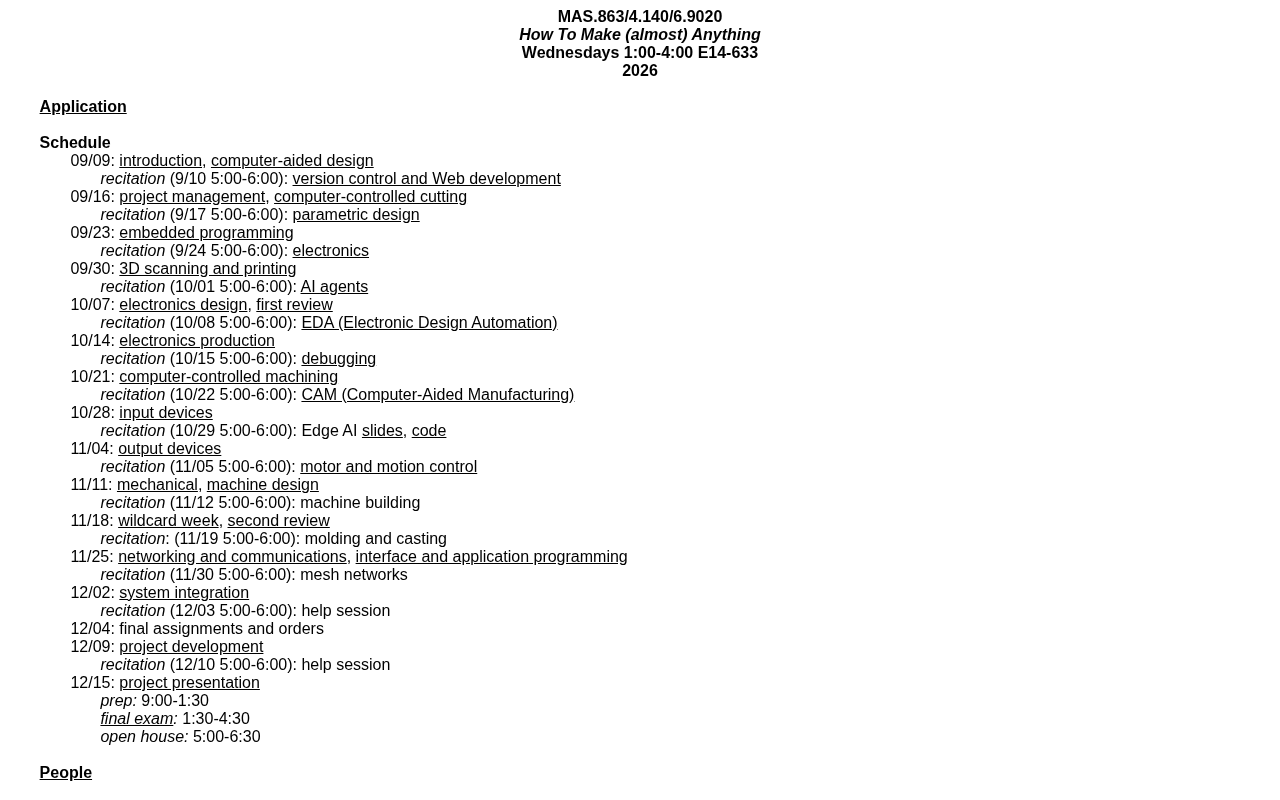
A post titled "How to make almost anything" sparked widespread discussion on Hacker News, gathering 240 upvotes and 41 comments. The title points to a legendary MIT (Massachusetts Institute of Technology) course—MAS.863, commonly known as "How to Make (Almost) Anything." The course's official site (pub.cba.mit.edu/863.26/site/) showcases its philosophy, projects, and outcomes. Although the post itself is just a link, the digital fabrication education philosophy it represents is well worth exploring in depth.
Course Origins and Core Philosophy
"How to Make (Almost) Anything" was founded by Professor Neil Gershenfeld of the MIT Media Lab. The course's core idea is to enable students with almost no engineering background to design and build functional objects by providing digital fabrication tools (such as 3D printers, laser cutters, CNC machines, etc.) and programming skills. This breaks down the barriers of traditional manufacturing, bringing "making" from the factory floor into personal workshops and even homes.
The course emphasizes "learning by doing." Students complete a small project each week and finish with a final project they can showcase. This intensive, practice-oriented teaching model has cultivated a large number of interdisciplinary innovators.
Neil Gershenfeld is a physicist and computer scientist at the MIT Media Lab. He first offered this course in 1998, originally titled "How to Make (Almost) Anything," to a small group of students. What truly stands out about the course is its "anti-elitist" teaching assumption: students do not need prior coursework in mechanical engineering or electronics. Instead, they directly use laser cutters, 3D printers, microcontrollers, and other tools, gradually mastering design, machining, programming, and system integration through weekly assignments. Gershenfeld later distilled the course experience into the theoretical foundation of the "maker" movement and drove the global spread of Fab Labs. The "MAS" in the course number MAS.863 stands for Media Arts and Sciences, reflecting its interdisciplinary positioning.
Digital Fabrication and Personal Fabrication
Behind the course lies the grand vision of "personal fabrication." In related writings, Gershenfeld points out that digital fabrication technology is undergoing a transformation similar to computing's shift from mainframes to personal computers. Today, tools such as 3D printing, laser cutting, and CNC machining are steadily dropping in price while improving in precision and ease of use, enabling individuals and small teams to produce prototypes and even small-batch production at low cost.
This trend has far-reaching implications for entrepreneurship, education, and research. Entrepreneurs can quickly validate ideas, educators can make abstract concepts tangible, and researchers can customize experimental equipment. The discussion on Hacker News also reflects the tech community's strong interest in this direction—commenters may have shared their experiences with open-source hardware, Fab Labs (maker spaces), and related tools.
Fab Lab (Fabrication Laboratory) is a standardized digital fabrication workshop promoted by Gershenfeld's team outside MIT, typically equipped with laser cutters, CNC milling machines, 3D printers, vinyl cutters, and electronics workstations. Its core principles include: openness to the community, shared equipment and knowledge, and adherence to the Fab Charter (a community convention on use, safety, and knowledge sharing). The global Fab Lab network offers remote instruction similar to the MIT course through Fab Academy, where participants complete weekly assignments at their local Fab Lab and receive certification. This "central course + distributed nodes" model extends digital fabrication education beyond a few universities to community centers, libraries, and small and medium-sized enterprises.
Open-Source Tools and Community Ecosystem
This MIT course does not exist in isolation. It spawned the global Fab Lab network—community workshops equipped with digital fabrication equipment, distributed across many countries and regions. Fab Labs generally follow open-source principles, sharing equipment operation guides, project code, and design files. This open, collaborative model dramatically lowers the barrier to innovation.
At the software level, tools commonly used in the course include Arduino (an open-source electronics prototyping platform), Processing (a programming environment), Fusion 360 (CAD software), and others. Most of these tools offer free or educational versions, further promoting the spread of knowledge. Community members exchange experience through forums, GitHub, and local meetups, forming a vibrant maker culture.
Arduino is an open-source electronics prototyping platform comprising hardware (microcontroller-based circuit boards) and software (a simplified C/C++ programming environment). Its emergence greatly lowered the barrier to electronic interaction design, enabling students without an electronics engineering background to complete tasks such as sensor reading and motor control within hours. Processing is an open-source programming environment for visual arts and design, skilled at rapidly generating graphics, animations, and interactive interfaces, and is often used together with Arduino. Fusion 360 is a cloud-based CAD/CAM software offered by Autodesk, free in its education edition, supporting parametric modeling and direct manufacturing output. Together, the three form a closed-loop toolchain of "design—program—fabricate" and are the most common combination in MIT courses and maker spaces worldwide.
Implications for the Age of AI and Automation
With the rapid development of AI technology, the manufacturing field is also undergoing intelligent transformation. Generative design uses algorithms to explore optimal structures, machine learning assists material selection, and robots automate assembly tasks. However, the "hands-on capability" and "systems thinking" emphasized by the MIT course remain irreplaceable in the AI era. Understanding the constraints of the physical world, material properties, and manufacturing processes is a prerequisite for effectively using AI tools.
Moreover, the ability to make "almost anything" advocated by the course also provides a foundation for AI hardware innovation. For example, custom sensors, robot prototypes, and experimental setups can all be quickly realized through digital fabrication. This ability to innovate by combining software and hardware is precisely what is scarce in today's tech industry.
How to Start Your Making Journey
For interested readers, you can start with the following steps:
- Learn the basic tools: Master at least one 3D modeling software (such as FreeCAD or Fusion 360) and one programming language (such as Python).
- Use community resources: Join a local Fab Lab or maker space and attend introductory workshops.
- Start with simple projects: For example, make a phone stand, an LED light, or a small robot.
- Refer to open-source projects: Look for tutorials and design files on platforms such as GitHub and Instructables.
- Keep iterating: Making is a process of continuous trial and error; record every failure and improvement.
The MIT course website (pub.cba.mit.edu/863.26/site/) provides the syllabus, project examples, and resource links, making it an excellent starting point for learning. The discussion on Hacker News is also worth reading, as it may contain practical advice from former students and manufacturing enthusiasts.
Digital fabrication is reshaping the way we interact with the material world. Whether for entrepreneurship, education, or personal interest, mastering the ability to "make almost anything" will open up new possibilities for you.
One-line Summary
MIT's legendary course How to Make (Almost) Anything lowers the barrier to making through digital fabrication and open-source tools, driving personal fabrication and the global Fab Lab network.
Paragraph Summary
The article centers on the course "How to Make (Almost) Anything," founded by Professor Neil Gershenfeld of the MIT Media Lab, and introduces its core philosophy of "learning by doing": enabling students with almost no engineering background to design and build functional objects using 3D printers, laser cutters, CNC machines, and programming tools. Behind the course lies the grand vision of "personal fabrication"—digital fabrication is undergoing a transformation similar to computing's shift from mainframes to personal computers, with falling prices and rising precision enabling individuals and small teams to achieve prototypes and small-batch production at low cost. The article also discusses the global Fab Lab network, the open-source toolchain (Arduino, Processing, Fusion 360), and the maker community ecosystem, and notes that in the age of AI and automation, hands-on capability and systems thinking remain irreplaceable. Finally, it offers five steps for getting started with digital fabrication.
Related articles
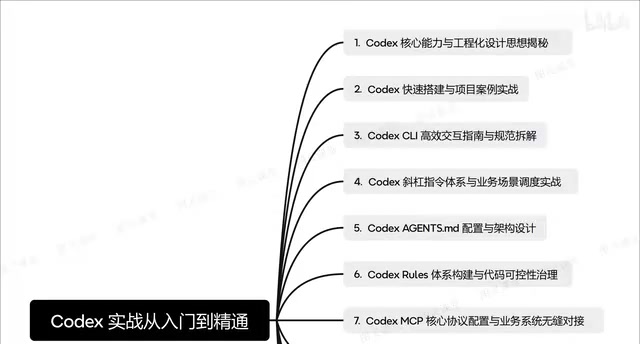
Codex in Practice: From Installation and Configuration to Multi-Agent Collaboration
Based on a Bilibili Codex course overview, this guide maps the full path of AI coding assistants from installation and agents.md context design to CLI commands, MCP integration, and multi-agent collaboration.
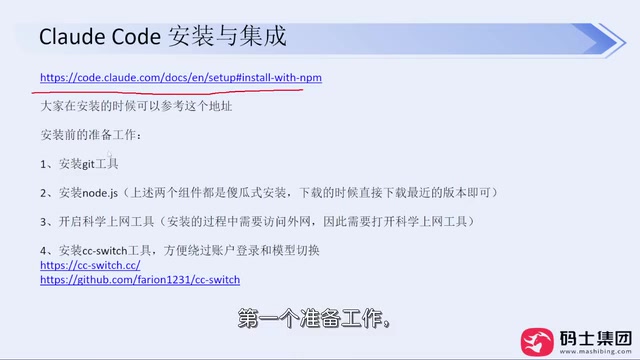
Claude Code Installation and Model Switching Guide for Users in China
How can developers in China install Claude Code reliably? This article compiles a Bilibili creator's hands-on solution: install via NPM, skip official login, use CC Switch to configure API Keys and freely switch between DeepSeek, Kimi, and other models to avoid account bans.
AI Supply Chain Security: What Canary Tokens Reveal
Starting from a Hacker News discussion, this article analyzes the role of canary tokens in AI supply chain security: how they detect abnormal access to model weights, training data, and credentials, as well as coverage blind spots and cost constraints during implementation.