Modaal for Android: One Project, AI-Generated Native Swift & Kotlin Apps
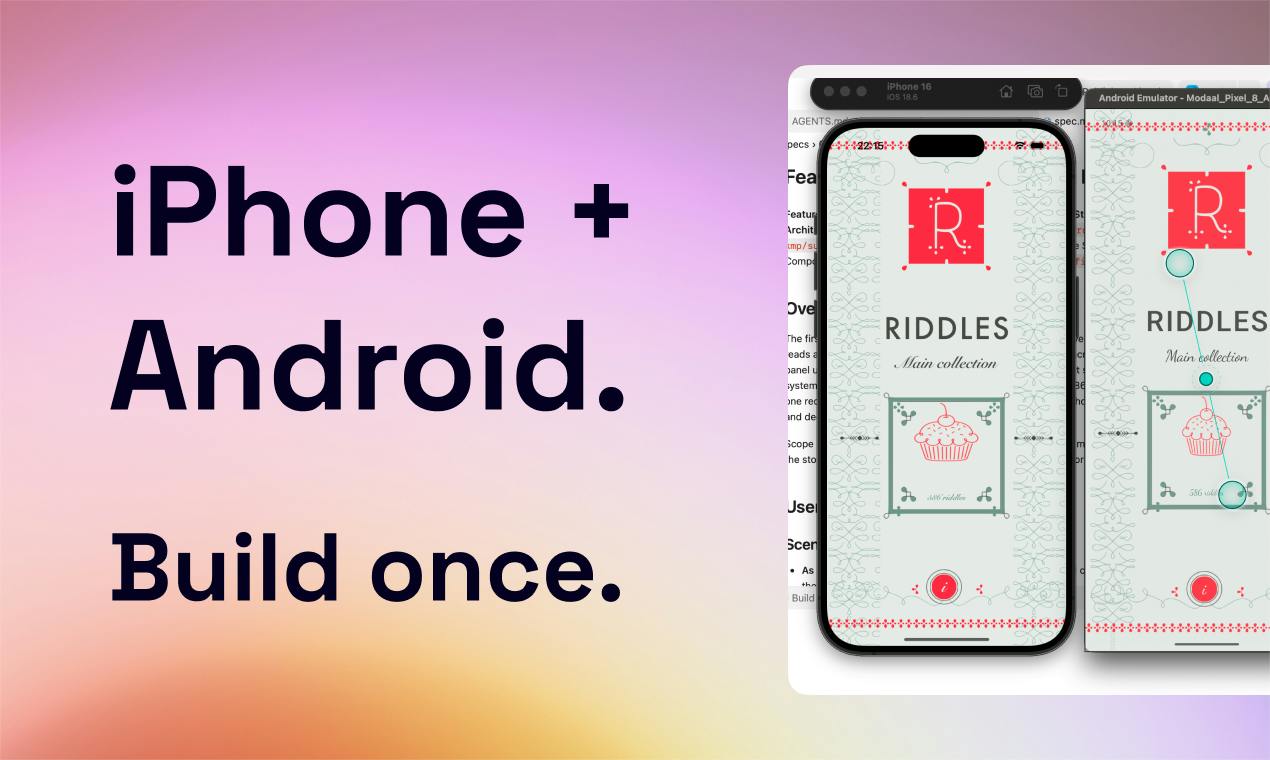
Modaal uses an AI agent to generate native Swift and Kotlin code from one project, sharing logic not UI.
Modaal for Android takes a different approach from React Native and Flutter: instead of sharing UI, it shares business logic, using an AI agent to generate Swift/SwiftUI code for iOS and Kotlin/Jetpack Compose code for Android from the same project. Users who build an iPhone app with Modaal can extend it to Android without changing any logic code, with the build process verifying that both platforms behave identically. Positioning itself between no-code wrapper solutions and high-barrier professional native development, it launched on Product Hunt with 119 upvotes and ranked 5th on its launch day. The key open question is whether AI-generated native code quality holds up in practice — especially in scenarios involving platform-specific permission models, lifecycle differences, and other areas where "shared logic" is hardest to maintain.
Cross-platform development has long forced a tradeoff: either maintain a single codebase with React Native or Flutter and sacrifice some native experience, or maintain two separate native codebases for iOS and Android and pay the cost of duplication. Modaal for Android offers a different path — sharing logic rather than UI, and letting an AI agent generate truly native code for each platform separately.
Shared Logic, Not Shared UI
Modaal's core proposition is a direct rebuttal to traditional cross-platform approaches. As its Product Hunt description puts it: "Instead of one React Native codebase painting the same screen on two phones, Modaal shares logic — not UI."
This means the AI agent generates real Swift/SwiftUI code for iPhone and real Kotlin with Jetpack Compose code for Android — both from the same project. The intent is clear: preserve the performance and experience of each platform's native UI framework, while eliminating duplicated work through shared business logic.
This is a noteworthy approach to the "last mile" problem that has long plagued cross-platform solutions — the difficulty of making a universal framework perfectly conform to each platform's design conventions and native controls. It leaves the differences to the native tools each platform does best, unifying only at the logic layer.
Swift/SwiftUI is Apple's official iOS/macOS development language and UI framework combo. Since 2019, it has gradually replaced Objective-C as the mainstream choice for Apple platforms, offering declarative layouts and native controls deeply integrated with the system. Kotlin and Jetpack Compose are the Android counterparts — Kotlin was designated by Google as the preferred official Android language in 2017, and Jetpack Compose is Google's declarative UI framework officially released in 2021, sharing the same programming paradigm. The two frameworks share similar design philosophies, but differ fundamentally in their APIs, lifecycle management, and platform conventions — which is exactly why traditional cross-platform solutions struggle to feel truly "native" on both. By outputting these two native codebases directly instead of adding yet another abstraction layer on top of them, Modaal theoretically allows generated apps to benefit from each platform's performance optimizations, system-level animations, and latest API support.
From iPhone App to Dual-Platform Launch
Modaal's flagship use case is seamless expansion. According to its official description, anyone who has built an iPhone app with Modaal can add an Android version directly, "without changing a single line of logic code."
The product also emphasizes several promises aimed at developers: no credit meters and no rebuild. These selling points directly address common pain points with vibe coding and no-code tools — cost unpredictability from usage-based billing, and the development friction of having to start from scratch when switching platforms.
More critically, it's the approach to consistency that stands out. The description mentions that "the build proves both behave the same." If this verification mechanism works reliably, it strikes a balance between diverging native codebases and behavioral consistency — precisely the area most prone to bugs when maintaining two separate codebases.
Positioning and Market Reception
Modaal for Android is categorized under Android, No-Code, and Vibe coding, targeting creators who want to ship apps quickly without compromising on native experience. It received 119 upvotes and 17 comments on Product Hunt, ranking 5th on its launch day — indicating a meaningful level of community interest.
In terms of product logic, Modaal is attempting to occupy a specific niche: between pure no-code platforms (which often produce wrapper or hybrid apps) and professional native development (which carries high barriers and costs). It uses an AI agent to handle code generation while outputting maintainable native code — a more conceptually compelling approach than simply wrapping a WebView.
Questions Worth Watching
Beyond the concept, Modaal's real-world effectiveness remains to be proven. The quality of AI-generated Swift and Kotlin code, the reliability of behavioral consistency verification under complex business logic, and the maintainability and readability of the generated code — these are all critical factors in determining whether it can genuinely replace traditional development workflows.
"Without changing a single line of logic" is a highly attractive promise, but cross-platform differences often hide in the details. Permission models, lifecycle management, and platform-specific API handling can all create real resistance to the ideal of "shared logic." For developers considering trying it, it's worth starting with relatively simple apps to test the quality of native code output and cross-platform consistency before committing more complex projects.
The challenge of "shared logic" in cross-platform development stems from structural differences in the underlying runtime models of each platform. iOS uses ARC (Automatic Reference Counting) for memory management, with app lifecycle driven by UIApplicationDelegate/SceneDelegate. Android is built around Activity/Fragment, with more complex lifecycle callbacks and platform-specific scenarios like BackStack and Configuration Change handling. Permission models are also entirely separate: Android's runtime permission request flow differs fundamentally from iOS's Info.plist declaration mechanism, and the implementation of push notifications, background tasks, file access, and other features varies significantly. These differences mean the boundaries of "business logic" are themselves difficult to define precisely — the closer logic gets to system capabilities, the harder it becomes to truly reuse across both platforms. This is precisely the challenge an AI agent must accurately identify and handle separately during code generation.
Overall, Modaal for Android represents a new approach to AI-assisted cross-platform development: rather than pursuing "write once, run everywhere" UI reuse, it uses AI to generate idiomatic native implementations for each platform. If this direction proves viable, it could redefine how small teams and indie developers approach multi-platform expansion.
Related articles
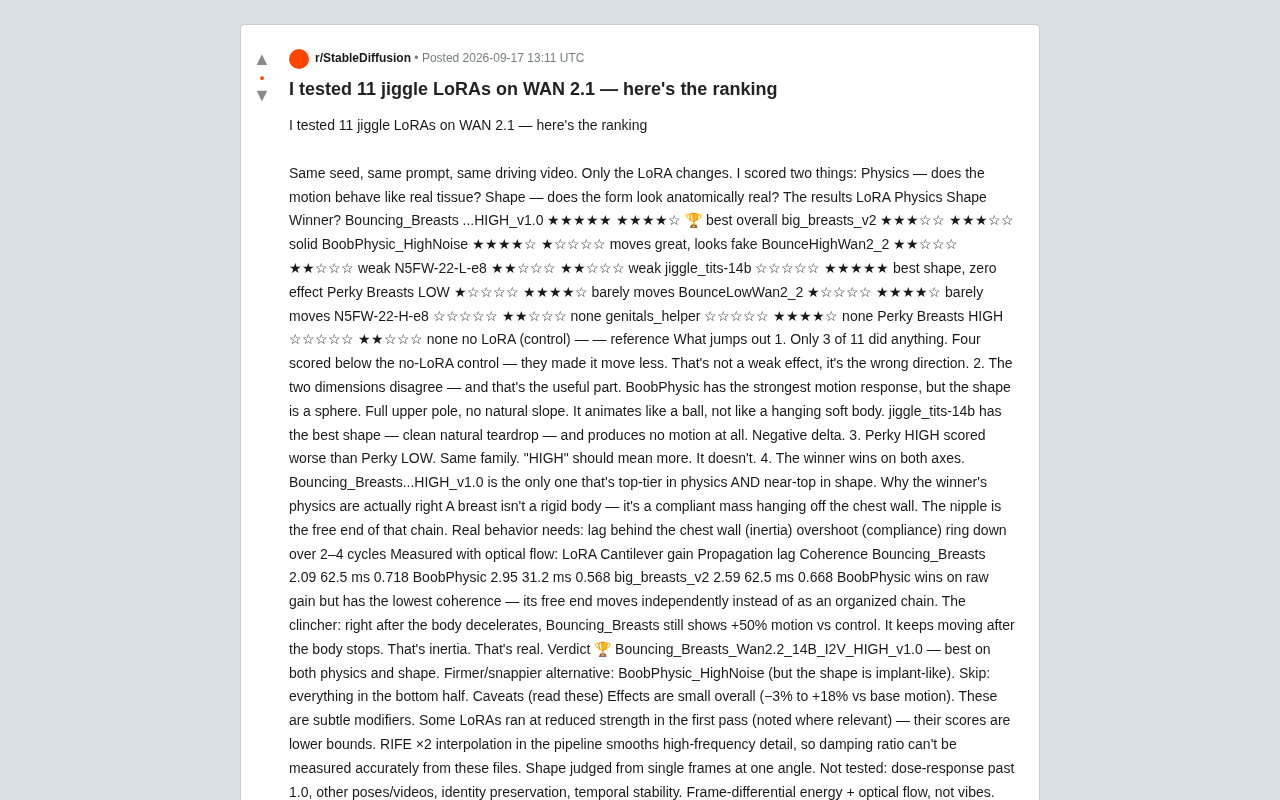
WAN 2.1 Physics Motion LoRA Benchmark: Rankings and Methodology for 11 Models Tested
A Reddit user benchmarked 11 physics-motion LoRAs on WAN 2.1 using optical flow analysis. Only 3 worked meaningfully; 4 scored below the no-LoRA baseline. Full rankings and methodology inside.
Lucid Partners with Bolt to Target European Robotaxi Market
Lucid Motors has signed a letter of intent with European mobility platform Bolt to explore Robotaxi services in Europe, though no vehicle orders have been placed yet.
AI Assistants Enter the "Phone Call" Era: Instinct and Meta Muse Add Voice Task Execution
AI assistants Instinct and Meta Muse now make phone calls on your behalf — booking restaurants, canceling subscriptions — marking a leap from chat tools to real-world agents.