Mother Gets Suspended Sentence for Letting 5-Year-Old Walk Alone: Overreach or Child Protection?
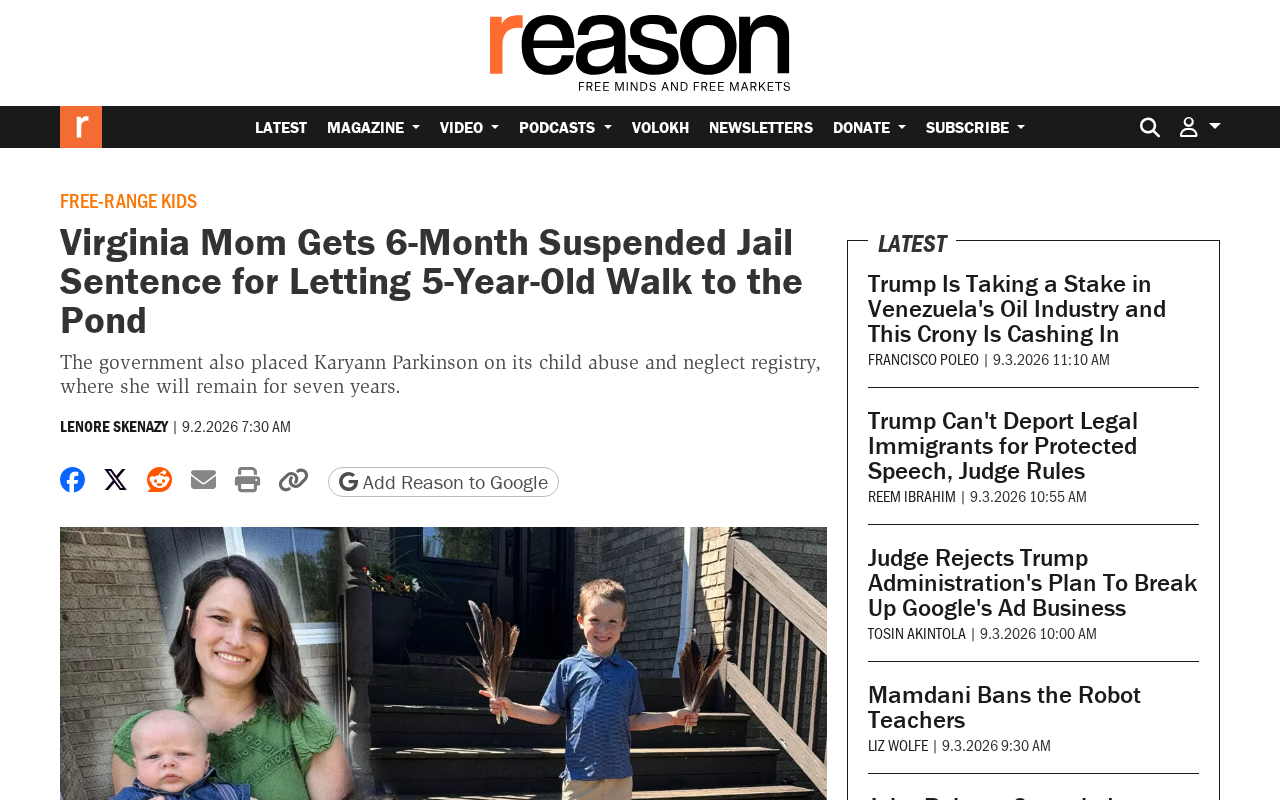
A mom's suspended sentence for letting her child walk alone ignites debate on overregulation vs. child safety.
A mother was sentenced to six months' probation for allowing her 5-year-old to walk to a nearby pond alone, sparking heated debate on Hacker News about the boundaries of state intervention in family life. The discussion highlights the growing gap between perceived and actual child safety risks, the rise of helicopter parenting fueled by media fear, and the free-range parenting movement pushing back through legislation.
The Incident: Criminal Punishment for Letting a Child Walk Alone
Recently, a post on Hacker News titled "Mom Gets 6-Mo Suspended Sentence for Letting 5-Year-Old Walk to the Pond" sparked widespread discussion, garnering 140 upvotes and over 124 comments. Hacker News (HN) is a social news website operated by Y Combinator, the renowned Silicon Valley startup accelerator, founded in 2007. Its core audience consists of programmers, entrepreneurs, and tech investors. While the platform is best known for technical content, its user base is generally characterized by strong systems thinking, a preference for quantitative analysis, and a deep affinity for personal freedom and decentralization. Topics involving overregulation and the boundaries of state power frequently trigger in-depth discussions there. This story resonated so strongly in such a community precisely because it touches on an issue far beyond parenting: modern society's rapidly declining tolerance for "risk," and the question of where the boundary lies for state power intervening in the private domain of family life.
According to the post, a mother was sentenced to six months of probation simply for allowing her 5-year-old child to walk alone to a nearby pond. To many, the ruling seemed almost absurd — just a few decades ago, children playing and exploring independently in their neighborhoods was an utterly ordinary part of childhood. Today, that same behavior can lead to criminal charges.
Why This Parenting Case Resonated in a Tech Community
Interestingly, this news appeared on Hacker News, a technology-oriented platform, rather than a traditional parenting or social news site. This "crossover" virality itself speaks to the universality of the issue. Tech professionals tend to have a natural sensitivity to "risk quantification" and "overregulation" — their daily work involves extensive probability assessment, cost-benefit analysis, and systems thinking. When a legal ruling clearly diverges from the level of real-world risk supported by data, this kind of "systemic mismatch" is particularly glaring to them.
The Vast Gulf Between Risk Perception and Actual Risk
Many commenters pointed out that the core dilemma facing modern parents is the enormous gap between risk perception and actual risk. Statistics consistently show that the probability of extreme events like child abduction by strangers is extremely low and has been declining steadily over the past several decades. Yet the 24-hour news cycle and the amplifying effect of social media make every rare tragedy feel like it's happening next door, distorting the public's judgment of everyday risk.
The 24-hour news cycle refers to the model of round-the-clock, uninterrupted news broadcasting that originated with CNN's founding in 1980. Under this model, media outlets need to continuously fill airtime, so they tend to repeatedly broadcast events that provoke strong emotional reactions — especially extreme cases involving child safety. Social media further amplifies this effect: a single incident occurring thousands of miles away can reach millions of parents within hours through algorithmic recommendations. The "Availability Heuristic" theory in communication studies explains that people judge the probability of an event based on how easily similar examples come to mind. When tragic events receive repeated exposure, people dramatically overestimate their actual frequency, leading to systematic risk misjudgment.
This "risk distortion" has fueled the rise of so-called Helicopter Parenting — parents constantly hovering over their children, depriving them of opportunities to explore independently, make mistakes, and build self-confidence. The term "helicopter parenting" was first mentioned by Haim Ginott in his 1969 book Between Parent & Teenager, and was later popularized by Foster Cline and Jim Fay in the 1990s. A substantial body of academic research has shown significant correlations between overprotective parenting and elevated childhood anxiety, diminished self-efficacy, and reduced independent problem-solving ability in adulthood. A longitudinal study published in Developmental Psychology in 2018 found that children who experienced over-controlling parenting at age 2 were more likely to exhibit emotional regulation difficulties by age 10. The prevalence of this parenting style is not purely a matter of personal choice — it is shaped by social normative pressure, media narratives, and the legal environment. And within this social atmosphere, the judicial system also tends to adopt a zero-tolerance stance toward any form of "letting go."
The Rise of the Free-Range Parenting Movement
This case brings to mind the Free-Range Parenting philosophy that has gained traction in Europe and the United States in recent years. Advocates of this approach argue that an appropriate degree of independence and autonomy is essential for children's psychological well-being and development.
The iconic figure of the free-range parenting movement is columnist Lenore Skenazy, who in 2008 was dubbed "America's Worst Mom" by the media after allowing her 9-year-old son to ride the New York City subway alone. She went on to found the "Free-Range Kids" website and the "Let Grow" nonprofit organization, advocating for legislative reform. In 2018, Utah became the first U.S. state to pass a "Free-Range Parenting Law," explicitly stating that allowing "sufficiently mature" children to walk to school alone, play in parks, or stay home by themselves does not constitute neglect. Texas, Oklahoma, Colorado, and other states have since passed similar legislation. The core logic of these laws is to distinguish between "reasonable independent activity" and "genuine neglect," preventing normal parenting judgments from falling within the scope of criminal prosecution. However, in jurisdictions where such legislation has not yet been enacted, parents still face the risk of criminal charges stemming from differences in cultural attitudes.
The Deeper Struggle Between Surveillance Culture and Family Autonomy
The Social Risks of Everyone Becoming a "Watchdog"
For a community concerned with privacy and tech ethics, this case raises yet another layer of concern: as societal anxiety about "safety" continues to escalate, it is often accompanied by pervasive surveillance and reporting culture. A single phone call from a neighbor or a photo snapped by a passerby can plunge an ordinary family into a legal quagmire. This shares a spiritual kinship with the long-running discussions in the tech world about "Surveillance Capitalism" and "data-driven governance."
"Surveillance Capitalism" is a concept systematically articulated by Harvard Business School professor Shoshana Zuboff in her 2019 book The Age of Surveillance Capitalism. The theory argues that large tech companies collect user behavioral data at massive scale, transforming human experience into predictable and tradable "behavioral surplus," thereby constructing a new kind of economic order. While this concept primarily targets data collection in the commercial sphere, its underlying logic — eliminating uncertainty through ubiquitous surveillance — shares a profound structural similarity with societal surveillance of family behavior. Within this framework, every citizen can inadvertently become a node in this social surveillance system, participating in the scrutiny of others' private parenting decisions through smartphone photos, social media posts, or reports to law enforcement.
When everyone becomes a potential watchdog, the foundation of social trust erodes. People no longer tend to interpret others' choices charitably, but instead default to worst-case assumptions when judging and intervening.
How to Balance Parental Decision-Making Rights and the State's Duty to Protect
A recurring debate in the comments focused on: How should the balance between parental autonomy and the state's obligation to protect children be struck? One side argues that parents know their own children and circumstances best, and should have the right to determine their parenting approach. The other side emphasizes that children, as a vulnerable group, require societal intervention to prevent potential harm.
This debate actually touches on a profound question of legal philosophy. In the American legal tradition, a parent's right to raise their children is regarded as a "fundamental liberty interest" protected by the Due Process Clause of the Fourteenth Amendment. The Supreme Court has affirmed this right in several landmark cases (such as Meyer v. Nebraska in 1923 and Troxel v. Granville in 2000). However, this right is not absolute — when there is substantive harm or neglect of a child, the state has the authority to intervene under the parens patriae doctrine. The crux of the issue is: how do we draw the line between "substantive harm" and "reasonable differences in parenting judgment"? In the absence of clear legislative guidance, this determination often falls to the subjective discretion of individual law enforcement officers or judges.
This debate has no easy answers. But the specific sentence of six months' probation left many feeling that the scales have tipped heavily toward overreach. When "letting a child walk alone" can constitute a crime, we must ask: is this truly protecting children, or punishing normal development?
Conclusion: Finding Balance Between Safety and Freedom
The reason this seemingly ordinary local news story resonated in a tech community is that it reflects a universal dilemma of modern society: in our obsessive pursuit of absolute safety, are we losing our tolerance for reasonable risk and our respect for individual autonomy?
From a risk quantification perspective, this is a clearly disproportionate ruling. From a social governance perspective, it is yet another example of surveillance culture and overregulation. Regardless of the lens through which we examine it, it reminds us that a healthy society must both protect the vulnerable and preserve adequate space for individual freedom of choice. True child development has always been accompanied by appropriate risk and trust.
Related articles

Perplexity Hybrid Compute Tested: Privacy Data Never Leaves the Mac
Perplexity Hybrid Compute tested: how PrivacyGate intercepts sensitive data, how local and cloud models divide work, model differences on 16GB vs 32GB Macs, and privacy protection in real scenarios like bank statements and medical records.

Big Fat Fish Roasts Mainstream LLMs at Home and Abroad: Doubao Takes the Crown, DeepSeek Tied for First
Bilibili creator Big Fat Fish roasts mainstream LLMs: Doubao tops for emotional value, DeepSeek ties first for open-source value, with ERNIE, Hailuo, Yuanbao, Kimi, Qwen, Kling, Claude, Gemini, and Grok each branded with a distinct persona.
How to Truly Test AI Agents Before Production? A Practical Testing and Monitoring Framework
BotGage founder Pramin Pradeep shares a three-step framework for testing AI Agents before production: Agent registration visibility, red teaming, and production observability — plus a real case cutting QA costs from $180K to $80K and an analysis of IT roles shifting to Agent supervisors.