Motorola Razr Swarovski Edition: The Retro Flip Phone Makes a Sparkling Comeback

Motorola's Swarovski Razr is a $900 crystal-studded retro flip phone built for personality over performance.
Motorola has launched a Swarovski special edition Razr 70 (Razr 2026) featuring 35 hand-set crystals, a 32-facet hinge crystal, and quilted leather-style finish that evokes mid-2000s flip phone nostalgia. Hardware stays true to the standard spec — 6.9-inch foldable OLED, 3.6-inch cover screen, and 4,800mAh battery — with no performance boost from the bling. At ~$900 in the US (with a clear case included in some markets), the price is surprisingly restrained for a luxury collaboration. In a sea of identical black slabs, this phone's value lies in self-expression rather than spec-sheet competition.
Motorola has launched a foldable flip phone encrusted with Swarovski crystals — and the most surprising part might be that the price ends up being the least outrageous thing about it. Known as the Razr 70 (or Razr 2026 in some markets), this Swarovski special edition looks like it was pulled straight out of a mid-2000s celebrity handbag — except it now runs every app the 2020s can throw at it.
A Flip Phone That Turns Back the Clock to 2005
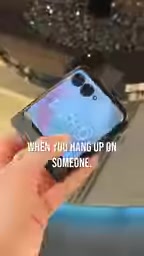
The design language here is unabashedly retro. The handset features a quilted leather-style finish with 35 hand-set Swarovski crystals on the surface, plus one larger 32-facet crystal positioned prominently on the hinge. As one reviewer put it, that crystal really commands attention — "because your phone should sparkle when you hang up on someone."
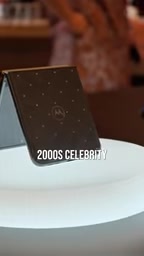
That prominent hinge crystal does introduce a small moment of anxiety, however. The reviewer mentioned feeling slightly nervous opening and closing the phone because of where the crystal sits — "but it's fine, it's on there pretty securely." That kind of concern neatly captures the subtle tension between luxury ornamentation and a mechanical component designed for constant use.
Swarovski is an Austrian brand renowned for precision-cut crystals, prized for their high refractive index and meticulously faceted craftsmanship. The brand has a long history of collaborating with fashion, jewelry, and consumer electronics — phone tie-ins are nothing new. Back in the mid-2000s, Nokia and Sony Ericsson both released crystal-studded limited editions that were hugely popular during the feature phone era. That "32-facet" hinge crystal is a hallmark of the brand's precision cutting: the more facets, the more complex the light refraction, and the more dramatic the sparkle. Placing a crystal on the hinge — the highest-traffic moving part of a folding phone — is as much a design statement as it is a test of durability.
The Colorway and the "Don't Call It Space Gray" Joke
The crystals are set against a colorway called Pantone Meteorite. The reviewer made a point of emphasizing that this is "absolutely not space gray, don't you dare call it that" — a gently mocking reminder of how obsessively the industry chases differentiated marketing language. That kind of naming strategy is nothing new in the phone business, but on a product leaning so hard into retro glamour, it adds a welcome note of self-awareness.
Hardware: Under All That Bling, It's Still a Standard Flagship
Strip away the crystals and the quilted finish, and what you have is a standard 2026 Razr. It features a 6.9-inch foldable OLED main display, a 3.6-inch cover screen that can also run apps, and a 4,800mAh battery.

In other words, the crystals won't make your games run faster. It's a telling product positioning: Motorola has taken a mainstream-spec foldable and dressed it up to sit in the fashion and luxury space rather than the performance enthusiast arena. The value proposition here is squarely about self-expression, not spec-sheet bragging rights.
The combination of a 6.9-inch foldable OLED main screen and a 3.6-inch cover screen is now the standard form factor for flip-style foldables. Unlike book-style foldables that open like a tablet, flip phones fold down to roughly half the footprint of a regular slab phone and slip easily into a pocket, with the cover screen handling light tasks like notifications and viewfinder framing. At 4,800mAh, the battery is on the generous side for this category — flip foldables have historically struggled with battery capacity because hinge mechanisms eat into interior space, so this is a meaningful real-world improvement. The overall spec sheet suggests Motorola didn't cut corners on the internals just because the exterior got a luxury makeover; the logic is "start with a capable daily driver, then stack a fashion premium on top."
Surprisingly Affordable — and It Comes With a Case
What genuinely surprised the reviewer was the price. The Swarovski edition retails for around $900 in the United States. Given the crystals and the luxury positioning, that figure is "much cheaper than I expected." Compared to high-end brand collaboration phones that can run into thousands of dollars, $900 is genuinely restrained.
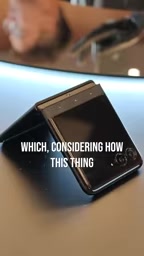
Some regional versions also come bundled with a transparent protective case, so you can "protect all that sparkle while still showing it off to everyone around you." That slightly self-deprecating observation nails the essence of this kind of product — it's both a practical tool and an unapologetically loud personal statement.
In a World of Black Slabs, Its Existence Actually Matters
The reviewer closed with a thought-provoking observation: even though the back of this phone looks "like something straight out of 2005," in a world drowning in uniform black rectangles, he's genuinely glad a phone like this still exists.
That might be the most insightful point in the whole review. As mainstream smartphones converge on increasingly identical designs and a shared visual vocabulary, Motorola's Swarovski Razr offers a legitimate path to differentiation. It doesn't try to be the best phone — it tries to be the most distinctive one. For users tired of cookie-cutter designs, this blend of retro nostalgia and unabashed glamour is a value proposition in its own right.
Related articles

Build an AI Super Employee System at Zero Cost: A Full Breakdown of Automated Agent Workflows
A deep breakdown of the AI super employee system demoed on Bilibili: agent orchestration, digital human voiceovers, map and enterprise lead generation, 24/7 customer service, and legal modules. We analyze the business logic and compliance risks behind zero-cost signup to help entrepreneurs judge the real ROI of this AI digital employee system.

The Essential Difference Between Chatbots and AI Agents: Crossing from Conversation to Execution
What's the difference between a chatbot and an AI agent? Based on the MCP series on the Learn Tech channel, this article uses examples like booking flights and summarizing notes to explain: a chatbot only gives answers, while an agent actually completes tasks through a think-act-observe loop. It breaks down the four core components—model, tools, memory, and goal—as well as MCP's role as a bridge, and discusses agents' applicable boundaries and permission risks.

Free GitHub Repo: 342 Hours of AI Courses, from Math to MCP Servers
A free GitHub repo offers 342 hours of AI courses: 523 lessons across 20 phases, from math fundamentals to agent building and MCP servers. Nearly 100,000 learners have started.