Mullvad Shuts Down Public Encrypted DNS Service, Sponsors Quad9 Instead
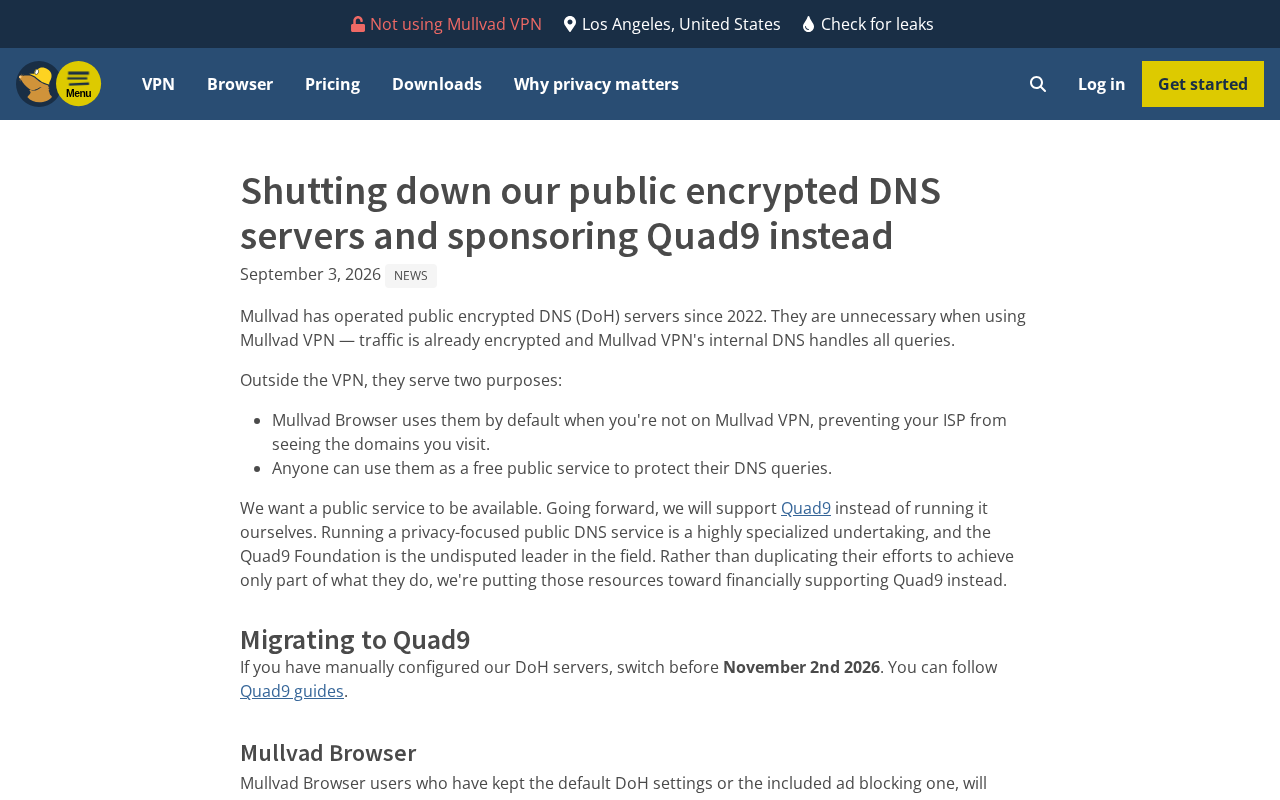
Mullvad closes its public DNS service, redirecting support to nonprofit Quad9.
Privacy VPN provider Mullvad is shutting down its public encrypted DNS servers after two years of operation, choosing instead to financially sponsor Quad9, a Swiss nonprofit DNS service. The move reflects a strategic focus on core VPN business and a belief that supporting a mature, specialized provider benefits the broader privacy ecosystem more than maintaining its own DNS infrastructure.
Mullvad's Strategic Shift: Exiting the Public DNS Market
Renowned privacy-focused VPN provider Mullvad recently announced it will shut down its public encrypted DNS servers, opting instead to sponsor the nonprofit organization Quad9's DNS service. This decision marks a significant consolidation of resources in the privacy technology space.
Mullvad began offering its public DNS service in 2022, aiming to provide users with a no-logging, encryption-enabled (DoH/DoT) domain resolution solution. However, after more than two years of operation, the team decided to focus its resources on its core VPN business rather than continue spreading efforts thin maintaining DNS infrastructure.
Why Quad9 as the Replacement
Quad9 is a Swiss-registered nonprofit organization whose DNS service offers several key advantages:
- Privacy commitment: No logging of user queries, no selling of user data
- Security protection: Built-in malicious domain blocking powered by threat intelligence databases
- Open governance: As a nonprofit, it's subject to public audits and community oversight
- Technical compatibility: Supports the same modern encrypted DNS protocols, including DoH and DoT
Mullvad stated that rather than having users scattered across multiple small-scale DNS services, it makes more sense to rally support behind a mature solution that already has economies of scale and professional operational capabilities. By financially sponsoring Quad9, Mullvad can indirectly help more users access privacy-protecting DNS resolution.
Impact on Users and the Industry
This shift reflects a reality in the privacy technology space: infrastructure services need economies of scale to remain sustainable in the long run. For small and mid-sized privacy service providers, the cost and technical complexity of maintaining global DNS nodes often exceeds the scope of their core business.
Based on discussions in the Hacker News community (220 upvotes, 77 comments), the tech community has been largely understanding of this decision. Many commenters pointed out that specialization and division of labor is a healthier development model for the open-source and privacy tools ecosystem than trying to "do a little bit of everything."
User Migration Guide
For users currently relying on Mullvad's public DNS, here's the recommended migration path:
- Change your DNS settings from Mullvad's server addresses to Quad9 (
9.9.9.9or2620:fe::fe) - Continue using DoH/DoT protocols to ensure your DNS queries remain encrypted
- Mullvad VPN users' built-in DNS functionality is not affected by this change
Sustainability Considerations for Privacy DNS Services
This shutdown has also sparked discussion about the business models behind privacy services. While free public DNS services can attract user attention, long-term maintenance costs are steep. Mullvad's approach—sponsoring a mature project to fulfill its privacy protection mission—may represent a more pragmatic path forward.
For privacy-conscious users, the core takeaway from this change is: a healthy ecosystem matters more than any single provider's full-stack ambitions. With resource support from organizations like Mullvad, Quad9 can deliver more stable and reliable encrypted DNS services to the entire privacy community.
Related articles

Free Unlimited Claude Code Solution: Agnes AI + CC Switch Setup Guide
No paid subscription needed — pair the free AI platform Agnes AI with the open-source tool CC Switch to provide a backend for Claude Code, enabling unlimited free calls to text, image, and video models. This guide covers the full setup, test results, and usage boundaries.

A Complete Zero-Cost Guide to Getting Started with Claude Code for Beginners in China
A beginner's guide to Claude Code for users in China: two installation methods (command line and IDE plugin), full configuration steps for replacing the official API with the free domestic LongCat model, and a hands-on demo of building a small tool with natural language, plus tips.

When the NSA Gets Involved: The AI Supply Chain Crisis Behind Open-Source CVEs and API Key Hijacking
Multiple open-source projects disclosed severe CVEs in one day, PHP flaws alarmed the FBI, and Railway and OpenCode were breached with API keys stolen. This article breaks down the vulnerability window, AI-accelerated exploitation, and the AI supply chain crisis behind the API key black market, with a developer defense checklist.