Multiple Tech Giants' Services Collapse Within a Week: The Fragility Crisis of the AI Era

Multiple major tech service outages within a week expose the fragility and single-point dependencies of AI-era infrastructure.
The Vergecast reviewed a week of major service disruptions at the FAA, United Airlines, Microsoft, Chase, and iCloud, noting that while each incident had a simple explanation, together they created a strong sense that something big is happening. Microsoft CEO Nadella called it a "Y2K moment": the window between vulnerability discovery and exploitation is narrowing while senior engineers who understand the underlying architecture are dwindling. The show's core judgment is that "fragility" has become the defining word of the AI software era—AI-generated code brings opacity that makes troubleshooting slower and harder. Additionally, Nvidia's leadership turmoil and the China chip controversy affect the entire AI financing chain, while Google's naming chaos and Amazon's agentic shopping plans reflect platform strategy losing focus and ecosystem rent-collection risks respectively.
When Everything Falls Apart at Once: A Chain Reaction of Infrastructure Failures
The latest episode of The Vergecast, titled "The week everything fell apart," reviewed a series of major technical service disruptions that occurred in quick succession over the past week: the U.S. Federal Aviation Administration (FAA) triggered a nationwide ground stop for flights due to a single router replacement, United Airlines' systems suffered widespread outages shortly after, Microsoft Outlook went down for more than two days, technical issues at JPMorgan Chase sparked chain-reaction panic across the banking sector, and even iCloud and the App Store went offline due to an internal update.
According to hosts Nilay Patel and David Pierce in the episode, each of these events, taken individually, had "a relatively simple and benign explanation," but stacked together, they gave the public a strong sense that "something big is happening." As the show put it, this was "a week that made people realize how much of their lives depends on those rickety computers."
The Y2K Moment Revisited: The Scissors Gap Between Update Speed and Human Resources
Microsoft CEO Satya Nadella compared the current situation to "a Y2K moment" and called critical digital infrastructure "the world's dial tone." Patel shared on the show the official explanation he heard at a Microsoft Ignite roundtable: Microsoft changed a server, which triggered a latent bug that spread to all regions under specific traffic conditions. When pressed on whether "AI-written code broke the system," Microsoft's response was that "AI actually helped us fix the problem faster."
Patel's interpretation: vulnerabilities are being discovered at an unprecedented rate, the window from discovery to exploitation is shrinking dramatically, and the entire industry is racing to patch. On the other side, the number of senior engineers who can understand the underlying architecture of these systems is declining—partly replaced by AI, partly lost due to policy reasons. The pace of patching is accelerating, but patching itself is also creating new visible cracks.
The Y2K problem (the Millennium Bug) stemmed from early computer systems commonly using two digits to store years in order to save expensive memory resources at the time. When the year 2000 arrived, systems could misinterpret "00" as 1900, triggering chain failures in critical sectors such as finance, power, and aviation. The world spent hundreds of billions of dollars on code review and system upgrades, and ultimately averted disaster. Nadella's comparison to a Y2K moment does not refer to a similar date-rollover risk, but rather emphasizes that a tiny change to critical digital infrastructure can trigger latent bugs and spread system-wide, with an impact radius comparable to Y2K—yet the frequency and complexity of changes in modern systems far exceed those of that era.
Fragility: The Defining Word of the AI Software Era
The most insightful judgment in the episode came from the two hosts' discussion of "brittleness." Pierce pointed out that AI tools themselves are fragile, and that generating code with AI is making systems even more fragile. The more critical issue is "opacity": as more and more code is generated by AI and maintained by engineers who "babysit agent swarms," every system that goes wrong is wrapped in an extra layer of black box, making diagnosis and repair harder rather than easier.
Patel added that traditional deterministic code "fails in predictable ways," and the people who built these systems are capable of troubleshooting them; but AI-driven automated systems fail in stranger ways, and the troubleshooters may not understand how they were built.

Deterministic code refers to programs whose behavior is fully determined by inputs and logic, always producing the same output under the same conditions. Such systems may fail, but failures are reproducible and traceable, and engineers can locate root causes through logs and breakpoints. In contrast, AI-driven systems (especially large language models and agent orchestration layers) are probabilistic and emergent; the same input may produce different outputs, and failure modes are difficult to enumerate. When AI-generated code is embedded in traditional systems, the two failure modes overlap: troubleshooters must understand the original logic while also inferring model behavior, creating what is known as a "black box within a black box."
The Nvidia Leadership Shakeup and the AI Economy's Single-Point Dependency
The latter half of the show turned to the resignation controversy surrounding Nvidia CEO Jensen Huang. According to the show, Huang departed due to a romantic relationship with a direct subordinate and for making false statements to the board and shareholders regarding relationships with China-related entities; the board subsequently stated explicitly on the earnings call that it "does not intend to bring him back," and the interim CEO quickly halted the China chip sales exemption that had been vigorously pursued.
The two hosts compared this to the OpenAI Altman incident and Steve Jobs' return to Apple, arguing that the three situations are "completely different" and should not be conflated. More noteworthy is the structural problem: the entire AI economy's financing chain is highly dependent on Nvidia, and Nvidia's revenue is in turn closely tied to the Chinese market. Patel noted that if reports of gray-market chips flowing into China are confirmed, the foundation of the entire AI investment narrative would be shaken.
The AI economy's financing chain is highly dependent on Nvidia for structural reasons: training and inference for large models require massive amounts of GPUs, and Nvidia holds a dominant share of the high-end AI chip market, with its revenue and stock price regarded as a thermometer for the entire AI investment narrative. At the same time, the Chinese market once accounted for a significant share of Nvidia's data center revenue, and reports of export controls and gray-market channels directly affect investors' judgment on the sustainability of AI compute supply. Once large-scale circumvention of China sales channels is confirmed, not only does Nvidia's compliance risk rise, but the entire AI valuation model premised on compute expansion could face repricing.
Google's Product Naming Chaos and Amazon's Agentic Shopping Ambitions
In the lighter "lightning round" segment, Pierce complained that Google had renamed its previous AI agent features such as Spark and Project Mariner to "Tasks"—even though Google Tasks already existed as a to-do app. Typing @Tasks in Gemini only adds items to the old Google Tasks rather than invoking the new agent features. This was seen as a typical symptom of Google "publishing its org chart directly as a product."

On the Amazon front, there were two worrisome pieces of news: CEO Andy Jassy said the company would establish "fair value exchange" relationships with third-party AI agents in the future; and reports said Amazon is building a "world product graph" covering shopping activity and product information across the entire web. Pierce's concern is that this would make the recommendation mechanisms of AI agent shopping extremely opaque, while Amazon would charge fees and insert ads at every step of the chain.
AI agent shopping refers to a shopping model in which AI agents complete search, comparison, and ordering on behalf of consumers. Unlike traditional e-commerce search, agents can aggregate product information across platforms, make automatic decisions based on user preferences, and interact with merchants or platforms on behalf of users. The key issues with this model lie in recommendation mechanisms and fee structures: if a platform simultaneously controls the product graph, the agent gateway, and the advertising system, it could influence recommendation results by manipulating rankings or charging "agent gateway fees," and consumers would be hard-pressed to notice. Amazon's construction of a "world product graph" and its stated intent to establish "fair value exchange" with third-party agents are precisely an attempt to occupy a rent-collecting position in the agentic shopping ecosystem.
Apple's Boundary Testing: Siri Recording Review Features
The show also discussed the new "Live Rewind" and "Siri Recaps" features on Apple Watch. The former allows users to double-tap to view audio transcriptions from the past 15 seconds, while the latter continuously generates ambient summaries. Patel's core question was about the consent mechanism: even if technically the audio is not retained, users are effectively "recording and transcribing" conversations of people around them, and those people can only notice and object after the fact.
Pierce then added a practical critique: the quality of Siri Recaps summaries is so poor that they are "functionally useless"—it cannot distinguish speakers, mixes children's bedtime conversations with work meetings, and even summarizes podcast recordings themselves into absurd text. The two hosts' consensus: this feature pays a privacy cost while delivering no usable value.
Key Takeaways
- Within a week, FAA, United Airlines, Microsoft, Chase, and iCloud failed in succession, exposing single points of failure that are widespread across the economy.
- Nadella described the current situation as a "Y2K moment": the gap between vulnerability discovery and exploitation is narrowing, while the human resources needed for remediation are shrinking.
- The opacity introduced by AI-generated code makes troubleshooting slower and harder, and fragility has become the defining word of this era.
- Nvidia's leadership turmoil and the China chip export controversy affect the stability of the entire AI financing chain.
- Google's product naming chaos and Amazon's agentic shopping strategy represent two risks respectively: platform strategy losing focus and ecosystem rent collection.
Related articles
Cursor Agent Whiteboard Breakdown: Rul…
Cursor Agent Whiteboard Breakdown: Rules, Checkpoints, and Safety Nets
A whiteboard breakdown based on Cursor's official docs and course, covering the Cursor Agent's working loop, three rule types (project rules/user rules/AGENTS.md), checkpoints and steering as two safety nets, plus officially acknowledged loop traps and advice to start with small tasks.
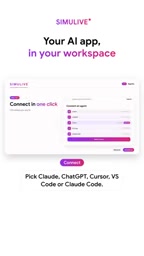
Simulive One-Click Connect Claude/ChatGPT/Cursor to Your Workspace
Simulive now supports one-click connection of Claude, ChatGPT, Cursor and other AI tools to your workspace—no API key copying, with fine-grained permissions, operation confirmation, rate limiting and audit logs, letting users process data with their own AI.

Goodbye Repetitive Prompting: A Practical Guide to Cursor Project Rules
Cursor Project Rules let the AI agent read preset instructions before coding, so you stop repeating prompts. Learn how to create rules, the four activation modes, and team tips to unify coding conventions with .cursor/rules.