Muse Spark Open Launches Across Pro, Max, Teams, and Pay-as-You-Go Plans

Muse Spark Open opens across four plans at once via a one-line announcement—broad coverage, zero technical detail.
Muse Spark Open announced a simultaneous launch across Pro, Max, Pay-as-you-go, and Teams via a single tweet. Covering all four tiers at once rather than a staged rollout suggests engineering readiness—Teams implies enterprise features like permissions and data isolation, while Pay-as-you-go offers a flexible trial path. The "Open" label signals a lower barrier, but what exactly is opened remains unclear, and model specs and pricing are unconfirmed.
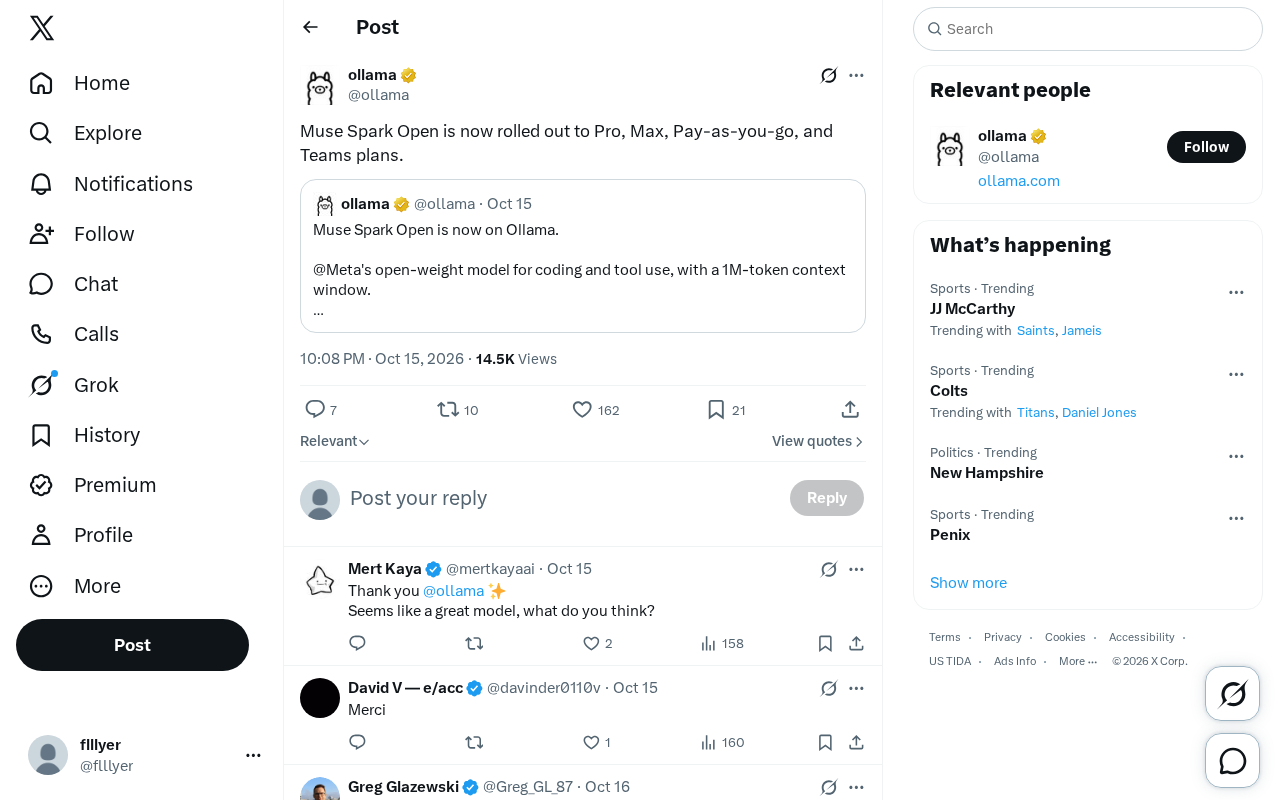
Muse Spark Open's release announcement landed like a pebble dropped into a lake—the original text is just a single sentence, yet it's enough to send ripples through the developer community. The official tweet announced that the capability is now available across four plan tiers: Pro, Max, Pay-as-you-go, and Teams. No demo video, no technical blog post, not even a feature description—this minimalist release style is itself a signal worth interpreting.
What Simultaneous Coverage of Four Plans Means
Looking at the plan matrix, the rollout strategy is fairly aggressive. Pro and Max target individual professional users and power users, Teams serves collaboration scenarios, and Pay-as-you-go lowers the barrier to flexible users who pay on demand. Opening all four at once suggests Muse Spark Open isn't a tentative canary release but has gone straight to general availability.
For enterprises, the inclusion of the Teams plan is especially significant—team collaboration scenarios typically impose more complex requirements around permission management, data isolation, and cost allocation. Covering it in the same batch implies the product is engineering-ready.
The Pay-as-You-Go Plan Is the Flexible Entry Point
Pay-as-you-go deserves separate mention. It's usually used as a low-commitment trial channel, suited to teams that want to validate value before deciding whether to upgrade. Including this tier in the launch lineup essentially paves the "try before you buy" path.
In this context, Canary Release and General Availability (GA) are two common product launch strategies. A canary release means opening a new feature to a small subset of users first (usually by percentage or invitation), so feedback can be gathered and defects caught within a controlled scope; general availability means the feature is open to all users within the plan, with no additional barriers. The article concludes Muse Spark Open falls into the latter category precisely because all four plans are covered in the same batch, with no trace of staged rollout. For enterprise-grade products, moving from canary to GA often requires a series of engineering validations—permission systems, audit logs, SLA guarantees, and more—so the move itself reflects product maturity.
Pay-as-you-go is a common billing model in cloud computing and SaaS, where users pay for the actual resources consumed (such as API call counts, token counts, or storage capacity) without committing to a fixed period or minimum spend in advance. The alternative is subscription-based billing (Pro, Max, and Teams all fall into this category), where users pay a fixed fee monthly or annually in exchange for quotas or feature access. The core value of pay-as-you-go is lowering the cost of trial and error: teams can validate product value without signing a long-term contract, then decide whether to migrate to a subscription plan. For vendors, this tier is both a funnel entry point for customer acquisition and a window into real usage—pricing adjustments here often precede other plans in reflecting changes to product positioning.
What the Naming Reveals
The word "Open" isn't chosen casually in AI product naming. It could refer to open weights, open APIs, open ecosystem access, or simply being opened to more user tiers. Combined with the simultaneous launch across four plans, the most reasonable interpretation is that Muse Spark Open's capability boundary is being opened to a broader user base—not limited to enterprise or invitation-only users.
This naming strategy aligns with common industry practice for "Open" products—the wording itself signals a lower barrier. But what exactly is being opened, the announcement doesn't specify. That's both the suspense and the thing to watch going forward.
In the context of AI products, the word "Open" carries at least three distinct meanings, often conflated: first, Open Weights, meaning model parameters can be downloaded and deployed locally, as with the Llama series; second, Open API, meaning the capability can be invoked through a public API but the model itself isn't disclosed; third, open ecosystem/open access, meaning third-party integration is allowed or the product is opened to a broader user base. The implications for users differ enormously—open weights mean auditable, fine-tunable, and offline-runnable, while an open API merely means programmable invocation. Since the announcement doesn't specify which one applies, readers should be wary of equating "Open" directly with "open source"—one of the most common misreadings in this field.
The Gaps Left by the Official Announcement
It must be acknowledged that the confirmable facts are very limited: the feature name, the four plans covered, and the release channel. As for model specifications, performance benchmarks, pricing changes, and differences from existing features, the original text says nothing.
This has two practical implications. For potential users, the safest approach is to log into the backend of the relevant plan and confirm whether the feature entry point has appeared, rather than relying on secondhand information. For observers following this product line, this rollout looks more like a preliminary move—the real technical details may appear in subsequent documentation updates or blog posts.
The Limitations of Single-Source Information
All judgments in this article are based on this one official tweet, with no cross-verification from third-party reviews, user feedback, or technical documentation. With information this sparse, any inference about performance can only remain speculation. Readers should treat this article as a structured interpretation of the announcement itself, not an assessment of the product's capabilities.
What to Watch Next
To gauge the weight of this release, keep an eye on three signals: whether the official team adds technical details in the near term; whether genuine user feedback appears in the community; and whether the pricing page shows adjustments corresponding to the four plans. Pricing changes are especially worth noting—if the billing method for the Pay-as-you-go tier changes, it often signals a shift in product positioning.
This Muse Spark Open rollout is a coverage-first release move: seize user mindshare with the widest possible availability first, then gradually release the technical narrative. This playbook isn't rare in AI product competition, but whether it works depends on the speed and quality of follow-up information.
One-line Summary
A one-sentence announcement opens Muse Spark Open across four plans at once—coverage first, but no technical details.
Paragraph Summary
Muse Spark Open announced via a minimalist tweet that it's opening simultaneously across Pro, Max, Pay-as-you-go, and Teams plans. The article argues that covering all four tiers at once rather than a staged rollout shows the product is engineering-ready—especially the inclusion of Teams, which hints at enterprise-grade capabilities like permission management and data isolation, while Pay-as-you-go paves a flexible "try before you buy" entry point. The "Open" naming signals a lower barrier, but the announcement doesn't specify whether it means weights, APIs, or ecosystem access. With only single-source information, model specs, performance benchmarks, and pricing changes can't be confirmed; the author recommends logging into the backend to confirm feature access, and offers three signals to watch: documentation updates, genuine community feedback, and pricing page adjustments.
Related articles

Frontend to AI Agent Development: A Frontline Architect Explains Career Paths and Opportunities
A frontline AI architect explains the industry changes and practical paths for frontend developers transitioning to AI Agent development: why pure frontend jobs are disappearing, why Agent + full-stack has become mainstream in hiring, and three transformation routes—Agent development engineer, FDE, and remote contracting—along with corresponding learning strategies.

How to Choose an AI Agent Development Course: Five Pitfall-Avoidance Guidelines
A mechanical-engineering career changer's two-year pitfall-tested checklist for screening AI Agent development courses: complete delivery pipeline, resume-worthy projects, real development perspective, update frequency, and coaching feedback—with concrete judgment methods and pitfall-avoidance tips.

Coze AI Agent Building for Beginners: A Zero-Code AI Agent Development Guide
Coze, ByteDance's one-stop AI application development platform, supports zero-code drag-and-drop AI agent building. This article outlines Coze's core concepts, three advantages, differences between the domestic and international versions, and the distinction between agents and apps, helping beginners quickly get started with AI Agent development.