n8n + GoHighLevel Automation: AI Lead Routing and CRM Sync

n8n plus GoHighLevel builds a sales automation workflow for lead deduplication, AI routing, and automatic opportunity creation.
The article introduces a sales automation workflow based on n8n and GoHighLevel, covering the full chain from form lead capture to automatic opportunity creation in the CRM. Its core process is dedupe, save, route, and create: leads are first checked against GoHighLevel to avoid duplicates and ownership disputes, then routed by AI and converted into opportunity records. The Slack alerts mentioned in the title are not expanded in the source material. The article sees this as part of the broader trend of automation tools becoming more accessible, letting small teams build lightweight sales operations at low cost, while advising testing deduplication and field mapping before deployment.
In sales automation, the efficiency with which leads flow from form to CRM directly determines conversion speed. A tutorial from YouTube demonstrates how to use n8n together with GoHighLevel to build a complete workflow spanning lead capture, deduplication, AI routing, and automatic opportunity creation.
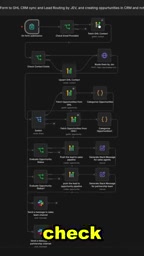
The Core Logic of the Workflow
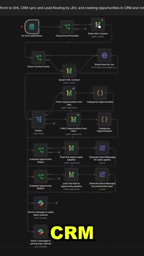
The entire automation revolves around one main thread: after a form captures a lead, the system first checks whether that lead already exists in GoHighLevel CRM to avoid duplicate entries. Once the status is confirmed, n8n automatically saves the lead and hands it off to AI for routing decisions. According to the tutorial author, the routing result directly drives subsequent actions—based on the distribution logic of "Jeff" (the routing entity/rule demonstrated in the video), the corresponding opportunity is automatically created in GoHighLevel.
This "dedupe—save—route—create" chain solves three common pain points in traditional manual CRM assignment: duplicate data, assignment delays, and missed opportunities.
n8n is an open-source workflow automation tool that uses visual node orchestration, connecting different apps and APIs by dragging and linking. It can be self-hosted or used via a cloud version, and supports hundreds of prebuilt integration nodes plus a generic HTTP request node, making it more flexible than many closed-source iPaaS platforms when integrating with domestic or niche SaaS tools. Compared with tools like Zapier and Make, n8n's core advantages lie in being open-source, self-hostable, and priced by workflow complexity rather than task count—making it well suited to small and mid-sized teams that are sensitive to data compliance and cost.
GoHighLevel, meanwhile, is an all-in-one CRM platform for marketing agencies and sales teams, integrating contact management, sales funnels, opportunity pipelines, forms, SMS, and email marketing. It offers a public REST API that allows external systems to read and write objects such as contacts and opportunities—which is exactly the prerequisite for n8n to integrate with it. The significance of combining the two is this: n8n handles cross-system logic orchestration and AI calls, while GoHighLevel handles data storage and sales execution, forming a clearly divided automation chain.
Key Node Breakdown
Form Capture and CRM Deduplication
The first step of the workflow is receiving lead data from a specified form. Then, n8n calls GoHighLevel's API to check whether the contact already exists. This deduplication step may seem simple, but it prevents the sales team from following up on the same lead twice and also avoids ownership disputes caused by duplicate records.
AI Routing and Opportunity Creation
After passing deduplication, the lead enters the routing stage. The key here is the combination of routing rules and AI judgment: the system can not only assign based on preset fields (such as region, source, and type of need) but can also support more flexible decision logic. Once routing is complete, the workflow automatically generates an opportunity record in GoHighLevel, letting sales see high-value leads awaiting follow-up directly in the CRM rather than waiting for manual record creation.
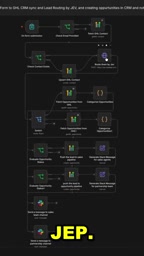
So-called AI routing means introducing large language models or classification models on top of traditional field-matching rule engines to perform semantic understanding and intent judgment on leads, then deciding who they should be assigned to, what tags they should receive, or which nurturing path they should enter. Traditional rule-based routing relies on manually preset if-else conditions, such as "region=East China AND need=quote," which has high maintenance costs and struggles to cover vague expressions. AI routing can directly read the free-text content of a lead (such as form messages or requirement descriptions) and output structured distribution decisions, making it better suited to scenarios where lead quality varies and field entries are non-standard. In practice, n8n's AI node typically calls a model API and maps the returned results to the opportunity owner, pipeline stage, or custom fields in GoHighLevel, thereby enabling dynamic distribution.
Slack Alerts (Mentioned in the Title but Not Expanded in the Source Material)
"Slack Alerts" in the original title is the third output direction of this workflow: after a lead has been routed and an opportunity created, the corresponding salesperson is notified via Slack. The source material mainly focuses on the form, CRM, and routing parts; the specific node configuration for the Slack step is not expanded in the provided excerpt and would need to be completed with the full tutorial video.
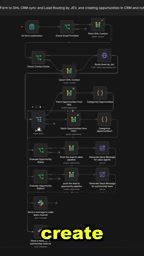
Slack Alerts usually play the role of "human-machine handoff" in automated workflows. After a lead is routed and an opportunity is created, the system pushes key lead information (name, source, need, assigned salesperson, opportunity link) to a specified channel or direct message via Slack's Incoming Webhook or official node. Compared with email notifications, Slack messages support button interactions and threaded replies, allowing sales reps to claim leads or mark follow-up status directly in the message, reducing time spent switching between multiple systems. Implementing this step in n8n generally requires first creating a Slack App and obtaining a Bot Token or Webhook URL, then assembling the notification content with a message-sending node. If follow-up status needs to be written back in GoHighLevel, Slack's interactive callbacks can also be used to further close the loop.
Why It Is Worth Paying Attention To
The combination of n8n's open-source nature and GoHighLevel's marketing capabilities essentially means building a "lightweight sales operations hub" at low cost. For small and mid-sized teams using GoHighLevel, manually assigning leads and syncing the CRM is high-frequency repetitive work, and workflows like this free up human labor from mechanical operations.
From an industry perspective, this represents the downward expansion trend of automation tools: lead routing that once required custom development or expensive iPaaS platforms can now be assembled using n8n's visual nodes. The video author also mentioned that viewers can comment "Jeff" to get the workflow, showing that templated, reusable automation solutions like this are becoming a common form of interaction between content creators and communities.
It is worth noting that the stability of the workflow depends on API compatibility across the form, CRM, and AI routing stages. Before actual deployment, it is recommended to first verify the deduplication logic and field mapping in a test environment.
iPaaS (Integration Platform as a Service) refers to a platform that provides system integration capabilities in the form of cloud services. Typical examples include Zapier, Make, Workato, and MuleSoft. Through prebuilt connectors and visual orchestration, it enables enterprises to connect data flows between different SaaS applications without writing code from scratch. The advantages of iPaaS lie in relatively mature stability, monitoring, and error retry mechanisms, but it usually charges by task execution count or number of connectors, and costs rise noticeably at scale. Open-source tools like n8n precisely target this gap in price and flexibility: they cover the core scenarios of iPaaS functionally while returning control over deployment and data to users. This is also the technical background behind what the article calls the "downward expansion of automation tools."
One-line Summary
n8n combined with GoHighLevel builds a sales automation workflow for lead deduplication, AI routing, and automatic opportunity creation.
Paragraph Summary
The article introduces a sales automation workflow based on n8n and GoHighLevel, covering the complete chain from form lead capture to automatic opportunity creation in the CRM. The core process is "dedupe—save—route—create": after a lead enters the system, it first checks whether it already exists in GoHighLevel to avoid duplicate entries and ownership disputes; after passing deduplication, it is handed to AI for routing decisions, and after assignment by rules, an opportunity record is automatically generated so sales can see leads awaiting follow-up directly in the CRM. The Slack alert mentioned in the title is the third output direction, but the source material does not expand on its specific configuration. The article argues that this solution reflects the downward expansion trend of automation tools, allowing small and mid-sized teams to build a lightweight sales operations hub at low cost, while also reminding readers to verify deduplication logic and field mapping in a test environment before deployment.
Related articles

GPT-Next Leak, Gemini 4 Argon Imminent: AI News Roundup
GPT-Next leak suggests extreme efficiency; OpenAI's 28-day shipping pledge boosts speed 50%; Gemini 4 Argon nears release; Anthropic subscription value report sparks debate.

GPT-Next Leaked, Gemini 4 Argon Speeds Up, Fable 5.5 May Launch Today
OpenAI's GPT-Next model leaks, expected to be extremely low-cost and possibly part of the 28-day release plan; Gemini 4 Argon internal testing accelerates, NanoBanana 2.1 is live; Semi Analysis tests show Claude Max's equivalent API value is about 5 times that of ChatGPT Pro; Fable 5.5 may launch today.

Gemini 4 Argon Launches Globally: Key Highlights from the AI Daily Brief
Google opens Gemini 4 Argon globally across Pro and Ultra subscriptions and the API, and demonstrates robot control. This article rounds up open-source models, Agent infrastructure, cost transparency, and safety governance updates.