Nasdaq Erases All 2026 Gains: Tech Stocks' AI Rally Faces a Stress Test
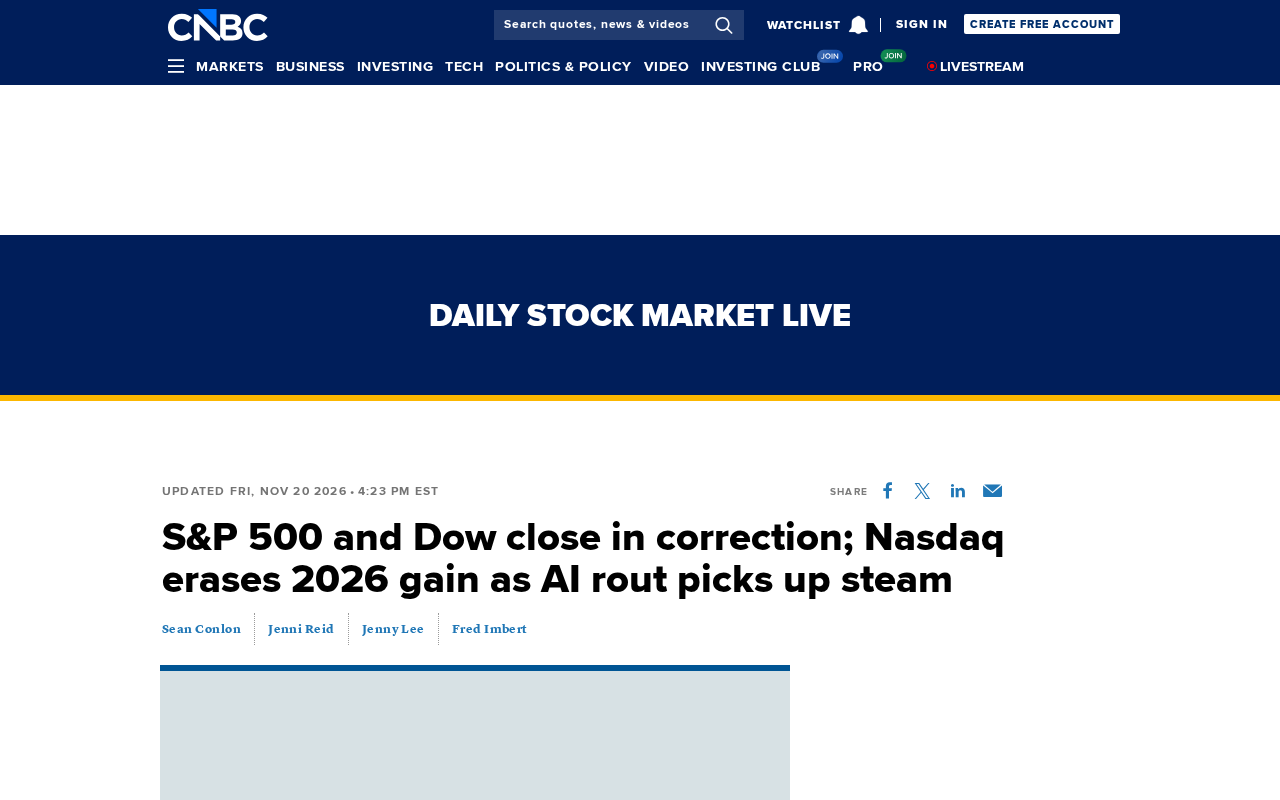
The Nasdaq erased all its yearly gains—tech should watch the fundraising and valuation transmission signals.
Starting from a Hacker News post with only 8 points and no comments, the article notes that the Nasdaq Composite has wiped out all its 2026 year-to-date gains. Because the Nasdaq is tightly bound to the AI supply chain across compute, cloud services, semiconductors, and the model layer, its performance is viewed as a thermometer for how capital markets price the AI narrative. A weakening index may mean optimistic expectations are fully priced in, incremental capital is demanding clearer commercialization evidence, and this transmits to the primary market as more cautious terms and an investment preference emphasizing revenue quality. The article cautions against reducing this to "the AI bubble bursting" without index levels, drawdown data, or causal attribution, and offers three practical takeaways: reassess fundraising timing, shift to a quantifiable-efficiency narrative, and keep compute and cloud spending commitments flexible.
Event Recap: The Market Sentiment Shift Behind a Single Headline
According to a brief post on Hacker News with only 8 points and no comments, the Nasdaq Composite has erased all of its year-to-date gains—the original headline reads "Nasdaq erases all 2026 gains." The information itself is extremely sparse, providing no specific index level, drawdown magnitude, or triggering factors, but as a signal it is clear enough: the forces that had been driving the index higher are losing their effectiveness, and the cumulative gains since the start of the year have been completely wiped out.
For tech professionals who have long tracked US equities, phrases like "erases all YTD gains" tend to appear at inflection points where market sentiment shifts from optimism to caution. It doesn't describe a single day's crash but emphasizes the resetting of a cumulative result to zero, meaning the narrative of the current phase of the rally needs to be reassessed.
The Nasdaq Composite is a market-cap-weighted index covering all stocks listed on the Nasdaq exchange. Unlike the Nasdaq-100, which includes only 100 large non-financial companies, it has a broader constituent base and better reflects overall market breadth. "YTD gains" refers to the cumulative return from the closing price on the first trading day of the year to the current point—an important anchor for institutional performance evaluation and investor sentiment. When the media says the index "erases all YTD gains," the actual meaning is that the current level has fallen back to where it started the year, with all prior gains offset. This phrasing is widely cited because it marks a psychological threshold—investors who bought at the start of the year are back to breakeven overall, which often coincides with a contraction in risk appetite and position adjustments.
Why the Tech Community Should Pay Attention
The Nasdaq's entanglement with the AI supply chain has become unprecedentedly tight over the past several earnings cycles. Compute, cloud services, semiconductors, and model-layer companies form the core weights of the index, so the Nasdaq's performance is to some extent viewed as a thermometer for how capital markets price the AI narrative. When the index erases its yearly gains, it typically means two things: first, earlier optimistic expectations for AI-related assets have been fully reflected in prices; second, incremental new capital is beginning to demand clearer commercialization evidence.
The direct implication for developers and founders is a change in the fundraising environment and valuation expectations. Primary-market pricing of AI projects often references comparable public companies, so a weakening index transmits into more cautious terms, longer due diligence cycles, and an investment preference that emphasizes revenue quality over growth stories.
There is a clear valuation transmission mechanism between the primary and secondary markets. When pricing private companies, venture capital firms often use the price-to-sales (P/S) and price-to-earnings (P/E) ratios of public companies in the same sector as comparable benchmarks, adjusted for a liquidity discount. When Nasdaq heavyweight stocks pull back and comparable company valuations decline, investment committees (ICs) correspondingly lower target valuation ranges, and valuation caps, liquidation preferences, and anti-dilution provisions in term sheets also tend to become stricter. In addition, a weaker secondary market affects exit expectations—a narrowing IPO window and compressed M&A pricing lengthen fund holding periods and affect the fundraising pace of new funds. So index volatility isn't just a concern for secondary-market traders; it transmits to the fundraising reality of early-stage startups through three paths: valuation anchors, exit channels, and LP confidence.
Interpretation Pitfalls to Watch For
The phrase "erases all yearly gains" alone cannot tell us the specific cause. The current material provides no details on rate paths, earnings performance, regulatory developments, or geopolitical factors, nor does it give index levels or drawdown percentages. The reasonable attitude, therefore, is to treat it as an observation point on sentiment and positioning rather than a causal conclusion.
What should also be avoided is reducing it to a single narrative of "the AI bubble bursting." An index giving back its gains can come from heavyweight stocks pulling back or from a market style rotation. Without data support, the more prudent approach is to return to specific companies' fundamentals and order visibility.
"Erasing all yearly gains" and "entering a bear market" are concepts of different magnitudes. In technical analysis, a decline of more than 20% from a recent high is typically defined as a bear market, a decline of 10% to 20% is called a correction, and an index erasing its YTD gains may correspond to only a single-digit drawdown. Moreover, index moves are the market-cap-weighted result of constituent stocks, so the fluctuations of a few mega-cap weighted stocks (such as large tech companies) are enough to dominate the index's direction—meaning index performance may not represent the median performance of most individual stocks. Divergent conditions where "the index falls but individual stocks rise" are not uncommon. Understanding this helps avoid misreading a single index reading as the overall state of the entire tech sector or AI industry.
Practical Takeaways for Practitioners
First, re-examine assumptions about fundraising timing. If previous plans relied on a loose valuation environment, prepare more conservative fallback options. Second, shift the narrative focus from showcasing capabilities to quantifiable efficiency gains and cost savings—this is more persuasive when buyers are more cautious. Third, maintain flexibility on long-term commitments for compute procurement and cloud spending, and avoid locking in overly long cycles at price peaks.
Market volatility itself is not a conclusion; it is merely a reminder for participants to distinguish between "the certainty of technological trends" and "the certainty of asset prices"—the former tends to be slower, the latter tends to be more abrupt.
Related articles
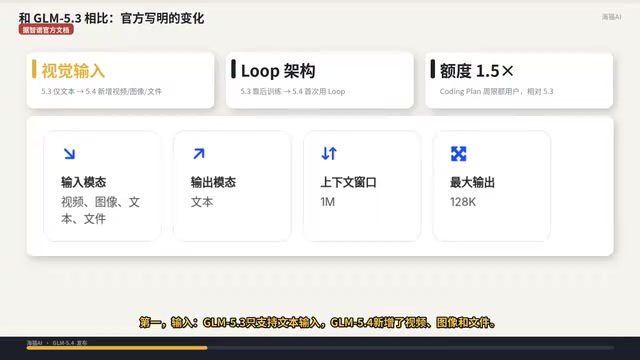
Zhipu GLM-5.4 Released: Loop Transformer Runs 28 Layers Twice
Zhipu releases GLM-5.4, the first Loop Transformer flagship: 28 layers run twice for 2-3T-equivalent intelligence, plus video and image input. API and open weights not yet released.

GLM-5.4 Coding Test 4.6x Slower? Unpacking the Loop Transformer Architecture
GLM-5.4 coding test took 431 minutes vs. competitor's 109, 4.6x more steps. We analyze its Loop Transformer architecture, KingBench4 score of 55.3, Max tier's 1.04M token cost, and tier selection advice.

Zhipu GLM-5.4 Quietly Released: A Debut for Loop Transformer Architecture
Zhipu GLM-5.4 quietly lands in coding plans: first Loop Transformer flagship with 750B params, 1M token context, AIM math up from 19.2 to 30.4, and native vision for coding from screenshots.