National Anthem for the Week: The Tech Content Distribution Phenomenon Behind a Single Tweet
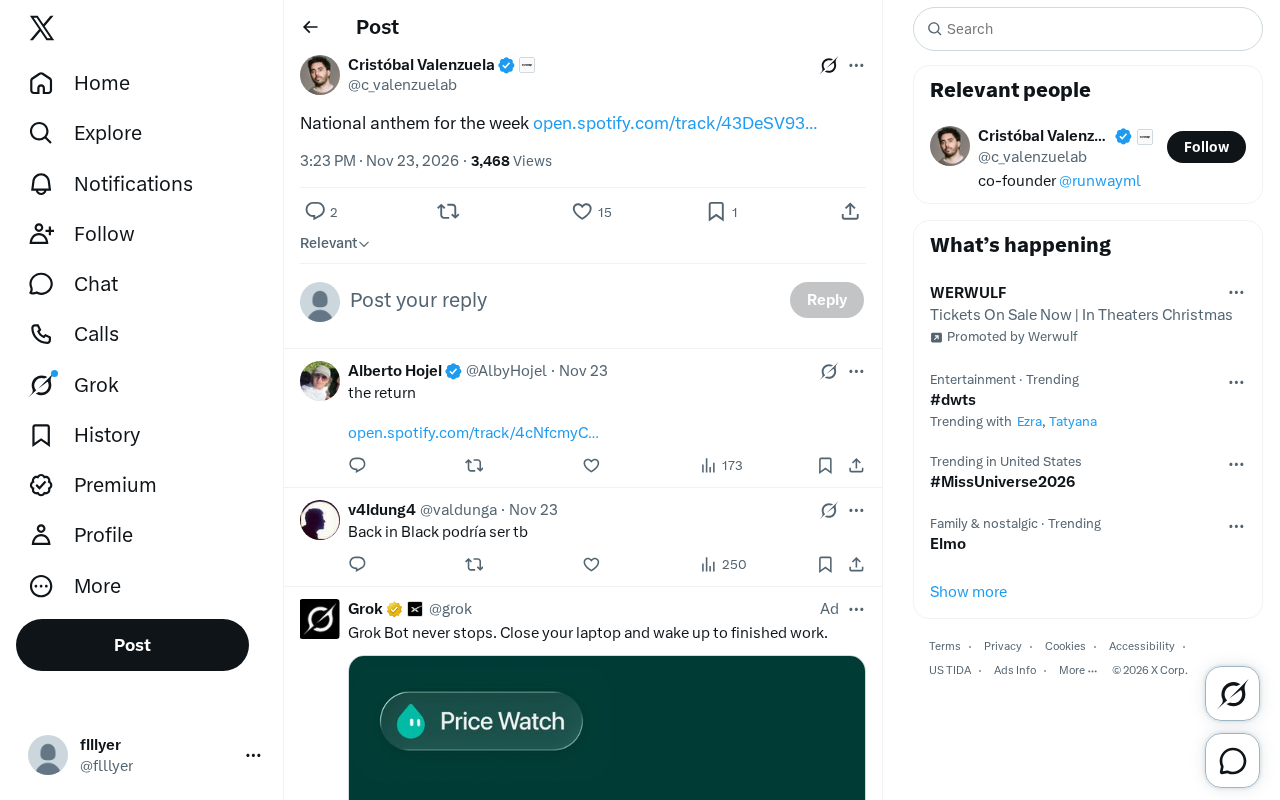
Minimalist tweets with external links are efficient but thin—real value lies in the long content behind the link.
Using a tweet containing only "National anthem for the week" and a short link as a sample, this article dissects the "one sentence + external link" content distribution model on social platforms. This minimalist expression leverages information gaps to trigger curiosity at extremely low distribution cost, but the absence of lead-in text raises bounce rates and undermines reader trust. The article notes that the division of labor—social platforms for reach, long-form content for depth—has its logic but also exacerbates information fragmentation. For creators, short expression suits high-frequency updates, but pure-link tweets lack informational value; a safer approach is to include one substantive judgment. For readers, domain credibility, preview cards, and poster relevance can quickly filter low-value links, and developing the habit of opening original sources is worthwhile.
A Minimalist Tweet Draws Attention
On social platforms drowning in information overload, a tweet containing nothing but "National anthem for the week" and a short link seems to carry almost no information at all—yet it reflects a typical pattern in how tech content spreads today: using extremely low expressive cost to direct attention toward an external link.
The tweet itself provides no background, opinion, or data. It functions more like a "hook"—the real information is hidden in whatever the link points to. For content creators and SEO practitioners, this "one sentence + link" model is worth unpacking: why it works, and what problems it exposes.
The Distribution Logic of Minimalist Tweets
Social platform recommendation algorithms favor engagement rates, and short text with strong suspense tends to trigger more clicks. The tweet doesn't explain which song the "national anthem" refers to, why it's this week's pick, or where the link leads—this information gap itself creates a curiosity-driven pull.
From a content distribution perspective, this is clickbait compressed to its absolute minimum: the tweet serves as the headline, and the link serves as the body. Its advantage is extremely low distribution cost; its disadvantage is the lack of context—readers can't judge whether the content is worth their time before clicking.
Links as Content Carriers
On platforms like Twitter, external links are a common way for creators to funnel traffic to their own properties. This tweet includes no accompanying text, meaning readers rely entirely on link previews (if the platform generates a card) or direct clicking to judge the content.
For SEO professionals, this suggests a counterintuitive lesson: the value of an external link depends not only on the quality of the target page but also on whether the lead-in text can set expectations. Links without any framing text typically see higher bounce rates after clicking.
Information Gap Theory was proposed by psychologist George Loewenstein in 1994. It describes how when people become aware of a gap in their knowledge, they experience a discomfort similar to curiosity that drives information-seeking behavior. In the context of social media, this gap can be deliberately manufactured: a tweet offers only vague clues (like "this week's national anthem") without any explanation, and readers click the link to fill the cognitive void. Unlike traditional clickbait, the information gap strategy doesn't rely on exaggeration or deception—it leverages humans' natural sensitivity to incomplete information. Research shows that moderate information gaps can significantly boost click-through rates, but gaps that are too large (readers can't even infer the direction of the content) or too small (the information is already sufficiently complete) both weaken the effect. Understanding this mechanism helps creators precisely calibrate the "dosage" of suspense when designing tweets.
Bounce Rate is a core metric in website analytics, referring to the percentage of visits where users leave a landing page without any interaction (such as clicking, scrolling, or filling out a form). In social external-link scenarios, bounce rate is often used to measure how well the lead-in text matches expectations about the target page content. When a tweet provides only a link with no explanation, users click with vague expectations—and if the landing page's above-the-fold content doesn't match what they imagined, they'll quickly return or close the page, producing a high bounce rate. For SEO practitioners, while high bounce rates aren't directly a ranking factor, they indirectly affect site quality assessments by reducing page engagement and internal link clicks. Therefore, adding a substantive judgment or question to a tweet is essentially about managing user expectations—thereby lowering bounce rates and improving downstream conversions.
The "Light Expression" Trend in Tech Content Distribution
Similar minimalist tweets are common in tech circles. Developers and researchers often share new projects, papers, or tools with a single sentence plus a link, leaving detailed explanations for blogs, GitHub repositories, or videos. This division of labor has its logic: social platforms handle reach, and long-form content handles depth.
But it also has a side effect—information fragmentation. What readers see is often secondhand paraphrase or out-of-context headlines rather than complete arguments. For readers following AI and tech developments, developing the habit of "clicking through to the original source" is more valuable than staying at the tweet level.
Implications for Content Creators
If you run a tech-focused account, you can learn two things from this tweet: first, short expression genuinely lowers the publishing barrier and suits high-frequency updates; second, pure-link tweets lack information value and, over the long term, undermine reader trust. A safer approach is to include one substantive judgment in the tweet before attaching the link.
Information Fragmentation refers to the phenomenon where content is cut into short, discrete pieces for distribution, making it difficult for recipients to grasp the full context and logical chain. On social platforms, this trend is amplified by algorithms that favor short, punchy content: a single tweet, headline, or short video often replaces a complete argument. The risk is that fragmented information can easily be misread when stripped of its original context—especially when secondhand paraphrase omits preconditions or data sources. For tech content, fragmentation can also obscure methodological details and limitations, causing readers to overestimate or underestimate the value of a piece of research. Coping strategies include: preserving key qualifiers when sharing, prioritizing links to original sources, and encouraging readers to engage in "source-tracing reading."
How to Judge Whether Such Links Are Worth Clicking
When faced with a tweet containing only a title and a link, you can quickly make a few judgments: whether the link domain is trustworthy, whether there's a platform-generated preview card, and whether the poster's past content is relevant to the topic. These three steps can filter out most low-value content in seconds.
For content analysts, such tweets are themselves material—they demonstrate how creators test audience interest at minimal cost. If a particular link gets high engagement, it signals demand for that topic and is worth developing into a full article or video.
Link Preview Cards are rich media summaries that social platforms automatically generate upon detecting a URL, typically including a title, description, thumbnail, and domain. Their generation depends on Open Graph protocol or Twitter Card meta tags in the target webpage. For readers, preview cards provide the first layer of information filtering before clicking: whether the card is complete, whether the title is specific, and whether the image is relevant all help assess link quality. For content creators, optimizing these meta tags is foundational work for improving external link click-through rates and reducing bounce rates—links with missing cards or garbled information are often simply skipped by users. Therefore, when evaluating a pure-link tweet, the presence and quality of a preview card is an important signal for quickly filtering out low-value content.
Conclusion
The "National anthem for the week" tweet carries close to zero information, but it's a sample for observing how social platform content distribution works. The minimalist expression plus external link model is efficient but thin—what truly determines content value is still whether the thing behind the link is well written. For readers, spending a few extra seconds to open the original source is often more rewarding than staying at the tweet level.
One-line Summary
Minimalist tweets with external links are efficient but thin—the real value still lies in the long-form content behind the link.
Paragraph Summary
Using a tweet containing only "National anthem for the week" and a short link as a sample, this article analyzes the "one sentence + external link" content distribution model on social platforms. This minimalist expression leverages information gaps to trigger curiosity at extremely low distribution cost, but the absence of lead-in text raises bounce rates and undermines reader trust. The article notes that the division of labor—social platforms for reach, long-form content for depth—has its logic but also exacerbates information fragmentation. For creators, short expression suits high-frequency updates, but pure-link tweets lack informational value; a safer approach is to include one substantive judgment. For readers, domain credibility, preview cards, and poster relevance can quickly filter low-value links, and developing the habit of opening original sources is worthwhile.
Related articles
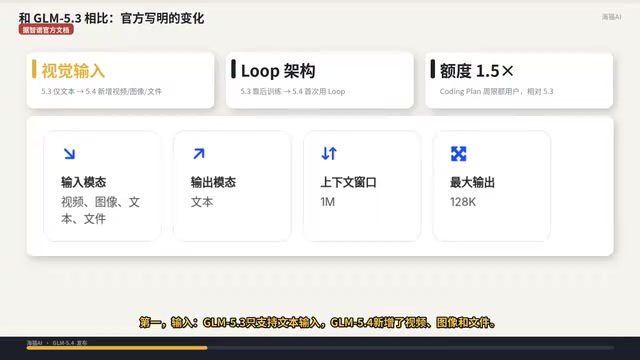
Zhipu GLM-5.4 Released: Loop Transformer Runs 28 Layers Twice
Zhipu releases GLM-5.4, the first Loop Transformer flagship: 28 layers run twice for 2-3T-equivalent intelligence, plus video and image input. API and open weights not yet released.

GLM-5.4 Coding Test 4.6x Slower? Unpacking the Loop Transformer Architecture
GLM-5.4 coding test took 431 minutes vs. competitor's 109, 4.6x more steps. We analyze its Loop Transformer architecture, KingBench4 score of 55.3, Max tier's 1.04M token cost, and tier selection advice.

Zhipu GLM-5.4 Quietly Released: A Debut for Loop Transformer Architecture
Zhipu GLM-5.4 quietly lands in coding plans: first Loop Transformer flagship with 750B params, 1M token context, AIM math up from 19.2 to 30.4, and native vision for coding from screenshots.