National Geographic New Trailer: Bertie Gregory Films Wolves Hunting Moose Up Close

National Geographic's new trailer captures Bertie Gregory's extreme filming challenge tracking wolves hunting moose in Hudson Bay.
National Geographic has released the official trailer for *Wolves Up Close With Bertie Gregory*, in which wildlife photographer Bertie Gregory ventures deep into Hudson Bay to track wolves through the full process of hunting moose. The trailer reveals extremely rare challenges in nature documentary filmmaking: the wolves' greatest difficulty is finding enough food, and moose hunting season is their critical survival window; adult moose are highly dangerous, and wolves must rely on teamwork and precise tactics to hunt successfully; the crew must keep pace with the wolves' movement speed to complete filming, reflecting extremely high physical and technical demands. Bertie Gregory continues his close-range immersive style, and the full film's release date has not yet been announced.
National Geographic has released the latest official trailer for Wolves Up Close With Bertie Gregory, in which wildlife photographer Bertie Gregory ventures deep into Hudson Bay to track wolves through the full process of hunting moose. Though the trailer runs only a few dozen seconds, it reveals an extraordinarily rare challenge in nature documentary filmmaking—keeping pace with the wolves to capture their most authentic state of survival.
Hudson Bay: The Ultimate Battleground for Wolf Survival
The trailer opens by establishing the location: Hudson Bay. This is a quintessential region of the North American wilderness, with a harsh climate and fierce competition within the food chain. For wolves, danger lurks everywhere—but the greatest challenge is always "finding enough food."
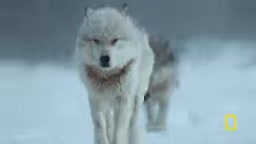
This line directly defines the narrative core of the entire documentary: the wolves are not performing—they are fighting to survive. Wolves in Hudson Bay face seasonal food pressure; when moose hunting season arrives, they must seize the opportunity or face starvation and even death. This survival pressure is precisely the most precious and hardest-to-capture authentic material in nature documentary filmmaking.
Hudson Bay is a large inland sea in northeastern Canada, connected to James Bay to the south and bordered by Quebec, Ontario, Manitoba, and Nunavut. The region has a subarctic climate, with long, severe winters where temperatures can drop below minus forty degrees Celsius, and short, cool summers. The tundra and boreal coniferous forests interweave along the Hudson Bay coast and surrounding areas, providing habitat for large mammals such as polar bears, caribou, moose, and gray wolves. Each winter, after sea ice forms, polar bears move onto the bay surface to hunt seals, while wolves in the inland woodlands depend on moose, caribou, and other ungulates for food. Because food resources fluctuate dramatically with the seasons, the predator-prey relationship here is extremely tense, making it an ideal natural laboratory for studying the dynamics of northern ecosystems.
Moose: The Underestimated Dangerous Prey
Many people misunderstand the relationship between wolves and moose, assuming that wolves as predators hold absolute advantage. The trailer corrects this perception with a short, powerful narration: "Moose are dangerous prey."
An adult moose can weigh hundreds of kilograms and possesses massive antlers and powerful kicking legs. The counterattack of a single adult moose can be lethal. Wolves must rely on teamwork, patient exhaustion, and precise tactics to have any chance of taking down such prey. This means the filming crew is not facing a "predation show" but a life-and-death contest full of uncertainties.
Moose are the largest extant deer species, with adult males weighing between four hundred and seven hundred kilograms and standing over two meters at the shoulder. Although they feed on plants, they are extremely aggressive when facing predators. A moose's front hooves are immensely powerful—a single strike can shatter a wolf's bones or even skull; their massive antlers are also deadly weapons during the autumn rut. In the boreal forests of North America and Eurasia, wolves are one of the moose's primary natural enemies, but wolf packs typically prioritize calves, the elderly, or the infirm—directly attacking a healthy adult moose carries an extremely high cost. Research shows that the success rate of wolf packs hunting adult moose is often less than ten percent, with most pursuits ending in the moose escaping or the wolves giving up. This long-term contest has shaped the moose's robust physique and defensive behavior, and has also forced wolves to evolve highly coordinated pack-hunting tactics.
Filming Wolves: A Dual Test of Physical Endurance and Technology
Bertie Gregory's filming style is known for being up-close and immersive. This mission is even more extreme: to capture the wolves hunting, the crew must keep pace with the wolves' movement speed.
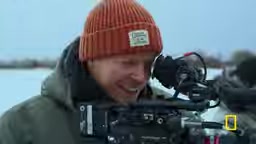
"If we want to film the pack we've got to keep up"—this line reveals the fundamental logic of wildlife documentary filmmaking: no matter how advanced the technical equipment, it cannot compensate for falling behind in physical distance. Wolves move quickly through snow and woodland, and the crew must carry heavy equipment while keeping pace across equally complex terrain.
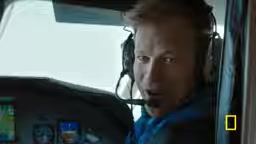
The trailer's closing line, "What did you do at work today?" carries a dark humor, hinting that this job is far from the romantic image outsiders might imagine. It is more like a wilderness endurance training that lasts for weeks—except the final output is precious footage for audiences around the world.
Close-range immersive filming has become an important trend in wildlife documentaries in recent years, standing in stark contrast to the traditional long-lens telephoto approach. Telephoto lenses can capture clear images from a safe distance but compress the sense of space, making it difficult to convey the environmental scale in which the animals exist. Immersive filming, on the other hand, requires photographers to enter the animals' activity radius, using wide-angle or medium focal length lenses to give viewers a sense of being there. This approach places extremely high demands on photographers: they need knowledge of animal behavior to predict movement directions, wilderness survival and tracking skills, and the ability to move quickly through snow, swamps, and dense forests while carrying heavy loads. Bertie Gregory is a leading figure in this style, having previously employed similar methods to film large predators in Antarctica, the African savanna, and the Arctic. The cost of this filming approach is significantly increased risk, but the reward is footage with greater narrative tension and scientific observational value.
Why This Trailer Is Worth Watching
From a production standpoint, National Geographic's technical accumulation and storytelling capabilities in the field of nature documentaries remain at the top tier. The trailer does not pile on special effects or sentimental music, but instead uses concise narration and intensely压迫 imagery to convey the cruelty and authenticity of the wilderness.
From a content standpoint, research on wolf pack hunting behavior itself has ecological value. Such footage can help researchers understand the dynamic balance between predators and prey, especially against the backdrop of climate and human activities continuously affecting Arctic and subarctic ecosystems.
Bertie Gregory is known for filming large predators up close, and this challenge of tracking wolves in Hudson Bay continues his consistent hardcore style. For nature documentary enthusiasts, this trailer is already enough to build anticipation for the full film.
The dynamic balance between predators and prey is one of the core topics in ecology. The relationship between wolves and moose is not simply "wolves eat moose" but a complex system regulated by climate, vegetation, disease, and human activity. For example, warm winters may cause moose populations to decline due to increased parasites and disease, which in turn affects wolf reproduction success rates; conversely, a decrease in wolf numbers allows moose to over-browse saplings, altering forest regeneration rhythms. In subarctic regions, climate change is shortening winters and altering snow conditions, all of which disrupt the existing predation pressure patterns. Footage documenting wolf hunting behavior can provide behavioral evidence for long-term ecological monitoring, helping researchers assess population health and whether ecosystems are within stable ranges.
Viewing Recommendations
The specific release date for the full film has not yet been announced, but the trailer sends a clear signal: this will be a tightly paced, visually stunning wolf ecology documentary. Stay tuned to National Geographic's official channels to get complete broadcast information as soon as it becomes available.
Related articles

LLaMA-Factory in Practice: A Complete No-Code Guide to Fine-Tuning Large Models
An introduction to LLaMA-Factory, the open-source fine-tuning tool: its 60.1K-star background, supported models and algorithms, local vs. cloud deployment, and CUDA setup steps.

Zeng Ming's Deep Retrospective: Why OpenAI May Not Be the Ultimate Winner — and Why the Corporate System Will Disappear
Zeng Ming's deep retrospective on the AI endgame: model companies are just infrastructure, OpenAI and Anthropic won't be the final winners; the next battle is the Agent entry point standard; the corporate system will disappear as AI restructures collaboration, and only mission-driven companies can survive the cycle.

OpenHands v1.28.0: OpenCode and PI Added as Built-in Agents, API Keys Requestable In-Conversation
OpenHands ships 5 releases in 21 days: v1.27.0 adds OpenCode and PI as built-in agents, v1.28.0 enables in-chat key requests. ACP integration, credential reuse, model list changes, and upgrade advice.