Native Marine Tank Daily Log: The Ocean Creatures with Personalities All Their Own

A charming native marine tank daily log tracking each creature's growth, health, and distinct personality.
The creator returns with a native marine tank update after a break, checking in on each resident one by one. The Blood Fuzz Monster has stabilized in size, Xiao Guai has grown dramatically and eats enormous meals, and Hai Bao has lost a little weight with a small white spot — judged to be a minor issue. The feeding segment steals the show: Xiao Guai is finicky, now refusing shrimp liver in favor of Ga Le liver, and must always be fed first or it will attack the other fish. The video captures the quiet appeal of documentary-style tank content — long-term observation that builds a genuine bond between keeper and creature.
A Long-Awaited Native Marine Tank Update
This video marks the creator's return to native marine tank updates after a bit of a hiatus. They open with a quick check-in — now that they've taken back control of their own schedule, there's finally time to film again. The stars of the tank, including two fish affectionately nicknamed "Xiao Yan" and "Xiao Shi," make their appearances one by one to greet the audience.
For marine tank hobbyists, the value of this kind of documentary-style video isn't in stunning visuals — it's in the long-term tracking of each creature's growth and personality. Native marine tanks (原生海缸) stay closer to natural ecosystems than artificially aquascaped reef tanks, and they demand a much deeper understanding of each species' natural behavior.
How the Tank Residents Are Doing
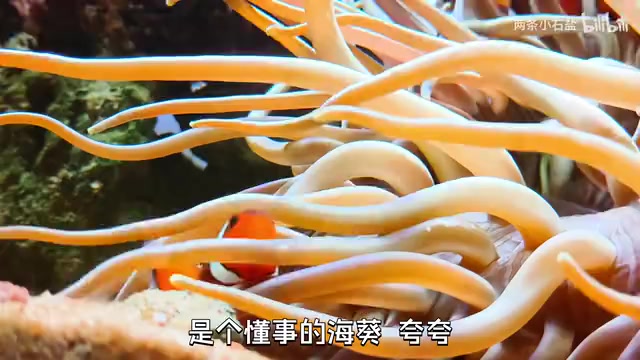
The video goes through each resident's current condition one by one. The "Blood Fuzz Monster" (likely a type of anemone or soft-bodied invertebrate) appears to have stopped growing and has settled into a stable size. The two fish jokingly called "Little Stinky Fish" are behaving themselves. The most dramatic growth belongs to "Xiao Guai" — it's now roughly the same size as "Hai Bao," puts away an impressive amount of food at every meal, and ends up with a visibly rounded belly.
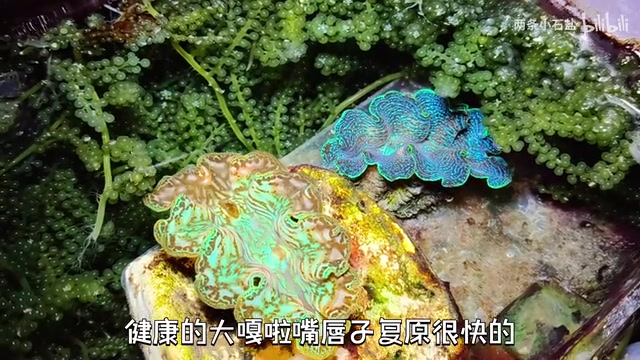
The tank also houses two larger creatures (referred to as "Da Ga Le" in the video), which startle and hide when the creator tries to interact with them. One of them had a mouth injury at some point, but it appears to have healed quickly on camera. The creator also notes that the same individual can display noticeably different colors depending on the viewing angle — one of the genuinely fascinating qualities of native marine life.
As for "Hai Bao," it seems to have lost a little weight recently, and a small white spot has appeared on its back. The creator's take is that this is nothing more than a minor "common cold" — as long as the animal is still eating and defecating normally, there's no need to panic. That kind of calm, experience-based health assessment only comes from years of hands-on observation.
A Native Marine Tank is an aquarium that features wild marine life from a specific local or regional habitat, with the goal of recreating that ecosystem as faithfully as possible. It differs from the more common mixed reef tank, which prioritizes coral reef aquascaping. The core philosophy of a native marine tank is authentic ecological representation — which means stricter requirements for water parameters, substrate selection, and specimen sourcing. Keepers need a thorough understanding of their animals' wild behavior to maintain normal physiology and activity in a closed system. For these reasons, native marine tanks are considered one of the more challenging setups in the hobby, but also one of the most ecologically meaningful and rewarding.
Feeding Time: A Window into Their Personalities
The feeding segment is the most entertaining part of the video, because it puts each creature's personality on full display.
"Xiao Guai" is a picky eater — after being fed shrimp liver three times in a row, it completely burned out on the stuff and now refuses to eat anything but "Ga Le" liver. On top of that, it eats messily; the creator describes it as a "food demolisher," biting food apart and sending fragments drifting all over the tank. Fortunately, the other fish in the tank actively clean up the scattered bits, creating an unexpected kind of teamwork.
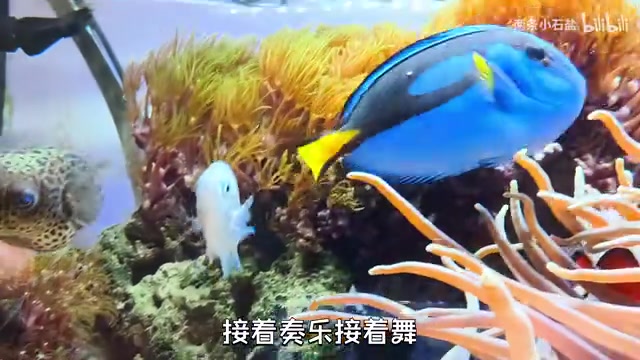
There's also a non-negotiable rule at feeding time: Xiao Guai always gets fed first. The creator explains that if this particular individual doesn't get priority, it gets jealous and starts attacking the other fish. Give it first dibs, and everyone gets along just fine. This kind of feeding strategy — developed around one animal's personality — is exactly the sort of practical wisdom that comes with managing a mixed-species tank.
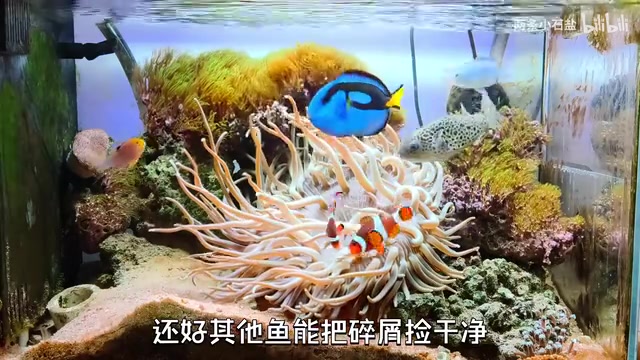
After Xiao Guai is sorted, "Juan Mao Guai" gets its share too, even though it isn't actually the jealous type. Any leftovers don't go to waste — the rest of the fish get topped up with pellet food, and only then is the whole feeding routine considered complete.
A Mixed Species Tank is an aquarium system that houses multiple different species together. The central challenge of managing one is navigating interspecies competition — territorial disputes, food competition, and aggressive behavior. Individual animals often establish clear dominance hierarchies, with higher-ranking individuals claiming first access to food and space. The "feed Xiao Guai first" rule in this video is a perfect example of a keeper identifying the dominant individual through long-term behavioral observation and actively intervening in feeding order to reduce aggression. This kind of behavior-based management insight is nearly impossible to find in textbooks — it can only be accumulated through years of direct experience.
The Unique Value of Documentary-Style Content
At its core, this type of native marine tank daily log is an ongoing ecological observation journal. There are no tutorial-style tips or how-to guides — just vivid, granular details: who stopped growing, who's lost weight, who's become a picky eater, who gets jealous. Through these details, viewers get a genuine sense of the long-term relationship a keeper builds with the creatures in their care.
For fellow marine tank hobbyists, these everyday observations offer practical benchmarks for assessing animal health and managing mixed-species dynamics. For general viewers, it's simply a calm, restorative slice of natural life. The appeal of the native marine tank lives in exactly these kinds of seemingly mundane moments.
Related articles
FlyEnv Plugin Review: Visually Running llama.cpp and Managing GGUF Models
FlyEnv launches the official llama.cpp plugin with side-by-side Metal runtime management, public GGUF repository indexing with file type labels, and visual configuration of context, threads, and GPU layers—saving templates and speculative decoding with each model for one-click local LLM inference.

How Can Frontend Developers Advance into AI Agent Development? Deconstructing System-Level Agent Architecture from OpenClaw
Starting from the OpenClaw demo in a Bilibili open class, this article breaks down the three-layer architecture and universal formula of system-level AI agents, and analyzes the path for frontend developers to enter agent development based on TypeScript, including plugin-based design and security/memory layer challenges, with an interview answer framework.

WorkBuddy in Action: How AI Agents Automate Batch File Conversion and Archiving
Bilibili creator Teacher Shanyao tests WorkBuddy vs. Doubao on batch file conversion, showing how AI Agents move from "giving solutions" to "direct execution," with a full workflow and credit cost reference.