NetBSD and My Life: Why a Twenty-Year-Old Open Source Memoir Is Trending Again

A 2005 NetBSD memoir resurfaces, sparking reflection on open-source identity and depth in the AI age.
A personal essay from 2005 about one developer's lifelong bond with NetBSD has resurfaced on Hacker News, drawing renewed attention. This article examines why: NetBSD's extreme portability philosophy, the deep relationship between open-source communities and personal growth, and a growing nostalgia among developers for engineering craftsmanship in an era dominated by AI hype and black-box abstractions.
Introduction: A Memoir Spanning Two Decades
Recently, an old article titled "NetBSD and my life (2005)" resurfaced on the Hacker News front page, garnering 100 points and 25 comments. Written in 2005, this personal narrative documents the author's deep connection with the NetBSD open-source operating system. Despite its age, the open-source spirit it reflects, the philosophy behind technical choices, and the symbiotic relationship between personal growth and a technical community remain profoundly relevant today.
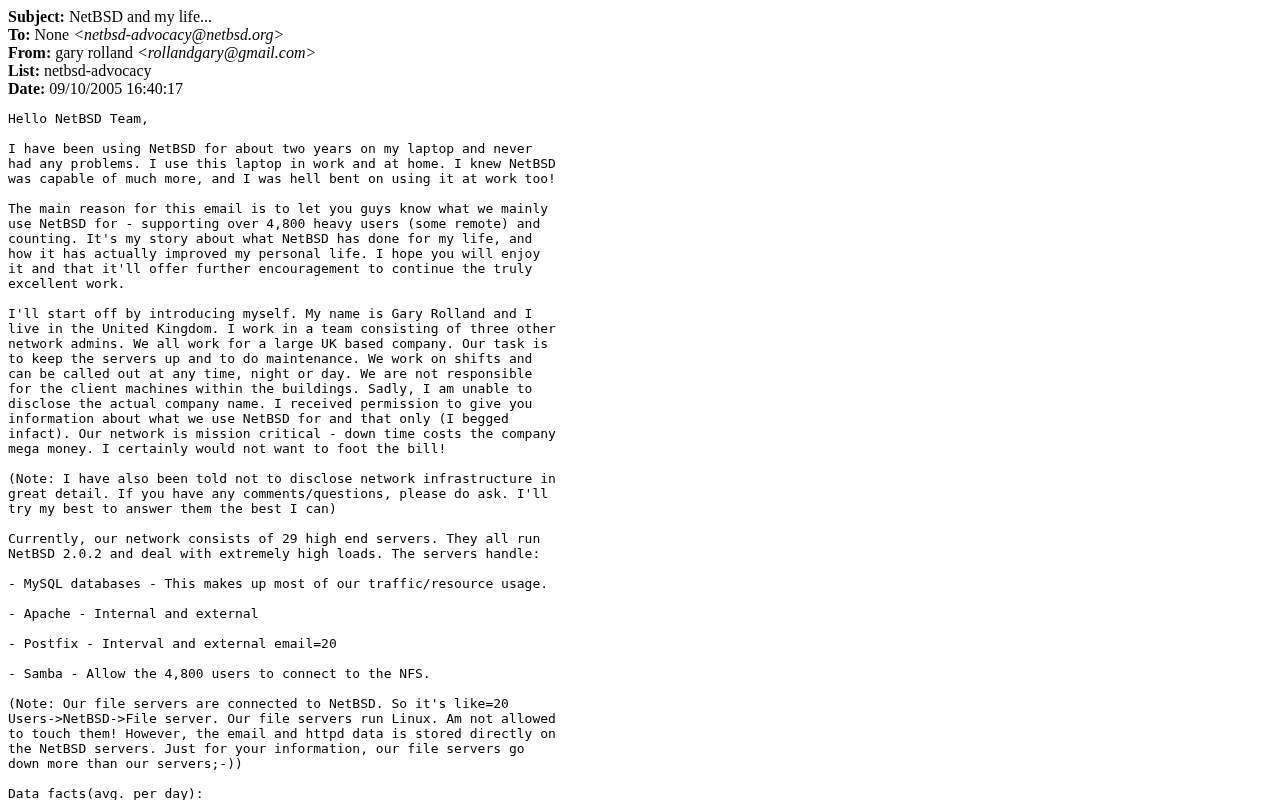
Why does a twenty-year-old article still resonate so widely? The answer may lie in NetBSD's unique positioning—and in the memories of every technologist who has grown alongside an open-source system.
NetBSD: The Underrated "King of Portability"
What It Actually Is
NetBSD is one of the three major BSD branches (alongside FreeBSD and OpenBSD), originating in 1993 as a descendant of BSD Unix from the University of California, Berkeley. BSD (Berkeley Software Distribution) traces its history back to 1977, developed by Berkeley's Computer Systems Research Group (CSRG), initially as an enhanced version of AT&T Unix. During the 1980s, BSD introduced critical innovations including the TCP/IP networking stack, virtual memory systems, and the Fast File System (FFS)—technologies that laid the foundation of the modern internet. The release of BSD Net/2 in 1991 and the subsequent resolution of legal disputes with AT&T enabled free BSD-derived systems to emerge, and NetBSD was the first open-source operating system project derived from 4.4BSD-Lite.
Compared to its siblings, NetBSD established a distinct goal from its very inception—extreme portability. Its famous motto "Of course it runs NetBSD" is no joke: the system can run on dozens of platforms ranging from large servers to embedded devices, from mainstream x86 architectures to obscure legacy hardware. As of now, NetBSD officially supports over 57 different system architectures, from VAX, SPARC, and MIPS to ARM and RISC-V, covering virtually every mainstream and niche processor family.
Each of the three major BSD branches has its own unique technical philosophy: FreeBSD focuses on performance optimization and enterprise-grade features for x86/AMD64 platforms, serving as the infrastructure choice for companies like Netflix and WhatsApp, with its ZFS support and Jails virtualization technology being highly regarded; OpenBSD, forked from NetBSD by Theo de Raadt in 1995, places security as its highest priority, and its code audit culture has produced widely adopted security components like OpenSSH, LibreSSL, and the pf firewall; NetBSD, meanwhile, upholds the path of portability and code cleanliness—its pkgsrc cross-platform package management system has been adopted by multiple operating systems, and its rump kernel technology allows kernel components to run as user-space libraries, demonstrating the foresight of its architectural design.
A Unique Technical Philosophy
NetBSD's core value lies in code cleanliness and architectural clarity. To achieve cross-platform portability, developers must strictly separate hardware-dependent code from hardware-independent code. This engineering discipline makes NetBSD an excellent reference for learning operating system principles.
Specifically, NetBSD defines a clear Hardware Abstraction Layer (HAL), isolating processor architecture-specific code (such as interrupt handling, MMU operations, and context switching) in dedicated directories, while core kernel subsystems like the scheduler, file systems, and network protocol stack remain entirely hardware-independent. This machine-independent/machine-dependent code layering architecture means that porting to a new platform only requires implementing a limited set of interface functions, dramatically reducing the engineering complexity of cross-platform adaptation.
For many developers who encountered low-level technology in the early 2000s, NetBSD was not merely a usable system—it was a living textbook. This explains why the original author tied NetBSD so closely to "my life"—it carried not just utility, but an entire set of beliefs about how software ought to be built.
The Mutual Shaping of Open Source Systems and Personal Growth
Technical Choices as Value Statements
In 2005, choosing NetBSD over the more popular Linux or FreeBSD was itself an expression of attitude. To understand the weight of this choice, one needs to appreciate the technological landscape of the time: 2005 was a period of rapid development for the Linux 2.6 kernel series, Ubuntu had risen swiftly just a year after its release, and enterprise Linux (RHEL, SUSE) was eating into traditional Unix markets. That same year, Sun Microsystems open-sourced Solaris (OpenSolaris), and Apple released Mac OS X Tiger built on FreeBSD. Against this backdrop, developers choosing NetBSD faced an ecosystem with a far smaller user base than Linux and virtually zero commercial support.
Yet it was precisely this "niche" positioning that attracted a cohort of hardcore developers who valued technical depth over ecosystem convenience. This choice often meant that the developer prioritized engineering rigor, system simplicity, and the technical purity of the community over market share or commercial ecosystem prosperity. The original author's first-person account of personal experience reveals the deeper relationship between open-source software and its users—one that transcends the simple "user-product" dynamic.
Community as Belonging
For many early open-source contributors, participating in a project meant finding a like-minded technical community. Before GitHub launched in 2008, open-source project collaboration relied primarily on mailing lists, CVS/SVN version control systems, and IRC instant messaging. Developers would send patches to mailing lists, which underwent public code review before being merged into the codebase by committers. While this workflow had a higher barrier to entry, it cultivated rigorous coding habits and clear technical communication skills. NetBSD's source-changes mailing list still operates today, automatically notifying all subscribers of every code commit, maintaining a high degree of transparency.
Within this community, code commits, mailing list discussions, and bug fixes constituted important milestones in one's technical career. This "slower-paced" collaboration model stands in stark contrast to today's Pull Request-driven rapid iteration, yet it often produced more solid systems-level programming capabilities. The article is titled "NetBSD and my life" precisely because, for the author, the boundary between technical career and personal life had long since blurred—open source had become internalized as a way of life.
Why This Old Article Is Trending Again Today
Nostalgia Masking Present-Day Anxiety
The resurgence of this 2005 article is itself a phenomenon worth pondering. In an era where AI waves sweep through the tech world and large language models dominate the discourse, more and more developers are nostalgic for a "purer" technological age—when people cared about system elegance, code readability, and engineering craftsmanship, rather than compute stacking and parameter races.
The Enduring Vitality of Niche Operating Systems
The Hacker News community's affection for this type of content also reflects technologists' appreciation for diversity. In a world where operating systems grow increasingly homogeneous and cloud-native and container technologies nearly erase underlying differences, the hacker spirit of "running it for the sake of running it" that NetBSD represents feels especially precious.
The proliferation of container technology (Docker/Kubernetes) and cloud-native architectures has made it increasingly invisible which OS kernel applications run on. Through its absolute dominance in cloud computing (the vast majority of VMs on AWS, Azure, and GCP run Linux), Linux has effectively become the de facto server-side standard. OCI container images further decouple applications from host systems—developers don't even need to know what kernel version is running underneath. Under this trend, the differentiating value of operating systems themselves has been dramatically compressed, and NetBSD's insistence on "understanding every layer of your system" serves as a form of technical reflection against this black-boxing trend.
Among the 25 comments, many veteran users reminisce about the first time they got NetBSD running on some peculiar piece of hardware. This collective awakening of shared memory is precisely the source of the article's renewed popularity.
Lessons for Today's Technologists
Depth Over Breadth
In an era that encourages rapid learning and chasing trends, the NetBSD story reminds us: true technical capability often comes from sustained deep engagement with a particular domain. The author's decades-long bond with NetBSD is a vivid embodiment of long-term thinking on the technical path.
The Legacy of Open Source Spirit
Regardless of how technological trends shift, the sharing, collaboration, and transparency championed by open-source communities remain the most valuable assets of the software world. Today's developers may face GitHub, large language models, and cloud platforms, but the sense of belonging that comes from participating in a shared endeavor is no different from what NetBSD contributors felt twenty years ago. From mailing lists to Pull Requests, from CVS to Git, the tools evolve, but the essence of open-source collaboration—aggregating individual wisdom into public knowledge—remains unchanged.
Conclusion
The reason "NetBSD and my life," an article spanning two decades, can still touch hearts is that it was never just about the technical details of an operating system. It's the story of how a person affirmed their identity through technical choices and found belonging within an open-source community. In today's era of AI's relentless advance, looking back at this humble yet profound technical sentiment may help us reconsider: why exactly do we write code, and what kind of technologists do we want to become?
Related articles

GPT-Next Leak, Gemini 4 Argon Imminent: AI News Roundup
GPT-Next leak suggests extreme efficiency; OpenAI's 28-day shipping pledge boosts speed 50%; Gemini 4 Argon nears release; Anthropic subscription value report sparks debate.

GPT-Next Leaked, Gemini 4 Argon Speeds Up, Fable 5.5 May Launch Today
OpenAI's GPT-Next model leaks, expected to be extremely low-cost and possibly part of the 28-day release plan; Gemini 4 Argon internal testing accelerates, NanoBanana 2.1 is live; Semi Analysis tests show Claude Max's equivalent API value is about 5 times that of ChatGPT Pro; Fable 5.5 may launch today.

Gemini 4 Argon Launches Globally: Key Highlights from the AI Daily Brief
Google opens Gemini 4 Argon globally across Pro and Ultra subscriptions and the API, and demonstrates robot control. This article rounds up open-source models, Agent infrastructure, cost transparency, and safety governance updates.