Nevada's 'Trump Recession': Voter Remorse Before the Midterms

Nevada voters are feeling "buyer's remorse" over the trade war and high prices, and the Culinary Union's canvassing scene reflects the midterm political winds.
The article starts with Las Vegas Culinary Union members going door to door canvassing for Democratic candidates, raising the question of whether Nevada voters regret supporting Trump in 2024. The video sums up the local political landscape in three words—"Trump recession": the trade war, strict immigration policies, and persistently high prices have caused some voters who once voted for Trump to experience "buyer's remorse." The Culinary Union is seen as a political bellwether in Nevada, and the fact that its members still feel life is hard even with good union jobs shows that economic issues have moved from abstract policy debate down to household budgets. The article argues that this signal could sway voters who once supported Trump, making Nevada the frontline thermometer for observing the midterms, and that voters' answers will test whether the "Trump recession" is campaign rhetoric or a real political shift.
Starting with the Union's Door-to-Door Canvassing
With only a few days left until the midterm elections, Culinary Union members Jessica and Al are going door to door in Las Vegas, canvassing for Aaron Ford and Horsford. They say that all the issues they've been tracking this year will finally come to a head in these last few days.
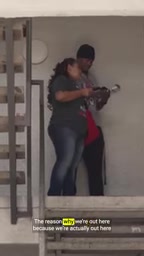
This on-the-ground footage from YouTube brings a bigger question to the surface: do Nevada voters regret voting for Trump? The video's answer is condensed into three words—"Trump recession."
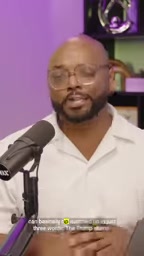
What Is the 'Trump Recession'?
The video defines the term as follows: Nevada voted for Trump in 2024, but after his trade war with Mexico and Canada, strict immigration policies, and persistently high prices, some local voters are beginning to experience "buyer's remorse."
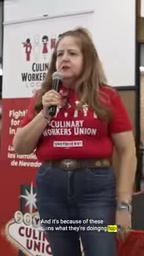
One union member puts it bluntly on camera: even with a good union job, they are still struggling, "and that never used to happen," and she blames the actions of politicians. This gets to the heart of the matter—the problem isn't whether jobs exist, but whether those jobs can still support a life.
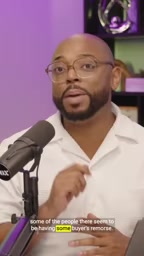
"Buyer's remorse" originally refers to the regret consumers feel after purchasing an expensive item. In a political context, it is borrowed to describe voters' regret after casting a ballot for a candidate when the policy outcomes fall short of expectations. The concept is often used to analyze shifts in swing voters' attitudes, especially when economic issues are prominent. A related term is "voter's remorse," but "buyer's remorse" places greater emphasis on treating a vote as a transaction—voters expect a policy payoff, and if tariffs drive up prices or immigration policy disrupts the local labor market, they feel they "bought the wrong thing."
Why Nevada?
Nevada is a typical sample for observing the midterms. It has strong union organizations (the Culinary Union has long been regarded as a local political bellwether), and it is also a state directly affected by trade and immigration policy. The video emphasizes that the Culinary Union is a group that "knows politics super well," and their feelings often reflect changes in the political landscape ahead of time.
When even union members begin to publicly express struggle, it shows that the economic narrative has moved from abstract policy debate down to concrete household budgets.
The Culinary Union is one of the most influential private-sector unions in Nevada, affiliated with UNITE HERE, representing about 60,000 casino, hotel, and food-service workers in the Las Vegas and Reno areas. It is called a "political bellwether" because its members are mostly Latino, Asian, and female immigrants, forming an important part of Nevada's Democratic voter base. The union has a mature door-to-door canvassing and voter-protection operation and has historically played a key mobilization role in primaries and general elections. In the swing state of Nevada, the Culinary Union's endorsements and grassroots actions are often seen as a leading indicator of the political landscape.
What It Means for the Midterms
The video doesn't offer polling numbers, but it does offer a signal: voters who once supported Trump may be wavering because of the trade war and the cost of living. For both parties, the canvassing scene in Nevada is the frontline thermometer.
With only a few days left until voting day, Jessica and Al's question is simple—how many days until Election Day? And the answer voters give will determine whether the "Trump recession" is campaign rhetoric or a real political shift.
Midterm elections refer to the congressional elections held in the middle of a U.S. president's four-year term, usually in November of the second year after the president takes office. All 435 House seats and about one-third of Senate seats are up for election, and most governors and state legislatures are elected at the same time. Historically, the ruling party tends to lose seats in midterms, a phenomenon known as the "midterm curse." As a result, midterms are often seen as a national referendum on the sitting president's performance, with the economy and price levels being core variables affecting the outcome. As a key swing state, Nevada's political landscape is indicative of the two parties' battle for control of Congress.
One-line Summary
Nevada voters are experiencing "buyer's remorse" over the trade war and high prices, and the Culinary Union's canvassing scene reflects the midterm political winds.
Paragraph Summary
Starting from the scene of Las Vegas Culinary Union members going door to door canvassing for Democratic candidates, the article raises the question of whether Nevada voters regret supporting Trump in 2024. The video sums up the local political landscape in three words—"Trump recession": the trade war, strict immigration policies, and persistently high prices have caused some voters who once voted for Trump to experience "buyer's remorse." The Culinary Union is seen as a political bellwether in Nevada, and the fact that its members still feel life is hard even with good union jobs shows that economic issues have moved from abstract policy debate down to household budgets. The article argues that this signal could sway voters who once supported Trump, making Nevada the frontline thermometer for observing the midterms, and that voters' answers will test whether the "Trump recession" is campaign rhetoric or a real political shift.
Related articles

9 AI Subscription Plans Compared: The Real Cost Per 100M Tokens Revealed
Bilibili creator tests 9 AI subscription plans from Volcano, Alibaba, Tencent, Baidu, Zhipu, Xiaomi, MiniMax and more, converting them all to real cost per 100M tokens, breaking down fixed-quota vs. three-tier coefficient billing and how caching, time-of-day discounts, and window limits affect actual quota.

Vibe Coding for Beginners: Expressing Intent Instead of Handwriting Code
What is Vibe Coding? A 137-episode Bilibili course defines it: the core is expressing intent, not writing code. This article analyzes Vibe Coding's productivity logic, target audience, and entry expectations to help beginners decide if it's worth learning.

LangChain Beginner's Guide: An Agent Development Roadmap from LangGraph to Deep Agents
Clarify the encapsulation relationship among LangChain, LangGraph, and Deep Agents, and master the learning path and selection logic for agent development frameworks—suitable for beginners in large model development.