New Breakthroughs in Eligibility Traces and Adaptive Step Sizes for Deep Reinforcement Learning

The paper proposes the FSD optimizer, enabling eligibility traces to preserve forward-backward equivalence in deep RL for efficient learning without a replay buffer.
Deep RL typically relies on experience replay buffers, which suffer from low memory efficiency and learning delay. Eligibility traces support incremental updates from data streams and multi-step credit assignment, but combining them with adaptive vector step sizes in deep RL remains open. A recent paper shows adaptive step sizes must be part of the eligibility trace to preserve forward-backward equivalence, and that Adam-like optimizers lack an online backward view, breaking equivalence when applied directly. The authors propose the Function-Space Distance (FSD) optimizer, which measures step sizes in function space. Experiments show FSD outperforms SGD and naive Adam, and eligibility trace algorithms match or beat PPO with a buffer in most environments. Code is open-sourced.
Deep reinforcement learning (RL) typically relies on experience replay buffers to store interaction data, but this approach suffers from low memory efficiency and learning delay. Eligibility trace algorithms allow incremental updates from data streams and enable multi-step credit assignment, yet how to combine them with vector step sizes in deep RL remains an open problem. A recent paper explores this in depth, proposes a new optimizer called Function-Space Distance (FSD), and validates its effectiveness across multiple algorithms.

Limitations of Experience Replay Buffers and the Rise of Eligibility Traces
Many deep RL algorithms store agent-environment interactions in a replay buffer and then learn by sampling transitions. While effective, this approach has two major problems: low memory efficiency and learning delay, because the agent can only learn when its transitions are sampled from the buffer. In addition, most of these methods use one-step or short multi-step temporal difference (TD) updates, which are slow at credit assignment.
Eligibility trace algorithms offer an alternative: they allow incremental updates directly from the observation stream without relying on a buffer, and they can perform credit assignment over multiple steps. Such algorithms were once common in linear function approximation but have only recently been applied to deep RL. However, some fundamental questions remain unresolved, such as how to combine vector step sizes with eligibility traces in the deep RL setting.
Eligibility traces are a mechanism in reinforcement learning for multi-step credit assignment. The core idea is to maintain a decaying "trace" for each state or parameter that records the strength of its recent visitation or influence. The TD error at the current moment is propagated backward to past states or parameters according to the strength of these traces, enabling efficient multi-step updates. Classic algorithms such as TD(λ) and Sarsa(λ) interpolate between one-step updates and Monte Carlo updates via the trace parameter λ. Under linear function approximation, eligibility traces have mature theoretical guarantees, but in nonlinear function approximation (such as deep neural networks), their combination with adaptive optimizers has long lacked rigorous analysis.
Adaptive Step Sizes Must Be Integrated into Eligibility Traces
The paper first shows that adaptive vector step sizes must be part of the eligibility trace in order to preserve the equivalence between the forward view and the backward view. The forward view and backward view are two perspectives for understanding eligibility traces: the former looks back at the past from the current moment, while the latter accumulates influence from the past to the present. Preserving this equivalence is crucial for the theoretical consistency and performance of the algorithm.
Furthermore, the paper points out that the step sizes of common optimizers (such as Adam) do not have an online backward view. This means that directly applying optimizers like Adam may break the forward-backward equivalence, thereby affecting learning. This finding explains why simply combining Adam with eligibility traces may not be optimal.
The forward view and backward view are two equivalent perspectives for understanding eligibility traces. The forward view starts from the current moment, aggregates future multi-step TD errors weighted by λ decay, and uses them to update the current state's value estimate; the backward view maintains a decaying trace vector and updates parameters at each step by multiplying the current TD error by the trace. Under exact computation, the two views produce exactly the same update, and this equivalence is the cornerstone of the theoretical consistency of eligibility trace algorithms. However, when nonlinear function approximation and adaptive step sizes (such as Adam's per-parameter step sizes) are introduced, if the step sizes are not correctly integrated into the trace update process, the equivalence is broken, causing the algorithm's behavior to deviate from theoretical expectations. The paper argues precisely from this angle that adaptive vector step sizes must be part of the eligibility trace.
The FSD Optimizer: Preserving Forward-Backward Equivalence
To address the above issues, the authors introduce a new optimizer, Function-Space Distance (FSD), which maintains forward-backward equivalence. FSD's design takes into account the properties of eligibility traces, ensuring that step-size adjustments are consistent with trace updates. The paper tests four eligibility trace algorithms, covering semi-gradient and gradient TD updates, as well as value-based methods and actor-critic methods.
Experimental results show that FSD outperforms SGD or naively applied Adam. These algorithms outperform or match other streaming methods in most environments, and are comparable to or better than PPO with a buffer. This suggests that with appropriate step-size design, efficient learning can be achieved without a buffer. The code has been made publicly available on GitHub for the research community.
Function-Space Distance (FSD) is an optimizer designed from the perspective of function space. Traditional optimizers (such as SGD and Adam) measure step sizes in parameter space, whereas FSD measures the distance by which the value function or policy function changes in function space before and after the update, and adjusts the step size accordingly. This design naturally aligns with the multi-step credit assignment of eligibility traces: since traces accumulate influence at the function level, step sizes should also be defined in function space to ensure consistency between the forward and backward views. FSD can be viewed as a generalization of the natural gradient idea, but it focuses more on maintaining equivalence within the eligibility trace framework rather than purely on second-order information.
Implications for Deep Reinforcement Learning Practice
The significance of this work lies in solving a key obstacle to applying eligibility traces in deep RL: how to set step sizes reasonably. Through theoretical analysis and experimental validation, the authors not only propose the FSD optimizer but also demonstrate the potential of eligibility trace algorithms in deep RL. For practitioners, this means they can consider training agents without large replay buffers, thereby saving memory and accelerating learning. This streaming learning approach may be particularly advantageous in resource-constrained environments.
Of course, the generality of FSD and its performance on different tasks still require further validation. But this work provides an important theoretical foundation and practical tool for future research, and is expected to drive deep RL toward more efficient and flexible directions.
For more details and code, please refer to the original paper and GitHub repository.
One-line Summary
The paper proposes the FSD optimizer, which enables eligibility traces to preserve forward-backward equivalence in deep reinforcement learning, allowing efficient learning without a replay buffer.
Paragraph Summary
Deep reinforcement learning typically relies on experience replay buffers, but these suffer from low memory efficiency and learning delay. Eligibility trace algorithms support incremental updates from data streams and multi-step credit assignment, yet how to combine them with adaptive vector step sizes in deep RL remains an open problem. A recent paper points out that adaptive step sizes must be part of the eligibility trace to preserve the equivalence between the forward view and the backward view, and that common optimizers like Adam lack an online backward view, so direct application breaks the equivalence. To address this, the authors propose the Function-Space Distance (FSD) optimizer, which measures step sizes in function space to maintain equivalence. Experiments show that FSD outperforms SGD and naive Adam, and that eligibility trace algorithms are comparable to or better than PPO with a buffer in most environments. The code is open-sourced.
Related articles
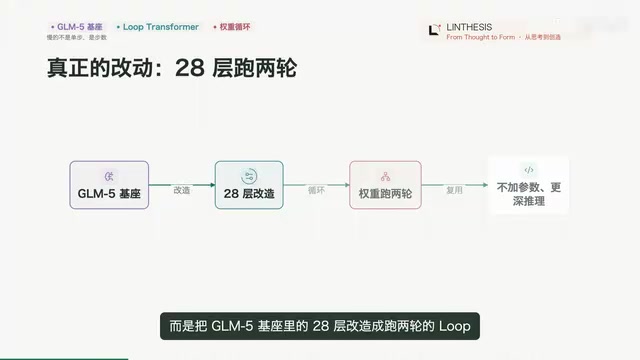
GLM-5.4 Coding Test 4.6x Slower? Unpacking the Loop Transformer Architecture
GLM-5.4 coding test took 431 minutes vs. competitor's 109, 4.6x more steps. We analyze its Loop Transformer architecture, KingBench4 score of 55.3, Max tier's 1.04M token cost, and tier selection advice.

Zhipu GLM-5.4 Quietly Released: A Debut for Loop Transformer Architecture
Zhipu GLM-5.4 quietly lands in coding plans: first Loop Transformer flagship with 750B params, 1M token context, AIM math up from 19.2 to 30.4, and native vision for coding from screenshots.
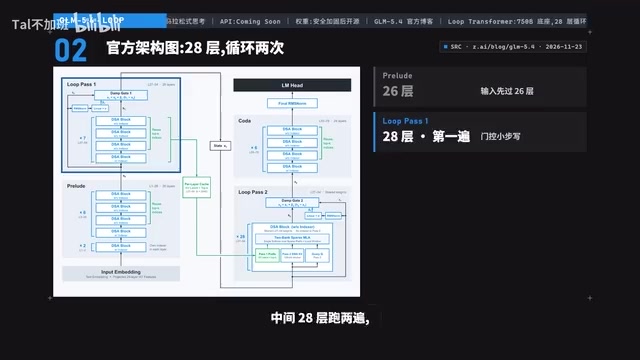
GLM-5.4 Releases 750B Model: Recurrent Transformer Architecture and the 30B Benchmark Controversy
GLM-5.4 releases a 750B model with a recurrent Transformer architecture that runs the same layers twice, claimed to match 2T–3T scale. But the benchmark table tests a 30B small model, not the main model. We break down the architecture changes, benchmark data, four demos, and open-source timeline.