New Paradigm in Protein Design: How Machine Learning Breaks Through Natural Sequence Limitations
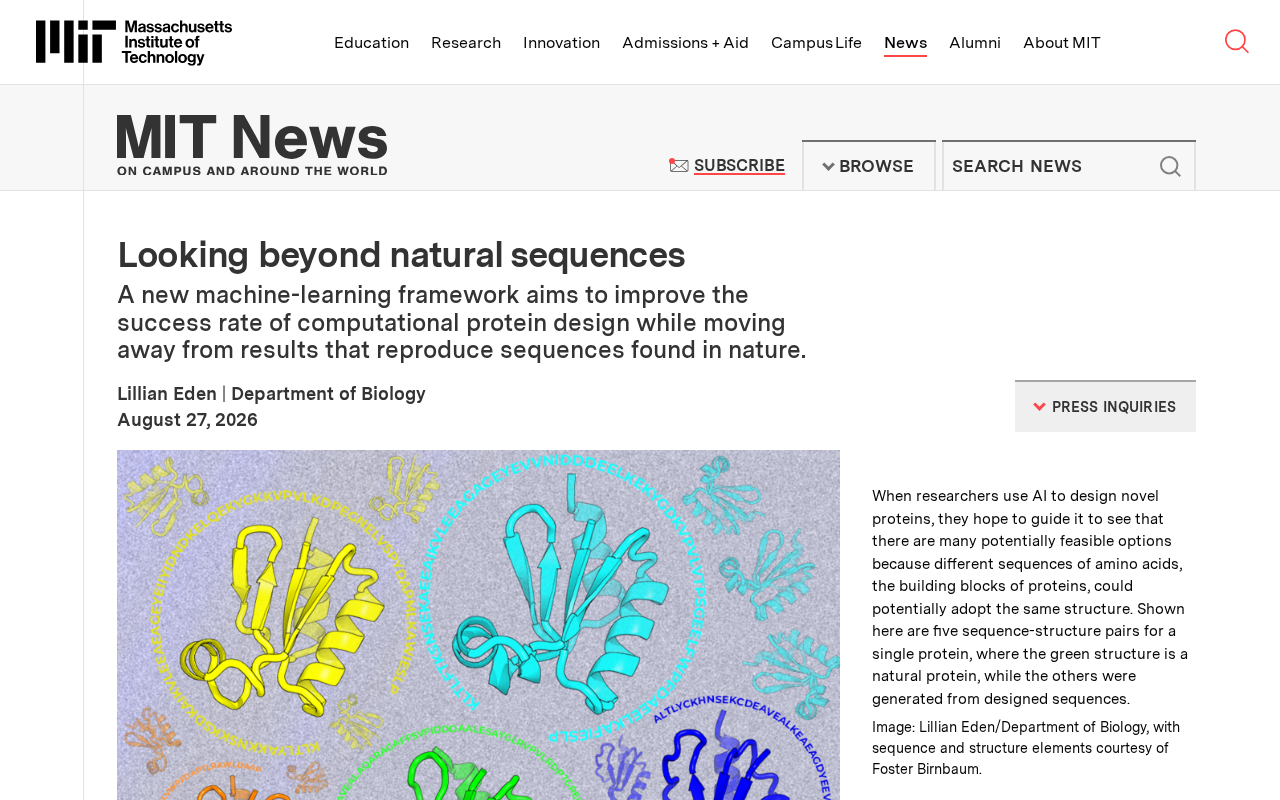
Machine learning enables protein design to break free from natural sequences, unlocking new possibilities
Protein design is shifting from replicating nature to surpassing it. New machine learning frameworks optimize for physicochemical properties rather than natural sequence similarity, employing negative sample learning and multi-objective optimization to boost success rates from 5-10% to over 50% in some cases.
From Imitation to Creation: A Paradigm Shift in Protein Design
The field of protein design is undergoing a profound transformation. Proteins are biological macromolecules composed of amino acid sequences that fold into specific three-dimensional structures, serving as the primary executors of life activities. Protein design refers to using computational methods to predict and design specific amino acid sequences that fold into desired three-dimensional structures and achieve target functions. Traditional computational protein design methods often rely on imitating and optimizing sequences that already exist in nature—learning patterns from approximately 200,000 known protein structures. While this approach is reliable, it also limits the innovation space for artificial proteins. Theoretically, the sequence space that can be formed by 20 natural amino acids is astronomical. For a 100-amino-acid protein, the possible sequence combinations reach 20^100, yet natural evolution has explored only a tiny fraction of this space.
The latest machine learning frameworks break through these constraints, shifting the goal from "replicating nature" to "surpassing nature," opening up entirely new possibilities for synthetic biology and drug design.
The core of this transformation lies in redefining design objectives: no longer treating natural sequences as the only standard answer, but instead using functional realization as the ultimate criterion. This means researchers can explore sequence spaces untouched by natural evolution and design protein molecules with entirely novel properties.
Core Technical Breakthroughs in Machine Learning Frameworks
The new protein design framework achieves innovation across multiple dimensions. In recent years, deep learning technology has achieved revolutionary breakthroughs in the protein field. AlphaFold2 solved the 50-year-old problem of protein structure prediction in 2020, accurately predicting three-dimensional structures from sequences. Building on this foundation, next-generation protein design tools like RFdiffusion and ProteinMPNN employ advanced architectures such as diffusion models and graph neural networks. These models no longer simply interpolate from natural sequences but have learned the physicochemical rules of protein folding, enabling them to generate entirely new sequences beyond the training data.
Fundamental shift in evaluation systems: The framework no longer uses "similarity to natural sequences" as the primary optimization metric, but directly optimizes for physicochemical properties such as protein stability and functionality. Traditional protein design employs homology-based methods, using sequence alignment and evolutionary information to guide design. Its core assumption is that similar sequences have similar structures and functions, which confines the design space to the neighborhood of known sequences. The new framework adopts a de novo design strategy, directly optimizing for physicochemical properties including: folding free energy, solvent-accessible surface area, hydrogen bond networks, hydrophobic core compactness, and other quantifiable metrics. This means that even if a sequence has very low similarity to any natural protein, it is a successful design as long as it is physically stable and functionally correct. This seemingly small shift fundamentally changes the dimensionality of the search space, expanding it from the local neighborhood of natural sequences to the entire theoretically feasible sequence space.
Intelligent constraint mechanisms: The framework introduces new constraint mechanisms that can maximize exploration of non-natural sequences while ensuring experimentally verifiable design results. Traditional methods often miss innovative sequences due to excessive conservatism, while the new framework significantly improves protein design success rates through more precise feasibility prediction.
Key Strategies for Improving Design Success Rates
Negative Sample Learning: Extracting Patterns from Failures
Improved success rates come from deep learning of failure cases. Negative sample learning is an important concept in machine learning and is particularly critical in protein design. Traditional training data mainly contains natural proteins (positive samples) but lacks systematic records of failure cases (negative samples). The framework not only analyzes successful design cases but, more importantly, systematically studies designs that failed in experiments, identifying sequence features and structural patterns that lead to failure—such as hydrophobic fragments prone to aggregation, proline distributions that disrupt folding pathways, and epitopes that cause immunogenicity.
This "negative sample learning" through contrastive learning enables the model to not only know what constitutes good design but, more importantly, to clearly understand what should be avoided, thereby more accurately judging which non-natural sequences are practically feasible. In practice, this has improved design success rates from 5-10% in early stages to over 50% in certain application scenarios today.
Multi-Objective Optimization Strategy
Protein design must simultaneously satisfy multiple constraints:
- Stability: Ensuring the protein maintains its folded state in the target environment
- Expressibility: Guaranteeing efficient expression of the sequence in host cells. This involves multiple levels of biological constraints: codon optimization (different organisms have different preferences for specific codons), mRNA stability (avoiding secondary structures that lead to low translation efficiency), post-translational modifications (such as disulfide bond formation requiring specific cellular environments), cellular mechanisms of protein folding (requiring assistance from chaperone proteins), etc. These constraints differ across expression systems like E. coli, yeast, and mammalian cells
- Functionality: Achieving the expected catalytic, binding, or regulatory functions
The new framework, by integrating host-specific expression data and more intelligent trade-off mechanisms, can optimize sequences for target expression systems, avoiding the common "rob Peter to pay Paul" problem in traditional methods and finding optimal balance points among multiple objectives.
Profound Impact on Synthetic Biology and Drug Design
The significance of this framework lies not only at the technical level but also in expanding the imaginative boundaries of protein engineering. The unique advantage of non-natural proteins is that they are not constrained by the limitations of natural evolution. Natural evolution is an optimization process under specific environmental pressures, with historical baggage and local optimum traps. For example, most natural enzymes work at 37°C and neutral pH because this is the organism's internal environment, but industrial applications often require high temperature, strong acid-base, or organic solvent environments.
When design is no longer limited by natural sequence templates, researchers can customize entirely new biomolecules for specific application scenarios:
- Industrial applications: Designing more efficient industrial enzymes with greater tolerance to extreme conditions. Non-natural proteins can be designed from scratch for these extreme conditions without compromising for other functional requirements within organisms
- Medical field: Developing more precise drug carriers and therapeutic proteins. Non-natural proteins can also avoid cross-reactivity with human natural proteins, improving treatment specificity and safety
- Basic research: Constructing artificial enzymes with entirely new catalytic mechanisms. Some entirely new chemical reactions do not exist in nature (such as click chemistry, carbon-fluorine bond formation, etc.), and designing artificial enzymes that catalyze these reactions requires breaking through natural sequence space
In the long term, this "surpassing nature" design philosophy may catalyze an entirely new protein library containing functional modules never produced by natural evolution. These non-natural proteins may exhibit performance surpassing natural proteins in extreme environment tolerance, catalytic efficiency, and specific recognition.
Current Challenges and Future Research Directions
Despite broad prospects, this direction still faces many challenges:
Experimental validation bottleneck: Each non-natural sequence design requires experimental confirmation of its function, yet the development speed of high-throughput experimental techniques has not fully kept pace with computational design. Current state-of-the-art technologies include: yeast display capable of screening 10^8-10^9 variants, phage display for antibody and peptide screening, microfluidic chips enabling single-cell level functional detection, and emerging DNA-encoded library technology. However, the throughput of these methods still lags behind computational design capabilities by several orders of magnitude—advanced generative models can produce millions of candidate sequences in hours, but experimental validation of each sequence may take weeks. This mismatch makes experimental validation the rate-limiting step in the innovation cycle.
Prediction accuracy: For designs that deviate significantly from natural sequences, the accuracy of behavior prediction still needs improvement.
Future research directions may include:
- Deep integration of the framework with automated experimental platforms, forming a closed loop of "design-synthesis-test-learn." Future solutions may rely on AI-driven laboratory automation and more intelligent candidate sequence screening strategies
- Developing more refined physical models to guide exploration of non-natural sequences
- Establishing performance evaluation standard systems for non-natural proteins
The emergence of this framework marks protein design's transition from "engineering" to "creation." While natural evolution is remarkable, it does not represent the entirety of sequence space—in those corners untouched by evolution, more possibilities waiting to be discovered may lie hidden.
Key Takeaways
Related articles

Meta Muse Spark 1.3 In-Depth Review: The Truth Behind Top-Tier Coding Capability and Ultra-Low Pricing
In-depth analysis of Meta Muse Spark 1.3's coding capabilities, million-token context, ultra-low pricing strategy, and data exchange logic. Covers performance benchmarks, technical architecture, use case recommendations, and privacy risk warnings to help developers rationally evaluate this AI programming model.

MOSS-VL-Realtime Hands-On: 11B-Parameter Real-Time Video Understanding on Consumer GPUs
MOSS Intelligence's MOSS-VL-Realtime model hands-on: 11B open-weight parameters supporting watch-while-answering, active silence, and dynamic updates. Successfully deployed locally on dual RTX 4070Ti Super with ~13.3GB memory usage. 256K context with 1fps sampling suits real-time scenarios like live monitoring and experimental observation.

AI Test Automation Learning Roadmap: A Complete Guide from Beginner to Expert
Complete AI test automation learning roadmap covering foundation building, AI testing-specific skills, and toolchain practice. Master data quality testing, model performance testing, adversarial testing, and more to achieve rapid career transformation.