New York Bans Car Subscription Fees: Automakers' Software Monetization Hits a Roadblock
New York legislation restricts automakers from charging subscription fees for built-in vehicle features, sparking debate on digital ownership and software monetization.
New York signed a bill restricting dealers and manufacturers from charging subscription or post-purchase fees for hardware features already built into vehicles, directly targeting the "hardware pre-embedded, software-unlocked" model. Officially framed as keeping owners' money in their pockets, it ignited heated debate on Hacker News over consumer rights boundaries and the sustainability of software-defined vehicle profits. The core dispute is digital ownership—whether consumers buy a device or a license requiring ongoing payment.
A new bill targeting the automotive industry has officially taken effect in New York, striking directly at the "hardware pre-embedded, software-unlocked" business model that has gained momentum in recent years. According to a press release published on the governor's official website, the bill restricts dealers and manufacturers from charging subscription fees or post-purchase fees for features already built into vehicles after they are sold. Officials characterized the measure as "keeping money that already belongs to car owners in their pockets."
The news quickly gained traction on Hacker News, where the post racked up 257 points and 72 comments. Discussion centered on two levels: where exactly the boundary of consumer rights lies, and how far the profit model of software-defined vehicles can still go.
What Problem Does the Bill Address?
Over the past few years, a new type of charging has emerged in the automotive industry: vehicles leave the factory with hardware already installed, but certain features are locked by software, requiring owners to pay a monthly fee to activate them. Common points of contention include heated seats, heated steering wheels, and unlocking advanced driver-assistance features. Manufacturers frame this as "pay-as-you-go, lower entry price," while consumers' gut reaction is "I already paid for this car, and now I have to pay again for features it already has."
New York's bill targets precisely this contradiction. The governor's press release uses fairly direct language, calling such charges "exploitative" practices. The key point of the bill is not to ban all software service fees, but to distinguish between "hardware capabilities the vehicle already possesses" and "continuously provided connected services"—the former should not be resold a second time.
Hardware pre-embedding, software unlocking is a business model that has emerged in the automotive industry in recent years: vehicles ship with all or part of their hardware pre-installed (such as heated seat elements, heated steering wheel modules, advanced driver-assistance sensors), but the corresponding features are locked via software, requiring owners to pay a subscription fee or a one-time post-purchase fee to activate them. Manufacturers often justify this by citing "lower entry-level model prices and pay-as-you-go," but critics argue it essentially resells hardware capabilities already included in the vehicle, blurring the boundary between product ownership and access licensing. This model has been practiced by brands including Tesla, BMW, and Mercedes-Benz, and has sparked multiple consumer disputes. New York's bill targets exactly this practice, attempting to legally distinguish between "hardware capabilities already possessed" and "continuously provided connected services," thereby restricting additional charges for the former.
Stress-Testing the Software Monetization Model
For automakers, subscription revenue has been a repeatedly emphasized growth curve in recent years. With hardware profit margins under pressure and massive investments in the electrification transition, software and service revenue is seen as a key pillar of the valuation story. New York's bill effectively places a hurdle in front of that curve in one of the most important markets.
The discussion in the HN comment section is worth noting. Some users see this as a return to the common-sense principle of "buyout," and hope other states will follow suit; others worry that manufacturers will pass on costs through other means, such as raising new-vehicle prices or bundling features into higher-trim models. Another view holds that the real dividing line is whether "a feature depends on cloud resources the manufacturer continuously invests in"—if it does, charging is reasonable; if it's just a local hardware switch, charging doesn't hold up.
This discussion actually touches on a structural dilemma of software-defined vehicles: when hardware costs are front-loaded and feature revenue is back-loaded, a systematic mismatch emerges between manufacturers' and consumers' understanding of "ownership."
Software-Defined Vehicle (SDV) refers to an architectural concept in which core vehicle functions are controlled by software and support continuous updates and feature unlocking. Its essence is converting traditionally mechanically defined functions (such as driving modes and comfort configurations) into code-controlled ones, enabling vehicles to gain new features or performance improvements through OTA updates throughout their lifecycle. This architecture creates a "hardware pre-embedding + software subscription" profit model for automakers, but it also brings about a separation of ownership and access rights: consumers purchase the physical vehicle, while some features require additional payment to unlock. The controversy over New York's bill stems precisely from this—when features depend on local hardware rather than cloud services, manufacturers' continued charging lacks a reasonable basis; if features involve cloud resources or ongoing R&D investment, charging may be considered reasonable. Software-defined vehicles have thus become a frontier battleground in the digital ownership debate.
Industry Impact and What to Watch Next
New York is not an isolated case; this type of legislative trend reflects regulators' broader attention to the "digital ownership" issue. From printer ink cartridges to the right to repair agricultural machinery, and now to car feature subscriptions, the core controversy is the same: manufacturers retain control over sold products through technical means, while consumers seek countermeasures at the legal level.
For automakers, the short-term impact may manifest in two areas: first, feature pricing strategies for models sold in New York need to be redesigned; second, legislators in other states may follow suit, creating regional compliance costs. The longer-term impact lies in investor expectations—if regulatory risk for subscription models rises, the software revenue narrative supporting high valuations will need adjustment.
Variables worth watching going forward include: how the bill's specific implementation rules will define "already-possessed features," whether manufacturers will challenge it through litigation, and what role dealers will play in this process. Some HN comments noted that dealers have long been unhappy about manufacturers bypassing them to charge car owners directly, and this bill may objectively strengthen dealers' bargaining power.
Final Thoughts
The significance of New York's bill extends beyond the automotive industry itself. The question it raises is universal: as products increasingly resemble services, what exactly is the consumer buying—a device, or an access license that requires ongoing payment? Regulators' answer leans toward the former, while the industry's business model innovation has been constantly testing the boundaries of the latter. The outcome of this contest will affect every industry that treats hardware as an entry point for software.
One-line Summary
New York legislation restricts automakers from charging subscription fees for features already built into vehicles, sparking debate over digital ownership and software monetization models.
Paragraph Summary
New York signed a bill restricting dealers and manufacturers from charging subscription or post-purchase fees for hardware features already built into vehicles, directly targeting the "hardware pre-embedded, software-unlocked" business model. Officially characterized as a measure to keep money that already belongs to car owners in their pockets, the bill sparked heated discussion on Hacker News. The debate centers on the boundaries of consumer rights and the sustainability of software-defined vehicle profit models. Supporters see it as a return to the common-sense principle of buyout, while skeptics worry about cost pass-through or argue that fees tied to cloud services are reasonable. The core controversy is digital ownership—whether consumers are buying a device or a license that requires ongoing payment. Going forward, watch how "already-possessed features" are defined, the risk of manufacturer litigation, and shifts in dealer bargaining power.
Related articles

GLM-5.4 Debuts Loop Transformer as AI Coding Tool Race Heats Up
Z.ai launches GLM-5.4, claimed as the first Loop Transformer model; OpenAI drops preprints on protein design and math proofs; AI coding tools update densely; cloud robot inference and off-grid data centers emerge.

GLM-5.4 Loop Transformer Explained: Separating Mechanism from Evidence
Zhipu GLM-5.4 uses Loop Transformer to run trained layers for an extra round. This article breaks down gated updates, hybrid KV cache, and separates official claims from 30B experimental evidence.
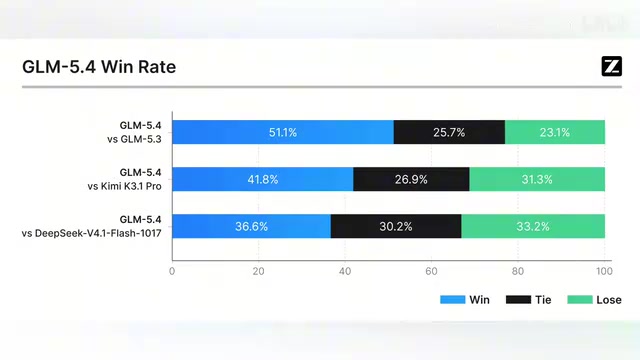
Zhipu GLM-5.4 Launches: First Commercial Loop Transformer Flagship
Zhipu launches GLM-5.4, China's first commercial Loop Transformer flagship: 750B params, 28-layer network looped twice for ~36% more compute depth, native vision for 3D modeling and industrial simulation, now fully available on Coding Plan.