Newgrounds: Why This Living Fossil of Internet Creative Culture Still Matters

Newgrounds trended on Hacker News, reigniting tech community nostalgia for indie platforms and early internet creative culture.
Newgrounds, a long-running online community for games, music, and art, recently earned 266 upvotes and 71 comments on Hacker News. This article examines the platform's content structure and historical role — particularly as an incubator for Flash games — and explores why it continues to resonate in an algorithm-dominated content landscape. The renewed attention reflects collective nostalgia for the decentralized, creator-first spirit of the early web, and an implicit critique of today's platform monopolies. Newgrounds' decades-long survival through community cohesion and creator loyalty makes it a compelling case study in independent platform sustainability.
A Veteran Community Makes the Hot List
Newgrounds.com recently climbed to the front page of Hacker News, drawing 266 upvotes and 71 comments and putting the platform back on the tech community's radar. This platform — built around games, music, and art — is anything but new, yet its resurgence in conversation reflects a collective nostalgia for early internet community culture and a renewed interest in decentralized, independent creative spaces.
Based on available material, the discussion centers on the original link (newgrounds.com) and its Hacker News comment thread. Given the limited source material, this article focuses on Newgrounds as a long-running creative community — examining what it is and why it still holds relevance.
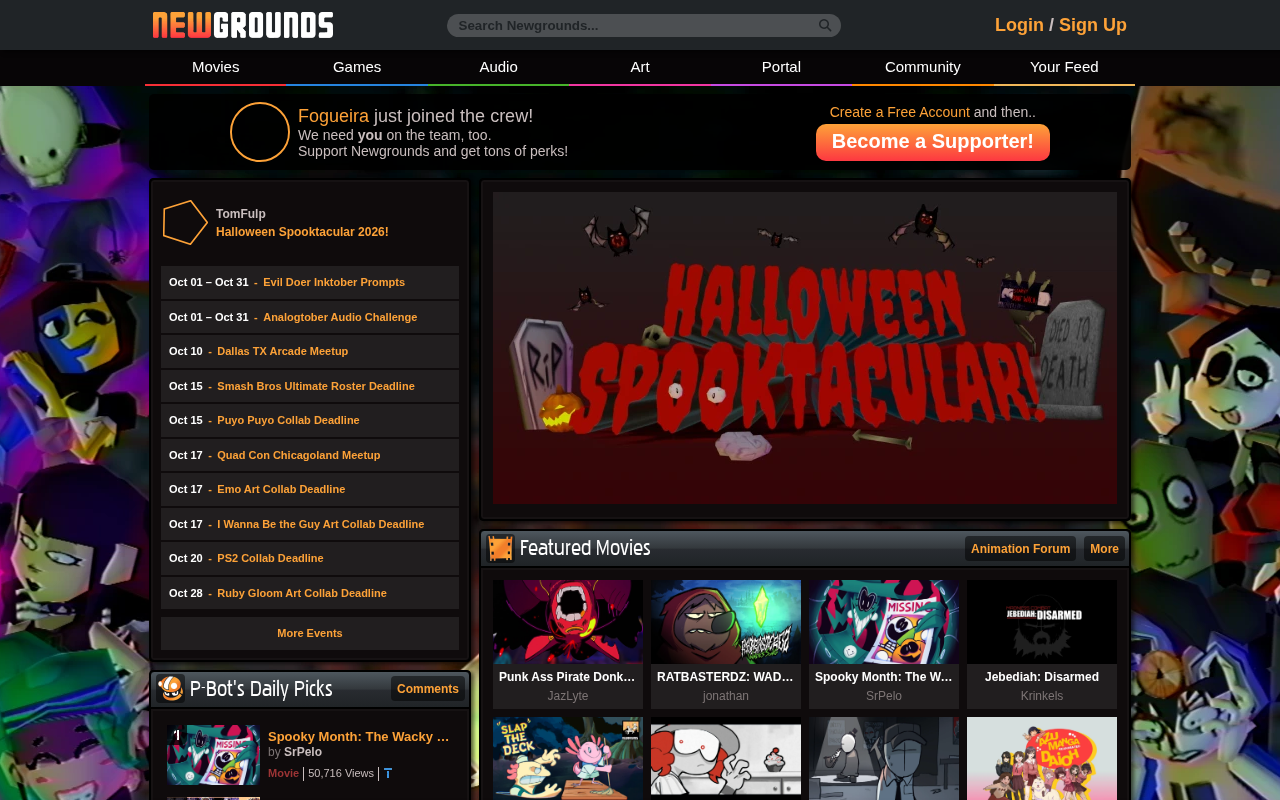
What Is Newgrounds
Newgrounds is an online creative community built around games, music, and art. It lets creators upload and share their work, while visitors can browse, rate, and comment. Unlike today's algorithm-driven mega-platforms, Newgrounds functions more like a user-powered showcase for creative work and community interaction.
Three Content Pillars
The platform's content broadly falls into three categories:
- Games: Historically, Newgrounds was a key incubator for Flash games, where many indie developers released experimental work.
- Music: The music section has long attracted amateur and semi-professional musicians, offering a channel for distributing work and getting feedback.
- Art: Illustrations, animations, and other visual art forms make up another major pillar of the community.
This multi-medium structure sets it apart from platforms that focus on a single content type.
Newgrounds played a particularly significant role in the Flash game ecosystem. Flash (Adobe Flash Player) was the dominant browser multimedia plugin of the early 2000s, enabling everyday developers to create animated and interactive web content with a relatively low barrier to entry. Newgrounds became the go-to platform for countless creators releasing Flash games and animations — series like Madness Combat and Dad 'n Me were born here, and some of those creators went on to become well-known figures in indie game development. When Adobe officially ended Flash support at the end of 2020, a vast library of early work suddenly became inaccessible. In response, Newgrounds partnered with projects like Flashpoint to archive and replay Flash content, and integrated the open-source emulator Ruffle directly into the site — preserving that historical catalog in a way that sets it apart from other platforms of the same era.
Why It's Still Worth Talking About
In an era where mainstream content is increasingly controlled by a handful of giant platforms, the continued existence of communities like Newgrounds offers a meaningful point of contrast. It represents a more primitive, work-first internet culture — one that prioritizes the creations themselves over engagement metrics.
For creators, the appeal of such platforms lies in a relatively open creative environment and direct community feedback, rather than exposure dictated by recommendation algorithms. For observers in the tech community, its long-term survival also raises questions about the sustainability of independent platforms — how a community maintains its vitality without massive capital or algorithmic amplification.
What the Hacker News Signal Tells Us
266 upvotes signal that the tech community still has genuine interest in non-mainstream platforms with historical depth. That interest is often accompanied by fond memories of early web culture and an implicit critique of today's overly centralized content ecosystem. The 71-comment discussion also suggests the topic resonates with a shared collective memory.
Where Independent Creative Communities Stand Today
Newgrounds' resurgence, viewed in a broader context, echoes the growing expectations for independent and decentralized content platforms in recent years. As major platforms face mounting controversy over content moderation, algorithmic distribution, and monetization, some users and creators have begun looking back toward smaller, more vertical communities.
The advantages of these platforms lie in community cohesion and creative freedom — but the challenges are equally real: how to stay independent under commercial pressure, how to attract a new generation of creators, and how to sustain operations without sacrificing community culture. The fact that Newgrounds has survived this long and is still being discussed is itself a case worth studying.
Discussions of decentralized content platforms in recent years have often run in parallel with protocol-layer approaches like the Fediverse. Built on the ActivityPub protocol, the Fediverse connects independent instances like Mastodon and Pixelfed, attempting to break platform monopolies at the technical architecture level. Newgrounds has taken a different path: it relies not on decentralized protocols, but on years of accumulated community culture and creator belonging. Funding comes primarily from user subscriptions (Supporter memberships) and limited advertising, and founder Tom Fulp remains deeply involved in running the platform. This "old-school" independent operating model has, paradoxically, become the key to surviving for decades in a capital-intensive content industry — and provides a non-technical reference model for other creative communities seeking platform independence.
Closing Thoughts
As a long-running community for games, music, and art, Newgrounds' return to public consciousness is less about a platform breakthrough and more about internet users reaffirming the value of independent creative spaces. In an age of highly centralized content, communities like this carry more than just creative works — they hold a cultural memory of what an open, autonomous web once looked and felt like.
Related articles

2026 AI Coding Tools Comparison: Claude, ChatGPT, Gemini — Which Is the Best?
A 2026 comparison of five mainstream AI coding tools — Claude Code, ChatGPT Codex, Gemini, DeepSeek, and GitHub Copilot — on real projects, pricing, and code quality, to help you decide where that $20/month should go.

ChatGPT Codex Can Clone Any Software? Testing the Risks and the Truth
YouTube shorts claim ChatGPT Codex or Claude Code can clone Adobe, Excel, and Figma for lifelong free use. We break down the feasibility, legal risks, and DM-funnel tactics—and explain what AI coding tools are truly good for.

Kilo Code Is Free to Install but Charges for API: Cost Estimation and Configuration Guide
Kilo Code is free to install, but connected AI models are billed per token. This guide covers VS Code extension and CLI setup and shows how to estimate API costs.