Nina: A Non-Custodial AI Trading Assistant with Institutional-Grade Data for Crypto and U.S. Stock Investing
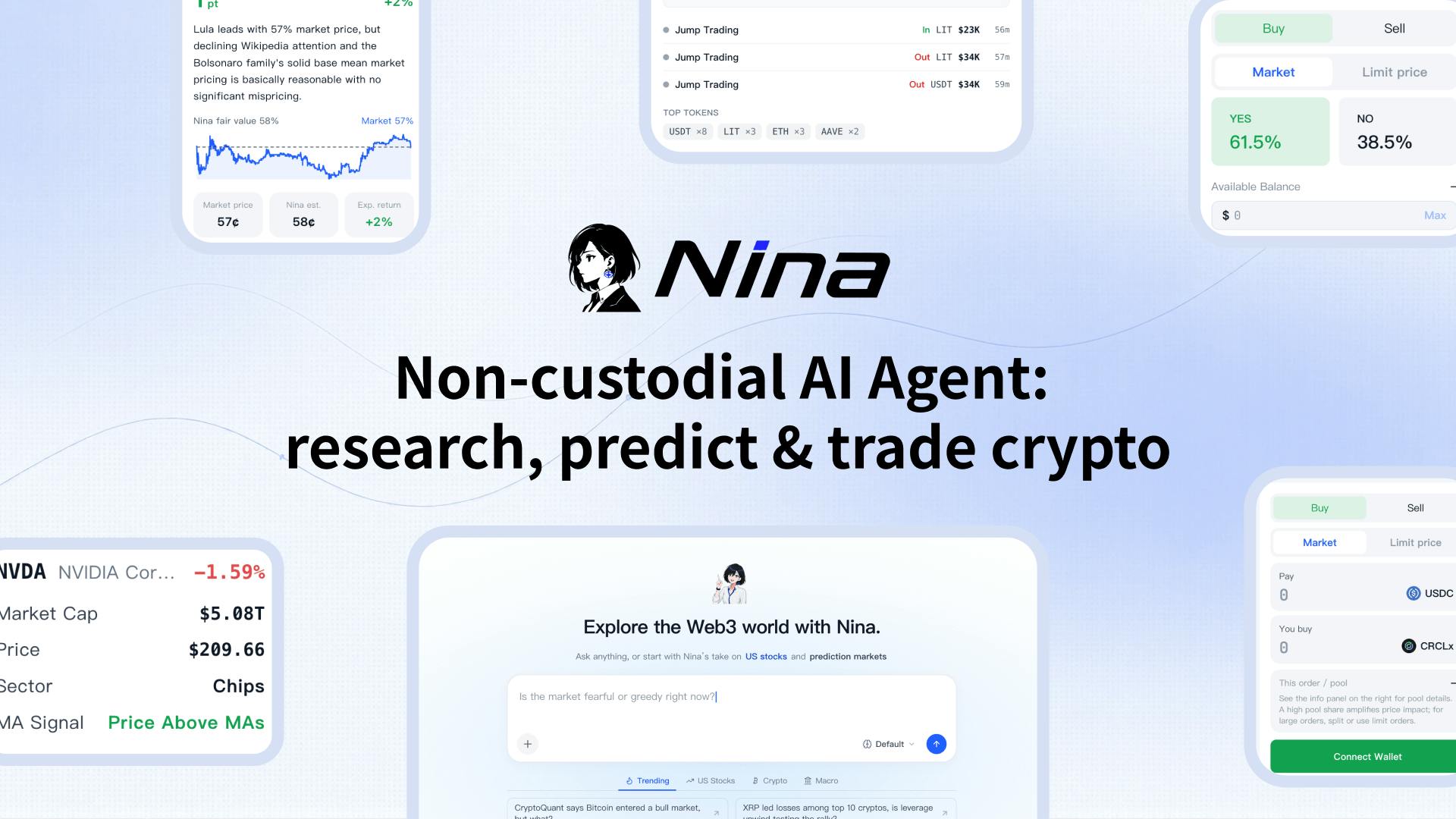
Nina is a non-custodial AI trading assistant combining institutional-grade data with crypto and U.S. stock analysis.
Nasdaq-listed Antalpha launched Nina, a non-custodial AI trading assistant that integrates institutional-grade real-time data for crypto and U.S. stock markets. Key features include Smart Money tracking, Polymarket integration, natural language queries with visual outputs, wallet security checks, 24/7 Sentinel alerts, and MCP protocol support. Users retain full control of their private keys while leveraging AI-drafted trade proposals.
What Is Nina: A Non-Custodial AI Trading Assistant by Antalpha
Nasdaq-listed company Antalpha (ticker: ANTA) has launched a non-custodial AI trading assistant called Nina, which received 89 upvotes on Product Hunt, ranking 10th on its launch day. The product combines institutional-grade real-time data with AI capabilities, offering crypto and U.S. stock investors an all-in-one solution for research, prediction, and trade execution.
Antalpha is a financial services company focused on the Bitcoin ecosystem. Listed on Nasdaq in 2024, it primarily provides crypto asset management, financing, and technology solutions for mining enterprises and institutional clients. The company has close ties to the Bitmain ecosystem and, leveraging its deep resources in the crypto mining sector, has been expanding into AI-driven fintech tools. The launch of Nina can be seen as a strategic move by Antalpha to extend from B2B institutional services into B2C end-user products.
Nina's positioning clearly distinguishes it from general-purpose chatbots. It connects directly to institutional-grade data sources and presents answers in a "conclusion-first" manner — users receive visual charts and actionable recommendations rather than lengthy text descriptions. More critically, Nina uses a non-custodial architecture, meaning users maintain full control over their assets at all times. The AI only drafts transaction proposals; the final signing and execution authority remains in the user's own wallet.
Nina's Core Features: Multi-Asset Coverage and Intelligent Data Integration
Dual-Market Analysis for Crypto and U.S. Stocks
Nina supports analysis across both crypto and U.S. stock markets. In the crypto space, it provides market intelligence, Smart Money tracking, price predictions, and Polymarket prediction market integration. For traditional financial markets, it covers real-time U.S. stock quotes and analysis. This cross-market capability allows users to make asset allocation decisions on a single platform.
Smart Money tracking is an important methodology in on-chain crypto analysis. Due to the transparent nature of blockchains, all on-chain transaction records are publicly accessible. Analysts tag known institutional wallets, early investor addresses, market maker addresses, and more to monitor capital flows from these "smart money" players — including which tokens they're accumulating, when they're transferring assets to exchanges at scale (potentially signaling sell-offs), and which DeFi protocols they're participating in. Platforms like Nansen and Arkham Intelligence have already established mature business models in this space. Nina integrates Smart Money tracking as conversational AI queries, effectively lowering the information barrier that previously required specialized on-chain analysis tools and a certain level of technical expertise.
Polymarket is currently the largest decentralized prediction market platform, where users can place bets on real-world events (such as election outcomes, economic indicators, sports events, etc.). Its market prices are considered real-time reflections of collective wisdom — for example, if a contract for a particular event trades at $0.72, it implies that market participants collectively believe there's roughly a 72% probability of that event occurring. During the 2024 U.S. presidential election, Polymarket's prediction data was widely cited by Bloomberg, The Economist, and other mainstream media outlets, with its prediction accuracy outperforming traditional polling in multiple cases. Nina's integration of Polymarket data means users can incorporate market-based probability assessments of macro events into their investment decisions, forming a more complete information landscape.
The data-layer advantage lies in access to "institutional-grade real-time data." Unlike ordinary tools that rely on public APIs, Nina leverages Antalpha's resources to access deeper market data and on-chain analytics, which is crucial for capturing changes in market microstructure. In financial markets, there's a significant gap between institutional-grade and retail-grade data: institutional-grade data typically includes lower-latency real-time quotes (millisecond-level vs. second-level), deeper order book data, dark pool trading information, block trade records, and cleaned and standardized historical datasets. In the crypto space, institutional-grade data also encompasses multi-exchange aggregated liquidity views, miner position changes, exchange net inflow/outflow metrics, and other proprietary indicators. Traditionally, accessing this data requires expensive subscriptions (e.g., a Bloomberg Terminal costs approximately $25,000 per year). Nina aims to deliver these institutional-grade data capabilities to individual investors in a consumer-grade product format through an AI wrapper.
Natural Language Interaction and Visual Output
The product emphasizes a "natural language interaction + visual output" model. Users can ask questions in everyday language, such as "What's the outlook for BTC over the next week?" or "Which wallet addresses are accumulating ETH?" Nina returns structured analysis results complete with charts. This design significantly lowers the barrier to using professional trading tools, enabling non-technical users to conduct in-depth market analysis.
The "conclusion-first" design philosophy reflects a deep understanding of traders' decision-making workflows — traders need clear judgments and supporting evidence, not raw data that requires secondary interpretation.
Non-Custodial Architecture: Asset Security and User Sovereignty
Why Non-Custodial Mode Matters
In the crypto space, the method of asset custody directly impacts security. Nina's non-custodial model means private keys remain under user control at all times, and the AI system cannot independently execute transactions. This design adheres to Web3's core principle — "Not your keys, not your coins."
Non-custodial architecture is the core security paradigm in Web3. Under a custodial model, users hand over their private keys to a third-party platform for safekeeping (such as centralized exchanges), which manages assets on their behalf — the 2022 FTX collapse, which resulted in billions of dollars in user asset losses, is a textbook example of custodial model risk. Subsequent platform failures including Mt.Gox (2014) and Celsius Network (2022) further reinforced the industry's demand for non-custodial solutions. In a non-custodial model, users hold their private keys directly through hardware wallets or software wallets (such as MetaMask, Phantom, etc.), and any transaction requires the user to cryptographically sign with their private key before it can be executed.
The specific workflow is as follows: Nina drafts transaction parameters based on its analysis (such as token pair, quantity, slippage settings, etc.), and the user reviews and confirms with their signature in their own wallet interface. Nina is essentially designed as an "advisory layer" rather than an "execution layer" — after the AI generates transaction parameters, it submits them to the user for approval via the wallet's signature request interface. Throughout the entire process, the AI system never touches the user's private keys. This mechanism preserves AI convenience while returning final decision-making and execution authority to the user.
Built-in Wallet Security Checks
Nina includes built-in wallet security check functionality that performs risk assessments on target addresses and contracts before transactions. This has real practical value for guarding against phishing attacks, malicious contracts, and other threats. Given the frequency of security incidents in the crypto market — according to Chainalysis, losses from hacks and scams in crypto exceeded $1.7 billion in 2023 alone — the utility of this feature cannot be overlooked.
Extended Capabilities: Sentinel Alerts and MCP Protocol Support
The product offers two noteworthy extended features:
Sentinel 24/7 Alert System: Provides users with round-the-clock market monitoring, proactively pushing notifications when key events occur (such as price breakouts, large transfers, abnormal volatility, etc.). This transforms a passive analysis tool into an active risk management system, helping traders avoid missing important market signals. The crypto market operates 24/7 without interruption, unlike traditional financial markets with fixed trading hours. This means significant price movements can happen at any moment, making automated round-the-clock monitoring especially essential for crypto traders.
MCP (Model Context Protocol) Support: Allows any AI client to tap into Nina's capabilities. MCP is an open standard protocol released by Anthropic in late 2024, designed to provide AI models with a unified way to access external tools and data sources. MCP uses a client-server architecture: AI applications act as clients initiating requests, while data or tool providers act as servers responding to them. This protocol is becoming the de facto standard for AI tool interoperability — similar to how USB-C unified hardware interface standards. Nina's MCP support means users can invoke Nina's market data and analysis capabilities directly within MCP-compatible AI clients like Claude, Cursor, or ChatGPT, without switching to Nina's standalone interface. This "composability" transforms Nina from a closed product into a functional module within the AI ecosystem, significantly expanding its potential reach and aligning with current trends in AI tool ecosystem development.
Nina's Market Positioning and Competitive Landscape
Nina targets users who want both AI convenience and asset sovereignty. Currently, AI trading tools in the market fall roughly into two categories:
- Custodial services (such as certain quantitative trading platforms): Offer fully automated trading but require users to relinquish asset control
- Pure analysis tools: Provide recommendations but don't handle execution
Nina strikes a balance between the two: ensuring security through non-custodial architecture while streamlining the analysis-to-execution workflow through deep integration. This positioning is theoretically attractive, but its real-world effectiveness depends on the accuracy of AI analysis and the smoothness of trade execution.
Judging from the Product Hunt community response (89 upvotes, 6 comments), users appear cautiously optimistic about this direction. The core challenge for crypto trading AI tools is that the market's high volatility and irrational characteristics make it difficult for prediction models to perform consistently over time. Nina will need to build user trust through continuous product iteration and transparent performance disclosure.
Who Is Nina For: Use Cases and Limitations
Nina is suited for the following user scenarios:
- Individual crypto investors who need quick market insights but lack professional analysis tools
- Small to mid-sized traders looking to track Smart Money on-chain activity
- Asset allocation decision-makers who need a cross-market (crypto + U.S. stocks) perspective
- Web3 users who prioritize asset security but want a simplified workflow
That said, there are some limitations worth noting:
- AI prediction accuracy: Whether it has been thoroughly backtested remains unclear
- Pricing model: The cost of accessing institutional-grade data may be passed on to users (the pricing model has not been publicly disclosed)
- Operational efficiency: While the non-custodial model is secure, it adds operational steps that could become a bottleneck in high-frequency trading scenarios
Overall, Nina represents a valuable attempt at balancing security, usability, and functionality in financial AI tools. As AI technology deepens its application in finance, products like this — which bring institutional-grade professional capabilities down to end users — are worth continued attention.
Key Takeaways
Related articles

VR Public Speaking Simulator: Practice Your Presentation Skills Right in Your Browser
Public Speaking VR Simulator is a WebXR-based speech practice tool supporting both browsers and VR headsets. Upload slides and rehearse on configurable virtual stages to effectively reduce speaking anxiety.
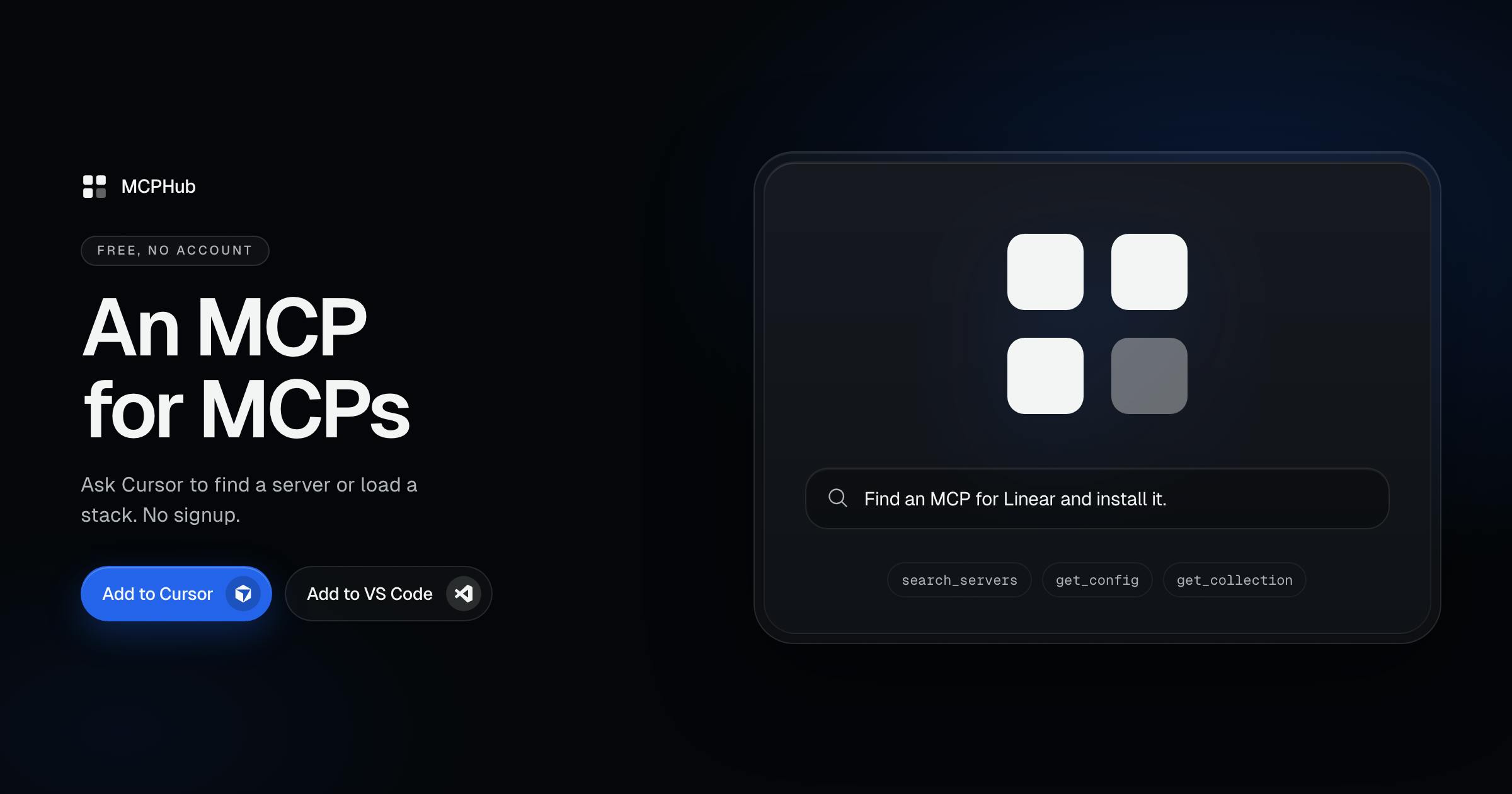
MCPHub: The AI-Native Launchpad That Uses One MCP to Discover All MCP Servers
MCPHub is an AI-native MCP server discovery tool indexing ~4,000 servers with one-click Cursor, Claude, and VS Code integration for search, config, and stacks.

Dnipro: A Chrome Extension That Detects Fake LinkedIn Accounts with One Click
Dnipro is a free, open-source Chrome extension that quickly identifies fake LinkedIn accounts using seven detection mechanisms. Ideal for HR screening and business verification.