NiSource-Microsoft 1,100MW Power Agreement: How 600MW Battery Storage Shapes Data Center Campus Planning

NiSource-Microsoft 20-year power deal includes a 600MW/2400MWh battery contract, showing capacity planning must separate power, energy, and dispatch rights.
The 20-year NiSource-Microsoft power agreement includes roughly 1,100MW of generation portfolio expansion, with Microsoft fully funding generation and transmission for its load, plus a 600MW/2400MWh standalone battery project by an AGP Group subsidiary. Nominal four-hour duration does not equal four hours of guaranteed backup; reviews must probe available energy, dispatch rights, other obligations, and recharge. Portfolio capacity should not be copied as campus IT load specs, and project teams should use a delivery register tying each load increase to infrastructure, commissioning evidence, and acceptance owners.
Title
NiSource-Microsoft 1,100MW Power Agreement: How 600MW Battery Storage Shapes Data Center Campus Planning
Meta Description
NiSource signs a 20-year long-term power agreement with Microsoft, involving roughly 1,100MW of generation expansion and 600MW/2400MWh battery storage. This article examines the SEC filing details and analyzes the practical implications of the battery tolling agreement terms, power versus energy dimensions, load ramp milestones, and campus capacity planning.
Article Content
The long-term power agreement signed between NiSource and Microsoft may look on the surface like a large-capacity power supply deal, but what infrastructure teams should really read closely is the planning logic revealed by the accompanying battery storage contract.
According to NiSource's company announcement, the two parties announced this long-term agreement on October 16, with service expected to begin in 2028 and a term of 20 years. The announcement mentions roughly 1,100MW of expansion in GenCo's owned portfolio, with Microsoft fully funding the generation and transmission facilities required for its load, and specifies a 600MW battery resource that will join a resource pool serving multiple large-load customers.
These statements describe power supply arrangements and planned infrastructure—not how much IT equipment can run on any given day.
The Battery Filing Fills In the Missing Energy Dimension
NiSource's October 16 filing with the SEC shows that on October 15, GenCo signed a tolling agreement with Atlas Storage 1, a subsidiary of AGP Group. This planned standalone system is rated at 600MW AC and 2400MWh and will interconnect to the MISO transmission system.

AGP Group is responsible for developing, building, owning, and operating the battery. GenCo provides charging power at its own expense and has the right to direct dispatch, obtain available capacity, discharge energy, and capture the economic benefits of other services. The filing expects the first phase of commercial operation no later than December 1, 2027, and the agreement's effectiveness depends on satisfactory engineering, procurement, construction, and interconnection agreements being signed by January 31, 2027.
These are disclosed contract terms and expectations—not evidence that the battery is already operating.
MISO Transmission System: MISO (Midcontinent Independent System Operator) is the independent system operator for the central continental United States, responsible for wholesale electricity markets and transmission dispatch across parts of the Midwest and South. Interconnecting to MISO means the battery resource must comply with its interconnection standards, market settlement rules, and reliability dispatch instructions. For large-load customers, having a resource located within MISO's footprint affects how its capacity accreditation is calculated and the upper limit of energy that can actually be called upon under different market conditions. In recent years, MISO has implemented a capacity accreditation methodology based on Effective Load Carrying Capability (ELCC), under which the accredited capacity of storage resources varies with discharge duration and charging reliability. Understanding MISO rules is therefore a prerequisite for assessing how much this 600MW battery actually supports Microsoft's load.
Operational Analysis: Power, Energy, and Dispatch Must Be Read Together
Dividing 2400MWh by 600MW yields a nominal four-hour duration. This arithmetic helps in understanding the rating but is insufficient to allocate four hours of guaranteed backup power to a campus on that basis.
A reliability review should ask: how much energy is available at the moment it is needed, who can dispatch it, what other obligations exist, and how the resource is recharged. It should also examine whether the battery can deliver power through the relevant network during the envisioned contingency.
A grid-connected resource can support a supply portfolio, but a campus still needs its own continuity arrangements. Before counting external storage in a site availability model, operators should request the electrical boundary, protection assumptions, and tested failure scenarios. Shared resources in particular require attention to allocation and dispatch priority.
These questions are not meant to imply the project is flawed, but rather to capture the information needed to turn a resource contract into a defensible operational assumption.
Nominal Four-Hour Duration vs. Available Energy: The "nominal duration" of a battery energy storage system is derived by dividing rated energy (MWh) by rated power (MW), typically based on specific test conditions (such as constant-power discharge, specific temperature, and state of health). Actual callable energy is affected by multiple factors: battery degradation, auxiliary system power consumption, depth-of-discharge limits, grid-tie inverter efficiency, and the power profile of dispatch instructions. For reliability-critical applications, it is also necessary to consider whether the battery may be unable to discharge at full output during a grid fault or high-load period due to other contractual obligations (such as capacity market commitments or ancillary service calls). Therefore, simply equating 2400MWh with "four hours of guaranteed backup" ignores operating boundaries and competing dispatch priorities; operators need to request guarantee terms and test evidence based on available energy.
Build Load Ramp Around Verifiable Milestones
For project teams considering similar agreements, the recommendation is to maintain a delivery register that maps each planned load increase to the infrastructure that makes it possible.
For the first server hall, the register should specify the required service capacity, supporting transmission works, commissioning evidence, and the party responsible for acceptance at each milestone. Subsequent halls need their own dependencies. A target year alone is too vague for equipment installation and customer commitments.
The register should also distinguish first energization from sustained service at expected load. Temporary commissioning arrangements, partial capacity, and full contractual service can support different activities, and conflating them will put procurement and operations on conflicting timelines.
The battery's contractual conditions provide concrete milestones to monitor. Satisfying conditions is only progress; construction, testing, and commercial operation are still needed to verify it. The same discipline should apply to the broader supply portfolio.
Delivery Register and Commissioning Evidence: In large infrastructure projects, a delivery register is a management tool that binds each load increment to specific preconditions (such as completion of transmission works, effectiveness of the interconnection agreement, and passing of protection setting tests). Commissioning evidence includes Factory Acceptance Testing (FAT), Site Acceptance Testing (SAT), protection relay setting records, islanding tests, and load tests. Distinguishing "first energization" from "sustained service at expected load" is critical: temporary commissioning power may come from backup generators or partial capacity and cannot support productive IT load. The register should specify the party responsible for acceptance at each milestone (owner, EPC contractor, utility) and the deadline for evidence submission, avoiding timeline conflicts arising from inconsistent assumptions between procurement and operations teams.
Keep Portfolio Capacity and Campus Demand Separate
Roughly 1,100MW is an announced portfolio expansion and should not be copied directly into campus specifications as verified IT load demand. Nor should the battery rating be added to that figure without a disclosed resource accounting basis.
For technical B2B readers, this changes the questions worth asking suppliers: which capacity definition is used in the proposal? Where is it measured? Which resource and network assumptions support it? What evidence permits the next load increment?
NiSource also expects savings for existing NIPSCO customers. These remain company expectations, not measured billing outcomes. Tracking these results requires a different evidence chain from tracking electrical readiness.
The agreement more clearly shows who funds the infrastructure and who controls the planned storage resource. Operators can use these details to build delivery and reliability reviews with clear responsibilities, dated dependencies, and the evidence required before each load increase.
One-line Summary
NiSource and Microsoft's 20-year power agreement includes a 600MW/2400MWh battery contract, revealing that capacity planning must distinguish power, energy, and dispatch rights.
Paragraph Summary
The 20-year long-term power agreement between NiSource and Microsoft includes roughly 1,100MW of generation portfolio expansion, with Microsoft fully funding the generation and transmission facilities required for its load, along with a 600MW/2400MWh standalone battery storage project developed by an AGP Group subsidiary. The article notes that the battery's nominal four-hour duration does not equate to four hours of guaranteed backup power, and a reliability review must ask about available energy, dispatch rights, other obligations, and recharge capability. Portfolio capacity should not be copied directly into campus IT load specifications, nor should the battery rating be added to the expansion figure without resource accounting. Project teams should establish a delivery register that links each load increase to specific infrastructure, commissioning evidence, and responsible parties for acceptance, distinguish first energization from sustained service, and manage load ramp around verifiable milestones.
Related articles
FlyEnv Plugin Review: Visually Running llama.cpp and Managing GGUF Models
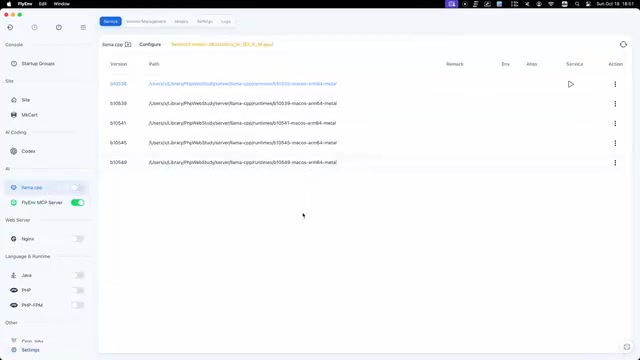
FlyEnv launches the official llama.cpp plugin with side-by-side Metal runtime management, public GGUF repository indexing with file type labels, and visual configuration of context, threads, and GPU layers—saving templates and speculative decoding with each model for one-click local LLM inference.
How Can Frontend Developers Advance into AI Agent Development? Deconstructing System-Level Agent Architecture from OpenClaw
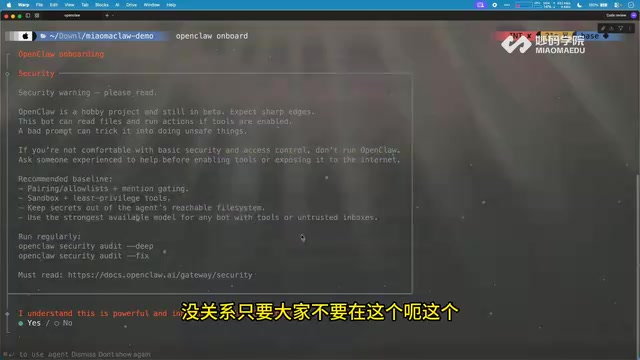
Starting from the OpenClaw demo in a Bilibili open class, this article breaks down the three-layer architecture and universal formula of system-level AI agents, and analyzes the path for frontend developers to enter agent development based on TypeScript, including plugin-based design and security/memory layer challenges, with an interview answer framework.

WorkBuddy in Action: How AI Agents Automate Batch File Conversion and Archiving
Bilibili creator Teacher Shanyao tests WorkBuddy vs. Doubao on batch file conversion, showing how AI Agents move from "giving solutions" to "direct execution," with a full workflow and credit cost reference.