NVIDIA Cuts Data Center Water Use: Is the AI Water Crisis Really Solved?

NVIDIA's cooling tech helps, but AI's real water crisis stems from fossil fuel power generation, not data centers alone.
NVIDIA announced a new cooling system to reduce data center water consumption, but this addresses only direct water use—the tip of the iceberg. The majority of AI's water footprint comes indirectly from fossil fuel power plants supplying electricity. True solutions require energy transition to renewables, algorithmic efficiency gains, and full life-cycle thinking, not just data center improvements.
NVIDIA Launches New Cooling System, Data Center Water Consumption Expected to Decrease
NVIDIA recently announced a new cooling system technology designed to reduce water consumption within data centers. As AI infrastructure experiences explosive growth, the energy and water consumption of data centers has increasingly become a focal point of public concern. NVIDIA's move is undoubtedly a direct response to industry pressure.
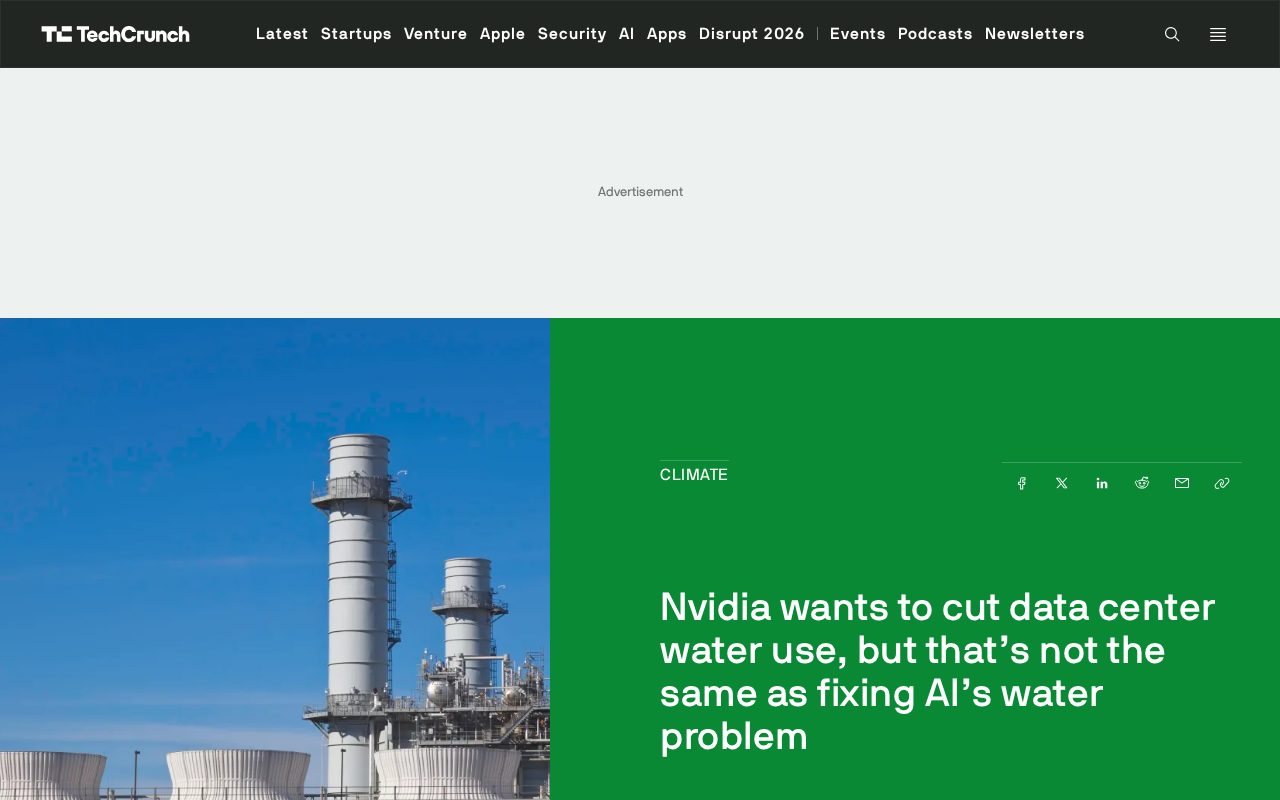
However, while this technological improvement deserves recognition, the problem it solves may only be the tip of the iceberg. To truly understand AI's water resource challenge, we need to look beyond the walls of data centers and see the complete picture.
Data Center Water Use Is Just the Surface: The Truth About Direct vs. Indirect Water Consumption
Direct Water Use: Water Consumption in Cooling Systems
Data center water use can be divided into two major categories: direct water use and indirect water use.
Direct water use is primarily for cooling systems—massive servers running at high loads generate enormous heat, and traditional solutions rely on evaporative cooling towers and other water-cooling technologies to maintain temperature. Traditional evaporative cooling towers work by spraying hot water onto fill media surfaces, using air flow to accelerate water evaporation and carry away heat. While this approach is relatively energy-efficient, every ton of water evaporated removes only about 2.26GJ of heat, and large data centers may evaporate hundreds of thousands of liters of water per day. In recent years, the industry has begun shifting toward Direct Liquid Cooling (DLC) and Immersion Cooling technologies—the former passes coolant directly through chip heat sinks to carry away heat, while the latter submerges entire servers in non-conductive coolant. NVIDIA's GB200 NVL72 rack already employs a liquid-cooled design, and the new cooling system is likely a further optimization built on this foundation. The core advantage of liquid cooling lies in the fact that liquid has a much higher specific heat capacity than air, improving heat dissipation efficiency by several times while significantly reducing or even eliminating dependence on evaporative cooling water.
Indirect Water Use: Power Generation Is the Real "Water Guzzler"
But indirect water use is the real heavyweight. Most of the electricity consumed by data centers comes from fossil fuel power plants, which are themselves major water consumers. Water use in thermal power plants is concentrated in two stages: first, boiler feedwater, where purified water is heated into high-pressure steam to drive turbines for power generation—water is repeatedly used in a closed loop during this process, but small amounts are still lost; second, condensation cooling, where exhaust steam after power generation must pass through condensers to return to liquid form, requiring large amounts of cooling water to carry away waste heat. Data from the U.S. Geological Survey (USGS) shows that thermoelectric power accounts for approximately 41% of total freshwater withdrawals in the United States, making it the largest industrial water use sector. For a typical coal-fired power plant, generating 1 kilowatt-hour (kWh) of electricity requires approximately 1.5-2.0 liters of water. By this calculation, the tens of millions of kWh needed to train a large language model at the GPT-4 level could consume tens of millions of liters of water in the power generation stage alone—far exceeding the water consumption of the data center's own cooling systems.
The Overlooked Upstream Water Footprint
When we discuss AI's water consumption, focusing solely on water use within data centers is far from sufficient. The Water Footprint is a comprehensive indicator for measuring the impact of human activities on water resources, proposed by Dutch scholar Arjen Hoekstra in 2002. It consists of three components: blue water footprint (consumed surface water and groundwater), green water footprint (consumed rainwater), and grey water footprint (freshwater needed to dilute pollutants). For data centers, the water footprint is primarily reflected in the blue water footprint, including direct cooling water and power generation water. Microsoft and Google have begun disclosing their WUE (Water Usage Effectiveness) metrics in sustainability reports in recent years—the ratio of annual data center water consumption to annual IT equipment energy consumption. The industry average WUE is approximately 1.8 L/kWh, while leading data centers can achieve below 0.5 L/kWh. However, WUE only measures direct water use and does not include indirect water use from power generation—this is precisely the critical blind spot in current industry disclosures.
A single large language model training run may require millions of liters of water—but a significant proportion of that figure comes from the fossil fuel power plants supplying electricity to data centers.
NVIDIA's new technology does not address this core issue. In other words, even if data centers achieve "zero water consumption" internally, as long as AI computing power still relies on fossil fuel power generation, the overall water consumption problem will not be fundamentally resolved.
Where Are the Real Solutions? From Energy Transition to Full-Chain Optimization
Energy Transition Is Key to Solving AI's Water Problem
To fundamentally solve AI's water resource problem, transforming the energy structure is crucial. Wind and solar power generation require virtually no water—if data centers can shift to renewable energy at scale, their indirect water footprint will decrease dramatically.
Currently, tech giants like Microsoft and Google are actively signing renewable energy Power Purchase Agreements (PPAs). A PPA is essentially a long-term contract (typically 10-25 years) where the buyer commits to purchasing the power output of a specific renewable energy project at a fixed price. There are two main forms: physical PPAs (electricity delivered directly to the buyer) and virtual PPAs (obtaining renewable energy certificates through financial settlement). As of 2024, Microsoft has signed over 19GW of clean energy PPAs, and Google has announced multiple nuclear and geothermal energy procurement plans. However, the core challenge facing PPAs is the "Additionality" issue—whether these agreements truly drive new renewable energy capacity additions or merely purchase output from existing projects. Additionally, the intermittency of renewable energy means data centers still need to rely on fossil fuel power from the grid when wind is insufficient or during nighttime, making "24/7 Carbon-Free Energy" the industry's new goal—one that is extremely difficult to achieve.
Overall, the growth rate of AI computing demand far outpaces the deployment speed of clean energy. This supply-demand imbalance means that in the short term, fossil fuel power generation will remain a significant electricity source for AI infrastructure.
Life-Cycle Thinking: Four Levels, All Indispensable
Solving AI's water resource problem requires a full life-cycle mindset:
- Chip level: Improving energy efficiency ratios to accomplish equivalent computing tasks with less power. NVIDIA has indeed made continuous progress in this area—iterations from A100 to H100 to B200 have brought significant energy efficiency improvements, with B200's performance per watt approximately 4x that of H100. But the "Jevons Paradox" reminds us that efficiency improvements often stimulate larger-scale usage, causing total resource consumption to increase rather than decrease.
- Data center level: Adopting more advanced cooling technologies to reduce direct water use (the focus of NVIDIA's new solution)
- Energy level: Accelerating the transition to renewable energy to reduce indirect water use at the source
- Algorithm level: Developing more efficient AI models to reduce overall computing demand. Technologies such as Mixture of Experts (MoE), Knowledge Distillation, and Quantization can dramatically reduce computing requirements while maintaining model performance, but whether the pace of these optimizations can keep up with the explosion of AI applications remains an open question.
It's worth noting that the computing demands of AI models are growing at an astonishing rate. Research from OpenAI shows that since 2012, the training compute requirements of top AI models have doubled every 3.4 months—far exceeding Moore's Law's 18-month cycle. GPT-3 training consumed approximately 1,287 MWh of electricity, while GPT-4's training energy consumption is estimated to have increased several-fold. During inference, the situation is equally serious—each ChatGPT query consumes approximately 6-10 times the energy of a traditional Google search. This means that even as point-level efficiency continues to improve, overall resource consumption may continue to climb.
Beware the "Greenwashing" Trap: Technological Progress Does Not Equal Problem Solved
The timing of NVIDIA's new cooling technology release is thought-provoking. At a time when the AI industry faces increasing environmental scrutiny, such announcements can easily give the public the impression that "the problem is being solved." But if we only focus on improvements within data centers while ignoring the larger-scale energy-water problem, we may fall into a trap of selective narrative.
This is not to say that NVIDIA's efforts are worthless—any technological advancement that reduces resource consumption deserves encouragement. But the industry and the public need to remain clear-headed: reducing data center water use and solving AI's water resource problem are two propositions of entirely different magnitudes.
Conclusion: AI Sustainability Requires Systemic Change
The sustainable development of the AI industry cannot rely on single-point breakthroughs—it requires systemic change. NVIDIA's new cooling technology is a positive signal, but the entire industry still has a long way to go before truly solving AI's water crisis. When we assess AI's environmental impact, we must expand our perspective from data centers to the entire energy supply chain to see the full picture of the problem and find truly effective solutions.
Related articles
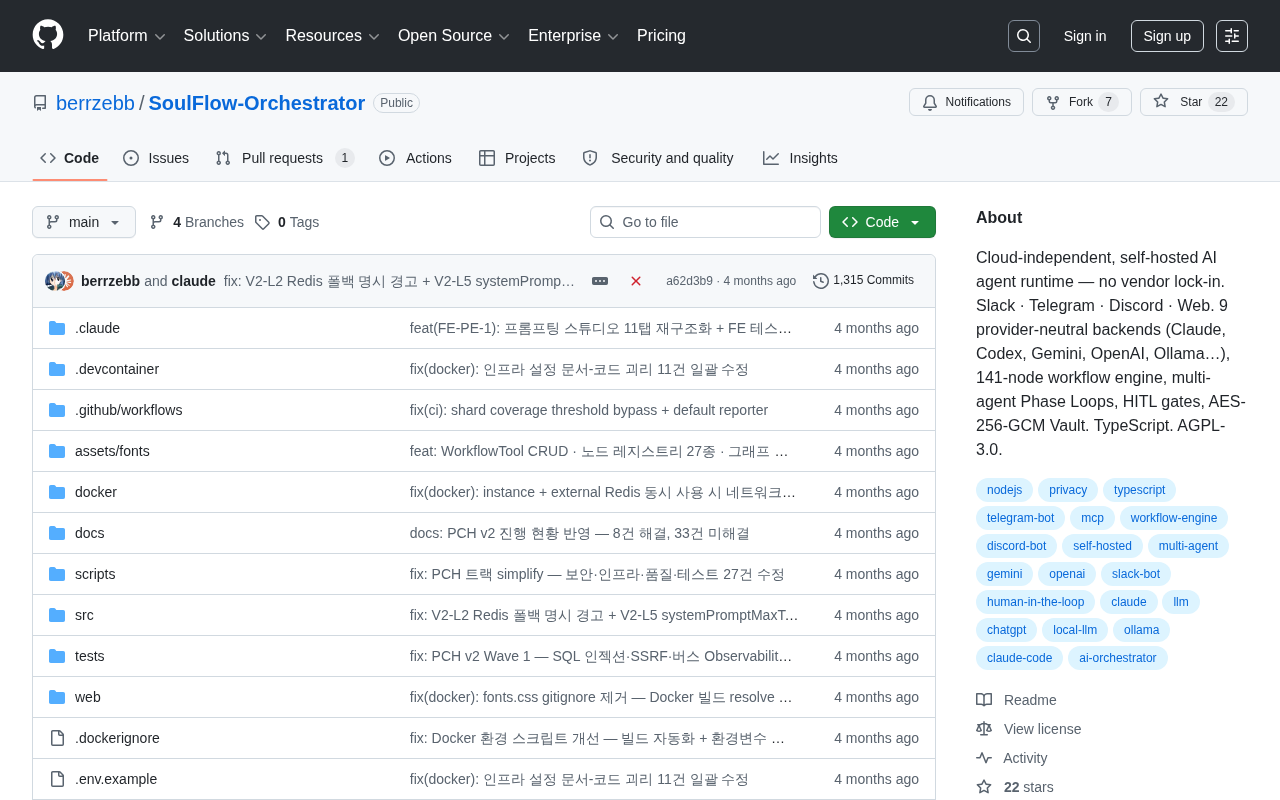
SoulFlow-Orchestrator: A Self-Hosted, Vendor-Lock-In-Free AI Agent Runtime
SoulFlow-Orchestrator is an open-source, self-hosted AI agent runtime with no vendor lock-in. Supports 9 neutral backends (Claude, OpenAI, Ollama), 141-node workflow engine, multi-agent loops, and HITL gates.
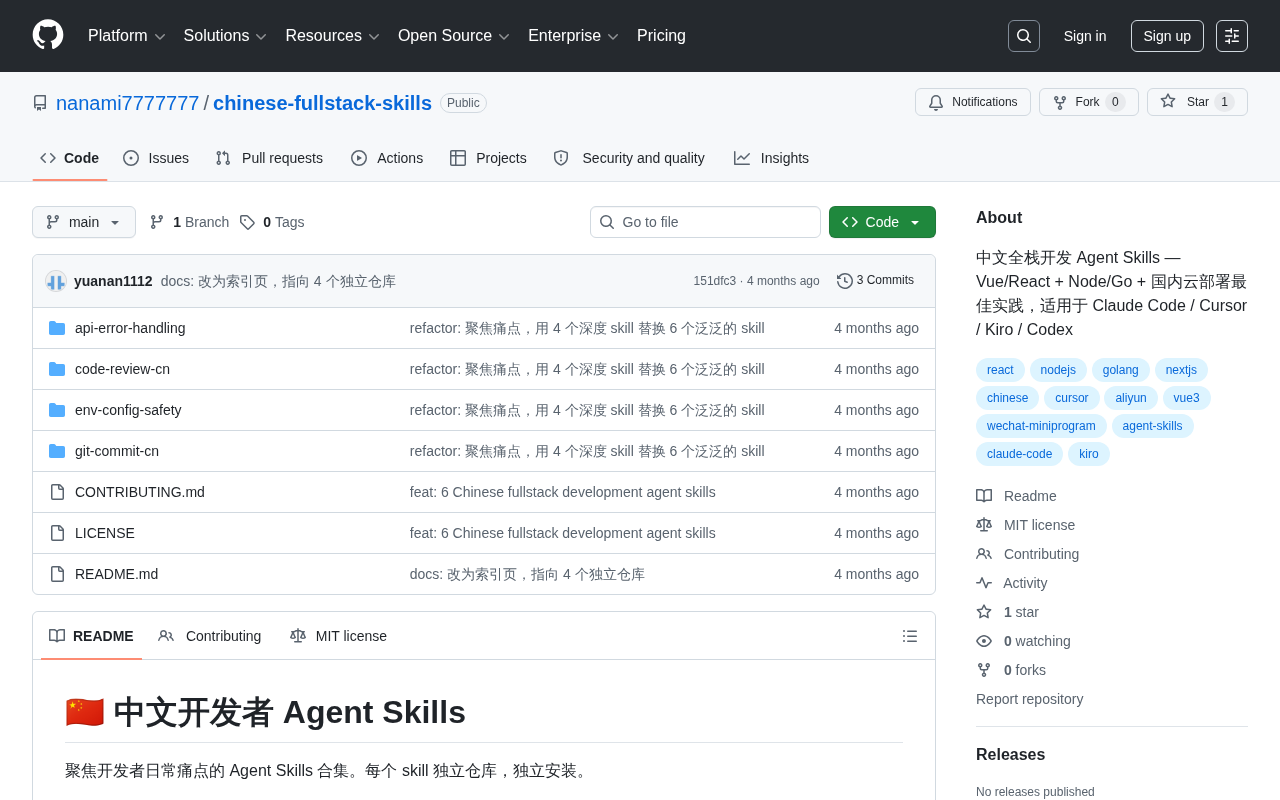
Chinese Full-Stack Agent Skills: A Skill Library Tailored for Domestic AI-Assisted Development
chinese-fullstack-skills is an Agent Skills library for Chinese full-stack development, covering Vue/React, Node/Go, and domestic cloud deployment best practices. Compatible with Claude Code, Cursor, Kiro, and Codex.
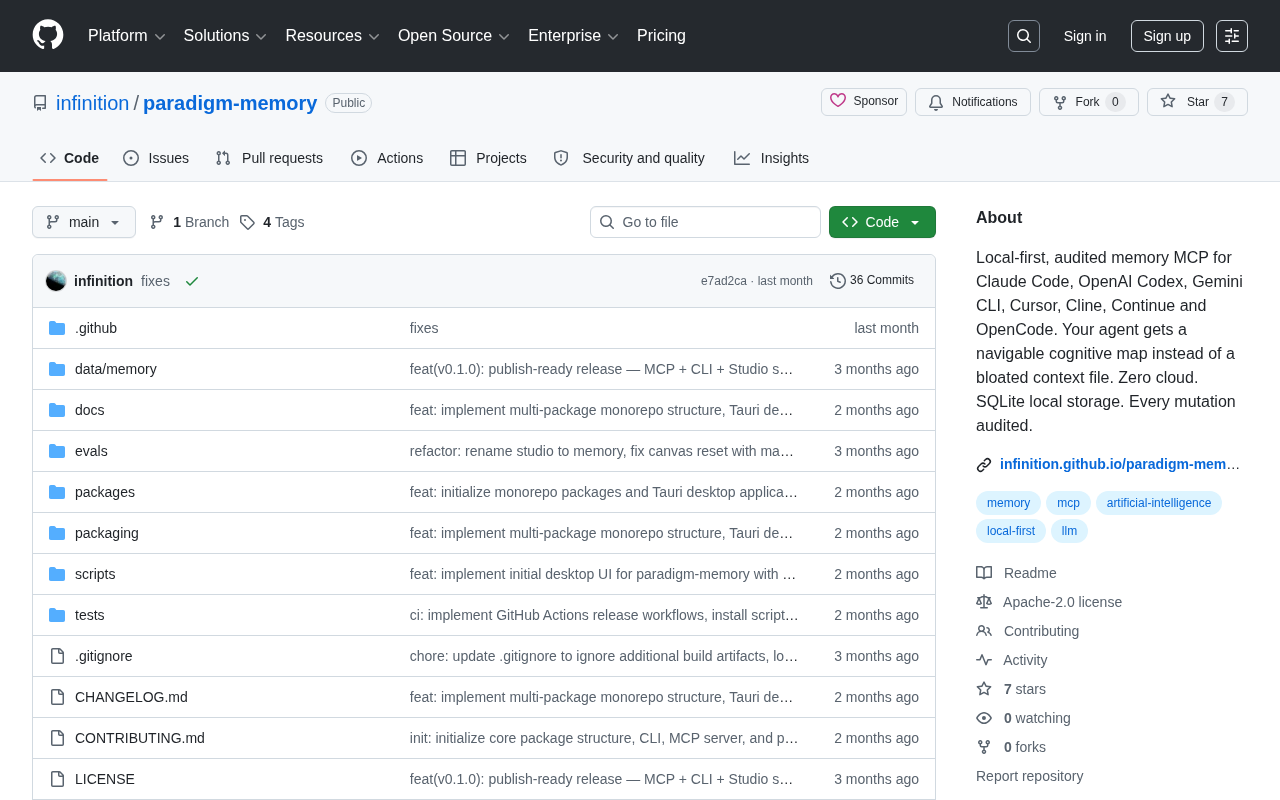
Paradigm Memory: A Local-First Memory System for AI Coding Assistants
paradigm-memory is a local MCP memory tool for Claude Code, Cursor, and Cline. It uses SQLite local storage, zero cloud, full audit trails, and a navigable cognitive map instead of bloated context files.