NVIDIA DSX AI Factory: How a Runtime AI Asset Inventory Validates GPU Platforms

NVIDIA points out that static configuration inventories are no longer sufficient and that a runtime AI asset inventory is needed to ensure GPU platform visibility and validation.
The article centers on a viewpoint from NVIDIA's developer blog: when dozens of teams and hundreds of AI jobs share a single GPU cluster, platform visibility into "what's actually running" becomes the new bottleneck. Static configuration inventories only record deployment intent and can't reflect runtime changes such as image replacement, driver upgrades, and inference backend switches—especially distorted in mixed Dynamo inference and Kubeflow training scenarios. NVIDIA's solution is to collect a runtime AI asset inventory and incorporate it into the DSX AI Factory platform validation process, giving GPU compute delivery a reproducible, verifiable basis. The article further notes that Dynamo, Kubeflow, and Slurm bring differentiated collection requirements, emphasizes that the inventory must be jointly maintained by platform and algorithm teams, and recommends incorporating runtime comparison into daily operations rather than one-time acceptance.
When AI Workloads Scale Up, Platform Visibility Becomes the New Bottleneck
Getting the first training job running on a GPU platform isn't hard. What's hard is being able to say precisely, when dozens of teams and hundreds of jobs are running on the same cluster at once, "which models are actually running right now, which inference framework are they using, and which GPU resources are they occupying." NVIDIA's developer blog is direct in its assessment: as teams deploy and scale AI workloads with NVIDIA Dynamo, Kubeflow, or Slurm, the need for visibility into what's actually running has outgrown what the platform itself can provide.
This isn't just the old ops problem under a new name. Traditional cluster monitoring focuses on node uptime, GPU utilization, and memory usage, while AI workloads introduce an extra layer of complexity: model versions, inference runtimes, framework combinations, and the dependencies among them all affect whether the platform is correctly configured and can reliably carry production traffic. NVIDIA's approach is to collect this information as a "runtime AI asset inventory" and validate the GPU platform through the DSX AI Factory methodology.

Why a Static Configuration Inventory Is No Longer Enough
The Mismatch Between Platform State and Workload State
The configuration inventory generated at cluster deployment time is static—it records "what this machine was supposed to have installed according to the design." But in actual operation, images get replaced, drivers get upgraded, and inference services running in containers switch backends, so the configuration inventory quickly falls out of sync with reality. The runtime AI asset inventory fills exactly this gap—it captures the objects that are actually running now, not the intent at deployment time.
This mismatch is especially pronounced in mixed-workload scenarios. A single GPU node may simultaneously host Dynamo inference tasks and Kubeflow training pipelines, whose resource demands and runtime dependencies don't align, and a static inventory can't reflect this dynamic layering.
The Value of the Validation Step
Using the runtime inventory for platform validation means teams can compare actual running state against an expected baseline to determine whether the platform remains reproducible and deliverable. This is critical for scenarios like AI factories that supply GPU compute as a production resource: what's delivered to internal customers can't just be a platform that's "configured correctly in theory," but one that's been verified at runtime and can account for which AI workloads it's currently hosting.
The Positioning Differences of Dynamo, Kubeflow, and Slurm
The three names that recur throughout represent three layers of AI workload orchestration. NVIDIA Dynamo is a distributed runtime for inference services, responsible for scheduling large-model requests across multi-node GPUs and reusing KV caches; Kubeflow is an ML workflow platform built on Kubernetes that containerizes training, hyperparameter tuning, and pipeline orchestration; Slurm is a batch job scheduler widely used in traditional high-performance computing that still dominates training clusters. The three differ in the granularity of their resource abstractions: Dynamo works at the level of model instances, Kubeflow at the level of Pods and Pipelines, and Slurm at the level of jobs and partitions. This difference directly means that the "runtime asset inventory" needs to collect different fields and relationships on different stacks—which is the fundamental reason unified visibility is hard to achieve with a single tool.
Configuration Drift
The core problem the validation step must counter is configuration drift: the phenomenon in which a system gradually deviates from its expected baseline after deployment due to manual changes, automatic upgrades, or dependency updates. On GPU platforms, drift manifests as inconsistent driver versions, mismatched CUDA/cuDNN combinations, replaced inference backends, container image tags pointing to new content, and so on. Drift itself isn't necessarily an error, but it robs "whether the platform meets the bar" of any basis for judgment—the same baseline can correspond to completely different actual states at different points in time. The value of the runtime inventory is that it makes drift explicit rather than hidden, enabling teams to distinguish intentional changes from accidental deviations and to confirm after scaling or upgrades that the platform remains reproducible.
The Role of the Runtime Inventory in the AI Factory
NVIDIA discusses this work under the DSX AI Factory framework, pointing to a complete chain from platform build-out to runtime validation. The core proposition of the AI factory is to make GPU compute as plannable, schedulable, and measurable as industrial production capacity—and to do that, the prerequisite is knowing what's being produced on the line. The runtime AI asset inventory plays the role of this "production line ledger."
For teams using Dynamo for inference serving, the inventory can answer questions like which models are being served and which runtime instances they correspond to; for teams using Slurm to manage batch training jobs, the inventory helps clarify the actual mapping between jobs and hardware resources. In Kubeflow scenarios, containerized pipelines make resource ownership more granular, and the need for runtime collection rises accordingly.
One detail worth noting: NVIDIA doesn't elaborate on the inventory's specific collection mechanisms or field definitions in the original article, instead presenting "runtime visibility" as an open problem and incorporating it into the DSX AI Factory validation process. This also means that implementation will still require adaptation to the collection capabilities of specific platforms.
What Is DSX AI Factory
DSX is a reference architecture and methodology NVIDIA proposes for the "AI factory," aiming to build and operate GPU clusters as plannable, schedulable, and measurable production facilities rather than scattered project-based experimental environments. It covers the complete lifecycle from data center design, GPU selection, and network and storage configuration to platform validation and runtime management. Under this framework, validation isn't a one-time acceptance check but a continuous action that runs throughout platform delivery and operations. The reason the runtime AI asset inventory is incorporated into the DSX process is that the metering and scheduling premises of an AI factory require accurate knowledge of the identity of workloads running on the line—without this ledger, compute providers can't account to internal customers for where resources go, nor can they do capacity planning.
Practical Implications for Platform Teams
Incorporating the runtime inventory into the daily operations rhythm is more valuable than treating it as a one-time acceptance action. Platform teams can use it to establish a continuous comparison mechanism: periodically collect runtime state, compare it against the baseline configuration, and promptly attribute any drift discovered. This practice is especially necessary after scaling, driver upgrades, and framework version switches.
Another implication is the question of inventory ownership. The runtime asset inventory spans both the infrastructure and AI application layers, requiring platform teams to provide collection capabilities and algorithm teams to help label workload identities. If both sides maintain separate records with different definitions, the validation value of the inventory itself is undermined. NVIDIA's discussion of this problem in the AI factory context is in effect a reminder: GPU platform validation isn't just hardware-level acceptance but also continuous accounting of the AI assets running on top of it.
For teams moving GPU clusters from experimental environments into production, this approach offers an actionable handle—first make runtime state observable and comparable, then talk about whether the platform meets the bar.
One-line Summary
NVIDIA points out that static configuration inventories are no longer sufficient and that a runtime AI asset inventory is needed to ensure GPU platform visibility and validation.
Paragraph Summary
The article centers on the viewpoint raised in NVIDIA's developer blog: when dozens of teams and hundreds of AI jobs share a single GPU cluster, platform visibility into "what's actually running" becomes the new bottleneck. Static configuration inventories only record deployment intent and can't reflect runtime changes such as image replacement, driver upgrades, and inference backend switches—especially distorted in mixed Dynamo inference and Kubeflow training scenarios. NVIDIA's solution is to collect a runtime AI asset inventory and incorporate it into the DSX AI Factory platform validation process, giving GPU compute delivery a reproducible, verifiable basis. The article further notes that Dynamo, Kubeflow, and Slurm bring differentiated collection requirements, emphasizes that the inventory must be jointly maintained by platform and algorithm teams, and recommends incorporating runtime comparison into daily operations rather than one-time acceptance.
Related articles
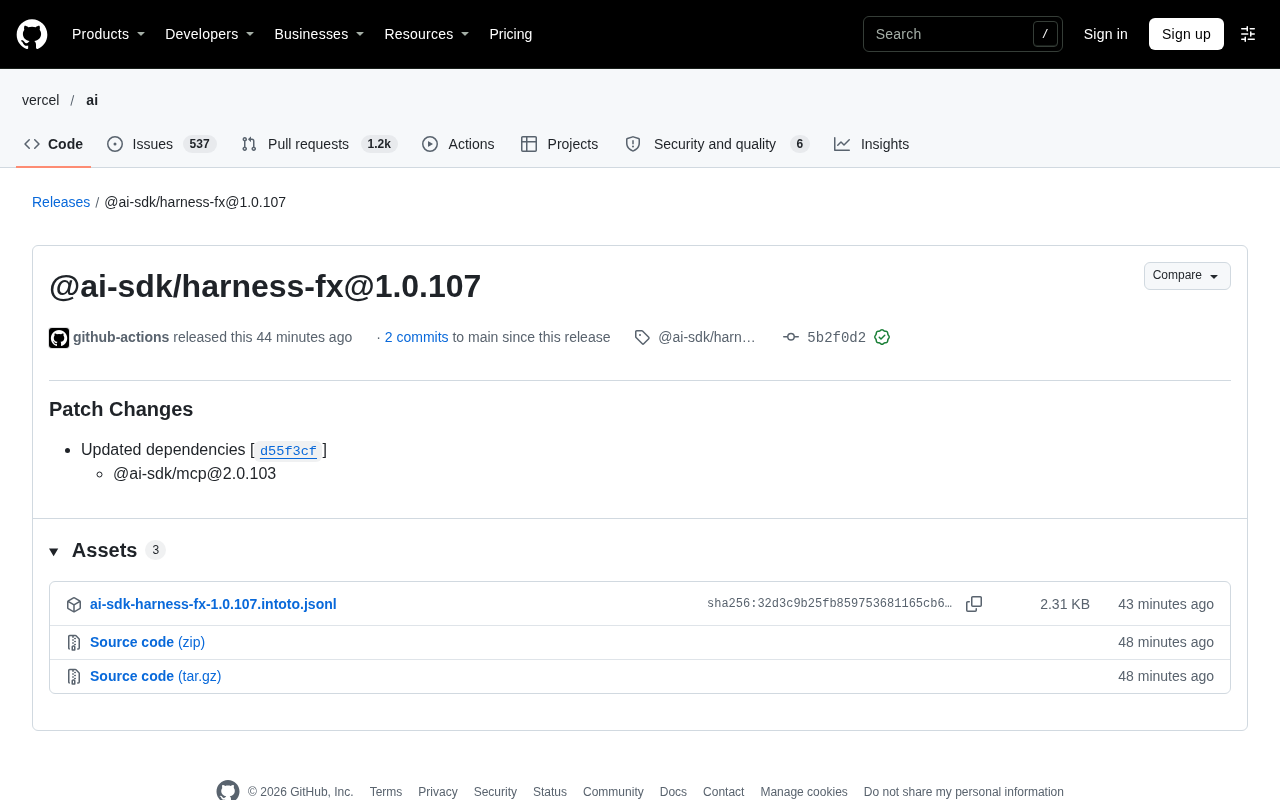
@ai-sdk/harness-fx 1.0.107 Released: MCP Dependency Upgrade, Patch Update
@ai-sdk/harness-fx 1.0.107 released, updating dependency @ai-sdk/mcp to 2.0.103. Learn about this patch update, its impact on AI SDK developers, and upgrade advice.

What Happened to Silicon Valley? O'Reilly Long-Form Piece Sparks Heated Debate on Hacker News
O'Reilly Radar's "What Happened to Silicon Valley?" earned 302 points and 153 comments on Hacker News, sparking debate on the valley's innovation ecosystem and culture.

After Maduro's Arrest, Where Does Venezuela Go From Here?
After Maduro's capture by U.S. forces and detention in Brooklyn, Venezuela faces a power vacuum, no election date, and a geopolitical struggle over its oil.