Nvidia Hit by Wave of Class Actions: Huang Renxun 'Spy Gate' Probe Triggers Stock Turmoil

Nvidia's board investigated Huang Renxun's relationship with a suspected Chinese spy, shares fell over 4%, and securities litigation risk emerged.
Nvidia's board announced an investigation into CEO Huang Renxun's relationship with a suspected Chinese spy, and the stock price fell more than 4% in response. A securities law expert pointed out that the company's earlier insistence that everything was "normal" could become a breakthrough point for class actions, because the gap between early downplaying of risk and subsequent investigative facts is precisely the basis plaintiff lawyers look for. The report uses "race" to describe litigation developments against Nvidia, suggesting that multiple law firms may already be preparing securities class actions. The event overlaps with a geopolitical background, and compliance issues involving China and espionage suspicions are being scrutinized in a magnified way by the market. The governance structure in which the key person is highly bound to the company directly transmits personal risk to the company's valuation, and subsequent investigation conclusions and litigation progress deserve continuous tracking.
Title
Nvidia Hit by Wave of Class Actions: Huang Renxun 'Spy Gate' Probe Triggers Stock Turmoil
Meta Description
After Nvidia's board investigated Huang Renxun's relationship with a suspected Chinese spy, shares fell over 4%. Securities law experts warn the company's early "all normal" statements could trigger costly class actions. This article analyzes litigation risk and governance impact.
Article Content
Nvidia is facing a new storm. After the company's board announced an investigation into CEO Huang Renxun's relationship with a suspected Chinese spy, the stock price fell more than 4%. A securities law expert points out that the company's earlier insistence that everything was "normal" could evolve into a costly legal problem.
Investigation Triggers Stock Drop, Market Reacts Quickly
Nvidia's stock price fell sharply after the board's investigation was announced, dropping more than 4%. For a chip giant with a massive market capitalization, the market value evaporation corresponding to this single-day decline is considerable. The market clearly does not view this as an ordinary personnel or compliance review—Huang Renxun is the soul of Nvidia, and the fact that his personal network is now under formal investigation itself sends an unusual signal.
The investigation focuses on Huang Renxun's dealings with an individual suspected of being a Chinese spy. Although public information is currently limited, intervention at the board level means the seriousness of the matter has risen to the highest level of corporate governance. Investors voting with their feet reflects concerns about potential legal and reputational risks.
Securities Law Expert: Early "All Normal" Statements Plant Hidden Risks
A securities law expert commented that Nvidia's earlier insistence that the situation was "normal" when facing related questions could become a handle for subsequent litigation. In the logic of securities class actions, whether a company and its executives' public statements about material information are accurate and complete is a key issue. If subsequent investigations reveal facts inconsistent with earlier statements, investors have grounds to claim they relied on inaccurate information when making investment decisions.
This logic is not complicated: when a listed company actively downplays a certain risk, and that risk eventually becomes explicit in the form of investigations, litigation, or regulatory action, the gap between early statements and subsequent facts is often the breakthrough point plaintiff lawyers look for. The expert used the phrase "a very expensive problem" to describe this potential consequence, pointing precisely to the compensation and settlement costs that class actions may bring.
Interestingly, the source material does not disclose the specific progress of the investigation, details of the alleged espionage, or the exact wording and occasion of Nvidia's early statements. These gaps mean there is still considerable uncertainty about the direction of events, but the outline of litigation risk is already clear.
Securities class action is a common investor rights protection mechanism in the U.S. capital market. When a listed company's stock price falls and investors suffer losses due to false statements, material omissions, or misleading information disclosure, injured shareholders can jointly file a class action, usually led by professional law firms soliciting plaintiffs. Its core legal basis is the anti-fraud provisions of securities law, and the key issues are whether the company made untrue or misleading statements about material information and whether investors suffered losses as a result. Such litigation has long cycles, high settlement amounts, and often comes with high attorney fees and reputational damage, so it is regarded by listed companies as a major risk.
Why the Race to Sue Nvidia May Have Already Begun
The original report's title uses the word "race" to describe litigation developments against Nvidia, suggesting that multiple law firms may already be evaluating or preparing to file securities class actions. In the U.S. capital market, after a listed company's stock price fluctuates significantly due to negative news, law firms specializing in securities litigation usually intervene quickly, soliciting injured investors and looking for grounds for suit. Nvidia's stock decline this time, combined with the clear event of the board investigation,恰好 constitutes a typical trigger for such law firms to launch investigations.
For Nvidia, the challenge is that two fronts are opening simultaneously: on one side, the board's internal investigation needs to clarify the facts; on the other, external litigants will try to use any information disclosed during the investigation to build their claims. How the company balances cooperation with the investigation and managing market expectations will directly affect the direction and cost of litigation.
In the U.S. securities market, law firms soliciting plaintiffs is a standard action before the launch of a securities class action. Once a company's stock price falls sharply due to negative events, law firms specializing in securities litigation quickly issue announcements seeking investors who bought shares during a specific period and suffered losses, in order to form a plaintiff class. This "race" stems from legal rules: the law firm that first submits a complaint often has the opportunity to be appointed by the court as lead counsel, thereby dominating the case and obtaining the main attorney fees. Therefore, it is very common for multiple law firms to investigate simultaneously and rush to file cases, which also explains the meaning of the word "race" in the report.
Behind the Event: The Intertwining of Corporate Governance and Geopolitics
What makes this event sensitive is also that it overlaps with the current geopolitical background of the tech industry. Keywords involving China and espionage suspicions give an event that might otherwise be viewed as a review of personal relationships broader room for interpretation. For a chip company whose core products are highly dependent on global markets and deeply affected by export control policies, any compliance issue linked to geopolitics will be scrutinized in a magnified way.
From a corporate governance perspective, the board's proactive launch of an investigation can be interpreted as an attempt to make a gesture on internal controls and transparency. But this action also confirms the existence of the problem, and the market often prices "unknown risks" more violently than known risks. The immediate stock price reaction shows that investors currently prefer to sell first and ask questions later.
Independent board investigation is a common procedure in corporate governance for responding to major allegations. When executive personal conduct or potential compliance risks are involved, the board (usually led by independent directors, with external lawyers and forensic accountants hired if necessary) launches an internal investigation to clarify the facts, assess legal liability, and decide whether to take disciplinary or legal action. Proactively launching an investigation can demonstrate governance transparency, but it also means the company formally acknowledges that there are issues requiring verification. The independence, scope, and degree of disclosure of conclusions of the investigation often become important bases for the market to judge a company's governance level.
What It Means for Investors and the Industry
In the short term, Nvidia needs to face the dual pressure of stock price volatility and litigation preparation. Securities class actions usually take a long time, but once formal proceedings begin, the legal fees, settlement amounts, and management distraction they bring are all real costs.
The longer-term impact lies in the governance warning. Huang Renxun's high degree of binding with Nvidia is an important asset for the company, but this structure also means that the key person's personal risks are directly transmitted to the company level. How the board's investigation this time ends and how much information is disclosed will become a window for observing Nvidia's governance capabilities.
For investors focused on the AI chip sector, this event reminds people that even for industry leaders, their valuations include pricing for governance risk and compliance risk. When these risks move from the background to the foreground, price adjustments often come quickly. Subsequent developments—the investigation's conclusions, whether formal litigation emerges, and how the company corrects its previous public statements—deserve continuous tracking.
One-line Summary
Nvidia's board investigated Huang Renxun's relationship with a suspected Chinese spy, shares fell over 4%, and securities litigation risk emerged.
Paragraph Summary
Nvidia's board announced an investigation into CEO Huang Renxun's relationship with a suspected Chinese spy, and the stock price fell more than 4% in response. A securities law expert pointed out that the company's earlier insistence that everything was "normal" could become a breakthrough point for class actions, because the gap between early downplaying of risk and subsequent investigative facts is precisely the basis plaintiff lawyers look for. The report uses "race" to describe litigation developments against Nvidia, suggesting that multiple law firms may already be preparing securities class actions. The event overlaps with a geopolitical background, and compliance issues involving China and espionage suspicions are being scrutinized in a magnified way by the market. The governance structure in which the key person is highly bound to the company directly transmits personal risk to the company's valuation, and subsequent investigation conclusions and litigation progress deserve continuous tracking.
Related articles
How Do Cursor, Devin, TRAE, and Copilot Compare on Price? Calculate Your Credits Before You Compare Monthly Fees
Side-by-side comparison of individual and team pricing for Cursor, Devin Desktop, TRAE, and Copilot, breaking down credit rules, third-party model inclusion, overage billing, and practical methods for measuring usage before paying, setting spending caps, and choosing the right tool.
Copilot Retires Three Models: Pro Users Left With Only One Alternative
GitHub Copilot retires Claude Opus 4.8, Claude Opus 5, and GPT-5.6 Tera on Nov 16 across Chat, code completion, and Agent mode. Pro users have only GPT-6 Luna left; Legacy annual plans miss Opus 5.5; admins must enable replacements manually.
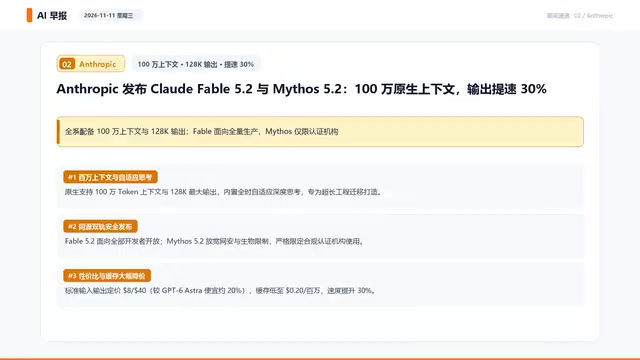
Gemini 4 Carbon Arrives: The LLM Race Enters the Era of Million-Token Context and Trillion-Parameter Open Source
Google launches Gemini 4 Carbon and multi-agent tool Swarm; Anthropic debuts million-context Fable 5.2 and Mythos 5.2; OpenAI releases security-focused GPT-6 Cyber; Mistral and Kimi open-source trillion-parameter models — the LLM race accelerates across the board.