NVIDIA PyTorch Hands-On Workshop: Building Neural Networks from Scratch to AI Infrastructure Optimization

NVIDIA's full-day PyTorch workshop lets engineers build, train, and optimize neural networks on real AI accelerators.
NVIDIA is offering a full-day immersive PyTorch hands-on workshop for AI engineers, covering three key phases: building a neural network from scratch, training the model, and optimizing it for real-world AI infrastructure — all on the latest AI accelerator hardware. Participants earn an industry-recognized credential upon completion. Last year's session hit 100% attendance, and registration closes October 13th. The workshop targets developers with a deep learning foundation who lack production-level tuning experience, aiming to close the gap between theory and industrial practice.
NVIDIA Launches Full-Day PyTorch Hands-On Training
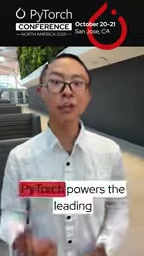
Faradong from NVIDIA introduced a full-day hands-on workshop designed for AI engineers. This isn't a slide-heavy theory lecture — it's an immersive, practical training session built around the latest AI accelerators. Participants will earn an industry-recognized credential that adds real weight to their professional profile.
The workshop's focus is crystal clear: PyTorch has become the de facto standard for training and inference frameworks, underpinning virtually the entire cutting-edge AI stack. Whether you're training models or deploying for inference, the ability to tune PyTorch on real hardware has become an essential skill for anyone working in AI.
PyTorch is an open-source deep learning framework developed by Meta (formerly Facebook) AI Research. Since its release in 2016, it has become the go-to choice for both academia and industry. Its core strength lies in its Dynamic Computation Graph mechanism, which lets developers flexibly modify network architectures at runtime — a far better debugging experience than the static graph-based frameworks that dominated earlier on. Today, PyTorch is the dominant framework across Hugging Face's model hub, paper implementations at top conferences, and major open-source large language models (such as LLaMA and open-source GPT reproductions). While it shares the landscape with TensorFlow, PyTorch has clearly pulled ahead in research community adoption.
From Scratch to Real-World Optimization
The standout feature of this workshop is its complete, end-to-end practical pipeline. Participants aren't watching demonstrations — they're hands-on through three key phases: building a neural network from scratch, training the model, and optimizing it for real-world AI infrastructure.
This "zero to deployment" design directly addresses the stages where AI engineering most often breaks down in practice. Many developers can run through tutorial example code just fine, but find themselves at a loss when faced with real accelerator hardware and production-grade infrastructure. The workshop's emphasis on hands-on work with the latest AI accelerators means participants get exposure to a compute environment close to the industry frontier — not toy-level exercises.
For engineers who want to truly understand how models run efficiently on NVIDIA's hardware stack, this kind of training bridges the gap between theoretical learning and industrial practice.
AI accelerators generally refer to hardware purpose-built for deep learning computation — including NVIDIA GPUs (such as the H100 and A100 series) and various specialized chips. Compared to general-purpose CPUs, these devices dramatically increase matrix operation throughput through massively parallel compute units and high-bandwidth memory (HBM). However, simply running a model on a GPU doesn't mean you're using the hardware efficiently. Factors like Tensor Core utilization, operator fusion, and memory access patterns all significantly impact real-world performance. In production environments, engineers also need to handle mixed-precision training (FP16/BF16), distributed parallelism strategies (data parallelism, pipeline parallelism, tensor parallelism), and other complex challenges — topics that pure framework tutorials rarely cover.
Industry-Recognized Credential and Registration Details
Upon completing the workshop, participants receive an industry-recognized technical credential. In today's increasingly competitive AI talent market, this kind of verifiable proof of ability carries real value for job seekers and those looking to advance their careers.
Notably, last year's equivalent workshop achieved a 100% turnout rate — a strong signal of how compelling participants found the content. NVIDIA recommends that interested attendees add the workshop to their conference registration as soon as possible, with registration closing on October 13th.

Why This Kind of Hands-On Training Matters
As the cost of training and running large models continues to climb, engineers who can optimize PyTorch workloads at the hardware level are becoming increasingly rare. This workshop packages modeling, training, and infrastructure optimization into a single day — offering a high-density, highly targeted learning path.
For developers who already have a solid deep learning foundation but lack production tuning experience, getting direct hands-on time with the latest accelerator hardware is a rare opportunity. It doesn't just help participants understand how neural networks are built — more importantly, it builds the engineering intuition needed to run models efficiently on real AI infrastructure. And that's exactly the capability many teams are struggling to find right now.
Related articles

Bilibili's Hit Dify Tutorial: A Practical Guide to Building 20+ AI Apps from Scratch
A distilled guide to Bilibili's top-rated Dify tutorial: Windows + Docker deployment, MySQL connection, five app types, model integration strategy, and publishing.

Agent Skills Beginner's Guide: From Concepts to Multi-Agent Collaboration in Practice
A comprehensive guide to Agent Skills: core concepts, components, the importance of Description, standardization, beginner learning paths, and multi-agent collaboration.

One Neuron Detects Both Cats and Cars? We Reproduced It and Found a New Explanation
The cat-car neuron reinterpreted: researcher Cammarata argues it distinguishes pointy from round, not cats from cars. We reproduced the experiment and found the new explanation holds on most inputs—but cars are the exception. The interpretability debate continues on language models.