NVIDIA Reappoints Jensen Huang as CEO: What's Behind the Move?
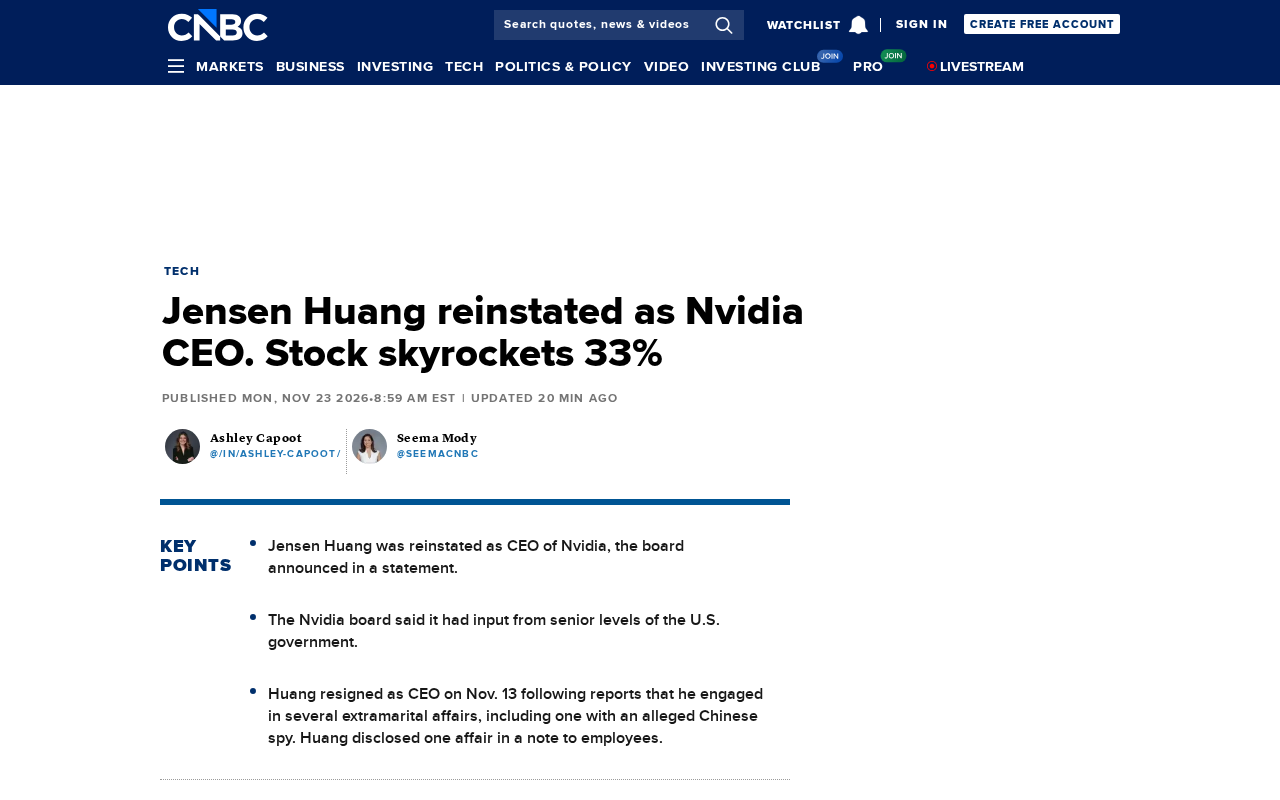
NVIDIA's board reappointed Jensen Huang as CEO, drawing intense attention from the tech community on governance and AI strategy.
NVIDIA's board formally reappointed co-founder Jensen Huang as President, CEO, and board member, with the official press release issuing this as a procedural matter. The news received 333 points and 1,585 comments on Hacker News, with a notably high comment-to-point ratio, indicating extensive discussion and disagreement within the tech community. The article notes that in the context of corporate governance, "reappointment" is usually a formal renewal vote for the incumbent executive rather than a transfer of power, but with NVIDIA at the center of AI computing power, this move is interpreted as a confirmation and endorsement of the existing strategic direction. Jensen Huang's personal judgment is deeply tied to NVIDIA's CUDA ecosystem and GPU-accelerated computing roadmap, and leadership stability constitutes a positive signal for AI companies and cloud service providers that rely on its computing power. The article also reminds readers that subsequent product launches, ecosystem partnerships, and capital allocation decisions are the key to judging the actual impact.
Title
NVIDIA Reappoints Jensen Huang as CEO: What's Behind the Move?
Meta Description
NVIDIA's board reappointed Jensen Huang as President, CEO, and board member. The official announcement sparked heated discussion on Hacker News. This article analyzes the corporate governance logic, market reaction, and potential impact on the AI computing industry behind this personnel move.
Article Content
NVIDIA's board of directors announced the reappointment of Jensen Huang as the company's President, CEO, and board member. The news quickly ignited discussion on Hacker News, with the post garnering 333 points and as many as 1,585 comments. For a company whose market cap keeps hitting new highs and which sits at the center of the AI wave, the very wording "reappointment" is intriguing in itself.
The Core of the Event: An Official Confirmation of "Reappointment"
According to NVIDIA's official press release, the board has passed a resolution reappointing Jensen Huang as President, Chief Executive Officer, and restoring his status as a board member. Jensen Huang is a co-founder of NVIDIA and has long held the helm since the company's founding, leading NVIDIA's transformation from a graphics chip manufacturer into the definer of AI computing platforms.
The wording of the official announcement leans procedural, but given NVIDIA's current position in the industry, this move has been imbued with more room for interpretation by outsiders. The high heat of the discussion on Hacker News shows that developers and tech professionals are paying close attention.
The Corporate Governance Meaning of "Reappointment"
In the context of U.S.-listed companies, the "reappointment" of a CEO is usually not personnel-change news, but rather a formal renewal vote by the board for the incumbent executive after term expiration, clause revision, or board composition adjustment, in accordance with the company's articles of incorporation or executive employment agreement. It is fundamentally different from "new appointment" or "succession": the latter implies a transfer of power, while the former is closer to a routine legal confirmation. U.S. corporate law (such as the Delaware General Corporation Law) requires the board to authorize executive appointments through formal resolutions, often voted together with compensation packages and term lengths. Therefore, such announcements often appear in annual proxy statements or 8-K filings, with highly formulaic wording. For investors, the key information is not the "appointment" itself, but whether the resolution is accompanied by governance structure changes, whether succession arrangements are disclosed, and whether board independence is affected.
Why Is the Market Reaction So Strong?
The Deep Bond Between Jensen Huang and NVIDIA
Jensen Huang's role at NVIDIA goes far beyond that of a professional manager. He is the core decision-maker of the company's technology roadmap and business strategy, and his personal style has profoundly influenced NVIDIA's product cadence and ecosystem layout. From the CUDA platform to GPU-accelerated computing, and now to the infrastructure for AI training and inference, Jensen Huang's judgment is regarded by investors as one of NVIDIA's most critical assets.
The board's reappointment of him can be understood as a confirmation and endorsement of the existing strategic direction. Especially against the backdrop of persistently high demand for AI computing power, leadership stability is an important signal for customers and partners.
Why the CUDA Ecosystem Constitutes NVIDIA's Moat
CUDA (Compute Unified Device Architecture) is a parallel computing platform and programming model launched by NVIDIA in 2006, allowing developers to directly call thousands of GPU compute cores using languages such as C/C++. Its key value lies not in the hardware itself, but in the software stack accumulated over more than a decade: libraries such as cuDNN, TensorRT, and NCCL, as well as native CUDA support in mainstream deep learning frameworks (PyTorch, TensorFlow). Once developers build training and inference pipelines around CUDA, migrating to other accelerators requires rewriting large amounts of low-level code—this switching cost creates extremely high ecosystem stickiness. Jensen Huang positioned CUDA early on as a strategic-level investment for the company, continuing to double down even during the early years when it was unprofitable for a long time. This judgment laid the foundation for NVIDIA's shift from a graphics chip manufacturer to an AI computing platform.
The Market's Sensitivity to "Uncertainty"
NVIDIA occupies the most watched position in the global tech industry, and any executive change will be amplified in interpretation. Although "reappointment" is usually a routine corporate governance process, in technical communities like Hacker News, discussion quickly extends to corporate governance structure, succession plans, and the impact of Jensen Huang personally on NVIDIA's long-term value. What the 1,585 comments reflect is precisely the outside world's high concern about the company's future direction.
The Meaning of Hacker News Heat Metrics
Hacker News is a tech community operated by Y Combinator. Its post ranking algorithm combines vote count with time decay; points reflect the amount of agreement received in a short period, while the comment count more directly reflects controversy and depth of discussion. 333 points is moderately above-average front-page heat, while the ratio of 1,585 comments to points is noticeably high, indicating that the topic sparked a large amount of disagreement or extended discussion within the community, rather than simple unanimous agreement. For tech professionals, the HN comment section is often seen as a window into the real attitudes of developers, entrepreneurs, and infrastructure engineers, and its discussion content often reflects the industry's collective judgment on a company's governance or technology roadmap earlier than news reports themselves.
The Governance Logic Behind the Official Announcement
From a corporate governance perspective, reappointing the CEO and restoring board membership often involves adjustments to the articles of incorporation, board composition, or executive employment terms. NVIDIA's official press release issued this as a formal matter, indicating that the move went through the board's formal procedures.
For a public company, it is not uncommon for the CEO to also serve as a board member, but Jensen Huang's uniqueness lies in his founder identity and long tenure at the helm. This makes the "reappointment" not only a legal procedure but also a reaffirmation of the company's power structure and strategic continuity.
What Does It Mean for the AI Industry?
NVIDIA is the core supplier of current AI infrastructure, and its GPU products support major large-model training and inference workloads worldwide. Leadership stability means the company's strategy will not take a sharp turn due to personnel changes. For AI companies and cloud service providers that rely on NVIDIA's computing power, this is a relatively positive signal.
On the other hand, the heat of discussion about NVIDIA in the tech community also reflects the industry's high dependence on the computing power supply chain. The large number of comments on Hacker News covers multiple angles, from corporate governance to technology roadmaps to market competition, showing that every move by NVIDIA touches the nerves of the entire AI ecosystem.
Several Directions Worth Continued Attention
After Jensen Huang's reappointment, whether NVIDIA's strategic priorities will be fine-tuned is a focal point of outside attention. From official information, the company has not announced major strategic changes, but the formal confirmation of leadership often comes with a clarification of the focus for the next stage.
The competitive landscape of the AI computing market is evolving, and NVIDIA faces challenges both from competitors and from the trend of customers developing their own chips. With Jensen Huang reappointed at this juncture, his subsequent product launches, ecosystem partnerships, and capital allocation decisions will directly affect NVIDIA's long-term position in the AI era.
For developers and tech professionals, following NVIDIA's official press releases and subsequent earnings calls is the most direct way to track the actual impact of this event.
One-line Summary
NVIDIA's board reappointed Jensen Huang as CEO, drawing intense attention from the tech community on governance and AI strategy.
Paragraph Summary
NVIDIA's board formally reappointed co-founder Jensen Huang as President, CEO, and board member, with the official press release issuing this as a procedural matter. The news received 333 points and 1,585 comments on Hacker News, with a notably high comment-to-point ratio, indicating extensive discussion and disagreement within the tech community. The article notes that in the context of corporate governance, "reappointment" is usually a formal renewal vote for the incumbent executive rather than a transfer of power, but with NVIDIA at the center of AI computing power, this move is interpreted as a confirmation and endorsement of the existing strategic direction. Jensen Huang's personal judgment is deeply tied to NVIDIA's CUDA ecosystem and GPU-accelerated computing roadmap, and leadership stability constitutes a positive signal for AI companies and cloud service providers that rely on its computing power. The article also reminds readers that subsequent product launches, ecosystem partnerships, and capital allocation decisions are the key to judging the actual impact.
Related articles
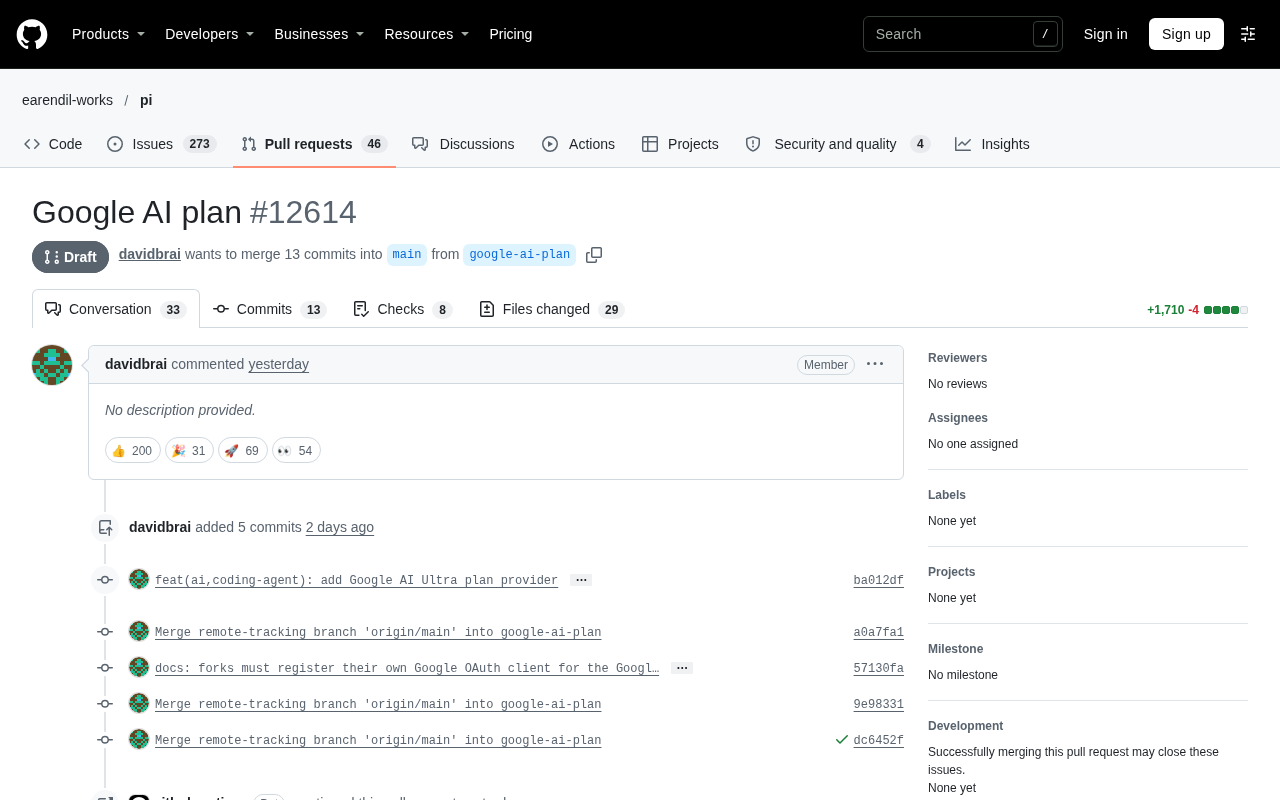
Google Officially Supports Pi Coding Agent: The AI Programming Tool Ecosystem Expands Further
Google adds official Google AI plan support for the open-source coding agent Pi, signaling accelerating integration between large model vendors and coding agent tool ecosystems. This article analyzes the impact on developer workflows, the tool ecosystem landscape, and model binding relationships.

Loom: One Machine for Weaving, Knitting and Braiding
Loom is a device that aims to seamlessly combine weaving, knitting and braiding in a single machine, drawing attention on Hacker News. This article examines its engineering challenges, significance for flexible manufacturing, and lessons for makers and hardware developers.
Running Local AI Agents on Mac: A Full Breakdown of the MLX Four-Layer Stack
A breakdown of Apple engineer Joanna's local Mac AI agent solution: the MLX four-layer stack, a three-step setup, and how the neural network accelerator, continuous batching, and distributed inference solve local agent performance bottlenecks.