Nvidia Reportedly Moving to Oust Jensen Huang? Leadership Shakeup Rumors Spark Debate
A WSJ headline about ousting Jensen Huang ignited the tech community, but details remain undisclosed.
The article examines a WSJ headline claiming "Nvidia is preparing to oust Jensen Huang," which gained 354 points and 345 comments on Hacker News. The source material offers only the headline and a discussion link—no details on who initiated the motion, board divisions, timeline, or Huang's response. The article notes that Huang's tight binding to Nvidia's technology roadmap explains the rumor's impact, while Nvidia faces structural pressures from customers-turned-competitors, a strained supply chain, and high valuation expectations. The community is split between those who see the blunt headline as evidence and those who advocate waiting for cross-verification. It closes with three reminders: distinguish headlines from facts, watch for subsequent sources, and return to industry fundamentals.
A headline from The Wall Street Journal has set the tech community abuzz: Nvidia is preparing to oust Jensen Huang. After the link was submitted to Hacker News, it quickly gained traction, racking up 354 points and 345 comments in a short time. Discussion around the fate of the AI chip giant's top leadership has drawn far more heat than typical corporate news.
The Core of the Rumor: A Heavy Headline, Thin Information
At present, the publicly available information consists almost entirely of the WSJ headline itself, paired with a Hacker News discussion link. The source material does not disclose specific details from the article's body—who initiated the removal motion, the degree of division within the board, the timeline, or Huang's own response are all undisclosed.
This point is easily overlooked in the spread of the story. Such a heavyweight headline naturally leads people to assume a detailed chain of facts lies behind it, but based on the available material, the only confirmed facts are "the report exists" and "the community is highly engaged"—everything else falls into the category of pending verification.
Why This News Hits So Hard
In Silicon Valley, the relationship between Jensen Huang and Nvidia is arguably one of the hardest founder-company pairings to separate. From its origins in graphics processors to its bet on the CUDA ecosystem, and then to becoming the most critical compute supplier in the generative AI wave, the company's strategic path has been tightly bound to its founder's personal judgment.
That is precisely why rumors of "ousting a founder-CEO" feel especially jarring. For most observers, this is not a routine executive change but a potential redefinition of a company's technology roadmap and organizational culture. The sheer volume of comments that gathered on Hacker News in a short window shows that this news has struck the most sensitive nerve among industry practitioners.
CUDA (Compute Unified Device Architecture) is a parallel computing platform and programming model introduced by Nvidia in 2006. It allows developers to use a C-like language to directly invoke the thousands of compute cores on a GPU for general-purpose computing rather than graphics rendering alone. Its key significance lies in building a vast software ecosystem: mainstream deep learning frameworks (PyTorch, TensorFlow, etc.) all rely deeply on CUDA at their foundation, and millions of developers, model codebases, and optimization tools have accumulated around it. This closed loop of "hardware—software—developer habits" creates extremely high switching costs and is one of the core moats behind Nvidia's long-standing dominance in the AI compute market. For this reason, the company's technology roadmap is tightly bound to its founder's early strategic bets, and any change at the governance level is seen as a potential disruption to the entire ecosystem path.
The Real Pressures Behind the Rumor
Even without public details from the report, Nvidia's situation is not hard to understand. While AI compute demand has propelled the company to the center of the industry, it has also brought multiple tensions:
- Dual roles of customer and competitor: More and more large tech companies are both major Nvidia customers and continued investors in in-house chips, hoping to reduce reliance on a single supplier.
- Persistent strain on supply chain and capacity: Advanced process capacity, packaging capability, and delivery cadence have long been key variables constraining shipments.
- Risk of a gap between valuation and expectations: The market's high expectations for the growth curve mean any strategic hesitation can be amplified in interpretation.
Whether these structural pressures have directly translated into governance actions at the board level is not supported by any evidence in the source material. But what can be confirmed is that for a company at the eye of an industry storm, it is hardly surprising that governance issues would be brought up for discussion.
Advanced packaging is one of the key bottlenecks constraining AI chip shipments. Represented by TSMC's CoWoS (Chip on Wafer on Substrate), such technologies densely interconnect GPU compute chiplets with high-bandwidth memory (HBM) on a substrate, and are an essential process for high-end AI accelerator cards to achieve large memory capacity and high bandwidth. Capacity expansion cycles are long, yield ramps are slow, and production is highly concentrated among a few foundries. As a result, even with sufficient wafer process capacity, the packaging step can still become a shipment bottleneck. This is one of the structural reasons behind Nvidia's strained supply chain: any constraint in advanced process, HBM supply, or advanced packaging directly affects delivery cadence and customer scheduling, which in turn magnifies market attention to the company's strategic execution.
Two Voices in the Community
Judging from the atmosphere of the Hacker News discussion, opinions are clearly divided. One camp tends to believe that such reports often originate from board members or sources close to decision-makers, and that the blunt wording of the headline suggests the situation is not entirely baseless; the other camp emphasizes that, absent details from the article body, the more reasonable stance is to wait for cross-verification from more sources rather than let a single headline skew judgment.
This divide reflects a characteristic of today's information environment: headlines spread far faster than facts are clarified. For those following the AI industry, maintaining a distinction between "confirmed" and "pending verification" is more valuable than rushing to conclusions.
Hacker News is a tech community under Y Combinator that operates as a link aggregator with comment discussion, with users primarily engineers, founders, and researchers. Its content ranking is driven by both upvotes and comment activity, so a link gaining hundreds of points and hundreds of comments in a short time usually means the topic has hit an issue of intense interest to practitioners. The community's culture leans toward skepticism and empiricism: for clickbait headlines lacking original sources, common practice is to demand the article body, trace the information source, and cross-check across multiple outlets. Understanding this community trait helps explain why the "wait for verification" camp carries considerable weight in the discussion, and why a single headline can trigger large-scale debate here.
What It Means for the Industry
If the rumors are later corroborated by more sources, the impact will extend beyond the personnel level of a single company. Nvidia's roadmap choices, capacity allocation, and ecosystem strategy touch the entire AI infrastructure chain, from cloud service providers to model training teams, all deeply coupled with it. Any major change in management could alter partners' expectations and planning cadence.
Conversely, if the report ultimately fails to be substantively corroborated, this episode will become yet another case study in the cost of information verification. Either way, discussion around Nvidia's governance structure will not die down anytime soon.
Three Reminders for a Rational View
First, distinguish headlines from facts. The source material provides only the report's headline and a community discussion entry point; neither the article body nor the quality of its sources is presented, so conclusions should not be inferred from it.
Second, watch for subsequent sources. Major governance events typically require cross-verification from multiple independent sources; a single report's headline is insufficient for a complete judgment.
Third, return to industry fundamentals. Nvidia's position in AI compute is supported by technological accumulation, ecosystem moats, and delivery capability; short-term rumors and long-term competitiveness should be evaluated separately.
For readers who track the AI industry over the long term, this news is worth following—but what is more worth following are the details and official responses disclosed later.
Related articles
How Do Cursor, Devin, TRAE, and Copilot Compare on Price? Calculate Your Credits Before You Compare Monthly Fees
Side-by-side comparison of individual and team pricing for Cursor, Devin Desktop, TRAE, and Copilot, breaking down credit rules, third-party model inclusion, overage billing, and practical methods for measuring usage before paying, setting spending caps, and choosing the right tool.
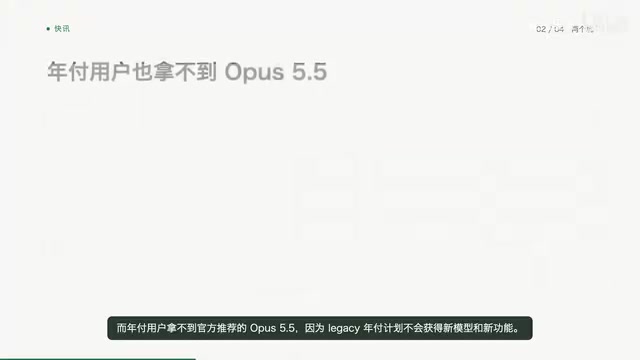
Copilot Retires Three Models: Pro Users Left With Only One Alternative
GitHub Copilot retires Claude Opus 4.8, Claude Opus 5, and GPT-5.6 Tera on Nov 16 across Chat, code completion, and Agent mode. Pro users have only GPT-6 Luna left; Legacy annual plans miss Opus 5.5; admins must enable replacements manually.
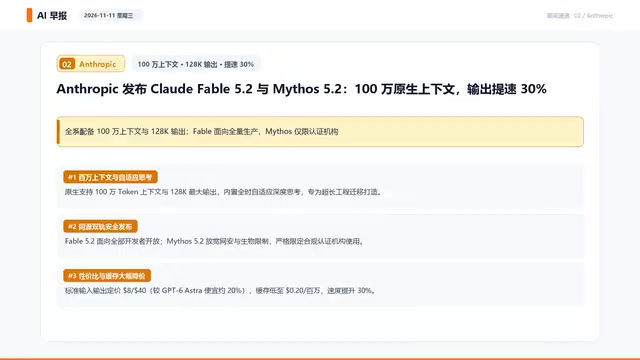
Gemini 4 Carbon Arrives: The LLM Race Enters the Era of Million-Token Context and Trillion-Parameter Open Source
Google launches Gemini 4 Carbon and multi-agent tool Swarm; Anthropic debuts million-context Fable 5.2 and Mythos 5.2; OpenAI releases security-focused GPT-6 Cyber; Mistral and Kimi open-source trillion-parameter models — the LLM race accelerates across the board.