NVIDIA RTX 50 Series GPU Prices Soar in Japan: Up to 41% Higher Than US

Japanese RTX 50 GPU prices carry a 5.66%–41.1% premium over the US, driven by VRAM shortages and AI capacity siphoning.
RTX 50 series GPUs in Japan's retail market are priced 5.66% to 41.1% higher than on Amazon US, with the RTX 5060 Ti carrying the highest premium at 41.1%. This abnormal pricing is not ordinary regional variation but a structural supply-demand imbalance caused by memory chip shortages combined with surging AI compute demand. VRAM supply is tightening as HBM production crowds out GDDR capacity, while NVIDIA plans to discontinue the RTX 5090 to redirect resources toward higher-margin data center products. The US market is also under pressure, with the RTX 5090 vanishing from online stores and third-party sellers asking nearly $10,000. The article argues that as long as AI compute demand remains elevated, supply tightness for high-end consumer GPUs will be difficult to alleviate in the short term, and other global markets may face similar upward pressure.
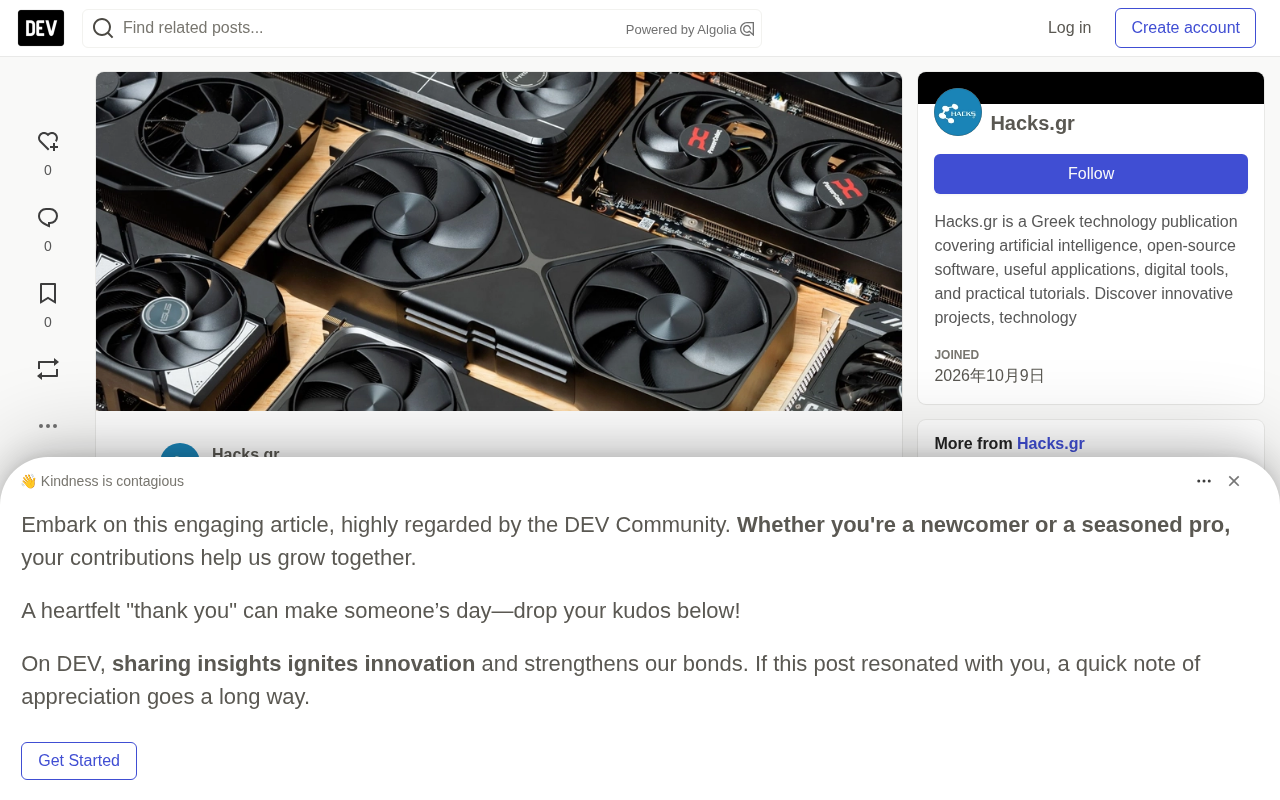
NVIDIA's RTX 50 series graphics cards are seeing retail prices in the Japanese market diverge sharply from US pricing. Price listings from Tokyo retail channels show that RTX 50 series models are priced 5.66% to 41.1% higher than on Amazon US, with the RTX 5060 Ti carrying the largest premium. This is not an ordinary regional pricing discrepancy, but a structural supply-demand imbalance driven by the dual pressures of memory chip shortages and AI compute demand.
How Severe Is the Premium in the Japanese Market?
According to publicly available Tokyo store price lists, the entire RTX 50 series lineup commands retail prices in Japan significantly above US market benchmarks. The premium ranges from 5.66% to 41.1% — a considerable spread that suggests supply pressure varies unevenly across models.
The RTX 5060 Ti emerging as the highest-premium model is a curious phenomenon. Typically, higher-tier flagship cards are more prone to price increases due to limited production capacity, but this time it's the mid-range model with the largest markup. This suggests NVIDIA may be prioritizing more production capacity for its higher-margin flagship and enterprise product lines, leaving mid-range consumer SKUs with even tighter supply.
The Root of Market Tension: VRAM Shortages and the AI Siphon Effect
The abnormal GPU pricing in the Japanese market points directly to two underlying factors.
Memory Chip Supply Crunch
Tight supply of VRAM modules is the direct factor driving up GPU costs. GDDR memory competes for production capacity between AI accelerator cards and consumer GPUs. When upstream memory manufacturers divert more capacity toward higher-margin HBM products, GDDR supply is naturally squeezed.
HBM (High Bandwidth Memory) is a high-end memory technology that vertically stacks multiple layers of DRAM on a silicon interposer and packages them together with the GPU die, primarily serving data center AI accelerator cards (such as NVIDIA H100/H200 and AMD MI series). Compared to traditional GDDR memory, HBM can achieve per-unit bandwidth of several TB/s, but it consumes more wafer area and advanced packaging capacity. The three major memory manufacturers — Samsung, SK Hynix, and Micron — have limited total production capacity. When HBM orders surge, the wafer and packaging resources originally allocated to GDDR are forced to shrink. This is one of the industrial root causes behind rising VRAM costs and tightening supply for consumer graphics cards.
AI Compute Demand Squeezing Consumer-Grade Capacity
The deeper cause lies in NVIDIA's own capacity allocation strategy. Reports indicate that NVIDIA plans to discontinue production of its flagship RTX 5090, concentrating resources on products for enterprise customers and data centers. The logic behind this decision is not hard to understand: the profit margin on a single data center GPU far exceeds that of a consumer flagship card. With AI compute demand remaining robust, consumer product lines are at a disadvantage in the internal competition for resources.
Data center GPU gross margins typically exceed 60%, while consumer flagship graphics cards often see gross margins in the 30%–40% range. More importantly, NVIDIA's GPUs are manufactured by TSMC, and advanced process capacity (such as 4N and 4NP) is itself a scarce resource. When the same wafer can yield either high-margin enterprise GPUs or consumer graphics cards, NVIDIA naturally leans toward data centers when allocating capacity. This internal "opportunity cost" calculation explains why flagship consumer GPUs suddenly get discontinued or face prolonged shortages better than a simple VRAM shortage alone.
The US Market Is Also Under Pressure
Japan is not an isolated case. The RTX 5090 has already disappeared from US online stores, with third-party independent sellers driving the price of that model to nearly $10,000. And in Japanese retail channel price lists, the RTX 5090 doesn't even appear at all — it's not a pricing issue, but rather that there's simply no inventory in stores.
What both markets share is that visible inventory of flagship models is approaching zero. The difference is that the US market still has third-party channels offering supply at extreme premiums, while in Japan even such channels are hard to find in regular retail.
"Priced but unavailable" and "price gouging" are two different forms of market failure. The former refers to official and legitimate channels being completely out of stock, leaving only unofficial channels offering supply at extreme premiums — for example, US third-party sellers driving the RTX 5090 to nearly $10,000. The latter refers to legitimate retail channels still listing products, but at prices significantly above the manufacturer's suggested retail price (MSRP) — for example, the 41.1% premium on the RTX 5060 Ti in Japan. Both actually reflect the same thing: price signal distortion caused by structural supply-side shortages. For consumers, the former means increased purchasing channel risk (no warranty, possibly second-hand or refurbished), while the latter means budgets are directly inflated.
The Real Impact on Consumers
For PC builders in the Japanese market, the current cost of purchasing RTX 50 series graphics cards is considerably higher than for US buyers, and flagship models are essentially priced but unavailable. While mid-range models are still available, the RTX 5060 Ti's 41.1% premium means its value proposition has been severely undermined.
This situation is unlikely to ease in the short term. As long as AI compute demand remains elevated and the restructuring of memory chip production capacity is not completed, supply tightness for high-end consumer graphics cards will persist. For users who don't urgently need a card, waiting may be the more rational choice; for professional users with immediate needs, they must either accept the premium or consider alternatives.
The price signal from the Japanese market may just be the beginning. When AI infrastructure buildout continues to take priority over consumer products, GPU prices in other global markets could face similar upward pressure.
The divergence between MSRP (Manufacturer's Suggested Retail Price) and actual retail prices is a direct indicator of supply-demand tension. When a product consistently sells at retail for more than 30% above MSRP and official channels remain out of stock, it typically signals a clear misalignment between the manufacturer's shipment pace and market demand. Historical parallels include the GPU premiums during the 2020–2022 crypto mining boom and the price hikes in automobiles and consumer electronics during the 2021 global chip shortage. The core driver of this round of premiums has shifted from "mining" to "AI training and inference," but the transmission path to the consumer market is highly similar: upstream capacity gets siphoned off to higher-margin uses, and downstream end users can only absorb the price increases or wait.
One-line Summary
Japanese RTX 50 GPU prices carry a 5.66%–41.1% premium over the US, driven by VRAM shortages and AI capacity siphoning.
Related articles

Frontend to AI Agent Development: A Frontline Architect Explains Career Paths and Opportunities
A frontline AI architect explains the industry changes and practical paths for frontend developers transitioning to AI Agent development: why pure frontend jobs are disappearing, why Agent + full-stack has become mainstream in hiring, and three transformation routes—Agent development engineer, FDE, and remote contracting—along with corresponding learning strategies.

How to Choose an AI Agent Development Course: Five Pitfall-Avoidance Guidelines
A mechanical-engineering career changer's two-year pitfall-tested checklist for screening AI Agent development courses: complete delivery pipeline, resume-worthy projects, real development perspective, update frequency, and coaching feedback—with concrete judgment methods and pitfall-avoidance tips.

Coze AI Agent Building for Beginners: A Zero-Code AI Agent Development Guide
Coze, ByteDance's one-stop AI application development platform, supports zero-code drag-and-drop AI agent building. This article outlines Coze's core concepts, three advantages, differences between the domestic and international versions, and the distinction between agents and apps, helping beginners quickly get started with AI Agent development.