NVIDIA's Guide to Building Financial Transaction Foundation Models: From Pre-training to Downstream Applications

NVIDIA's guide details building transaction foundation models for financial AI using pre-training and fine-tuning.
NVIDIA published a comprehensive guide on building Transaction Foundation Models for financial applications. The approach uses Transformer-based architectures pre-trained on billions of transactions via self-supervised learning, then fine-tuned for downstream tasks like fraud detection, credit risk assessment, and personalized services. Key techniques include time-aware positional encoding, sequence packing, and distributed GPU training with mixed precision.
Introduction: The Behavioral Code Hidden in Transaction Data
Every card swipe, transfer, and payment encodes patterns of human behavior within modern financial networks. Transaction data is one of the richest signals available to financial institutions, yet systematically mining the deep value of this data has long been a core challenge facing the industry.
NVIDIA recently published a landmark technical article on its developer blog, detailing how to build a proprietary Transaction Foundation Model to provide underlying support for financial intelligence applications. This approach marks the continued expansion of the foundation model paradigm from natural language and vision domains into the vertical domain of financial transactions.
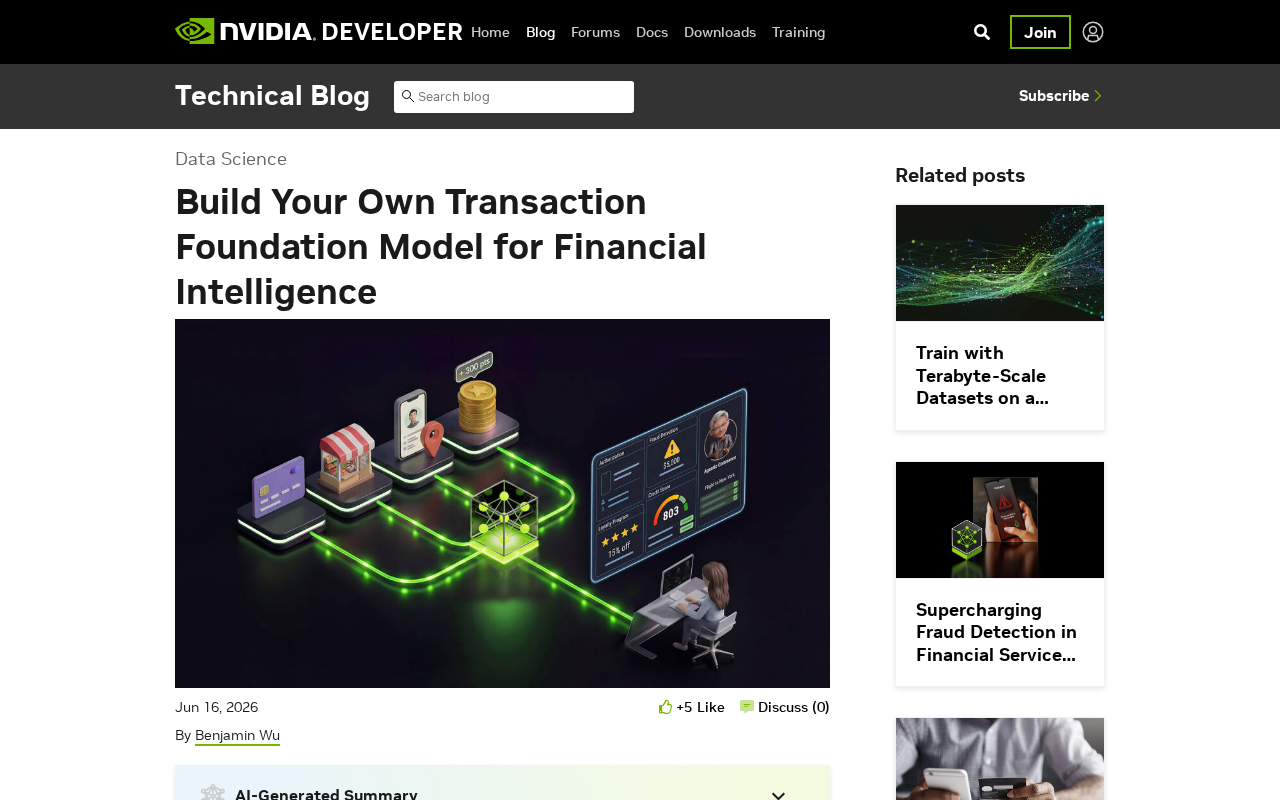
What Is a Transaction Foundation Model?
The Paradigm Shift from Traditional Models to Foundation Models
In traditional financial AI applications, each specific task—fraud detection, credit scoring, customer segmentation—typically requires training a dedicated model independently. This approach is not only expensive to develop but also prevents models from sharing learned knowledge with each other.
The transaction foundation model draws from the success of large language models (LLMs): first performing large-scale pre-training on massive transaction data to learn universal behavioral patterns embedded in transaction sequences, then rapidly adapting to various downstream tasks through fine-tuning. This "pre-training + fine-tuning" paradigm significantly lowers the development barrier for each specific application while improving model generalization.
The Unique Characteristics of Transaction Data
Unlike text data, financial transaction data has several distinctive features:
- Multi-modal mixture: Each transaction contains numerical (amounts, timestamps), categorical (merchant categories, transaction types), and sequential (transaction history) data types
- Strong temporal dependencies: User spending behavior exhibits clear temporal patterns—weekend spending, payday at the beginning of the month, and other cyclical features are crucial
- Highly imbalanced distributions: The ratio of normal to abnormal transactions can reach 10,000:1, posing special requirements for model training
- Privacy sensitivity: Financial data is subject to strict regulatory compliance, and model construction must be conducted under data security constraints
Technical Architecture and Implementation Path
Data Preprocessing and Representation Learning
The first step in building a transaction foundation model is converting heterogeneous transaction records into unified vector representations. NVIDIA's approach recommends using a Transformer-based encoder to map the multi-dimensional features of each transaction into a high-dimensional embedding space. Key techniques include:
- Bucketed encoding for numerical features: Discretizing continuous values like amounts and time intervals to facilitate model learning
- Time-aware positional encoding design: Unlike fixed positional encoding in NLP, transaction sequences need to be aware of actual time intervals
- Self-supervised pre-training objectives: Using tasks like Masked Transaction Prediction to enable the model to learn transaction patterns from unlabeled data
Model Training Strategy
During the pre-training phase, the model needs to process billions of transaction records. NVIDIA recommends leveraging GPU clusters for distributed training with the following strategies to improve efficiency:
- Sequence Packing: Compactly packing user transaction sequences of varying lengths into fixed-length batches to reduce padding waste
- Curriculum Learning: Gradually transitioning from simple short-sequence prediction to complex long-sequence modeling
- Mixed-precision training: Using FP16/BF16 to accelerate computation while maintaining model accuracy
Downstream Application Scenarios
Fraud Detection
The pre-trained transaction foundation model can be fine-tuned with a small amount of labeled data for rapid deployment in fraud detection scenarios. Since the model has already learned normal transaction behavioral patterns, anomalous transactions will show clear deviations in the embedding space, enabling more precise detection.
Credit Risk Assessment
By analyzing users' historical transaction sequences, the model can capture behavioral features that traditional credit scoring models struggle to discover, such as spending stability and income fluctuation patterns, providing richer signals for credit decisions.
Personalized Financial Services
Transaction embeddings can also be used for customer segmentation and personalized recommendations, helping financial institutions more precisely understand customer needs and deliver customized products and services.
Industry Impact and Outlook
The emergence of transaction foundation models represents an architectural upgrade in financial AI from "single-task specialized models" to "universal foundation model + task adaptation." The significance of this shift lies in:
- Reducing AI deployment costs: Financial institutions no longer need to train models from scratch for each business scenario
- Improving data utilization efficiency: Massive unlabeled transaction data can be fully leveraged through self-supervised learning
- Accelerating innovation cycles: New business requirements can be quickly addressed through fine-tuning rather than rebuilding models from scratch
One notable detail: NVIDIA released a construction guide rather than a ready-to-use model, meaning each financial institution needs to conduct customized training based on its own data. This both protects data privacy and ensures the model can adapt to the business characteristics of different institutions.
As digital transformation deepens across the financial industry, transaction foundation models are poised to become a core component of financial intelligence infrastructure, driving the industry's AI capabilities from fragmentation toward systematization.
Related articles
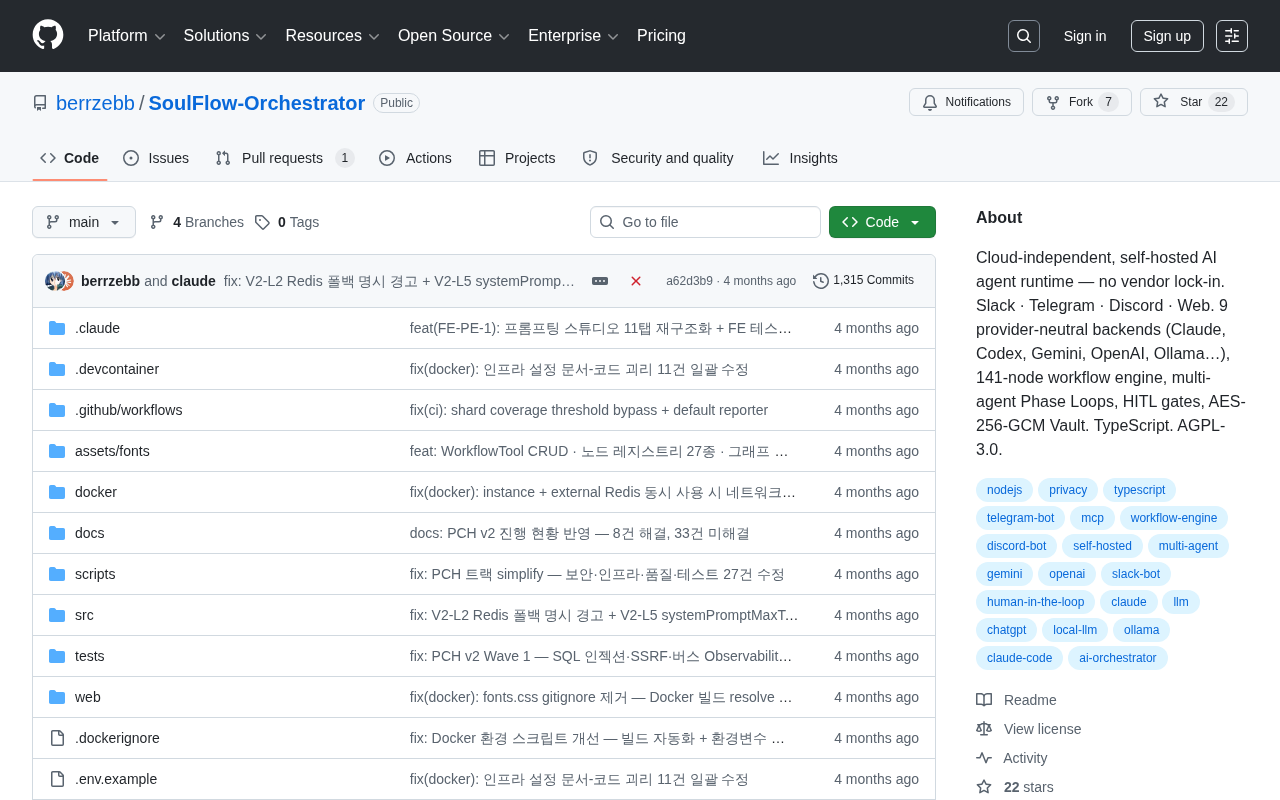
SoulFlow-Orchestrator: A Self-Hosted, Vendor-Lock-In-Free AI Agent Runtime
SoulFlow-Orchestrator is an open-source, self-hosted AI agent runtime with no vendor lock-in. Supports 9 neutral backends (Claude, OpenAI, Ollama), 141-node workflow engine, multi-agent loops, and HITL gates.
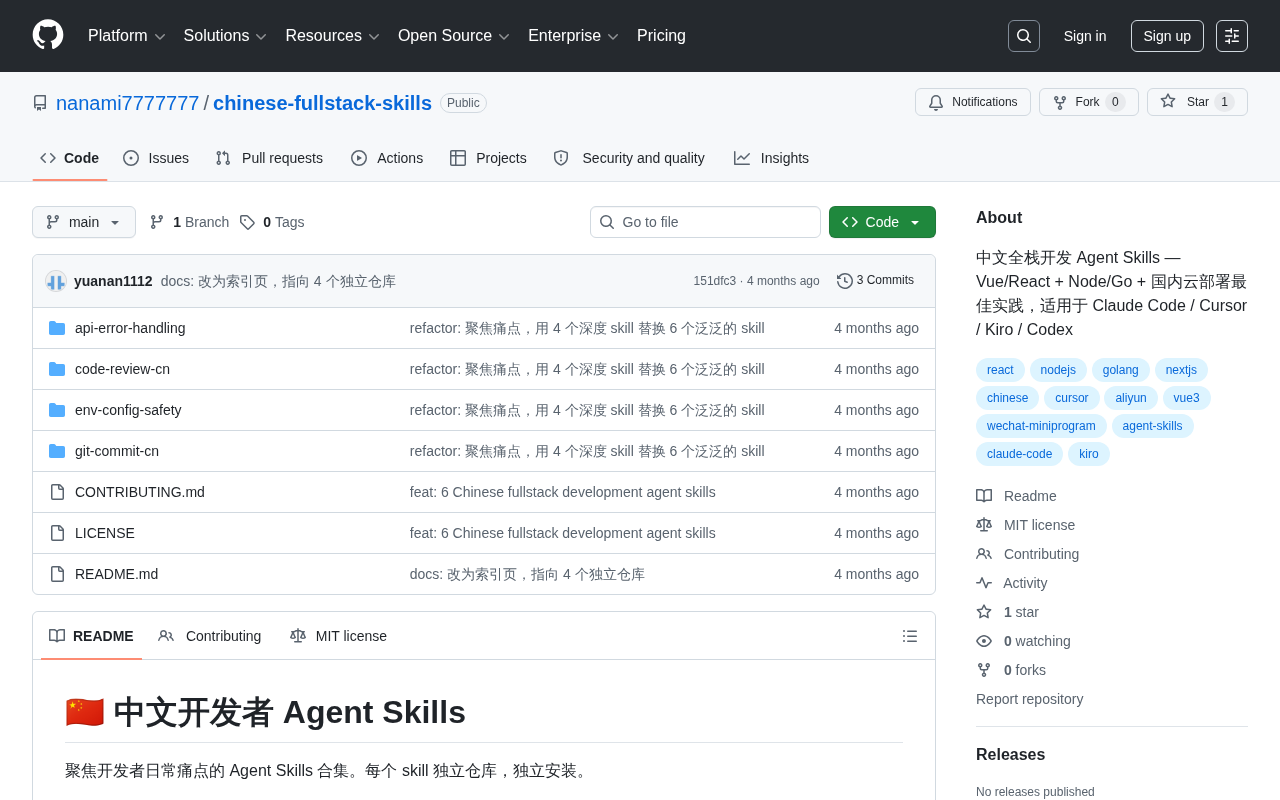
Chinese Full-Stack Agent Skills: A Skill Library Tailored for Domestic AI-Assisted Development
chinese-fullstack-skills is an Agent Skills library for Chinese full-stack development, covering Vue/React, Node/Go, and domestic cloud deployment best practices. Compatible with Claude Code, Cursor, Kiro, and Codex.
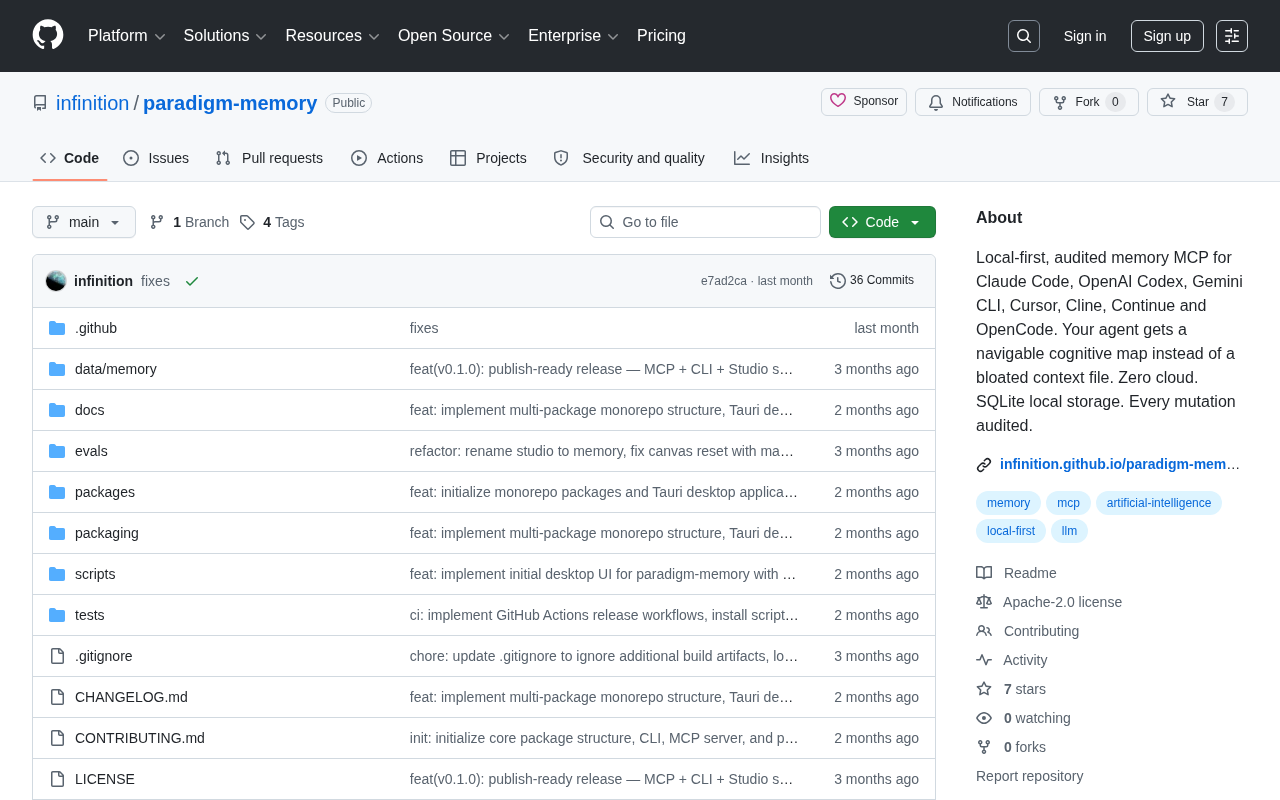
Paradigm Memory: A Local-First Memory System for AI Coding Assistants
paradigm-memory is a local MCP memory tool for Claude Code, Cursor, and Cline. It uses SQLite local storage, zero cloud, full audit trails, and a navigable cognitive map instead of bloated context files.