Nvidia Succession Questions: Report Says Jensen Huang Publicly Expressed Doubt About a Potential Successor

Jensen Huang reportedly called a potential successor "deer in the headlights," fueling talk about Nvidia's succession plans.
The article discusses a report that Jensen Huang described potential successor and Nvidia executive Chris Kress as "deer in the headlights" at a summer meeting. It explains the phrase reflects a specific occasion's shortfall, not a verdict on overall ability, and analyzes Nvidia's succession challenge amid founder key-person risk, advising investors to separate individual comments from governance arrangements.
A Meeting Sparks Succession Speculation
According to a recent report, Nvidia CEO Jensen Huang made a pointed assessment of a potential successor—current Nvidia executive Chris Kress—at a summer meeting. The report says Huang described Kress's state during the meeting as "deer in the headlights," a phrase that quickly drew attention to Nvidia's leadership transition plans.
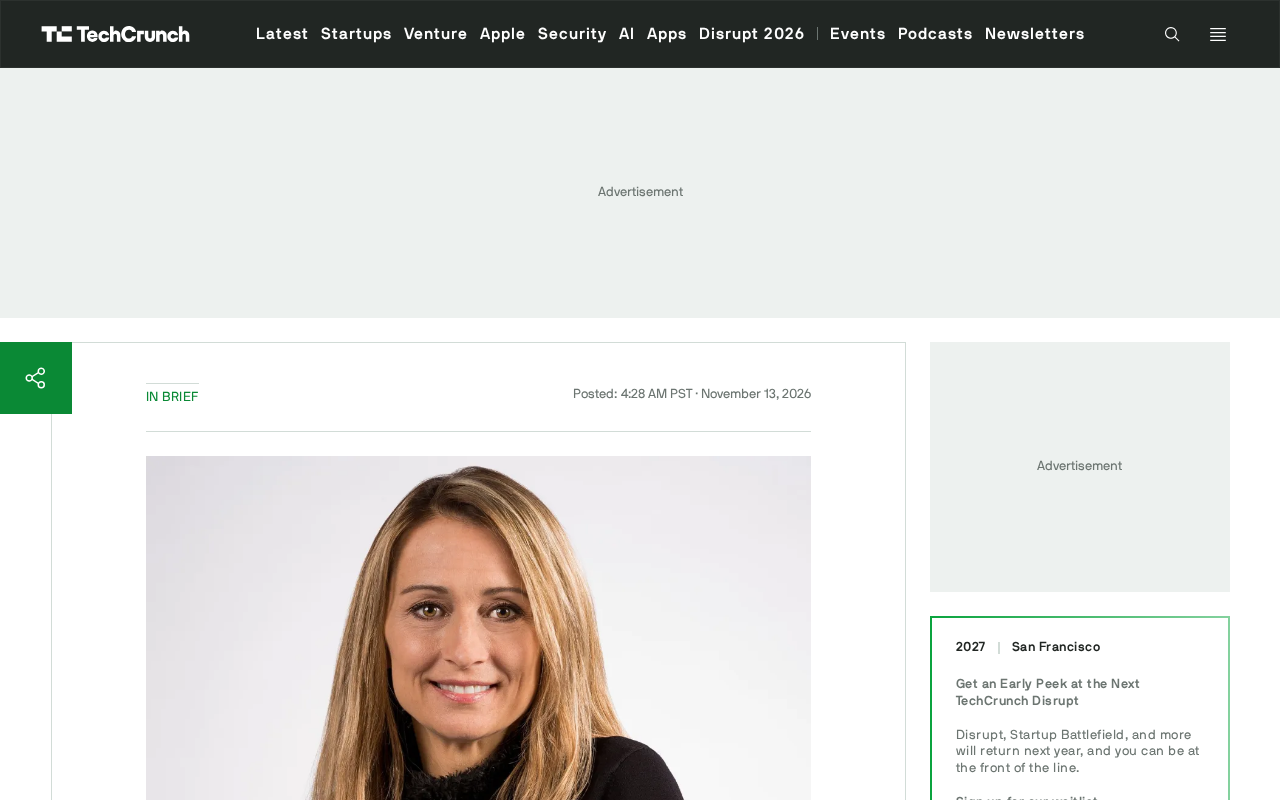
For a company whose market value keeps hitting new highs and which sits at the center of the AI wave, CEO succession has long been a focus for investors and analysts. As the soul of Nvidia, Huang's personal style is deeply intertwined with the company's strategy, so any signal about a successor tends to be amplified in interpretation.
What "Deer in the Headlights" Means
This English idiom usually describes someone who appears visibly nervous and at a loss under pressure. Huang's use of such a description in an internal meeting conveys at least two things: first, Kress's performance on that particular occasion fell short of Huang's expectations; second, Huang himself is not shy about making direct assessments of a potential successor's performance internally.
One caveat: a performance assessment from a single meeting does not amount to a negation of a person's overall ability. Reactions under high pressure do not necessarily correspond fully to day-to-day management capability or strategic judgment. The report provides only a fragment containing this phrase and does not disclose the specific context of the meeting, the topics discussed, or Kress's overall performance record before that.
"Deer in the headlights" literally refers to a deer frozen in place after being caught in bright headlights during a nighttime drive, and by extension describes a state in which a person's mind goes blank under sudden pressure or intense attention. In English-language workplace contexts, the expression carries some negative connotation, but it is milder than "incompetent," emphasizing on-the-spot reaction rather than long-term ability, so it is often used to describe moments of fluster in public speaking, sudden questioning, or high-pressure negotiations.
It is worth noting that this idiom is fairly common in the internal post-mortem culture of the tech and finance industries, where managers use it to describe a subordinate who "failed to catch" the situation at a key moment. Because it targets performance in a specific situation rather than a comprehensive judgment of personality or professionalism, directly interpreting it as "the successor has fallen out of favor" risks overreach.
Nvidia's Successor Challenge
Nvidia is in the most critical expansion phase in its history. Demand for AI compute keeps climbing, and the company's business has extended from gaming graphics cards to data centers, autonomous driving, and other areas, with organizational complexity and decision-making pressure rising in tandem. Against this backdrop, the choice of successor concerns not only individual capability but also whether the company can build an independent leadership system beyond the founder's aura.
Huang has long been known for a high-intensity, high-standard style, so it is no surprise that he demands a lot from management. The problem is that when the founder himself is the company's most important strategic asset, any successor will struggle to gain equal trust and authority in the short term. This also makes phrasing such as "lack of confidence" more easily read by outsiders as uncertainty in the handover process.
Founder Aura and "Key Person Risk"
In the tech industry, a founder's long tenure creates what is known as "key person risk"—the company's strategy, culture, and investor confidence depend heavily on a single leader. Nvidia's CUDA ecosystem and GPU roadmap are deeply tied to Huang's personal technical judgment and industry influence, which makes succession more complex than a typical professional-manager handover.
Mature succession planning usually has two tracks: "emergency succession" and "long-term development." The former designates interim successors for unexpected situations, while the latter gradually builds a successor's authority through job rotation and independent ownership of business lines. In currently available public information, Nvidia has not disclosed details of such institutional arrangements, so outsiders can only infer progress from assessments at individual meetings—which is the structural reason such reports are easily amplified.
Impact on Investors and the Industry
Based on public information, Nvidia has not issued a formal statement on succession planning, and this report is a retelling from a single source. When evaluating such information, investors should distinguish between "an assessment on a particular occasion" and "institutional arrangements at the corporate governance level." There is currently no evidence that Nvidia's day-to-day operations or strategic progress have been affected.
Still, the report reminds the market to watch a long-term issue: how tech giants sustain leadership after the founder era. For Nvidia, how to cultivate a management team capable of standing on its own while maintaining strategic continuity will be an unavoidable task in the coming years.
Conclusion
Whether Huang's assessment of his successor represents a final judgment remains unsupported by further information. But the discussion around the phrase "deer in the headlights" already reflects how sensitive outsiders are to Nvidia's succession question. As the AI race enters deeper waters, leadership stability and clarity of succession arrangements are also important dimensions for measuring a company's long-term value.
One-line Summary
Jensen Huang described a potential successor as "deer in the headlights," drawing attention to Nvidia's succession plans.
Paragraph Summary
The article centers on a report that Jensen Huang, at a summer meeting, described potential successor and Nvidia executive Chris Kress as "deer in the headlights." The author notes that the phrase reflects Kress's performance falling short of expectations on a specific occasion and shows Huang's willingness to assess subordinates directly, but a single meeting's assessment is not the same as denying a person's overall ability. The article further analyzes that Nvidia is in a critical period of AI compute expansion, and the founder's aura makes it hard for any successor to gain equal authority quickly, making succession a long-term governance issue. The report is a single-source retelling, with no evidence that operations or strategy have been affected, and investors should distinguish individual assessments from institutional arrangements.
Related articles
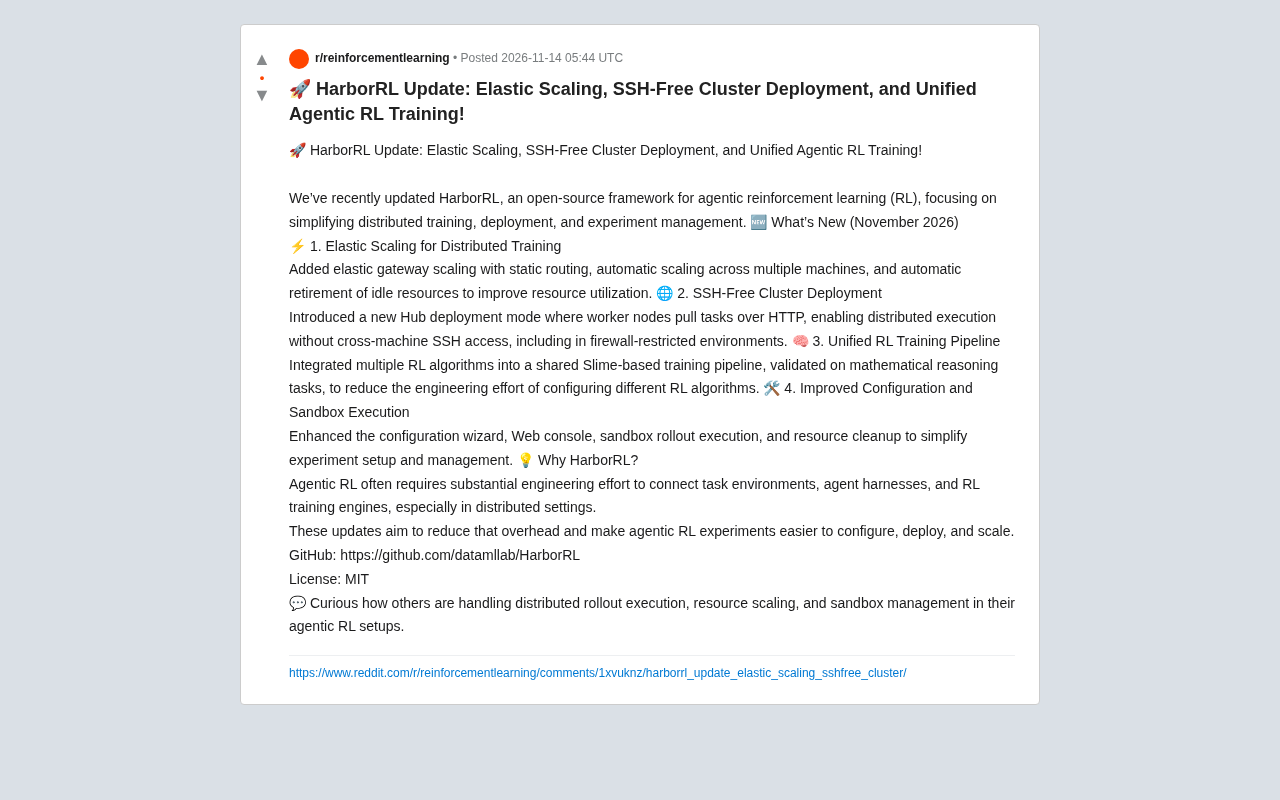
HarborRL Update: Elastic Scaling and SSH-Free Cluster Deployment
HarborRL, an open-source Agentic RL framework, releases an update: elastic gateway scaling with automatic idle resource reclamation, SSH-free cluster deployment via HTTP task pulling, a unified RL training pipeline based on Slime, and improvements to the configuration wizard and sandbox execution—lowering the engineering barrier for distributed agent reinforcement learning.

Tutu Livestream Transcript: A Real Snapshot of the Streamer-Fan Ecosystem
From Bilibili streamer Tutu's livestream transcript, observe a solo streamer's real survival state amid technical glitches, badge payment systems, and PK traffic competition, and analyze long-tail streamers' professional cognition and emotional labor.

Bilibili Live Streaming Ecosystem: Interaction, Tipping, and the Traffic Game in a Co-Streaming Session
From a Bilibili co-streaming session, we observe streamer interactions, the tipping economy, and PK gameplay, analyzing the complex relationship between authenticity and performance, traffic and emotion in the livestream ecosystem.