Okara: Billed as the World's First AI CMO — Can Multi-Agent Systems Replace a Chief Marketing Officer?
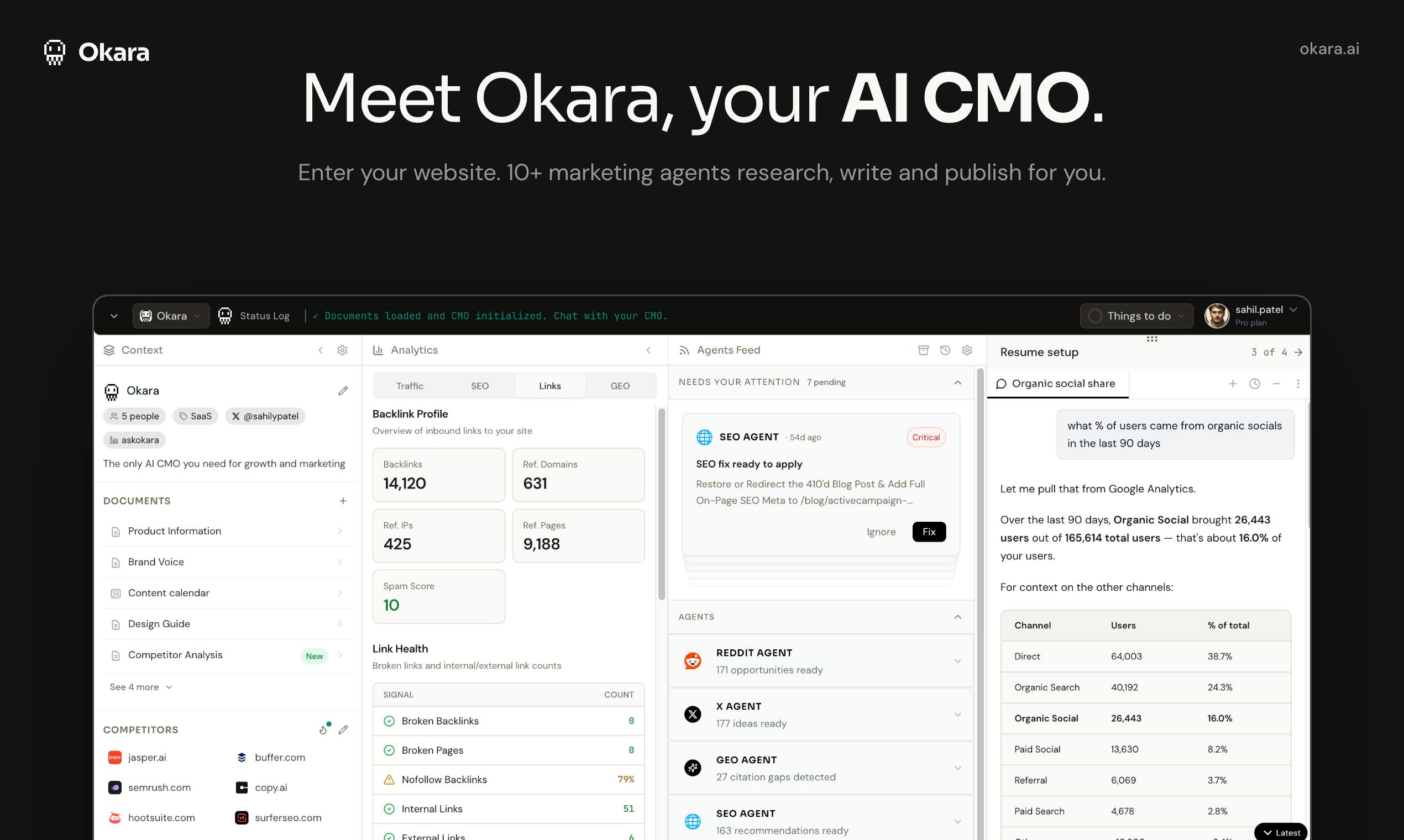
Okara positions itself as an AI CMO, using multi-agent orchestration for full-channel marketing with human review.
Okara is an AI marketing platform that debuted at #6 on Product Hunt, billing itself as the "world's first AI CMO." Users enter a website URL, and the system automatically researches the product, competitors, and brand voice, then dispatches 10+ specialized agents to handle SEO, AI search optimization (GEO), Reddit, X, LinkedIn, creator marketing, and UGC video. Unlike point-solution AI marketing tools, Okara emphasizes a full orchestration pipeline from strategic research to multi-channel execution. All drafts require human approval before publishing. The company claims 100,000+ businesses served, though activity and retention data are absent, and "world's first" claims are more positioning than fact.
What Problem Is an AI CMO Actually Trying to Solve?
Marketing teams are constantly pulled in a dozen directions at once: writing SEO articles, monitoring Reddit and X for brand mentions, scheduling LinkedIn posts, sourcing creators for UGC videos — each task demands dedicated attention, driving up costs and making coordination a nightmare. Okara, which recently debuted at #6 on Product Hunt, slaps on a boldly ambitious label: "the world's first AI CMO (Chief Marketing Officer)."
The core premise is straightforward: enter your website URL, and Okara automatically researches your product, competitors, and brand voice, then dispatches 10+ specialized AI agents to handle distinct channels — SEO, AI search optimization, Reddit, X, LinkedIn, creator marketing, and UGC short-form video. According to the company, the product currently serves over 100,000 businesses.

From "Point Tools" to "Multi-Agent Orchestration"
What makes Okara worth paying attention to isn't any single feature like SEO writing or social media posting — plenty of tools already do that. What's interesting is its attempt to chain the entire marketing workflow together using multiple coordinated AI agents.
Traditional AI marketing tools follow a "one model, one job" pattern: copywriting tools write copy, image tools generate images. Okara, by contrast, emphasizes an orchestration layer that thinks from the "CMO perspective": start with market research (product, competitors, brand voice), break that down into cross-channel execution tasks, and then hand each task off to a specialized agent. This complete arc from "strategic research" to "tactical execution" is exactly why the company positions itself as a "CMO" rather than a "marketing assistant."
Channel Coverage
Based on official descriptions, Okara's agents cover the most mainstream marketing channels today:
- SEO: Traditional search engine optimization
- AI Search Optimization: Content visibility for AI-native search experiences like ChatGPT and Perplexity
- Social Media: Reddit, X, LinkedIn
- Creators & UGC: Influencer/creator marketing, user-generated short-form video
The "AI search optimization" category is particularly telling. As more users get information through AI-powered conversations, brands now need to think about how to get mentioned inside AI-generated answers — a new battleground emerging alongside traditional SEO.
"AI search optimization" is also known in the industry as GEO (Generative Engine Optimization) or AEO (Answer Engine Optimization). The core difference from traditional SEO is a shift in optimization targets: classic SEO chases high rankings on Google SERPs, while GEO aims to get brand information cited within the responses of AI models like ChatGPT, Perplexity, and Claude. Since AI model answers draw from a mix of training data and real-time retrieval, brands typically need high-quality structured content, authoritative backlinks, and citations from credible media sources to increase their chances of being mentioned by AI. This space is still in its early stages, lacking standardized measurement frameworks — which is precisely the context for the skepticism raised later in this article about how to quantify results.
Multi-Agent Orchestration represents a major architectural shift in recent AI application development. The core idea: decompose complex tasks into subtasks, assign them to specialized AI agents running in parallel or in sequence, and manage it all through an "orchestration layer" that handles task allocation, result aggregation, and context passing. Compared to a single large model trying to do everything, this architecture allows each agent to be deeply optimized for its specific task while keeping the overall system highly scalable. OpenAI's Swarm, Microsoft's AutoGen, and LangChain's LangGraph are all canonical implementations of this approach. In a marketing context, the orchestration layer plays the role of a traditional CMO's "strategic coordination" function — ensuring every channel's execution is grounded in the same shared brand and competitive research, rather than operating in silos.
Human-in-the-Loop: You're Still the Final Decision-Maker
One design detail that's easy to miss but critically important: Okara is not fully autonomous. The company explicitly states that every draft requires your review and approval before it goes live ("You approve every draft and it publishes").
This "AI generates, human reviews" workflow is the dominant model for deploying generative AI in commercial settings today. It leverages AI's ability to produce content at scale while using human oversight to manage brand risk and quality control. For marketing — where brand voice is paramount and mistakes can be costly — keeping humans in the final decision seat is the pragmatic choice.
Taking a Sober Look at "World's First" and "100,000 Businesses"
Products on Product Hunt often come loaded with marketing language, and Okara is no exception. Calling itself the "world's first AI CMO" is more of a positioning label than a verifiable fact — there are already plenty of AI marketing automation platforms out there, and whether any of them qualifies as a "CMO" depends largely on how you define the term.
The "100,000+ businesses served" figure also deserves scrutiny: the Product Hunt page doesn't disclose those businesses' activity levels, paid conversion rates, or actual retention. As of now, the product has 124 upvotes and 8 comments on Product Hunt, ranking #6 — notable, but far from a breakout hit.
For teams actually considering using it, a few practical questions matter more than the marketing copy:
- Is the content quality from multiple agents consistently good enough to genuinely reflect brand voice?
- How do you measure the impact of "AI search optimization" in any meaningful way?
- How much actual work does the human review step involve? If you're heavily editing every piece, the efficiency gains shrink considerably.
A Direction Worth Watching
Setting aside the marketing rhetoric, the product philosophy behind Okara is genuinely valuable: marketing is evolving from "a collection of isolated AI tools" toward "a unified, multi-agent system operating from a single strategy." This orchestration capability may well be the defining competitive advantage in the next wave of AI applications.
For small businesses and early-stage startups, an AI marketing system that spans all channels while preserving human oversight does offer a credible path to doing more with less. But whether it truly "replaces the CMO" or simply "amplifies execution capacity" is a question that real-world results will have to answer. For now, treating it as a highly efficient marketing execution assistant is probably more realistic than expecting it to function as an actual Chief Marketing Officer.
Related articles

M&M's Spent Millions Replacing Artificial Blue Dye — Why Is It So Hard?
Mars spent millions trying to replace artificial blue dye in M&M's with spirulina, but thick material clogs pipes and residue risks mold, forcing a full production-line rebuild. Here's the engineering behind the reformulation.
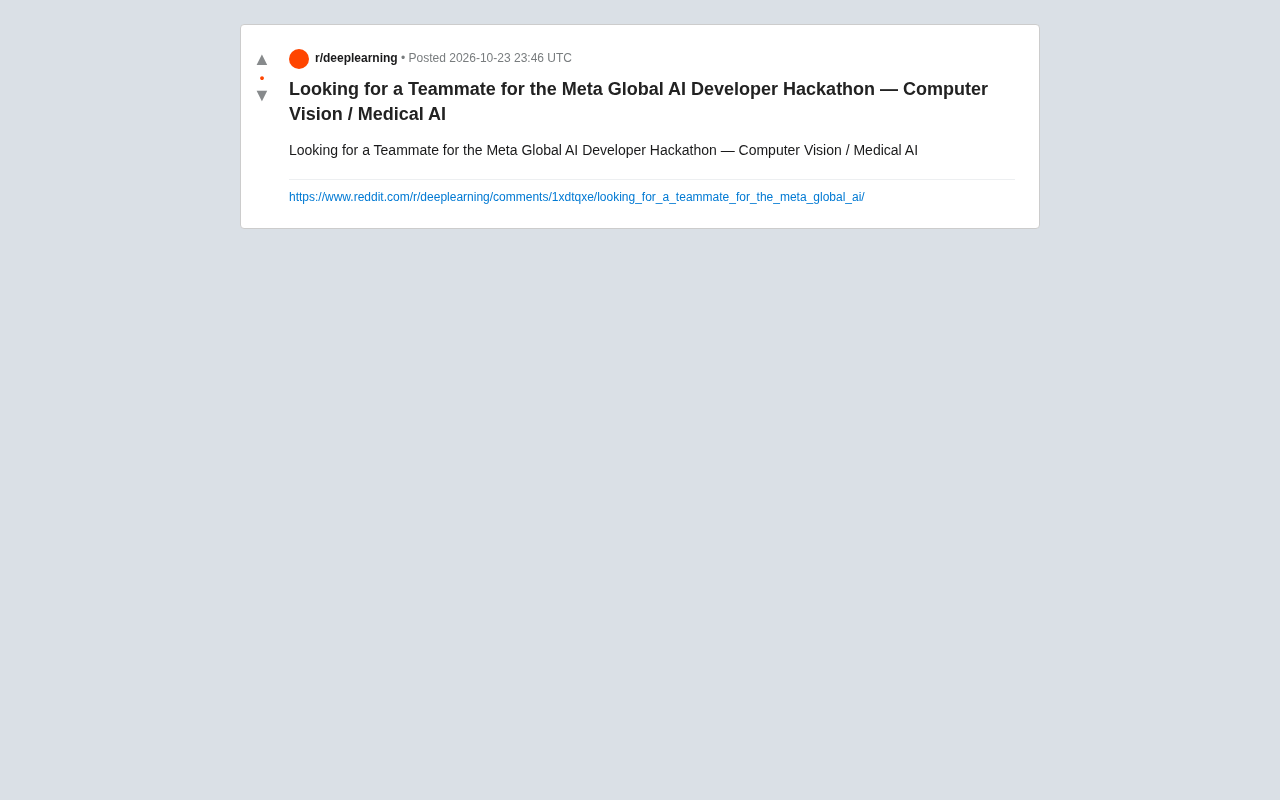
Teammate Wanted for Meta Global AI Developer Hackathon: Computer Vision & Medical AI
A Reddit developer seeks teammates for the Meta Global AI Developer Hackathon, focusing on computer vision and medical AI. This article analyzes the track logic, skills-complementarity needs, and topic selection strategy behind this teaming signal.
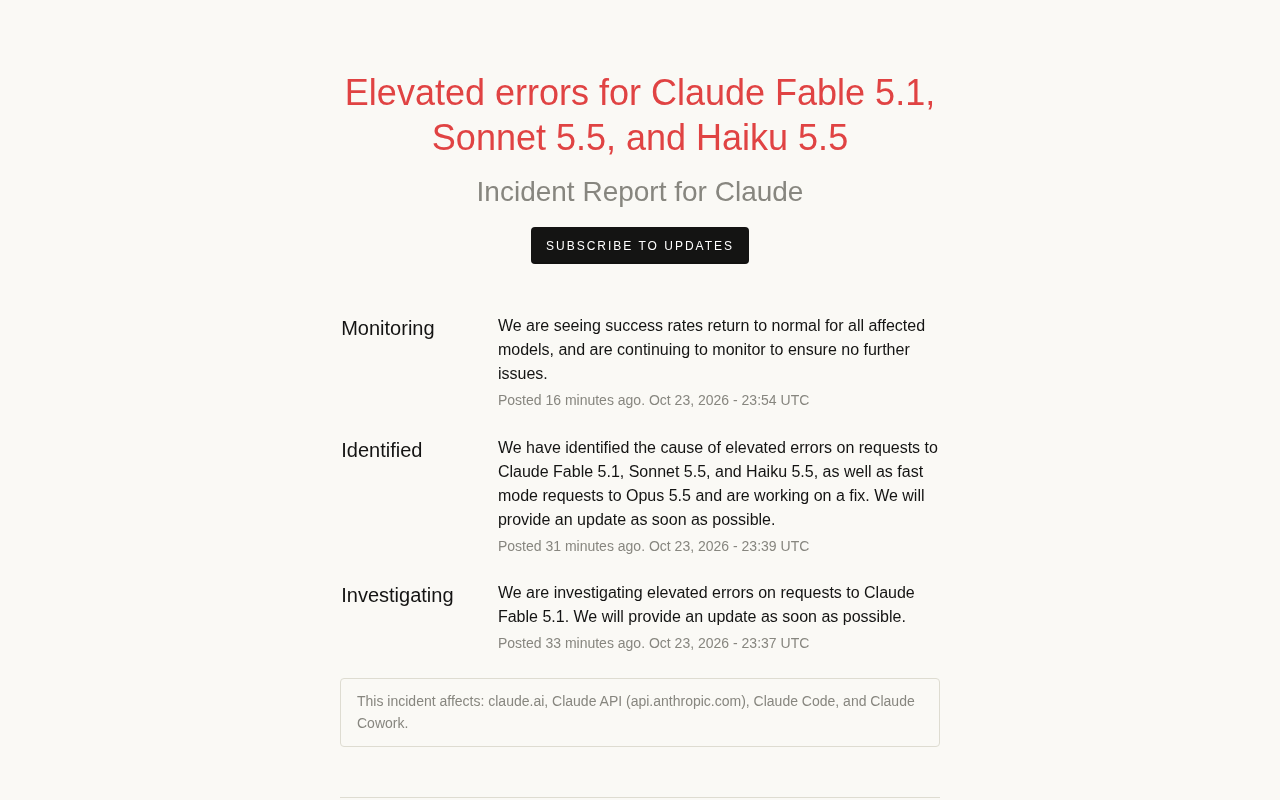
Multiple Claude Models Hit by Errors: A Postmortem of Fable 5.1, Sonnet 5.5, and Haiku 5.5
Claude Fable 5.1, Sonnet 5.5, Haiku 5.5, and Opus 5.5 fast mode saw elevated errors; Anthropic identified and resolved the issue in 17 minutes. This postmortem covers the timeline, the technical reasons for the multi-model cascading failure, and practical lessons for retry and degradation strategies.