OKF Agent Memory: How Git-Native Memory Solves the Amnesia Problem for AI Coding Assistants
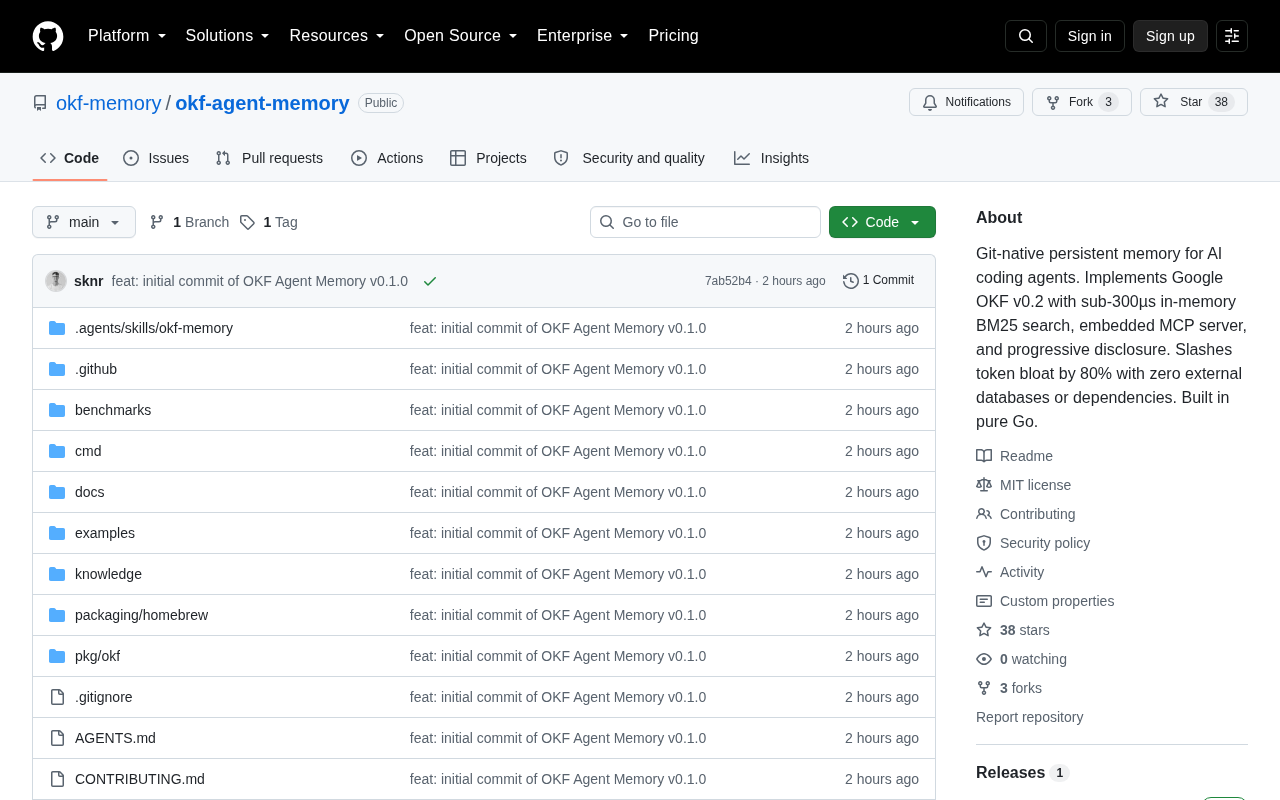
OKF Agent Memory uses Git-native storage to give AI coding assistants persistent, versionable memory.
OKF Agent Memory is an open-source project that tackles the persistent amnesia problem in AI coding assistants like Cursor and Copilot by storing memory directly in Git repositories. This Git-native approach enables version-tracked, team-shared, and auditable AI memory without extra infrastructure, offering a pragmatic alternative to vector database solutions like RAG.
The "Amnesia" Pain Point of AI Coding Assistants
Developers who have used AI coding tools like Cursor, GitHub Copilot, or Claude Code have almost all encountered the same frustration: every time you start a new session, the AI acts like it has amnesia, forgetting the architectural decisions, naming conventions, and project context you discussed last time. You're forced to explain the project background over and over again, and productivity takes a significant hit.
This is the core weakness of today's AI coding assistants — the lack of persistent memory. Large language models are inherently stateless; each call is based on the current context window, and once the session ends or the context limit is exceeded, all the accumulated "understanding" vanishes into thin air.
To understand the technical root of this problem, you need to recognize that a large language model (LLM) is essentially a pure function: it takes a text sequence as input and outputs a probability distribution over the next token, with no internal state preserved between API calls. The so-called "Context Window" refers to the maximum number of tokens the model can process in a single inference — for example, GPT-4 Turbo supports 128K tokens, and Claude 3.5 supports 200K tokens. Although context windows keep expanding, they are fundamentally a form of "short-term memory": they reset to zero after a session ends. Moreover, longer contexts mean higher inference costs, greater latency, and sparser attention allocation (the "lost in the middle" phenomenon) — so bigger windows aren't simply better.
An open-source project that appeared on Hacker News, OKF Agent Memory, targets exactly this pain point with a rather ingenious solution.
What Is OKF Agent Memory
The core idea behind OKF Agent Memory can be summed up in one sentence: providing Git-native persistent memory for AI coding assistants.
Unlike many solutions that rely on external vector databases or standalone memory services, OKF stores memory directly in the project's Git repository. This means the knowledge, decision records, and contextual information accumulated by the AI assistant are version-controlled alongside the code itself as files.
The Git-Native Design Philosophy
The "Git-native" positioning is the most noteworthy aspect of this project. To fully appreciate the weight of this design choice, it helps to revisit what Git itself is capable of: Git is currently the world's most widely used distributed version control system, created by Linus Torvalds in 2005 for Linux kernel development. Its core mechanism stores commit history in a Directed Acyclic Graph (DAG) structure, where each commit contains a complete file snapshot hash, parent commit pointers, and metadata. This means Git is inherently a powerful knowledge traceability engine — and OKF leverages exactly this capability.
It brings several natural advantages:
- Version Traceability: Memory content is committed alongside code, so you can clearly see which commit shaped a particular architectural decision. You can even use
git blameto trace the evolution history of memories. Thegit blamecommand traces line by line who last modified each line of a file and in which commit — it's a powerful tool for code auditing and knowledge archaeology. When applied to AI memory files, you can precisely track when each piece of memory was formed and what triggered it. - Team Sharing: Memory is no longer a private local asset belonging to a single developer. When team members clone or pull the repository, the AI's accumulated project understanding syncs along with it, putting everyone's AI assistant on the same page.
- Zero Additional Infrastructure: No need to deploy a separate database or memory service, reducing toolchain complexity. For developers who value simplicity, this is a very appealing tradeoff.
Comparison with Mainstream AI Memory Solutions
Current AI memory solutions on the market roughly fall into two categories:
| Solution Type | Representative Approaches | Advantages | Disadvantages |
|---|---|---|---|
| Vector Embedding Semantic Retrieval | Various RAG memory stores | Strong fuzzy matching, supports large-scale knowledge recall | Requires additional vector databases and embedding computation |
| File-based Structured Memory | OKF Agent Memory | Lightweight, transparent, versionable, auditable | Limited ability to handle large-scale unstructured memory |
The RAG (Retrieval-Augmented Generation) mentioned here is currently the most mainstream technical paradigm for adding external knowledge to LLMs. Its typical workflow is: first, slice documents and convert them into high-dimensional vectors through embedding models (such as OpenAI's text-embedding-3-small), then store them in vector databases (such as Pinecone, Weaviate, ChromaDB, etc.); when a user asks a question, the question is also converted into a vector, the semantically closest document fragments are found in vector space, and these fragments are then injected into the LLM's prompt for answering. RAG's advantage lies in supporting fuzzy semantic matching and large-scale knowledge base retrieval, but the cost is maintaining additional vector database infrastructure, dealing with embedding computation latency and costs, and facing the tuning challenges of retrieval recall and precision rates.
For code projects — which are inherently highly structured and naturally managed with Git — OKF's Git-native approach has clear advantages in auditability, team collaboration, and engineering controllability, making it a particularly fitting choice.
Why Persistent Memory for AI Coding Assistants Deserves Attention
From a broader perspective, OKF Agent Memory represents an important trend in the evolution of AI coding tools: moving from stateless "one-off conversations" to stateful "long-term collaborators".
This trend is closely tied to the rapid advancement of AI Agent capabilities. An AI Agent refers to an AI system that can perceive its environment, make plans, and autonomously execute multi-step tasks — distinct from single-turn Q&A chatbots. In 2024-2025, AI Agent capabilities saw significant leaps: from Devin (the first AI software engineer) to Claude's Computer Use and OpenAI's Operator, Agents are evolving from "advisors" to "executors." In programming, Agents no longer just complete code — they can understand requirements, search documentation, modify multiple files, run tests, and iteratively fix issues. This multi-step, long-cycle task pattern transforms persistent memory from a "nice-to-have" into a "hard requirement."
An AI assistant that remembers project history and understands its evolution versus a "stranger" that needs to be reintroduced every time — the productivity gap is orders of magnitude. Persistent memory is becoming the critical infrastructure for AI coding assistants to graduate from "toys" to "productivity tools."
The Significance of Open Source for Data Sovereignty
OKF is released as open source, which is especially important for memory-related features that involve sensitive project data — developers can fully control where their memory data is stored and what it contains, avoiding privacy concerns about entrusting core project knowledge to third-party black-box services. Storing memory data in your own Git repository is essentially a return of data sovereignty.
Data Sovereignty is a concept originating from the sovereignty concept in international law. In a technical context, it means data owners have complete control over their data — including storage location, access permissions, usage methods, and lifecycle management. As AI tools become deeply embedded in development workflows, information such as architectural decisions, technical debt, and business logic in code repositories becomes high-value knowledge assets. Hosting this information with SaaS services implies potential data leakage, vendor lock-in, and compliance risks — particularly prominent in enterprise environments governed by regulations like GDPR and SOC2. Open-source solutions allow users to audit code logic, self-deploy, and independently control data flow, providing an important technical safeguard for achieving data sovereignty.
A Realistic Look: Challenges Facing an Early-Stage Project
As an early-stage project that gained attention on Hacker News, OKF Agent Memory is still in its infancy and has not yet been validated in large-scale production environments.
Potential challenges are foreseeable:
- Memory Bloat: As projects progress, memory files may grow continuously. How to efficiently manage, prune, and retrieve them is an engineering challenge that must be solved. This creates dual pressure alongside the physical limitations of LLM context windows — even if memory is persistently stored, the content ultimately fed into the model is still constrained by context length, making efficient memory indexing and summarization mechanisms indispensable.
- Git Merge Conflicts: In multi-person collaboration, will memory files produce merge conflicts just like code? Git's merge mechanism requires manual intervention when handling parallel modifications to the same region of the same file. If AI assistants on different branches accumulate different memories, merging could produce semantic-level conflicts that are harder to resolve automatically than code conflicts. This is a scenario that the Git-native approach needs to seriously address.
- Mainstream Tool Integration: Whether it can seamlessly integrate with mainstream AI coding environments like Cursor and Claude Code determines its practical value ceiling. The current AI coding tool ecosystem is still in a phase of rapid iteration, and the plugin interfaces and extension mechanisms of various tools have not yet been standardized, posing significant engineering challenges for third-party memory solution integration.
Conclusion
OKF Agent Memory may not be the ultimate answer, but the "Git-native memory" approach it proposes offers a pragmatic and elegant perspective on the memory challenge for AI coding assistants. It treats memory as a first-class citizen alongside code — versionable, shareable, and auditable.
In the era of rapidly evolving AI Agents, how to make AI truly "remember" and "grow" is a question the entire industry is exploring. For developers following the cutting edge of AI coding tools, OKF Agent Memory is a project worth keeping an eye on.
Related articles
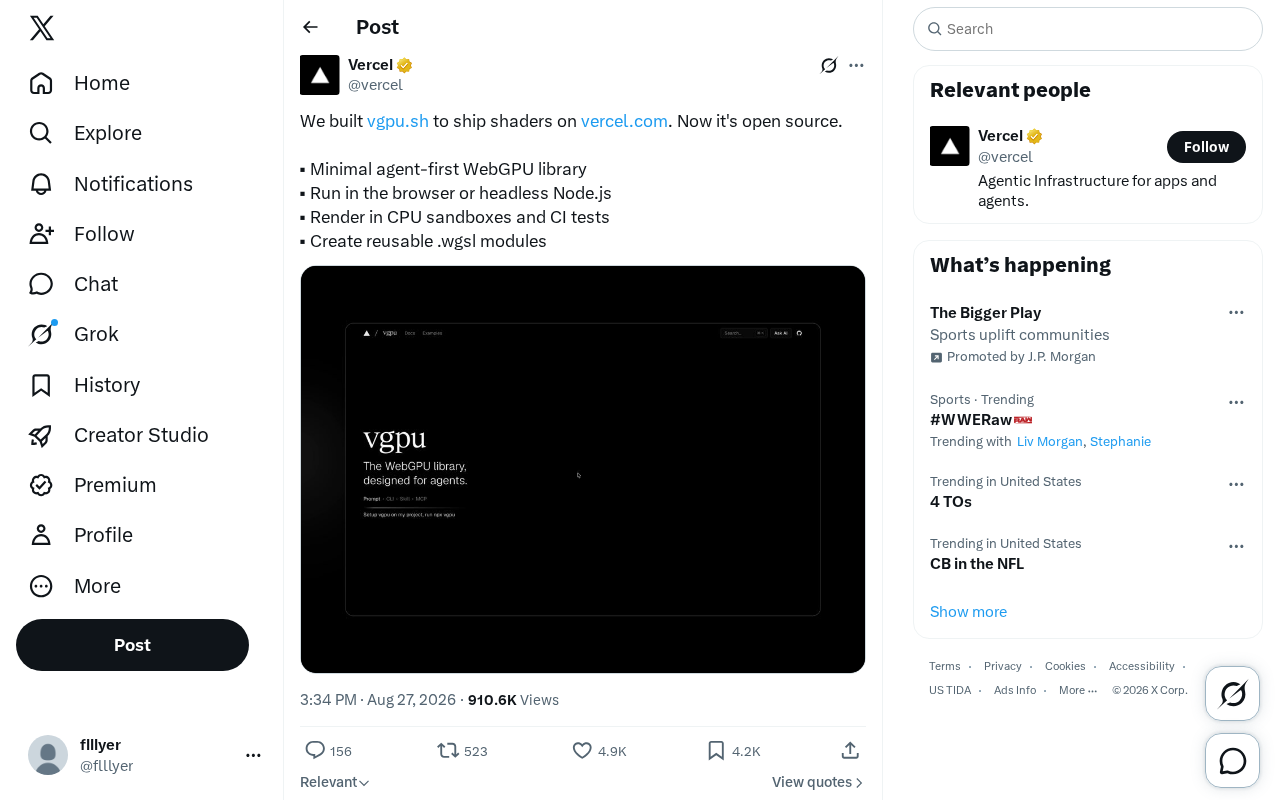
Open-Source WebGPU Library: A Lightweight Shader Solution for Browsers and Node.js
A lightweight, open-source WebGPU library supporting browsers and Node.js, with CPU sandbox rendering, reusable WGSL modules, and CI integration. Production-ready for web graphics and GPU compute.
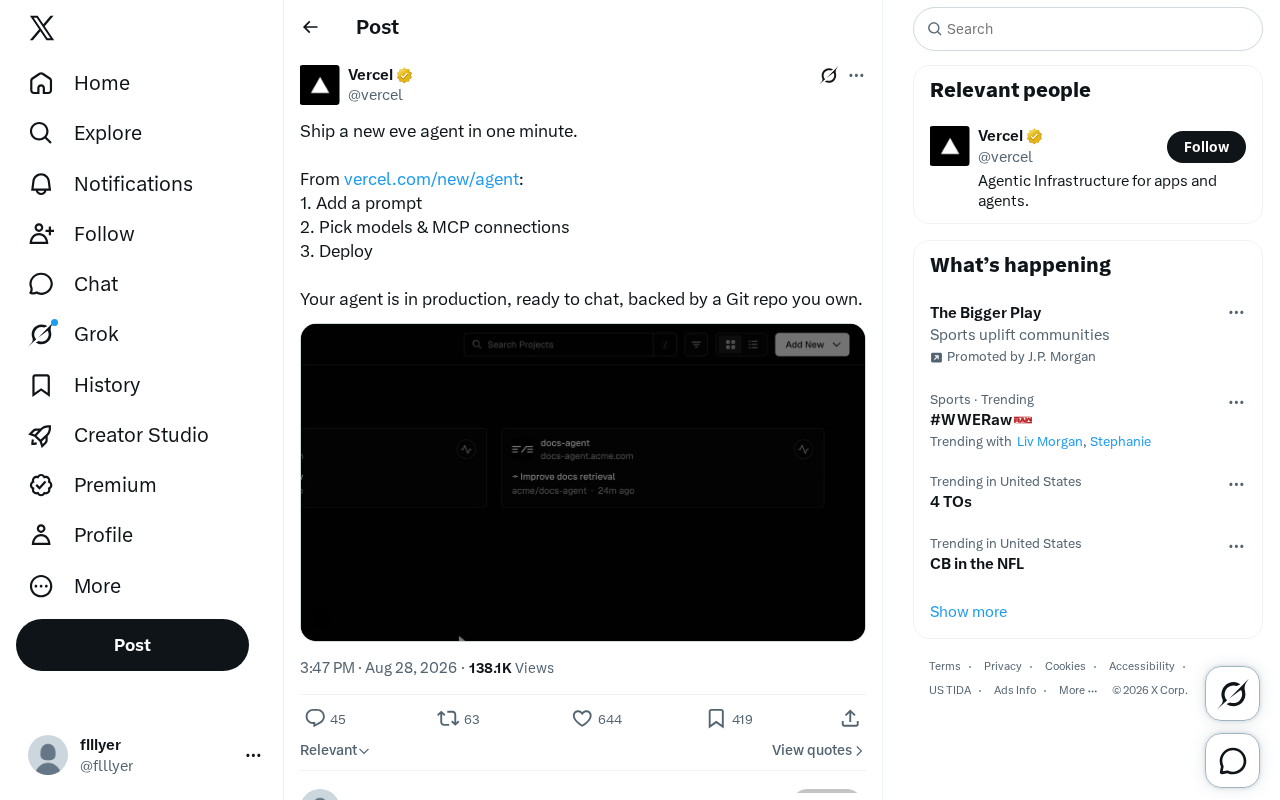
Deploying AI Agents on Eve Platform in Three Steps: A Minimalist Solution from Prompts to Production
Deep dive into how Eve platform achieves one-minute AI Agent deployment through prompt configuration, model selection, and MCP connections. Covers Git repo code ownership, MCP protocol integration advantages, and production challenges behind rapid deployment.

Codex Beginner's Guide: Installation, Registration, and Subscription for Users in China
A complete guide to OpenAI Codex: four installation methods (desktop, IDE plugin, CLI, web), ChatGPT Plus subscription via WeChat Pay, permissions, and model selection.