Ollama API Key Proxy: Multi-Key Rotation to Solve Rate Limiting Issues

Open-source reverse proxy that rotates multiple API keys to solve Ollama cloud model rate limiting.
Ollama API Key Proxy is an open-source reverse proxy that manages multiple API keys for Ollama cloud models. It uses round-robin rotation, automatic 429 cooldown, and intelligent retry with alternate keys to maintain uninterrupted AI coding workflows. The project includes observability endpoints and has been validated with Claude Code for streaming compatibility.
Introduction: Solving Key Management Challenges for AI Coding Tools
With the growing popularity of local and cloud-based large language models, more and more developers are using Ollama as a unified model runtime entry point. Ollama initially gained fame for running open-source LLMs locally (such as Llama, Mistral, Gemma, etc.), and its clean command-line interface combined with OpenAI API-compatible service endpoints quickly made it one of the most popular local model runtimes in the developer community. However, when it comes to Ollama cloud models, API key management and rate limiting become unavoidable pain points. Recently, a Reddit developer shared an open-source project they built—Ollama API Key Proxy—offering a lightweight and elegant solution to this problem.

The core idea behind this project is straightforward: set up a reverse proxy in front of Ollama that rotates through multiple API keys to access Ollama cloud models. Developers simply point their AI coding tools at a single proxy endpoint, and all key management is handled automatically by the proxy.
Core Design: Key Scheduling Behind a Single Endpoint
Why You Need an API Key Proxy
When using cloud-based LLM services in practice, a single API key often encounters rate limiting issues. Rate limiting is an access control mechanism set up by cloud service providers to protect system stability and fairly allocate resources, typically measured in "requests per minute" (RPM) or "tokens per minute" (TPM). When request frequency is too high, the server returns a 429 (Too Many Requests) status code, interrupting the workflow of AI coding tools. For scenarios that rely on continuous model responses from programming assistants (such as code completion, code review, etc.), this interruption significantly impacts the user experience.
The traditional solution is to manually switch keys, but this is not only tedious but also difficult to maintain efficiently in multi-tool, multi-task scenarios. This is exactly where Ollama API Key Proxy adds value—it abstracts the scheduling logic for multiple keys, making it completely transparent to upstream tools. Developers only need to configure a single unified proxy address, and the proxy layer automatically handles key rotation and failover in the background.
The Architectural Role of a Reverse Proxy
Architecturally, this project serves as a middleware layer: it sits between AI coding tools and the Ollama service, intercepting all requests, injecting the appropriate API key, and handling return results.
A reverse proxy is a classic design pattern in network architecture. Unlike a forward proxy, which represents the client side, a reverse proxy represents the server side. In modern internet infrastructure, reverse proxies like Nginx, Traefik, and Envoy are ubiquitous, handling load balancing, TLS termination, request routing, caching, and many other responsibilities. In the context of microservice architectures and API gateways, reverse proxies serve as the core hub for traffic governance. What Ollama API Key Proxy does is essentially apply this mature architectural pattern to the specific scenario of AI model access—except its core concern shifts from traditional traffic distribution to intelligent scheduling at the key level.
The benefit of this design is decoupling—upstream applications don't need to worry about how many keys exist underneath, or the health status of each key. All complexity is encapsulated within the proxy.
Key Feature Analysis
According to the author's description, Ollama API Key Proxy offers the following core features:
Round-Robin Key Rotation
The proxy uses a round-robin algorithm to cyclically distribute requests among multiple API keys. Round-robin is one of the most fundamental and classic scheduling algorithms in the load balancing domain. Its core idea is extremely simple: assign requests to each backend node (in this case, each API key) in a fixed sequential order, forming a cycle. Compared to weighted round-robin (which distributes different proportions of traffic based on node weights), least connections (which prioritizes the node with the fewest active connections), or random algorithms, naive round-robin's advantages lie in its simplicity of implementation, predictable behavior, and ability to achieve the most even load distribution when all keys have equal quotas.
This approach evenly distributes the request load across all available keys, preventing any single key from quickly hitting its rate limit due to concentrated requests. For teams or individual developers with multiple keys, this means effective expansion of overall available quota—for example, if a single key is limited to 60 requests per minute, having 5 keys theoretically boosts overall throughput to 300 requests per minute.
429 Auto-Cooldown Mechanism
When a key triggers rate limiting and receives a 429 response, the proxy automatically puts that key into a cooldown state, temporarily stopping new request assignments to it.
HTTP 429 (Too Many Requests) is a standard response code defined in RFC 6585, specifically designed to indicate that the client has sent too many requests within a given time window. The server typically communicates how long the client should wait before retrying through the Retry-After header field. At the implementation level, service providers commonly use token bucket or sliding window algorithms: the token bucket adds tokens to a bucket at a fixed rate, each request consumes one token, and requests are rejected when the bucket is empty; the sliding window counts requests within a continuously moving time window and triggers rate limiting when the threshold is exceeded.
The proxy's cooldown mechanism draws inspiration from the Circuit Breaker Pattern in distributed systems—when it detects downstream service anomalies, it proactively "opens the circuit" to prevent failure propagation while periodically "probing" to detect service recovery. This mechanism ensures rate-limited keys have time to recover while naturally directing traffic to other healthy keys, maintaining overall service continuity.
Intelligent Retry Strategy
For 429 and 5xx (server error) responses, the proxy has built-in automatic retry logic. The 5xx error code family (500 Internal Server Error, 502 Bad Gateway, 503 Service Unavailable, etc.) typically indicates temporary server-side failures and represents retryable error types. When a request fails due to rate limiting or temporary server failure, the proxy attempts to resend the request using a different key rather than directly passing the error to the upstream tool.
The key insight in this design is "retry with a different key" rather than "wait and retry in place"—because 429 is rate limiting against a specific key, switching keys is equivalent to changing "identity" from the server's perspective, immediately gaining access to a new request quota. This fault-tolerant design dramatically improves the overall system's robustness, making rate limiting events virtually invisible to upstream AI tools.
Observability and Monitoring Support
The project also provides two important monitoring endpoints:
/metricsendpoint: Exposes detailed statistics for each key, allowing developers to understand usage patterns, rate limiting frequency, and more./healthendpoint: Used for health checks, making it easy to integrate into operations monitoring systems.
Observability is a core concept in modern systems engineering, typically broken down into three pillars: Metrics, Logs, and Traces. The /metrics endpoint design follows the Pull Model widely adopted in the Prometheus ecosystem—the monitoring system periodically fetches metric data from target endpoints rather than having applications push data proactively. This pattern has become the de facto standard for cloud-native monitoring, deeply integrated with mainstream tools like Kubernetes and Grafana. The /health endpoint is the standard interface for container orchestration platforms (such as Kubernetes liveness/readiness probes) to assess service health.
Additionally, the proxy supports request logging, providing foundational data for debugging and auditing. While these observability features may seem simple, they are indispensable components in production environments—a system without observability is like a black box, making troubleshooting impossible and capacity planning groundless.
Real-World Validation: Integration with Claude Code
The author mentions having tested this proxy with Claude Code in practice. Claude Code is Anthropic's command-line AI programming tool that allows developers to interact directly with Claude models in the terminal, completing complex programming tasks like code writing, debugging, refactoring, and file operations. Unlike IDE plugin-style tools like GitHub Copilot, Claude Code leans more toward an agentic working mode—it can autonomously plan task steps, read and write files, execute commands, and continuously advance complex engineering tasks through multi-turn conversations.
This working mode places particularly strict demands on model endpoints: First, in agentic workflows, each completed step requires an immediate model call to get the next instruction, and any interruption breaks the entire task chain. Second, Claude Code extensively uses streaming responses, where model output is returned token by token via Server-Sent Events (SSE), requiring the proxy layer to correctly handle long connections and streaming data transmission. Finally, complex programming tasks typically involve very long context windows, with high token consumption per request, making it easier to hit TPM (tokens per minute) limits.
Being able to run stably with such a tool demonstrates that the proxy has a certain level of usability in real programming workflows, particularly having passed validation in terms of streaming compatibility.
However, it's worth noting that the author's description leans more toward a personal project share and doesn't yet provide stress test data from large-scale production environments. For developers hoping to use this in team or commercial scenarios, it's still recommended to validate stability and performance on a small scale first.
Value and Limitations: A Rational View of Key Rotation Solutions
What Problems It Solves
The greatest value of Ollama API Key Proxy lies in reducing the complexity of multi-key management. It unifies key rotation, rate limit handling, and failure retry—issues that developers previously had to handle manually—into a single lightweight proxy. For developers who frequently use Ollama cloud models, especially those with multiple keys who want uninterrupted workflows, this tool can significantly improve the experience.
Boundaries to Be Aware Of
From a compliance perspective, using multi-key rotation to circumvent rate limits requires developers to confirm for themselves whether it complies with the relevant service's terms of use. Most cloud service providers' API usage agreements explicitly restrict behavior that "bypasses rate limits." Generally speaking, if each key corresponds to a legitimately registered independent account (such as each team member's own key) and each account is paying and using the service normally according to the terms of service, then managing these keys through a unified proxy is typically reasonable. However, if keys are obtained by bulk-registering accounts to harvest free tier quotas for "unlimited expansion," this almost certainly violates terms of use.
Key rotation is fundamentally a resource scheduling optimization technique, but if used to break through a service provider's reasonable limits, it may cross the red line of usage agreements. Developers should carefully evaluate compliance risks when adopting such solutions.
Additionally, as a newly released personal open-source project, its code quality, security, and long-term maintainability still need community verification. In terms of security, a key proxy is inherently a highly sensitive component—it centrally stores multiple API keys, and a breach means all keys are simultaneously exposed. Therefore, several key security dimensions should be considered before deployment: whether keys are encrypted in configuration files or environment variables, whether the proxy endpoint has access authentication mechanisms, and whether injection or unauthorized access vulnerabilities exist. For security auditing of open-source projects, developers can check whether dependencies have known vulnerabilities (using tools like npm audit, cargo audit, etc.), whether network communication enforces TLS, and whether there are obvious security anti-patterns in the code.
The author chose to open-source and host the project on GitHub, which provides a foundation for community participation and code review, but users should still conduct independent audits of the code before deploying to critical environments.
Conclusion
Ollama API Key Proxy represents a typical class of "pain-point-driven" tools in the open-source community—addressing a real problem in a specific scenario with clean engineering solutions. It has no grand ambitions; it just focuses on doing one thing well: multi-key management. For developers frustrated by Ollama cloud model key management and rate limiting issues, such a lightweight, transparent, and observable proxy layer is undoubtedly worth trying.
As the AI coding tool ecosystem rapidly evolves, infrastructure tools surrounding the model access layer will continue to multiply. These small but beautiful open-source projects are an essential part of the ecosystem's healthy development.
Related articles
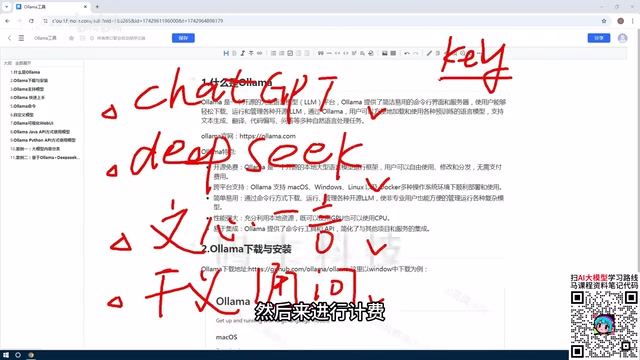
Getting Started with Ollama: The Go-To Tool for Running Open-Source LLMs Locally
Ollama is a free, open-source tool for managing and deploying open-source LLMs like DeepSeek locally. Learn what it is, its cross-platform support, CPU/GPU features, and key use cases.
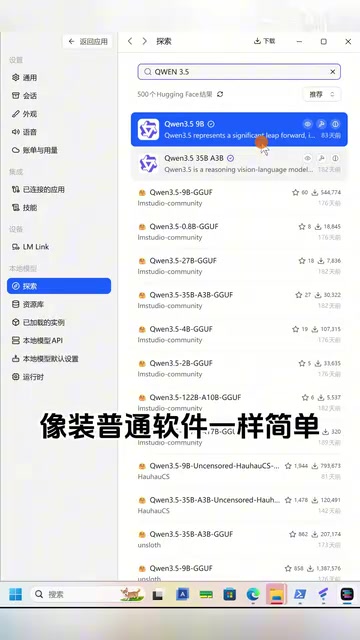
LM Studio vs Ollama vs vLLM: A Deep Dive into Local LLM Deployment Tools
LM Studio, Ollama, and vLLM compared: ease of use, performance, and ideal use cases. Beginners pick LM Studio, developers use Ollama, enterprises go with vLLM.
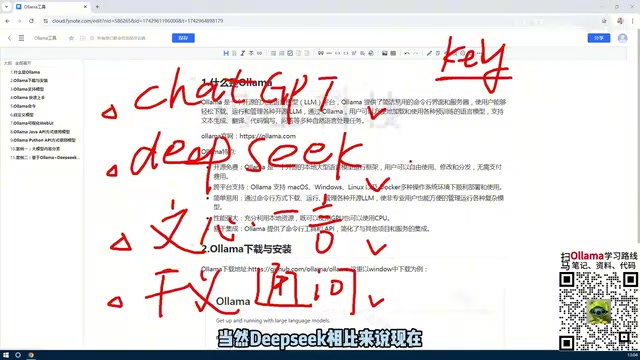
Getting Started with Ollama: The Essential Tool for Local Open-Source LLM Deployment
Learn what Ollama is and why it matters: a free, open-source tool for deploying LLMs like DeepSeek locally, with GPU/CPU support, cross-platform compatibility, and API access for private AI apps.