Ollama v0.40.9-rc0: WoA Support Switches to Released CUDA Toolkit
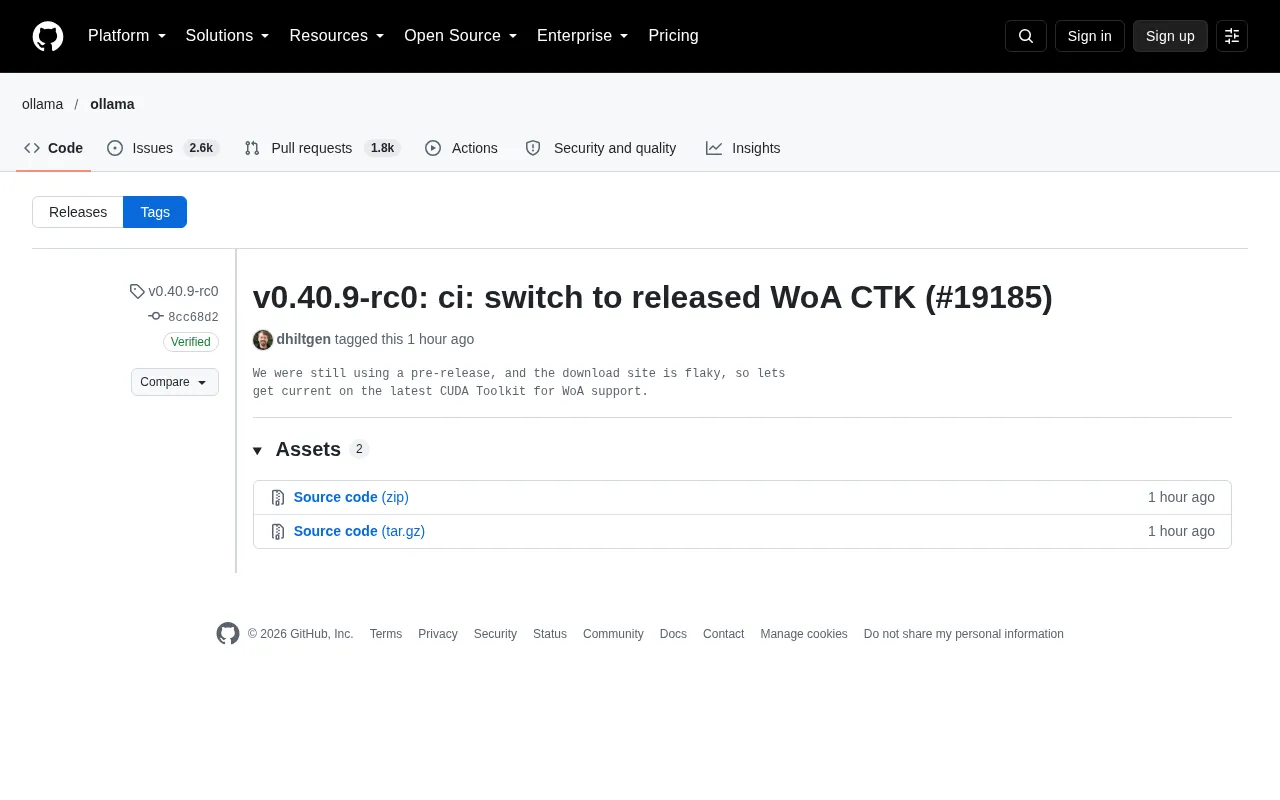
Ollama v0.40.9-rc0 switches WoA CI from a pre-release CUDA Toolkit to the official release to improve build reliability.
Ollama has released the v0.40.9-rc0 pre-release, with one core change: the CI pipeline switches from a pre-release CUDA Toolkit to the officially released version to support Windows on Arm. The commit (#19185) was tagged by dhiltgen with a GitHub verified signature. The motivation is that the pre-release download site is unstable, affecting build reliability, not a new feature. The article notes that WoA's CUDA stack maturity lags behind x86, and toolchain stability directly affects inference framework binaries; the value of such adjustments lies in making builds reproducible. Watch whether the official release uses the same CTK version and whether other platform CI has similar issues.
Ollama has released the v0.40.9-rc0 pre-release version, with only one core change—the CI pipeline switches from a pre-release CUDA Toolkit to the officially released version, in order to support the Windows on Arm (WoA) platform. The commit message (#19185) was tagged by dhiltgen on October 21 and includes a GitHub verified signature.
What Changed: A CI Adjustment to "De-pre-release"
From the commit description, the motivation for this change is quite direct: the team had still been using a pre-release version of the CUDA Toolkit in WoA builds, and the download site was flaky, which affected the reliability of CI builds. The author's exact words were "We were still using a pre-release, and the download site is flaky, so lets get current on the latest CUDA Toolkit for WoA support."
In other words, this is not a new feature but an infrastructure-level "alignment"—moving the dependency from an uncertain pre-release channel to the official release channel. For a CI system that runs a large number of builds every day, the stability of dependency sources is often more critical than whether a version is new or old.
A CI (Continuous Integration) pipeline refers to an automated system that triggers builds, tests, and packaging after code is committed. For a project like Ollama that needs to produce binaries for multiple platforms (Windows, Linux, macOS, as well as architectures such as x86 and Arm), every CI run must pull external dependencies such as compilers, the CUDA Toolkit, and drivers. These dependencies are usually obtained from vendors' download sites, and once a site rate-limits, changes paths, or is temporarily unavailable, the build fails. Therefore, CI reliability depends heavily on the stability of external dependency sources, and teams often prioritize official release channels over pre-release channels.
Why WoA CUDA Support Deserves Its Own RC
Windows on Arm is increasingly present in local AI inference scenarios, but the maturity of its software stack has long lagged behind the x86 + NVIDIA combination. The available versions, download channels, and release cadence of the CUDA Toolkit on WoA directly affect whether inference frameworks can stably produce usable binary packages.
Switching CI to the officially released CTK means that subsequent WoA builds can rely on a toolchain with a version commitment and a relatively stable download path. For downstream users, this reduces the hidden cost of "build failures with unknown causes"; for maintainers, it removes a class of intermittent failures from the pipeline.
The CUDA Toolkit (CTK) is the GPU computing development kit provided by NVIDIA, including components such as the compiler (nvcc), runtime libraries, profiling tools, and math libraries. In the context of Ollama, it determines whether the project can compile binary packages with GPU acceleration enabled. CTK releases are divided into pre-release (such as alpha/beta/rc) and general availability (GA); the former may change behavior at any time, and its download addresses may not be stable long term. Windows on Arm has long not been a first-class citizen of CUDA, and the available versions and distribution cadence of the corresponding CTK lag behind x86, so WoA builds are particularly sensitive to toolchain version choices.
The Risk Pattern of Pre-release Dependencies
Pre-release toolchains usually have two problems: first, the download site may change paths or rate-limit at any time; second, behavior may change before the official release. CI is especially sensitive to this uncertainty—a single download failure can turn the entire version's build red, and the troubleshooting cost is often underestimated.
This commit introduces no new features and does not modify runtime logic; its value centers on "making builds reproducible." From an engineering practice perspective, such changes usually do not appear prominently in release notes, but they make a real contribution to the stability of the release cadence.
"Reproducible build" is a basic requirement in software engineering: under the same source code and the same dependency versions, any time and any machine should produce build results with consistent behavior. Pre-release dependencies break this property—even if the source code is unchanged, changes in toolchain behavior or download availability may lead to different build results. Pinning dependencies to officially released versions is essentially reducing the variables in the build environment, making failures easier to attribute and the release cadence more predictable. Ollama releasing this change as an rc version shows that the maintainers believe its impact on downstream builds is significant enough to go through a separate release candidate process.
Version Positioning and What to Watch Next
v0.40.9-rc0 is a release candidate, and the tag page lists two assets, indicating that it has entered a distributable state. Since the change only involves CI configuration, ordinary users will not notice any difference in daily use; the real impact will show up in the failure rate of subsequent WoA-related builds.
Signals worth watching include: whether the official v0.40.9 uses the same CTK version, whether WoA build artifacts appear in regular release channels, and whether the download site instability also exists in CI for other platforms. If the latter is true, similar "de-pre-release" adjustments may appear in more build stages.
One-line Summary
Ollama v0.40.9-rc0 switches WoA CI from a pre-release CUDA Toolkit to the official release to improve build reliability.
Paragraph Summary
Ollama has released the v0.40.9-rc0 pre-release version, with only one core change: the CI pipeline switches from a pre-release CUDA Toolkit to the officially released version to support the Windows on Arm platform. The commit (#19185) was tagged by dhiltgen and includes a GitHub verified signature. The motivation is that the pre-release download site is unstable and affects build reliability, not a new feature. The article notes that WoA's CUDA software stack maturity lags behind x86, and toolchain stability directly affects the binary output of inference frameworks; the value of such "de-pre-release" adjustments lies in making builds reproducible. Going forward, watch whether the official release uses the same CTK version and whether CI for other platforms has similar download instability issues.
Related articles
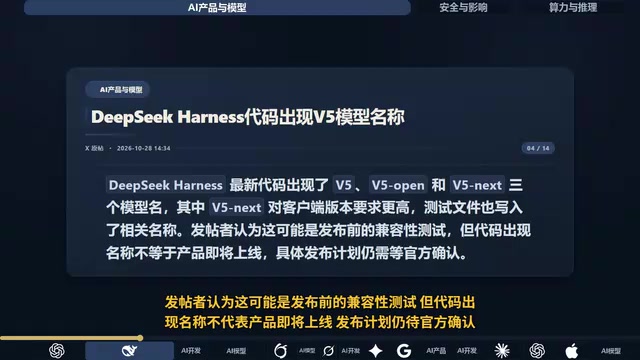
DeepSeek V5 Code Leak? It's Actually a Compatibility Test
AI Evening Report: DeepSeek Harness code shows V5 model names, deemed a compatibility test; Artificial Analysis V5 leaderboard released with DeepSeek tied for first among open-source models; Codex reset complete with news teased for tomorrow; coding agent security risks and OpenAI TPU procurement rumors analyzed.
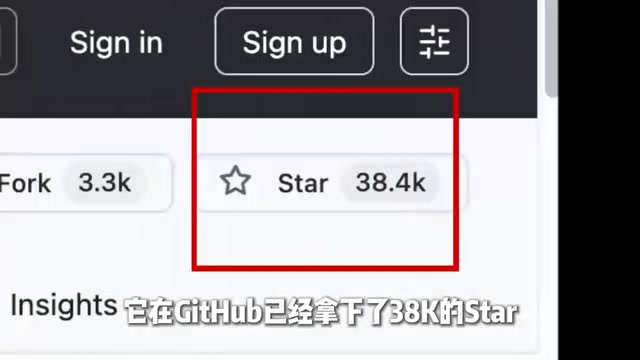
The AI Coding Terminal Built for DeepSeek: A Deep Dive into the 38K-Star Open Source Project
A deep dive into the open source AI coding terminal built for DeepSeek: 38K stars, 20 parallel agents, three security modes, and OS-level sandbox isolation for fully automated file reading, code editing, and command execution from a single-sentence requirement.
Wuzhen Conference Signals: Open Source Becomes China's Key Card for Changing Lanes and Overtaking in AI
The Wuzhen Internet Conference put open source and openness at center stage, with domestic open-source models from Huawei, Kimi, MiniMax, and DeepSeek showcased together. This article analyzes why open source has become China's key card for changing lanes and overtaking in AI, as well as the ecosystem standards battle, security governance, and commercialization challenges behind open source.