One Prompt, One Brand Video: A Hands-On Test of Synthesia Siren
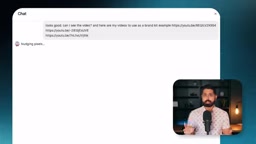
Synthesia Siren completed a brand promo video in 12m47s through pure conversation, showing both the power and limits of AI video generation.
YouTube creator Siraj Raval used Synthesia's Siren to complete a brand pitch video in 12 minutes 47 seconds through one initial prompt and three rounds of conversational revisions, without opening a timeline editor. Siren learned the channel's visual style and accurately identified bold typography and fast transitions, but missed the creator's intent to deliberately slow the pace. The first version had strong opening impact, but the ending contact information appeared too briefly. Siraj believes the tool's core value is shifting video production from software operation to text description, with efficiency gains depending on clear, describable requirements. Final creative review still requires human involvement to confirm asset authenticity and message delivery.
In the traditional video production workflow, writing a script, finding a designer, and editing the timeline can take days. YouTube creator Siraj Raval used a single prompt to produce a brand promo video he had put off for a long time in 12 minutes and 47 seconds. The tool he used was Siren, Synthesia's newly launched creative video generation tool. This is not a simple retelling of an ad—from capability boundaries to real shortcomings, this test video offers plenty of details worth unpacking.
Test Rules: No Timeline, All Edits Done Through Conversation
Siraj set clear rules for himself: start the project with only one initial prompt, make all changes through chat conversation, never open any timeline editor, and keep the timer running the entire time. He needed three types of videos: a channel trailer, a product launch short, and a pitch video he could send directly to brands. The last request had been sitting on his task list for a long time for a simple reason—he didn't have a motion designer.
This scenario of "demand piling up because no one is available" is exactly the market AI video generation tools are targeting. The question is whether the tool can truly replace the design step, rather than just generating a demo asset that looks decent.
Timeline editor is the core interface of traditional video editing software (such as Adobe Premiere and Final Cut Pro), arranging video, audio, subtitles, and other assets on horizontal tracks. Users control pacing and transitions by dragging clips and adjusting keyframes. Siraj's "no timeline" rule essentially tests whether AI can fully convert editing operations into natural language instructions, thereby bypassing the learning curve of professional software. This constraint also means all changes must be described through conversation, which places higher demands on prompt precision.
Learning the Channel Style: What It Got Right and What It Missed
Siren's first step is not asking the user to enter a prompt, but first "watching" the creator's existing work. Siraj uploaded several published videos, and Siren analyzed the channel's visual language accordingly—graphic style, text entrance methods, and editing rhythm.
It summarized two characteristics: bold typography paired with text to emphasize key information, and rapid transitions between technical demos and explanations. Siraj considered this judgment "quite accurate," but also pointed out an omission: his videos are not uniformly fast-paced; when presenting complex content, he deliberately slows down so viewers can keep up. This detail shows that style learning can capture explicit features, but its understanding of "the intent behind pacing changes" remains limited.
The initial prompt asked for a 40-second pitch video aimed at marketing leads at AI and developer tool companies, opening with the strongest result, showing three types of video content in the middle, ending with contact information, and requiring a style that is "energetic, clear, medium-paced, and free of exaggerated wording."
Visual language refers to the sum of stylistic features that recur in a video, such as graphic elements, color schemes, typography, transition methods, and editing rhythm. It forms the audience's identifying marker for a channel. Siren extracts these features by analyzing videos the creator has already published, which is a typical style transfer application. But visual language includes not only explicit elements but also the narrative intent behind pacing changes—for example, when to speed up and when to leave space—and these implicit rules are harder for models to capture.
Problems in the First Version: The Good Parts Were Very Good, but the Ending Held It Back
Siren first generated a storyboard script for confirmation. Siraj emphasized that this is "the cheapest point for changes"—adjusting the order and ending before any visuals are generated costs the least.
The first generated version performed well in opening impact and motion graphics style, with smooth transitions, professional typography, and overall coherence. But there was an obvious problem at the end: the contact information stayed on screen too briefly to read, and the opening also needed more breathing room.
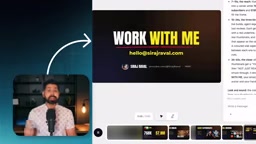
In traditional editing, these issues would take a few drags of clips to fix, but here they required clear description in natural language.
Three Rounds of Conversational Revisions: Turning "Editing" Into "Requesting Changes"
Siraj made three revisions, all through chat: slow down the opening by five seconds and extend the first line's duration, change the ending to "Work with me" plus an email address, and insert a five-second scene before the ending. After each revision, he compared the before and after. If a revision did not land in one pass, the video also preserved the failed attempt and the repair process.

According to the timer, from the first prompt to the final cut took 12 minutes and 47 seconds in total, covering storyboard review, generation, and three rounds of revisions. Siraj's observation was that most of the time was spent on creative decisions, not dragging clips or adjusting animations. This is very different from the traditional editing workflow—but this is also precisely where the limitation lies: the premise for efficiency gains is that the requirements are clear enough and can be accurately described in text.
Capability Boundaries: No Digital Humans, and Human Review Still Cannot Be Skipped
An easily overlooked detail: this video did not use a digital human on camera at all. Synthesia's brand recognition has long been tied to "digital humans," but this time Siren completed a combination of motion graphics, voiceover, and music. This shows that the tool's capability range has already gone beyond a single label.
Siraj made it clear that final creative review still requires human oversight—confirming that the visual assets truthfully reflect the work, that every claim is accurate, and that the video conveys the intended message. AI can generate scenes, assemble assets, and handle revisions, but he does not plan to fully hand over the step of "deciding what is worth showing" to automation.
For marketing leads or founders, if a video has been delayed because the designer's schedule is full, the value of this type of tool lies here: turning "no one can make it" into "describe it in text and get a first version." The real barrier is no longer software operation, but whether you can explain a video requirement clearly.
Digital human (AI Avatar) refers to a virtual character created through generative models that can simulate real facial expressions, lip movements, and body motions to deliver broadcasts or performances. Synthesia became known early on for digital human video generation, where users can make a virtual anchor "speak" by entering text. Siren did not use digital humans this time, indicating that its capabilities have expanded to automated combinations of motion graphics, voiceover, and music. It is no longer limited to a single digital human broadcast scenario, but covers a broader range of creative video types.
Related articles
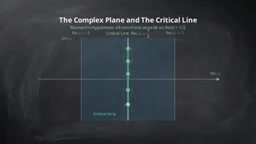
AI and Humans Team Up to Crack a 167-Year-Old Math Puzzle: Has the Riemann Hypothesis Been Solved?
A 167-year-old Riemann Hypothesis breakthrough? Human mathematicians provide a blueprint, AI coordinates 60 sub-agents to generate 17 million lines of proof code, then formally verified by Lean and compressed to 76,000 lines. This article analyzes the complete path and controversies of this human-AI collaboration.

AI Proves the Riemann Hypothesis? The Mathematical Revolution and Controversy Behind 170,000 Lines of Code
Anthropic mathematician uses AI to complete a machine-verified proof of the Riemann Hypothesis—17 million lines of Lean code shake the math world. A human team releases an all-human proof the same day, sparking debate over machine verification versus human understanding and AI's changing role in science.
Did AI Really Prove the Riemann Hypothesis? Mathematician Claims Cloud AI Model Cracked a 167-Year-Old Mystery
A mathematician claims a cloud AI model proved the 167-year-old Riemann Hypothesis. We explain prime distribution, what the hypothesis really says, and whether to trust the claim.