One-Third of Perplexity's Citations Can't Be Traced Back — AI Search Credibility Under Fire
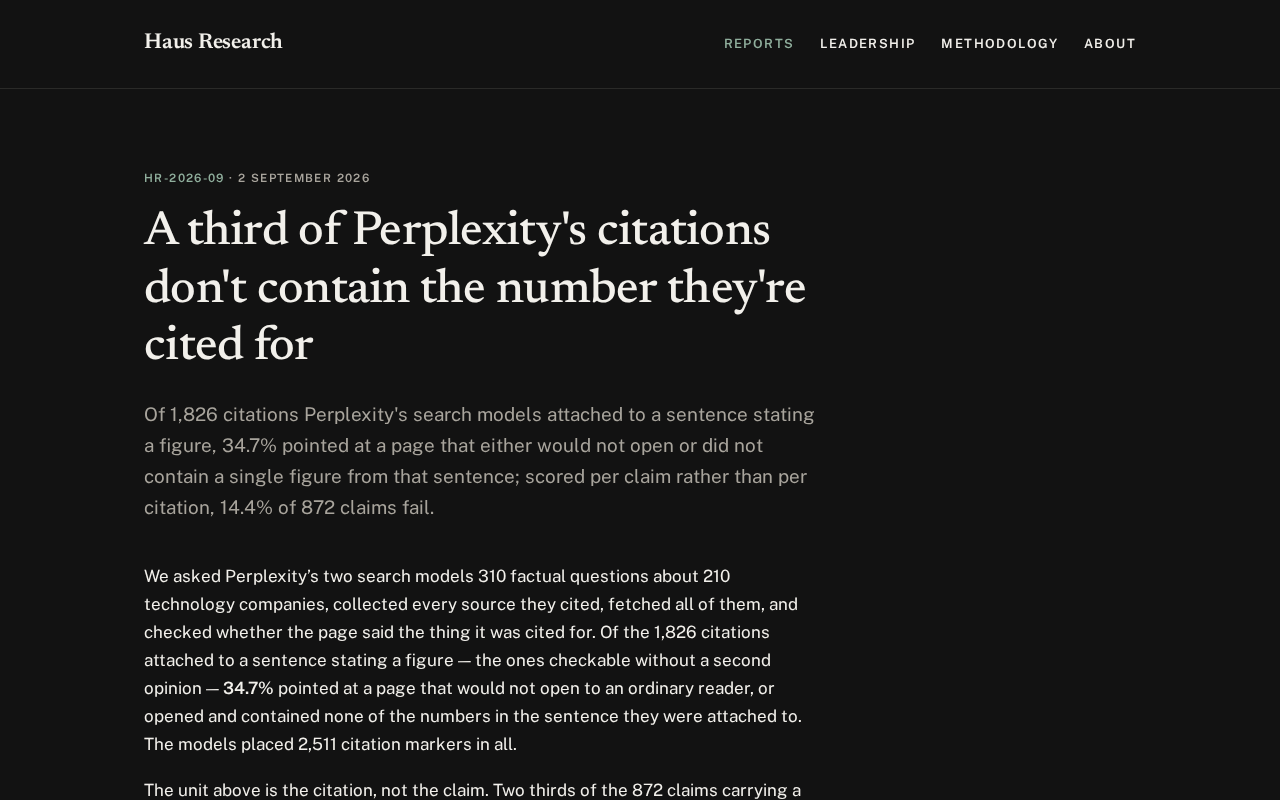
Study reveals one-third of Perplexity's cited data can't be found in original sources.
A recent study found that approximately 33% of data cited by Perplexity AI search engine cannot be traced back to the original sources. This exposes fundamental flaws in RAG architecture, where LLMs generate numbers based on statistical probability rather than verified retrieval, then match them with semantically similar but inaccurate sources. The finding raises urgent questions about AI search credibility and calls for industry-wide improvements in citation verification standards.
The Citation Credibility Crisis in AI Search Engines
AI search engines are becoming the go-to tool for an increasing number of users seeking information. Unlike traditional search engines, AI search products like Perplexity deliver comprehensive answers directly, complete with cited sources, creating an impression of being "well-documented" and trustworthy. Founded in 2022 by former OpenAI researcher Aravind Srinivas, Perplexity's core vision is to transform search engines from "providing lists of links" to "directly answering questions." This product paradigm is known as an "Answer Engine" — it combines the information retrieval capabilities of traditional search with the natural language generation power of large language models, aiming to satisfy users' information needs in a single step. By 2024, Perplexity's daily query volume had surpassed several million, with a valuation exceeding billions of dollars, signaling strong market validation for this new paradigm.
However, a study recently discussed on Hacker News threw cold water on this sense of trustworthiness: approximately one-third of the data sources cited by Perplexity don't actually contain the numbers it claims they do.
This finding strikes at the very core of trust in AI search products — if the citations themselves don't hold up under scrutiny, how much of the authoritative-sounding data users see is actually reliable?
Having a Link Doesn't Equal Fact-Checking
The crux of the problem is that AI search engines' citation mechanisms create an illusion: that attaching a link means the facts have been verified. In reality, when large language models generate answers, they first "produce" a number or conclusion, then match it with a source link that looks relevant. There's no rigorous verification step between these two processes.
To understand this disconnect, you need to understand the underlying generation mechanism of large language models. Current mainstream LLMs (such as GPT-4, Claude, etc.) use autoregressive generation, meaning the model predicts the next token one at a time, with each output based on the probability distribution of all preceding tokens. This means that when the model "produces" a number, it's actually performing a statistical probability operation — selecting the most probable next word in the current context — rather than extracting a precise value from some verifiable database. The model has no metacognitive ability to know "where this number came from"; it has simply seen similar patterns in its training data and is statistically inclined to produce a number that "looks reasonable." Citation link matching typically occurs after or in parallel with generation and is essentially a semantic similarity matching process, not a fact verification process.
In other words, the model might generate a specific figure based on patterns in its training data, then attach an article that's topically relevant but doesn't actually contain that figure. For ordinary users who won't click through and verify each link individually, this combination of "hallucination + endorsement" is extremely deceptive.
What a 33% Citation Failure Rate Really Means
Nearly one-third of citations being untraceable far exceeds most people's expectations. Translated into everyday usage: if you ask Perplexity three questions that require data-backed answers, on average one answer will have a key figure that doesn't hold up.
Data Hallucinations Are More Dangerous Than Textual Ones
Compared to AI fabricating an entire paragraph of text, data-level hallucinations are often more insidious and more harmful. In AI research, hallucination refers to the phenomenon where a model generates content that is factually incorrect, inconsistent with input sources, or unverifiable. Academics typically divide hallucinations into two categories: intrinsic hallucination, where generated content directly contradicts the provided source material; and extrinsic hallucination, where generated content cannot be verified from the source material and may or may not be correct. Most data-level hallucinations fall into the latter category — the model produces numbers that simply can't be found in the cited source, leaving users unable to determine their veracity.
In real-world cases, data hallucinations have already caused tangible harm. In 2023, a New York lawyer cited fictitious case law fabricated by ChatGPT in court documents, resulting in sanctions from the court. In finance, erroneous market data can directly impact investment decisions. Even more alarming, if academic research cites unverified AI-generated statistics, these figures can propagate through peer citations in academic literature for years before being discovered.
There are three key reasons:
- Numbers inherently carry authority: A percentage precise to the decimal point or a specific dollar amount naturally conveys a sense of being "statistically verified." Psychological research shows that people tend to assign higher credibility to statements containing precise numbers, even when those numbers are unverified — a phenomenon known as Precision Bias.
- Errors are hard to detect by intuition: Mistakes in written statements can sometimes be spotted through common sense, but an incorrect market size figure or growth rate is difficult for the average reader to identify immediately.
- Propagation chains can spiral out of control: Once incorrect data is cited in reports, articles, or even academic materials, it gets continuously redistributed, creating information pollution that's hard to correct. In communication theory, this phenomenon is called an Information Cascade — subsequent citers skip independent verification based on trust in the original source, causing misinformation to snowball.
Technical Limitations of RAG Architecture
From a technical perspective, citations in current AI search products mostly rely on Retrieval-Augmented Generation (RAG) architecture, which first retrieves relevant documents, then generates answers based on those documents. RAG was originally proposed by Facebook AI Research (now Meta AI) in 2020, with the core idea of combining parametric knowledge (stored in model weights) with non-parametric knowledge (stored in external document repositories). A complete RAG pipeline typically involves the following steps: first, converting the user query into a vector representation (embedding); second, retrieving the most semantically relevant document chunks from a vector database; third, feeding the retrieved document chunks along with the original query as context into the LLM; and finally, the model generates the final answer based on this context.
In theory, this should reduce hallucinations, but in practice there are several weak points:
- Retrieved documents may not contain the precise answer: Vector retrieval is based on semantic similarity, not exact matching. An article discussing "global AI market size" will be retrieved, but the specific figures it contains might be from 2022, while the model might present them as 2024 data. Moreover, current mainstream embedding models (such as OpenAI's text-embedding-3, Cohere's Embed, etc.) perform notably worse when handling numbers and precise data compared to concepts and semantics.
- The model may incorrectly paraphrase document content or confuse numbers: LLMs have known weaknesses when processing numbers. Research shows that models tend to confuse multiple numbers from retrieved documents (e.g., mixing up revenue figures with profit figures), or make incorrect unit conversions and rounding errors. Researchers refer to this phenomenon as Numerical Hallucination.
- Misattribution is common when synthesizing multiple sources: When a RAG system retrieves multiple sources simultaneously, the model needs to perform information synthesis. During this process, a number from Source A might be incorrectly attributed to Source B, or figures from different sources covering different time periods or using different statistical methodologies might be inappropriately combined.
The one-third failure rate is very likely the cumulative result of errors across these stages. It's worth noting that the industry is also exploring improvements, such as CRAG (Corrective RAG), which evaluates and filters retrieval results for quality before generation, and Self-RAG, which enables the model to self-reflect on citation reliability during generation — but these technologies have not yet been widely deployed in production environments.
Warnings for Users and the Industry
The value of this research lies not in denying the utility of AI search tools, but in reminding everyone: citations provided by AI are essentially "hints," not "proof."
How Users Can Protect Themselves
For users who rely on AI search for information — especially researchers, writers, investors, and others whose work demands data accuracy — the following practices are recommended:
- Always verify important data against the original source: Stay vigilant about any specific numbers and click through to the original link to confirm the data actually exists;
- Trust precise citations more: Citations that can be directly traced to a specific paragraph in the source text are far more credible than links that vaguely point to a lengthy article;
- Cross-reference multiple sources: Don't accept answers from a single AI at face value — verify key data with at least two independent sources.
Areas Where AI Search Products Need Improvement
For developers, this data exposes a gap in evaluation frameworks. The industry currently focuses heavily on answer "fluency" and "relevance" but lacks hard metrics for citation "verifiability." In academia, researchers have begun building systematic citation quality evaluation frameworks. For example, a Stanford University research team proposed Citation Precision and Citation Recall metrics — the former measures how many cited sources actually support the model's statements, while the latter measures how many of the model's statements are supported by cited sources. Additionally, Attributability has emerged as a new dimension for evaluating AI-generated content quality, requiring that every factual claim from the model be traceable to specific source text.
Future improvements may include:
- Mandatory verification of number-to-source consistency during answer generation: For example, introducing dedicated numerical verification modules that compare numbers in the generated text against original numbers in retrieved documents before final output;
- Proactively flagging uncertainty for untraceable data: Similar to confidence interval annotations in academic papers, AI search products could provide credibility scores for each citation, allowing users to quickly identify which data points are backed by solid sources and which may be uncertain;
- Providing sentence-level citation pinpointing for easy user verification: Some products have already begun experimenting in this direction, such as Perplexity's "highlighted citations" feature and Google's attempts to link directly to specific paragraphs in source documents, but the precision and consistency of these implementations still have significant room for improvement.
The Necessary Path to Trustworthy AI Search
It's worth noting that Perplexity is not an isolated case. The entire AI search space — from ChatGPT's search functionality to Google's AI Overview — faces similar citation credibility challenges. Google's AI Overview feature, launched at its 2024 I/O conference, drew widespread controversy for giving absurd suggestions (such as recommending putting glue on pizza), classic examples of hallucinations occurring when AI synthesizes information from multiple sources. ChatGPT's search feature, launched in late 2024, similarly faces questions about citation accuracy — tests have found that its cited links sometimes point to paywalled content or dead pages. Furthermore, emerging AI search players like You.com, Kagi, and China's Metaso AI Search have each adopted different technical strategies to improve citation quality, but none has fully solved this fundamental problem.
This study targeting Perplexity is better understood as a "stress test" for the entire industry.
As AI search increasingly permeates every aspect of daily information access, citation accuracy is no longer a technical detail — it's a foundational issue for the health of the information ecosystem. From a broader perspective, this actually touches on a deep epistemological question: in the human knowledge system, "citation" has always been the core mechanism for building chains of trust — from references in academic papers to sources in news reporting, the reliability of citations determines the credibility of the entire knowledge dissemination system. When AI search engines generate cited information at unprecedented speed and scale, if the citation chains themselves are unreliable, the impact on the information ecosystem will far exceed the misinformation problems of the traditional media era.
When a tool claims to help you "quickly find answers," it should at minimum ensure those answers can be verified.
For this still-nascent field, transparently acknowledging limitations and establishing verifiable citation standards may be more important than pursuing more impressive-looking answers. After all, the ultimate competitive advantage in AI search isn't "sounding good" — it's "being trustworthy."
Related articles
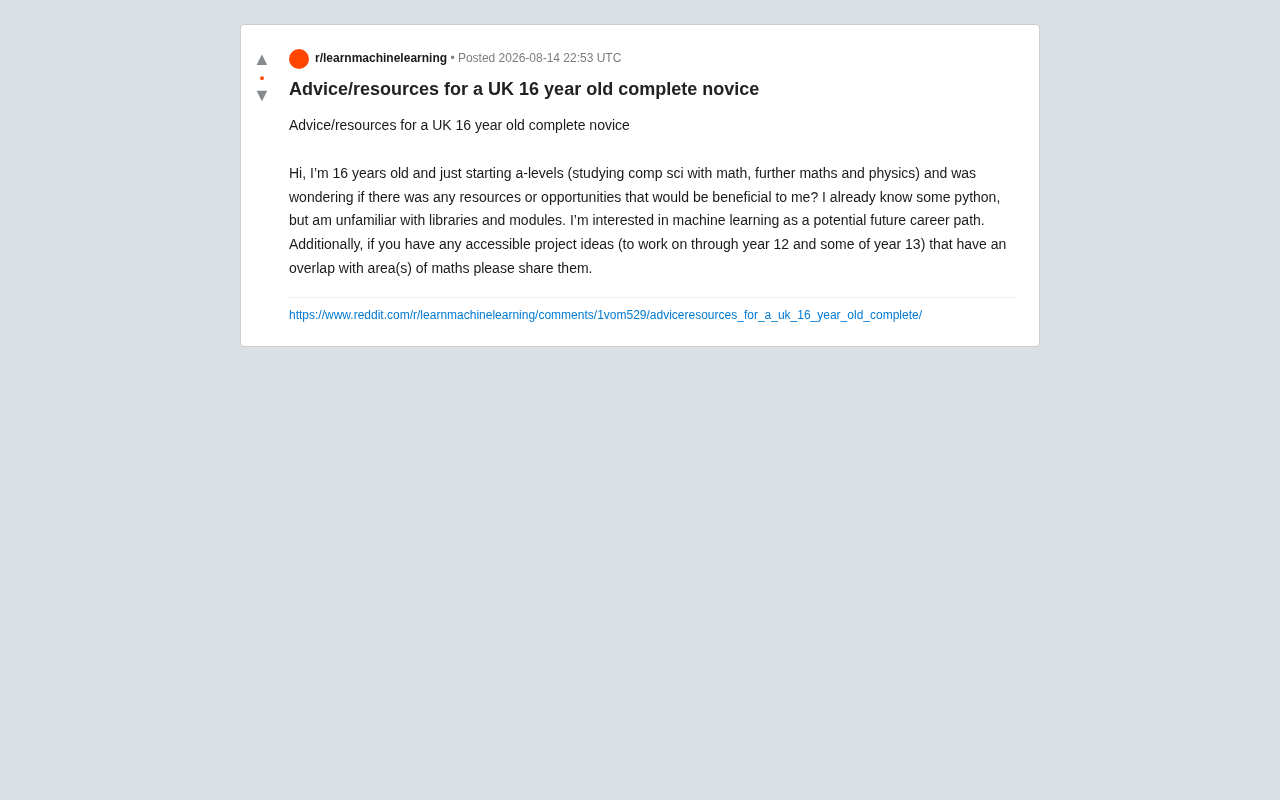
Getting Started with Machine Learning at 16: A Complete Learning Path from Zero to Hands-On Practice
How can a 16-year-old UK A-Level student get started with machine learning from scratch? A clear learning path covering Python basics, math connections, resources, and hands-on project ideas.
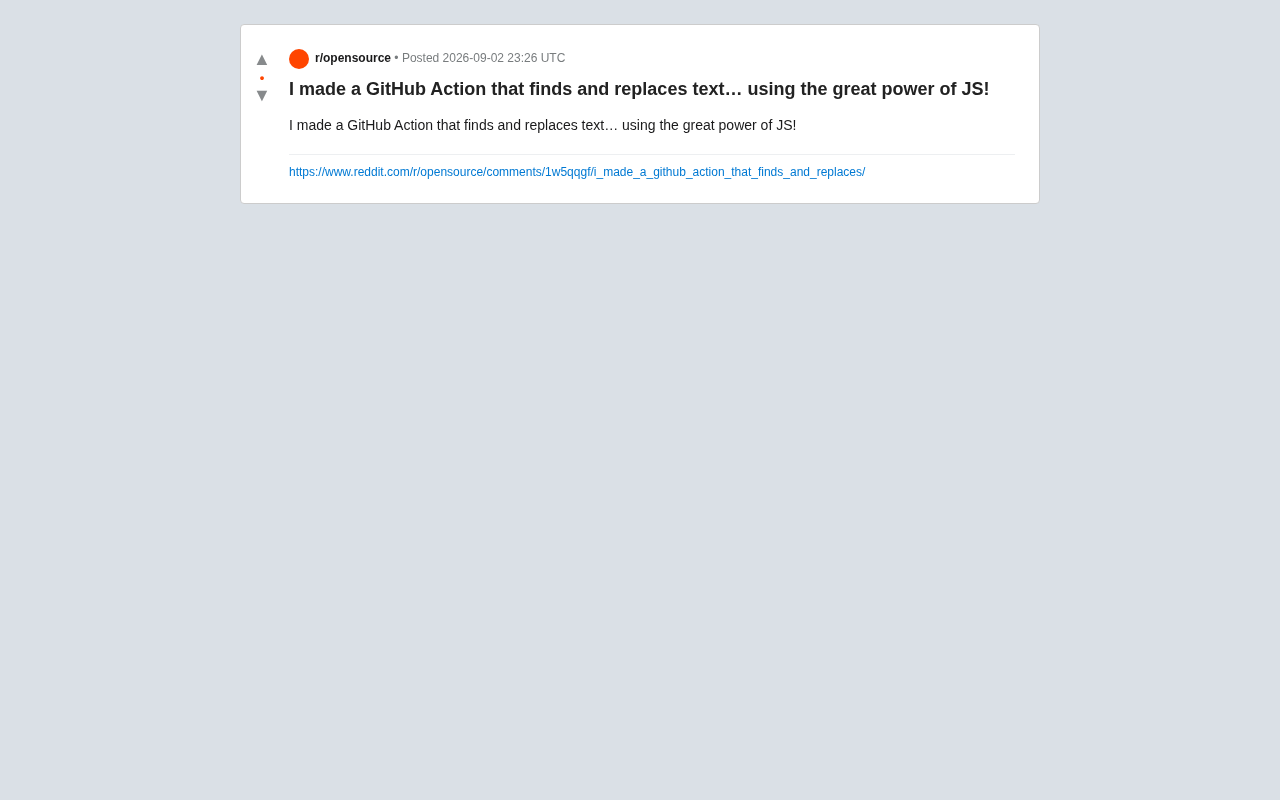
Building a GitHub Action Text Replacement Tool with JavaScript: From Principles to Practice
Learn how to build a GitHub Action for text replacement with JavaScript, covering implementation principles, use cases, and key technical details for CI/CD automation.
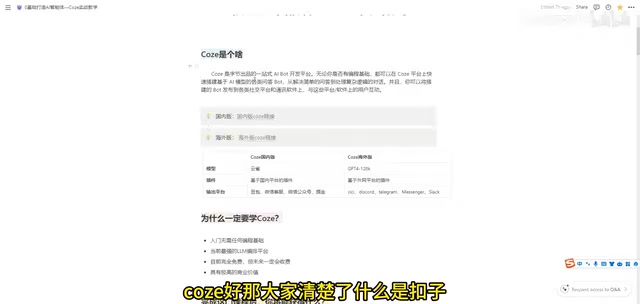
Coze Beginner's Guide: A Complete Cognitive Guide to Building AI Agents from Scratch
Learn what ByteDance's Coze platform is, key differences between domestic and international versions, how to use GPT-4 for free, and how to build AI Bots with zero coding experience.