Opaline: An Analytics Dashboard for Your Team's AI Coding Sessions

Opaline is a PostHog-style analytics dashboard for team-wide Claude Code and Codex sessions.
As AI coding assistants like Claude Code and Codex scale across engineering teams, token costs and usage patterns have become an opaque pain point. Opaline positions itself as the "PostHog for team AI coding sessions," offering message-level analytics that track token consumption, time spent, and skill usage per interaction — aggregated to the team level for cost attribution and efficiency insights. Its developer-friendly tone and focus on AI session observability signal an emerging analytics tool category forming around scaled AI coding adoption.
When Teams Start Using Claude Code and Codex, Observability Becomes a Blind Spot
More and more development teams are incorporating AI coding assistants like Claude Code and Codex into their daily workflows — but a practical problem has emerged: how many tokens are these AI sessions actually consuming, how much time are they taking, and how exactly are team members using them? Most teams have almost no idea. Opaline is targeting precisely this blind spot, positioning itself as "the PostHog for team-wide Claude Code and Codex sessions" — an observability and analytics layer for AI coding sessions.
The product launched on Product Hunt with 115 upvotes and 25 comments, landing at #5 for the day across three categories: Analytics, Developer Tools, and Artificial Intelligence.
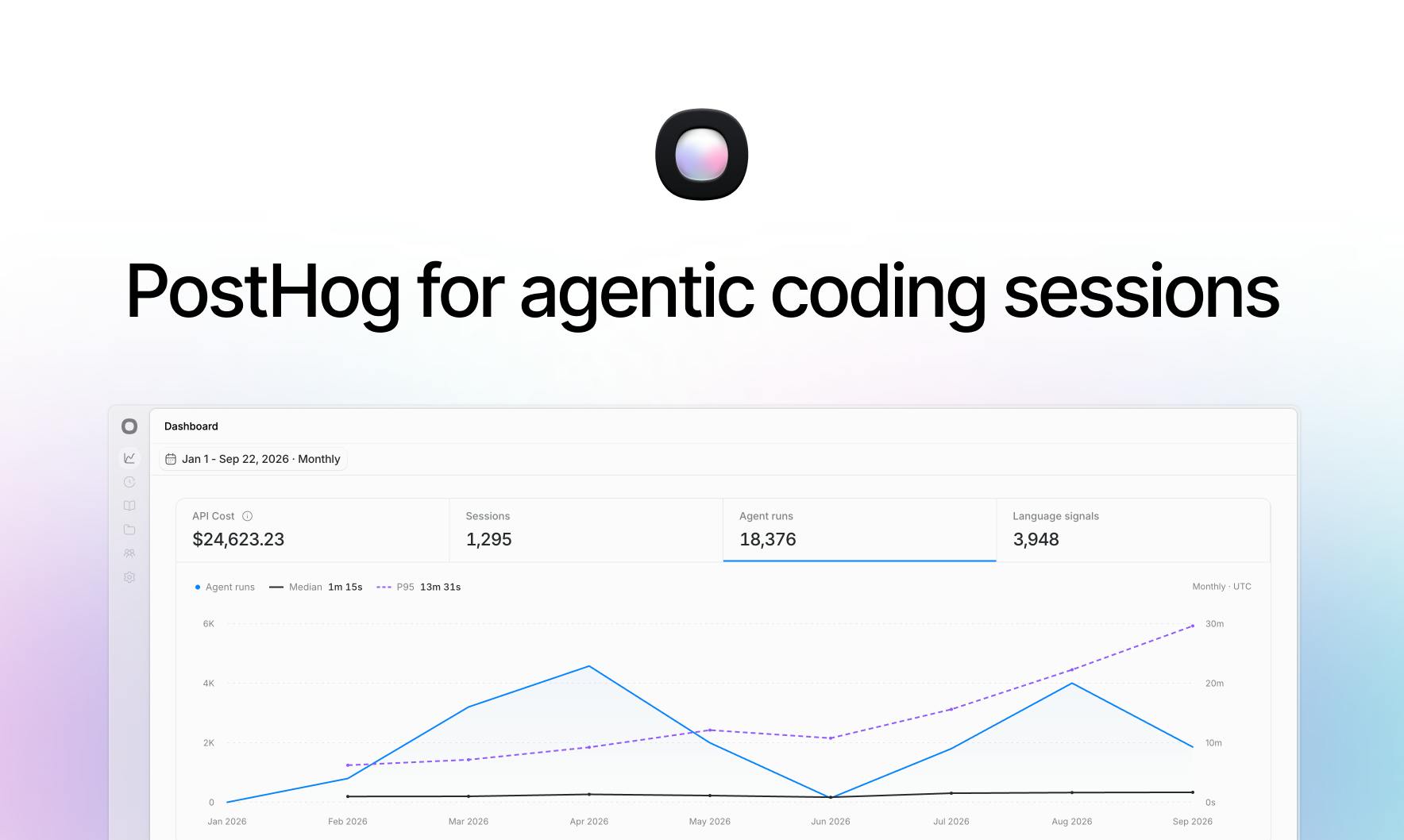
Message-Level Analytics: Fine-Grained Enough to Matter
Opaline's core value proposition is message-level analytics across the entire team. Rather than simply tallying up how much quota was used in a day, it drills down to the granularity of individual messages:
- Token costs: Tracks token consumption and associated costs per message
- Time investment: Records how long each interaction takes
- Skill usage: Analyzes which capabilities are being invoked during sessions
For mid-to-large engineering teams, this granular data is valuable for cost attribution and usage pattern insights. When AI coding tool bills start growing significantly, managers need to know where the money is going — which team members or task types are burning the most tokens — so they can make informed optimization decisions.
From Individual Tool to Team Asset
Worth noting is Opaline's emphasis on being "team-wide." Many AI coding usage analytics tools operate at the individual level, while Opaline lifts the perspective to aggregate session data across the whole team. This aligns with its PostHog comparison — PostHog being an open-source product analytics platform — and reflects a shared philosophy: structuring scattered behavioral data into something analyzable and actionable as a team asset.
PostHog is an open-source product analytics platform that lets engineering teams self-host and track user behavior events. Its core idea is to turn every user interaction in a product — clicks, page views, feature calls — into queryable, funnel-analyzable data. Opaline borrows this framing to convey the same analytical philosophy: transforming otherwise opaque AI session interactions into structured team behavioral data, enabling managers to analyze how engineers collaborate with AI the same way they'd analyze user behavior. The analogy also hints at the product's potential trajectory — event tracking, retention analysis, usage funnels — only the subjects being analyzed shift from end users to engineers, and the tracked behaviors shift from product actions to AI prompts and response sequences.
Tokens are the fundamental unit of measurement for how large language models process text — roughly corresponding to words or sub-word fragments in natural language. In English, approximately every 4 characters equals 1 token; in Chinese, each character typically maps to 1–2 tokens. Models like Claude and GPT charge separately for input and output tokens, and a multi-turn coding conversation with long context can easily consume tens or even hundreds of thousands of tokens. For teams using Claude Code or Codex on large codebases, a single session can cost several dollars — and those costs often come as a surprise when the monthly bill arrives. Message-level token tracking isn't just number-crunching; it's the foundational data layer for cost control. It helps teams identify which task types (code explanation, test generation, architecture advice) consume the most resources, enabling decisions about where AI investment is worthwhile and where usage limits should be set.
Product Tone: Using Deadpan Humor to Hit Developer Pain Points
Opaline's official description includes a notably sharp line: it claims to capture "every time Claude says 'you're absolutely right'" and "every time a frustrated teammate says 'I know, you stupid [expletive].'"
It reads like a joke, but it precisely captures two real AI coding experiences.
First, there's the over-agreeableness problem — Claude constantly saying "You're absolutely right" has become a well-worn complaint in developer communities, where that kind of sycophantic response sometimes masks real errors. Second, there's the genuine emotional friction in human-AI collaboration: when an AI repeatedly gives wrong answers, engineer frustration is very real.
By framing these details as part of what Opaline tracks, the product implies it's capturing more than cold numbers — it's trying to surface the actual texture of how teams interact with AI. This kind of product narrative resonates strongly with developer audiences.
Who Actually Needs This
Based on its feature positioning, Opaline fits best for:
- Teams that need to control AI tooling costs: Once Claude Code and Codex usage scales up, cost transparency becomes a genuine necessity
- Tech leads who want to optimize AI usage efficiency: Message-level data can surface inefficient patterns or over-reliance
- Engineering teams doing retrospectives on AI collaboration: Session data becomes an input for improving development workflows
That said, it's worth being clear-eyed: as a product that just debuted on Product Hunt, Opaline's publicly available information is still mostly at the concept and value proposition level. Its data collection methods, privacy compliance, depth of integration with existing toolchains, and the actual actionability of its analytics all still need validation. Twenty-five comments suggests it's generated real interest, but it's a long way from becoming a team staple.
Closing Thoughts: AI Coding Observability Is an Emerging Category
Opaline's arrival reflects a broader trend: as AI coding tools move from experimentation to scaled adoption, the demand for "observability" around them is being activated. Just as application monitoring gave rise to products like PostHog and Datadog, AI session monitoring may be incubating its own dedicated analytics tool category. Whether Opaline becomes the defining player in this space remains to be seen — but the questions it raises, namely how teams actually use AI and how cost and efficiency can be quantified, are already unavoidable for any organization that has adopted AI-assisted coding.
The term "observability" originates in control engineering and was popularized in software by APM (application performance monitoring) tools like Datadog and New Relic. Its core meaning is inferring internal system state from external outputs — logs, metrics, distributed traces. The observability challenge in AI coding contexts differs from traditional software monitoring: beyond performance metrics like latency and error rates, you also need to capture semantic-level information such as prompt quality, model hallucination rates, and tool call chains. This space already has LLM-focused observability tools like LangSmith (LangChain's official offering), Helicone, and Langfuse targeting LLM application developers. But analytics tools specifically focused on "AI coding assistant sessions" — as opposed to "LLM API calls" — from tools like Claude Code and Codex remain largely absent. That's the gap Opaline is trying to fill.
Related articles

Qwen 4 First Test Leaks: Performance Rivals Opus 5.5, DeepSeek V4 Series Surfaces
Early Qwen 4 test outputs leak, with front-end generation said to rival Opus 5.5; DeepSeek V4 Mini, Flash, and Pro names appear in a code repo; Ant Group's Ling-3.1-flash surfaces too. Here's the latest on model tiering and on-device lightweight models.

OpenCode Makes DeepSeek V4.1 Flash Free, AI Daily Roundup
AI daily roundup: OpenCode makes DeepSeek V4.1 Flash free, StepFun Step5 Preview and Ling 3.1 Flash open-sourced, Grok Voice 3.0 tops speech leaderboard, Matrix Game 4.0 open-sourced, and the EU opens its first AI Act enforcement probe into OpenAI and Anthropic.

DeepSeek V4.1 Flash 1017 Released: Reasoning and Coding Upgrades, Search and Fetch API Now Available
DeepSeek releases V4.1 Flash 1017 with major gains in reasoning, coding, and agentic tasks, plus web search and fetch APIs at 5 yuan per 1,000 requests. Tencent Hunyuan open-sources High Memory 2.0, Perplexity open-sources multimodal decision models, and MOFCOM seeks comments on AI export catalog.