Open Index Open Source Project: Structured Context Solves Four Major Pain Points of AI Agents

Open source tool bringing structured context management to AI Agents, solving Markdown's reliability issues
Open Index addresses critical challenges in AI Agent development by introducing structured context management over Markdown files. It tackles four key issues: context poisoning from irrelevant information, contradictions between documents, non-deterministic outputs, and navigation difficulties in large knowledge bases—problems increasingly recognized as Agent reliability bottlenecks in production environments.
When Markdown Context Becomes a Performance Bottleneck for AI Agents
As AI Agents rapidly gain adoption, more developers rely on Markdown-formatted context files (such as .md rule documents and knowledge base snippets) to inject background information into large language models. This approach is simple and intuitive, but exposes a series of thorny problems in real production environments.
To understand the root cause of these issues, we need to first understand the Context Window mechanism of large language models. Although mainstream large language models (such as GPT-4, Claude, etc.) have expanded their context windows to 128K or even larger token capacities, bigger context windows are not always better. Research shows that large models exhibit a "Lost in the Middle" phenomenon—when context becomes too long, the model's attention to information in the middle section significantly decreases, causing key information to be overlooked. Additionally, the number of tokens in each API call directly impacts response latency and computational cost. Therefore, how to precisely inject the most valuable information within a limited context window has become a critical engineering challenge in Agent development.
The recently launched open source project Open Index on Product Hunt targets exactly this pain point. Led by Siddarth Jain from DrDroid, the project positions itself as "building smarter Agents with structured context." On its first day, it received 78 upvotes and ranked 15th for the day, categorized under open source tools, developer tools, and artificial intelligence.
Four Major Issues with Markdown Context Management
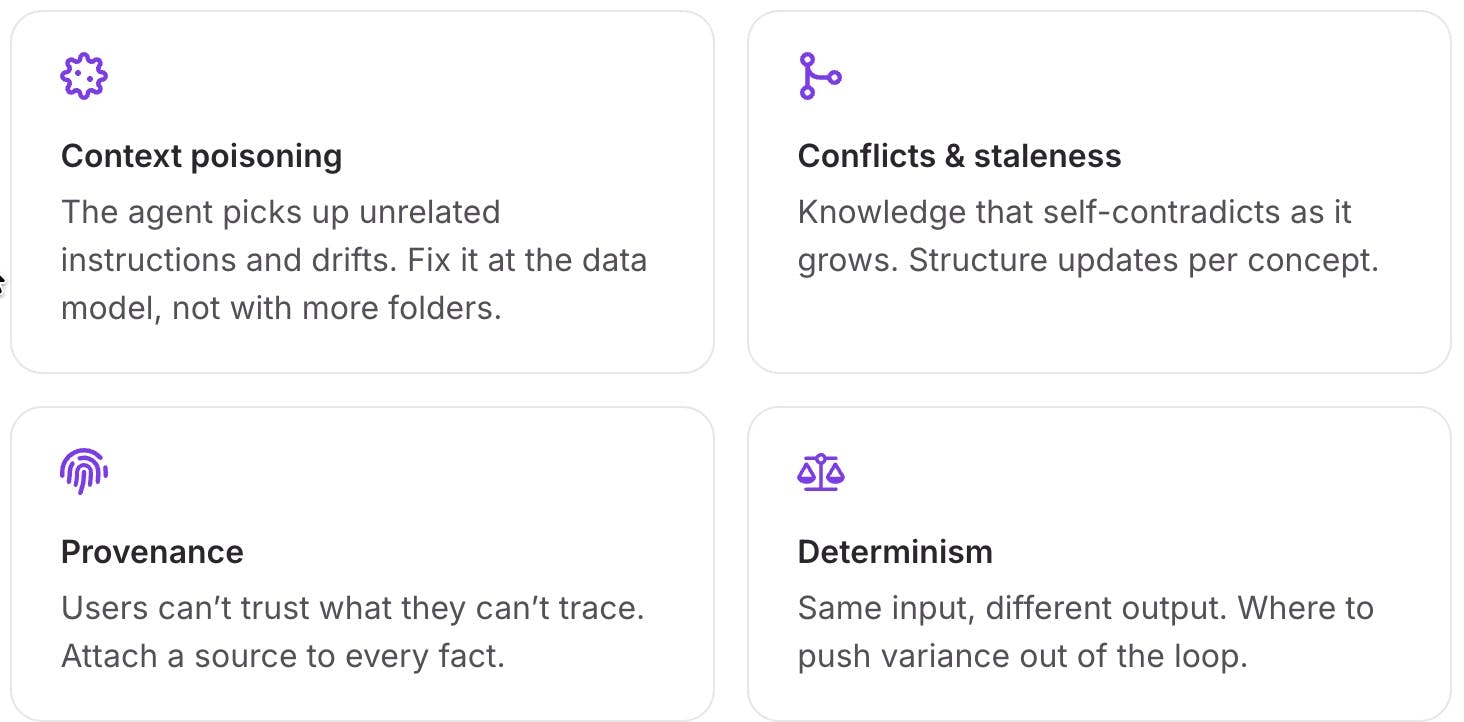
According to the project team's description, pure Markdown-driven context management faces four main challenges, which are pain points that many Agent developers repeatedly encounter in practice.
Here it's necessary to provide some technical background on AI Agents and context injection. AI Agents are AI systems that can autonomously perceive their environment, formulate plans, and execute tasks. Typical examples include AutoGPT, BabyAGI, and various enterprise Agent frameworks (such as LangChain Agent, CrewAI, etc.). When executing complex tasks, these Agents need to retrieve information from external knowledge bases and inject it into the large model's prompt. This process is typically implemented through RAG (Retrieval-Augmented Generation) technology. The basic RAG workflow is: split documents into small chunks, store them as vectors, retrieve the most relevant fragments during queries, and concatenate them into the prompt. Markdown, due to its strong readability and simple format, has become the mainstream format for knowledge base documents, but the chunking and retrieval quality in the RAG pipeline heavily depends on the degree of document structuring.
Context Poisoning
When large amounts of Markdown documents are indiscriminately stuffed into the context window, irrelevant or outdated information "poisons" the model's judgment, leading to degraded output quality. The model cannot distinguish which knowledge is truly needed for the current task and which is just noise.
From a technical mechanism perspective, context poisoning is essentially a signal-to-noise ratio problem. Large language models process input based on the Attention Mechanism, allocating different attention weights to each token in the context. When irrelevant information floods in, the model's attention is diluted, and key information that should receive high attention weights is insufficiently processed. This phenomenon is particularly severe in multi-step reasoning tasks—an Agent might deviate from the correct path in the very first step by adopting noisy information, and errors in subsequent steps accumulate like a snowball, ultimately leading to complete task failure.
Contradictions
Multiple documents often contain conflicting statements—for example, one document describes API usage method A, while another describes method B. Markdown itself has no validation mechanism, so when the model faces contradictory information, it can only make arbitrary choices, leading to unreliable behavior.
Non-determinism
The same input may produce vastly different results due to subtle differences in how context is organized. This non-determinism is fatal for production-grade Agents that need stable operation.
Non-determinism in Agent systems has multiple sources. First, the sampling process of large models itself has randomness (controlled by parameters like temperature, top-p). Second, when using vector retrieval, the Embedding Model's calculation of semantic similarity may return different document fragments due to subtle differences in query phrasing. Furthermore, the ordering of document fragments in the context also affects model output—research shows that even with identical content, merely changing paragraph order can lead to completely different reasoning results. For production-grade Agents, especially in high-risk scenarios like operations diagnostics and financial decision-making, this unpredictability is unacceptable.
Context Navigation Difficulties
When a knowledge base expands to hundreds or thousands of Markdown files, Agents struggle to efficiently locate the small piece of content most relevant to the current task. Both retrieval efficiency and accuracy become significant bottlenecks.
Open Index's Core Solution: Structured Context Management Layer
The core idea of Open Index is to introduce a structured context management layer on top of raw Markdown content. It's not about abandoning Markdown, but rather adding organization, indexing, and validation capabilities to it.
According to the project introduction, this solution was originally built internally by the DrDroid team for their own product. DrDroid itself focuses on AI tools for operations and observability, scenarios that demand extremely high accuracy and determinism in context—a single erroneous diagnostic recommendation could directly impact production systems.
It's worth noting that the AIOps (Artificial Intelligence for IT Operations) field where DrDroid operates is an emerging direction applying AI technology to IT operations. Observability is a core concept in modern distributed systems engineering, helping engineers understand internal system state through three pillars—Logs, Metrics, and Traces. In this scenario, AI Agents need to process massive amounts of operational documentation, alert rules, runbooks, and other knowledge. Any misjudgment caused by context errors could delay incident resolution, causing serious production outages. This explains why the DrDroid team has such stringent requirements for context accuracy and determinism.
Through continuous refinement of their internal tools, the team distilled this structured context layer and is now giving back to the entire ecosystem through open source.
From a design intent perspective, the structured context layer delivers several core values:
- Mitigating context poisoning: Reducing information redundancy through clear structural definitions
- Resolving content contradictions: Exposing and handling conflicting content through unified organizational standards
- Improving output consistency: Reducing non-determinism through deterministic retrieval and assembly logic
- Solving navigation challenges: Supporting efficient location in large-scale knowledge bases through indexing mechanisms
Why Agent Developers Should Pay Attention to Open Index
Context Engineering Is Becoming Core Competitiveness in Agent Development
Over the past year, the focus of Agent development has been quietly shifting. In the early days, everyone was keen on refining prompt templates, but now what truly determines Agent reliability is increasingly Context Engineering. The emergence of Open Index is a microcosm of this trend—how to effectively organize, filter, and inject context has become an independent engineering discipline.
The concept of Context Engineering was widely promoted by industry leaders like Shopify CEO Tobi Lütke during 2024-2025 and is considered the next core capability in AI application development after Prompt Engineering. Prompt Engineering focuses on how to write good instructions, while Context Engineering focuses on how to construct the optimal information environment for models. It encompasses a series of engineering practices including knowledge base organization, retrieval strategies, context compression, information deduplication and conflict resolution, dynamic context assembly, and more. Companies like Anthropic and OpenAI increasingly emphasize the importance of context management in their best practice guides, even believing that context quality has far greater impact on output effectiveness than model selection itself.
Open Source Solutions Significantly Lower Development Barriers
Open sourcing enterprise-validated internal tools is a win for the entire developer community. Compared to building a context management system from scratch, directly reusing a production-validated solution can dramatically save time and effort. This is especially true for small and medium teams that often lack resources to develop such infrastructure independently.
Seamless Collaboration with Existing Agent Development Ecosystems
Open Index's categorization under GitHub and developer tools tags suggests it's more likely to be an integratable component rather than a closed platform. This positioning allows it to embed into existing Agent frameworks (such as various Agent orchestration tools) as a powerful complement to the context management layer.
Viewing Rationally: Several Issues That Still Need Observation
As a newly launched early-stage project, Open Index's public information is still relatively limited. The team clearly describes the problems it aims to solve, but the specific structured format design, compatibility with mainstream large models, and actual performance at ultra-large-scale knowledge bases all still need more practical validation.
Additionally, any "structured" solution has an inherent trade-off: the stricter the structure, the higher the upfront organizational cost, and flexibility may also decrease accordingly. This trade-off has a classic analogy in software engineering: choosing between relational databases (like MySQL) and document databases (like MongoDB). Strict schemas can guarantee data consistency and query efficiency but sacrifice flexibility and development speed; schema-less approaches enable agile development but easily fall into chaos as data scales. Similarly, for early-stage projects with small knowledge bases and frequent iterations, Markdown's flexibility may be more advantageous; but when the knowledge base expands to a certain scale, or application scenarios have high reliability requirements, the benefits of structured management will far exceed its maintenance costs. Before adoption, developers need to make pragmatic judgments based on their current stage and scenario, evaluating whether the need for determinism justifies the maintenance cost of this structuring.
Summary: Context Governance Will Be the Next Battlefield in Agent Competition
Open Index addresses a real pain point in current AI Agent development—while Markdown context is easy to use, it struggles to support production-grade reliability requirements. By introducing a structured context management layer, it attempts to systematically solve the four major challenges of poisoning, contradictions, non-determinism, and navigation.
For Agent developers currently plagued by context issues, this is a new open source option worth watching and trying. It also reaffirms a judgment: The next competition in AI Agents will largely occur at the "context governance" layer.
Related articles

Kira Community: How an AI Creation Tool Is Transforming Into a Creator Community
Kira Community pivots from an AI image/video generation tool to a creator community, using hashtags to organize content and help creators build portfolios and find peers.
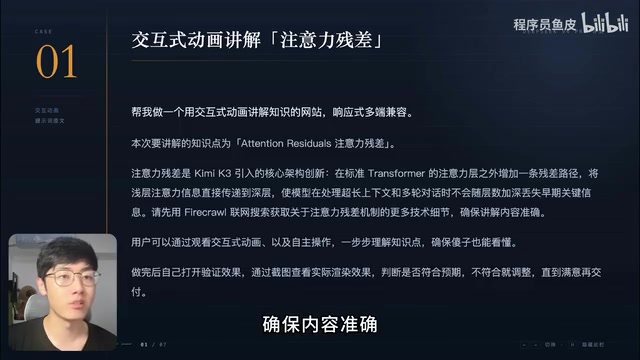
DeepSeek V4 Pro Real-World Test: 7 Projects Reveal Its True Coding Ability and Value
Real-world test of DeepSeek V4 Pro across 7 projects covering frontend, backend, 3D games, and long tasks. Frontend lags behind Claude, but at 1/180th the cost.
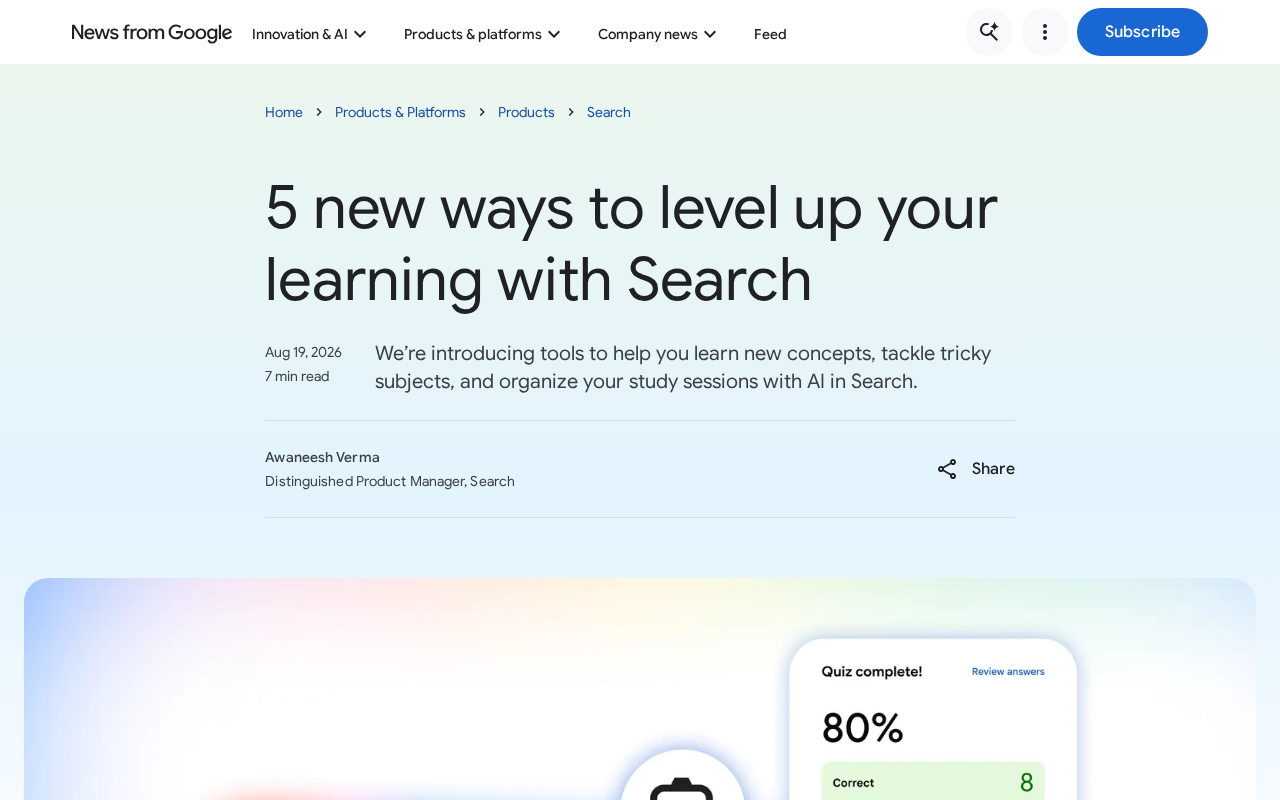
Google Search Launches Five AI Learning Features: A Complete Guide to Test Prep Assistants and Smart Learning Platforms
Google Search launches five AI learning features covering standardized test prep, structured knowledge review, and interactive practice — transforming search into a smart learning platform.