Open-Source Agent-Native Task Management: A Deep Dive into Cloudflare Edge Deployment
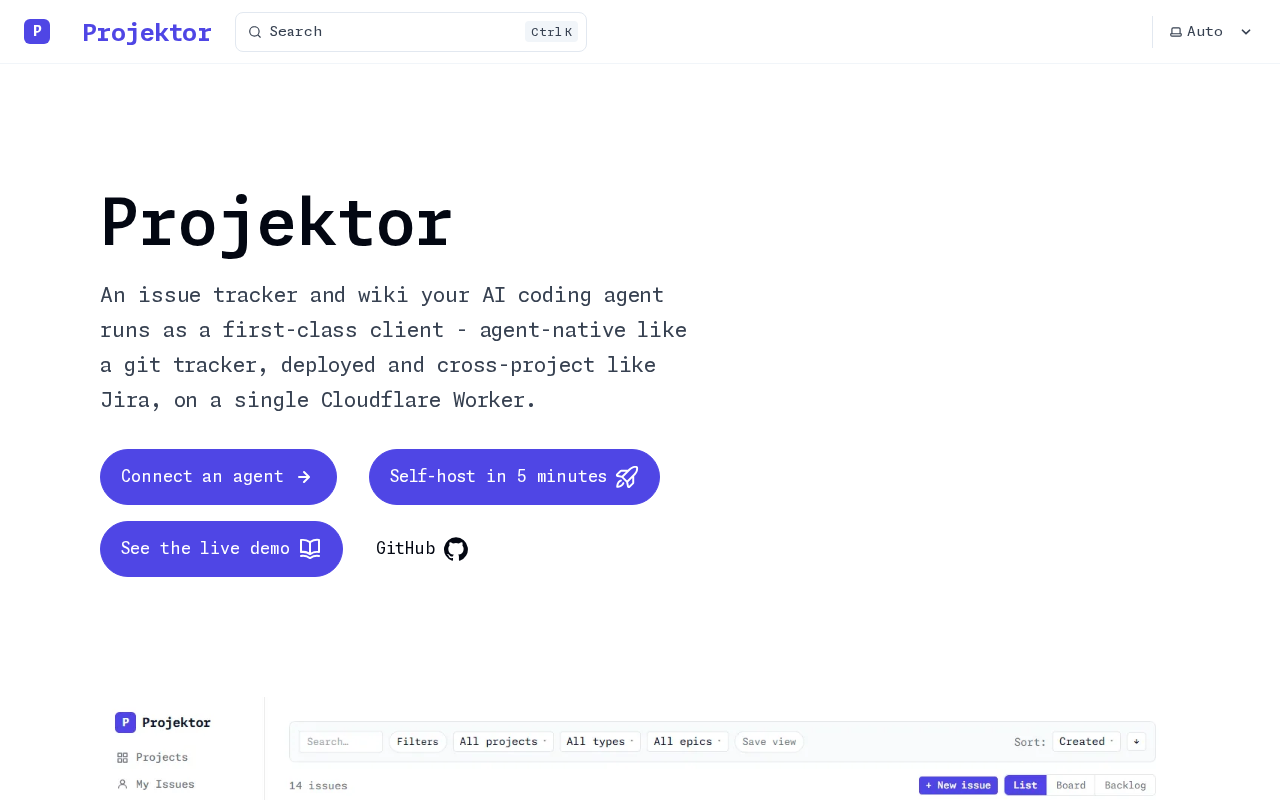
Exploring an open-source Agent-native task manager deployed on Cloudflare's edge infrastructure.
An open-source project proposes 'Agent Native' design—treating AI Agents as first-class citizens from the ground up. Deployed on Cloudflare Workers for low-latency edge computing, it combines task management with a Wiki knowledge base so Agents can access full context natively. While still early-stage, it offers a valuable architectural reference for building software designed for AI Agent interaction.
When Task Management Meets AI Agents
Recently, an open-source project called "Agent Native Task Management and Wiki" debuted on Hacker News as a Show HN submission. The project puts forward a forward-looking concept—Agent Native: designing systems from the ground up that treat AI Agents as first-class citizens, rather than bolting them on as afterthought plugins.
This concept is analogous to "Mobile Native" in the mobile internet era and "Cloud Native" in the cloud computing era. Around 2010, many companies simply adapted desktop websites to fit mobile screens, but the truly successful products (like Instagram and Uber) were designed from scratch for mobile scenarios. Similarly, Cloud Native emphasizes building applications from the start around cloud-specific characteristics like containerization, microservices, and continuous delivery, rather than simply lifting traditional monolithic applications to the cloud. Agent Native continues this evolutionary trajectory: AI Agents aren't after-the-fact integrations—they're treated as core interaction entities at every architectural layer, from data models and API design to permission systems and state management.
Over the past few years, we've witnessed countless traditional tools that "added AI": document software with a summary button, task systems with smart suggestions. But these are often patches on existing architectures. The "Agent Native" approach is fundamentally different—it assumes that the entities reading, writing, and organizing information in the future won't just be humans, but also large numbers of automated AI Agents.
The AI Agents referred to here are AI systems capable of perceiving their environment, making autonomous decisions, and executing actions to achieve goals. Unlike traditional single-turn Q&A language models, Agents possess capabilities including Planning, Memory, Tool Use, and Reflection. Current mainstream Agent frameworks include LangChain's LangGraph, Microsoft's AutoGen, CrewAI, and OpenAI's Assistants API. Between 2024 and 2025, Agents rapidly moved from proof-of-concept to practical applications—Anthropic released Computer Use capabilities, OpenAI launched Operator, and Google introduced Project Mariner—all signaling that Agents are transitioning from research to production environments. It's against this backdrop that software architectures "designed for Agents" gain real-world significance.
Why Deploy an Agent-Native System on Cloudflare
A key technical feature of this project is its Cloudflare-based deployment. This choice isn't accidental—it's highly aligned with its "Agent Native" positioning.
The Natural Advantages of Edge Computing
Cloudflare Workers provides edge computing capabilities, meaning services can run on globally distributed nodes close to users with extremely low latency. For AI Agent scenarios that require frequent calls and fast responses, this low-latency characteristic is crucial—when an Agent needs to continuously query task statuses and update Wiki entries, accumulated network latency significantly impacts overall efficiency.
From a technical implementation perspective, Cloudflare Workers is based on the V8 engine (the same JavaScript runtime as Chrome) and executes code on edge nodes across more than 300 data centers worldwide. Unlike traditional cloud functions (such as AWS Lambda), Workers uses V8 Isolates rather than container technology for multi-tenant isolation, with each request running in an independent lightweight sandbox with extremely short cold start times (typically under 5 milliseconds). This architecture allows requests to be processed at the node closest to the user, reducing network round-trip time (RTT) from 100-300 milliseconds in traditional centralized deployments to 10-50 milliseconds. For AI Agent scenarios, a complex task might involve dozens of consecutive API calls, and the latency saved on each call produces a significant cumulative effect.
Serverless Architecture Lowers the Self-Hosting Barrier
Leveraging Cloudflare's serverless ecosystem (including Workers, D1 database, KV storage, Durable Objects, etc.), developers don't need to maintain server infrastructure themselves. For an open-source project, this greatly reduces the complexity of self-hosting—users can deploy the entire system to their own Cloudflare account at relatively low cost while enjoying global CDN acceleration.
Specifically, each component in this data infrastructure serves a distinct role: D1 is a distributed relational database based on SQLite that supports automatic read replica distribution to global edge nodes, suitable for read-heavy task query scenarios. KV (Key-Value) storage provides eventually consistent globally distributed key-value pair storage, ideal for caching configurations and session data. Durable Objects is a unique innovation—it binds state (data) and computation (logic) within the same object, guaranteeing strong consistency, making it particularly suitable for scenarios requiring coordination of concurrent operations, such as conflict resolution when multiple Agents modify the same task simultaneously. R2 provides S3 API-compatible object storage with no egress fees. This combination allows developers to build fully-featured applications with global distribution capabilities without managing any servers.
The Logic Behind Combining Task Management + Wiki Knowledge Base
The project combines task management with a Wiki knowledge base, backed by clear product thinking.
In real workflows, tasks (what to do) and knowledge (how to do it and why) are inherently inseparable. Traditional tools often split them apart: tasks in Jira/Trello, documentation in Confluence/Notion. When AI Agents enter the workflow, this separation creates context fragmentation—Agents need to jump between multiple systems to obtain complete information.
This fragmentation problem has long plagued enterprise collaboration. According to industry research, the average knowledge worker switches between 9-12 different applications daily, with the split between task management (Jira, Linear, Asana, Trello) and knowledge documentation (Confluence, Notion, Google Docs) being particularly prominent. Atlassian attempted to address this through deep integration of Jira + Confluence, but fundamental differences in data models and interaction paradigms between the two systems have always made integration less than seamless. Notion tried to unify task databases and documents on a single platform with some success, but its design still centers on visual interaction for human users. When AI Agents need to fetch context across systems, they must handle different authentication mechanisms, different API formats, and different data models—this "context fragmentation" not only increases technical complexity but also leads to information loss and semantic drift.
Unifying both within a single platform that Agents can natively access means Agents can:
- Read project background from the Wiki to understand a task's true intent
- Automatically update the knowledge base based on task progress
- Establish connections between structured tasks and unstructured documents
This fusion of structured and unstructured data is itself a technical challenge. Data in task management systems is typically highly structured: status (to-do/in-progress/completed), priority, due date, assignee, and other fields all have explicit types and enumerated values. Wiki knowledge base content, on the other hand, is typical unstructured data: design decisions, technical proposals, and meeting notes described in natural language. In an Agent Native system, vector embedding technology can transform unstructured documents into semantic vectors, which combined with structured task metadata enables hybrid retrieval, allowing Agents to automatically correlate relevant design documents, historical decisions, and technical constraints when processing a task, forming a complete decision-making context.
This design transforms AI from being a "tool user" into something more like a "system collaborator."
The Value of Open Source and Early-Stage Observations
As a Show HN project, it's currently at a very early stage—with only 4 upvotes and 0 comments at the time of publication. This reminds us to maintain realistic expectations about its maturity: it represents more of an exploratory direction than a production-ready solution.
It's worth noting that Show HN is a section on Hacker News where developers showcase personal projects. Dozens of projects are posted daily, but only a very few gain broad community attention. A project's initial upvote and comment count doesn't fully reflect its technical value—timezone, title wording, and submission time all affect visibility. Many open-source projects that later gained widespread adoption didn't receive immediate attention upon initial release, but their solid design principles eventually won community recognition. Evaluating early-stage open-source projects should focus more on architectural design soundness, code quality and maintainability, documentation completeness, and potential for community participation.
The Imagination Space That Open Source Creates
Choosing open source means the developer community can:
- Freely audit the code to understand the implementation details of Agent interactions
- Customize and extend according to their own needs, integrating different LLMs or Agent frameworks
- Self-deploy within the Cloudflare ecosystem, avoiding vendor lock-in
For developers focused on AI Agent infrastructure, the value of such projects lies not only in "using them as-is" but also in providing a reference architecture sample: how to design data models, API interfaces, and permission systems for AI Agents.
Regarding interfaces and permissions designed for Agents, this is a topic worth deeper discussion. Agent-friendly APIs differ significantly from traditional frontend-facing REST APIs. First, semantically clear operational primitives are needed—each endpoint should correspond to a clear business action (such as create_task, update_status, link_document), avoiding ambiguous generic interfaces. Second, rich metadata and self-describing capabilities are needed; ideally, APIs should conform to the OpenAPI specification and provide detailed field descriptions, enabling Agents to understand usage by reading the schema. Third, fine-grained permission control is needed—Agents may be authorized by different users and execute tasks of varying scope, so systems need to support role-based (RBAC) or even attribute-based (ABAC) permission models, generating traceable audit logs for every Agent operation. Notably, Anthropic's MCP (Model Context Protocol) is gradually becoming the de facto standard protocol for LLM interaction with external tools, providing a unified specification for how Agents discover, invoke, and manage external tools.
Is Agent Native a Real Trend or a Marketing Gimmick?
It's worth considering deeply whether "Agent Native" represents a genuine paradigm shift or is just another marketing label.
From a long-term trend perspective, as AI Agent capabilities continue to strengthen, an increasing number of software operations will be completed automatically by Agents. Traditional software optimized for human graphical user interfaces (GUIs) may seem clumsy in the Agent era—Agents need clean APIs, structured data, and predictable state machines rather than beautifully designed button layouts.
From this perspective, "Agent Native" represents a reasonable forward-looking design philosophy. However, we should be cautious that many current products may simply be relabeling old systems. A truly Agent-native system should be optimized for Agents at every layer—data structures, interface design, permission models—and this requires more thorough architectural restructuring.
Conclusion
This open-source Agent-native task and Wiki project deployed on Cloudflare, while still in its early stages, provides a valuable observation window: When AI Agents become the core users of a system, how should we redesign software?
For developers, rather than waiting for mature products, it's better to study open-source explorations like this and understand their architectural thinking. In the current era of rapidly evolving AI Agents, mastering the ability to "design for Agents" may become a key competitive advantage in the next phase of technology.
Related articles
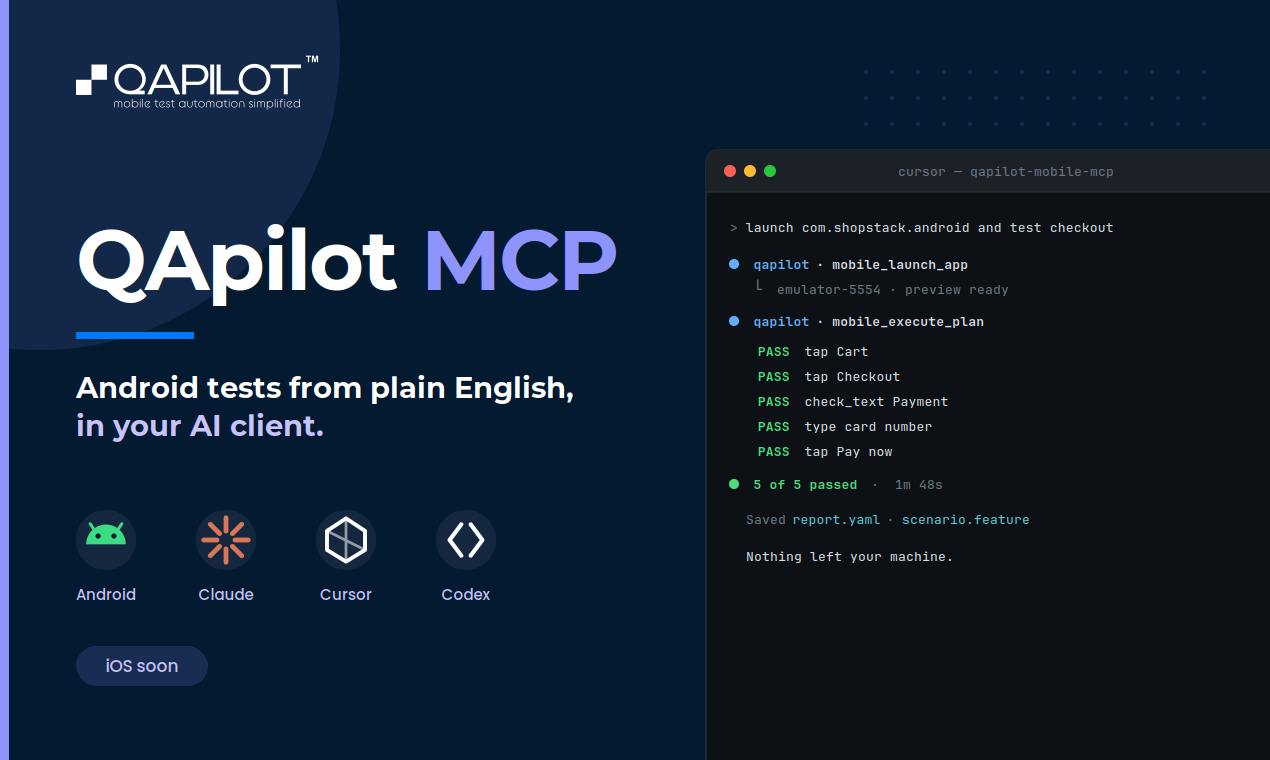
QApilot MCP: Test Android Apps in Natural Language Inside Your AI Coding Assistant
QApilot MCP lets developers test Android apps in natural language inside Claude, Cursor, and Codex — no Appium code needed. Auto-generates reusable Gherkin test cases.
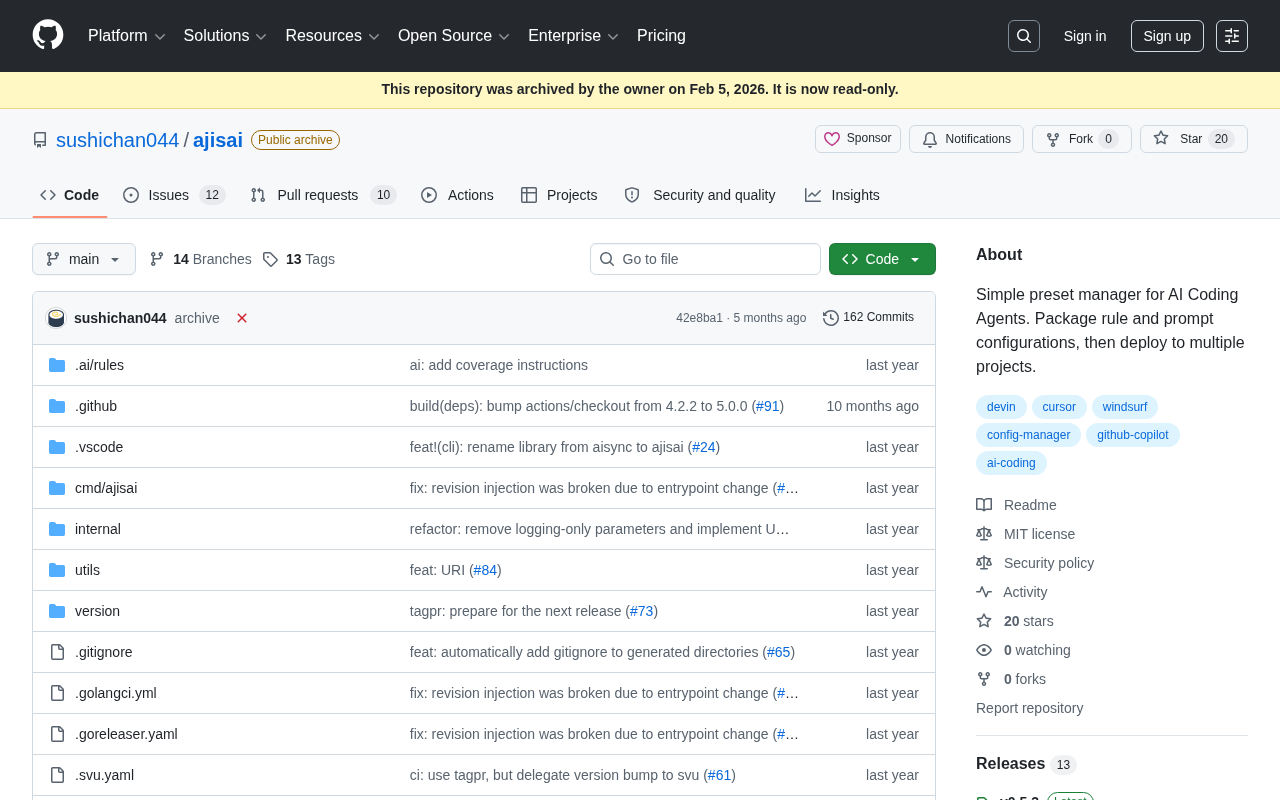
ajisai: A Preset Management Tool for Unifying Rules and Prompts Across AI Coding Assistants
ajisai is a Go-based preset manager for AI coding assistants like Cursor and Claude Code. Package rules and prompts once, deploy everywhere. Early-stage but promising.
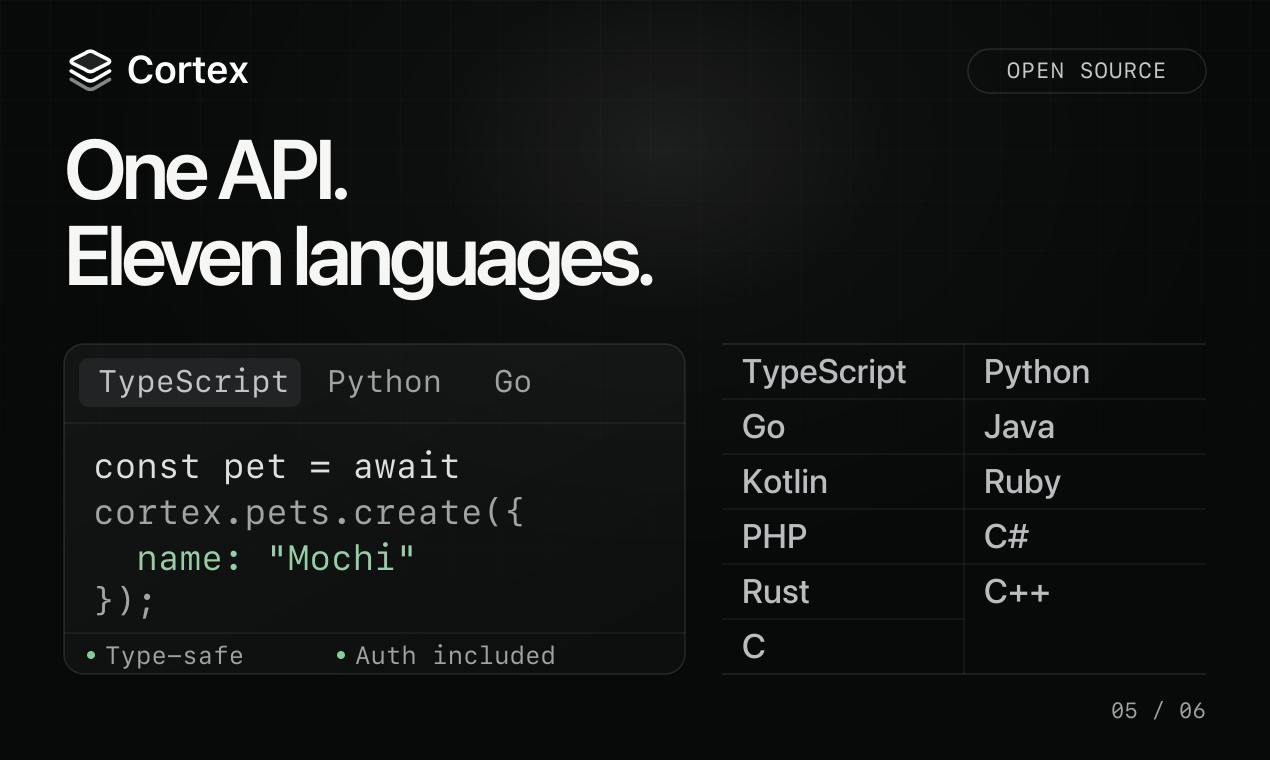
Cortex: Convert API Specs into Docs, SDKs, and MCP Servers in One Click
Cortex is an open-source tool that converts OpenAPI, GraphQL, gRPC and more into interactive docs, typed SDKs in 11 languages, and MCP servers for AI agents.