Open-Source AI Agents for Computer Control: A Comprehensive Guide to Multi-Model Integration
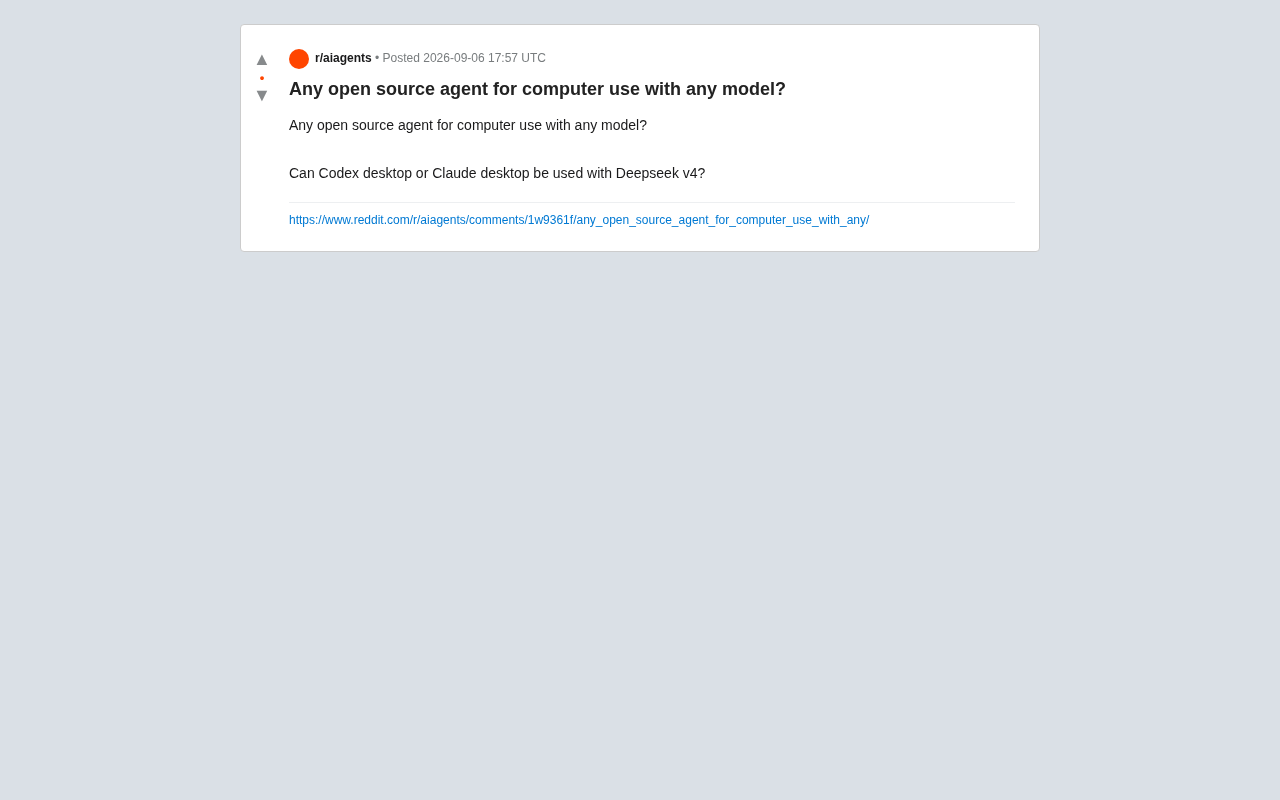
A guide to building computer-controlling AI Agents using open-source frameworks with multi-model support.
This article explores how open-source AI Agent frameworks like AutoGPT, LangChain, and Open Interpreter can be used to control computers, with a focus on integrating models like DeepSeek V3. It covers API compatibility, local deployment with vLLM and Ollama, and provides a complete technical roadmap from quick validation to production-grade layered architectures.
The Demand for Computer Control via Open-Source AI Agents
As large language models continue to grow more capable, AI Agents that directly control computers to execute tasks have become a highly watched application area. Recently, the developer community has seen active discussion around using open-source Agent frameworks paired with various models (such as DeepSeek V3) to achieve computer control — reflecting a strong demand for flexible, customizable AI assistant tools.
Commercial products like Claude Desktop and Cursor are powerful but often tightly coupled to specific models. An increasing number of developers are looking for open-source alternatives that support multiple model backends — combining the flexibility of the open-source ecosystem with the cost-effectiveness of models like DeepSeek.
Comparison of Leading Open-Source Agent Frameworks
AutoGPT and the LangChain Ecosystem
AutoGPT was one of the earliest open-source autonomous Agent projects, supporting API calls to different language models. Developers can configure OpenAI-compatible API endpoints, which theoretically allows integration with models like DeepSeek that offer OpenAI-format APIs. However, AutoGPT focuses more on task planning and execution chains, with limited support for direct computer interface control.
The LangChain framework, on the other hand, provides more low-level tool integration capabilities. Developers can define custom Tools for screenshot capture, mouse and keyboard control, and other functions, then combine these tools with any LLM backend through LangChain's Agent module — including locally deployed open-source models. For scenarios requiring fine-grained control over Agent behavior, LangChain offers superior flexibility.
Emerging Projects Focused on Computer Control
Open Interpreter is an open-source project specifically designed to let LLMs control local computers through natural language. It supports multiple model backends, including OpenAI, Anthropic, and locally running models. Users can switch between different model providers by configuring environment variables or command-line parameters.
Projects like AgentGPT and BabyAGI offer similar capabilities but lean more toward web interfaces and task management in their architectural design. If you need direct control over desktop applications, additional engineering work is usually required.
Feasibility of DeepSeek Model Integration
API Compatibility Approach
DeepSeek V3 provides an OpenAI-compatible API interface, meaning any Agent framework that supports the OpenAI API can connect to DeepSeek by simply modifying the base_url and api_key. The OpenAI-compatible API has become the de facto standard interface specification in the LLM service space — it defines a unified HTTP endpoint format (such as /v1/chat/completions), request parameter structures, and response formats. This allows third-party model providers to be seamlessly integrated into tools and frameworks originally designed for OpenAI simply by implementing the same interface protocol. This "API compatibility" strategy dramatically reduces migration costs for developers — just change two parameters, no business code modifications needed.
The core question is: does the model possess sufficient instruction-following and context-understanding capabilities to handle complex computer control tasks?
In practice, the following aspects deserve particular attention:
- Function Calling Capability: Computer control typically relies on the model's Function Calling or Tool Use capabilities, and DeepSeek V3 already supports this feature. Function Calling is a critical mechanism for LLM interaction with external tools — traditional LLMs can only output plain text, but Function Calling allows models to declaratively specify which function to call and what parameters to pass in a structured format. For example, in a computer control scenario, the model can output structured instructions like
{"function": "click", "arguments": {"x": 500, "y": 300}}rather than natural language descriptions like "click the middle of the screen." This mechanism was first introduced by OpenAI in June 2023 and was subsequently adopted by all major model providers. DeepSeek V3's reliable support for this means it can consistently output structured data conforming to tool-calling specifications — a necessary prerequisite for automated computer control. - Visual Understanding: If the Agent needs to understand screen content, multimodal capabilities are required.
- Response Speed: Real-time control scenarios impose stringent requirements on model inference latency.
Local Deployment Approach
For developers seeking complete autonomy and control, locally deploying DeepSeek models combined with open-source Agent frameworks is a path worth considering. For example, you could use vLLM or Ollama to set up model services, then build Agent logic through LangChain or Semantic Kernel.
vLLM and Ollama represent two differently positioned local model deployment solutions. vLLM is a high-performance inference engine developed at UC Berkeley that uses PagedAttention technology to optimize memory management and supports continuous batching. In high-concurrency scenarios, its throughput can be several times to tens of times higher than traditional approaches, making it suitable for production environments that need to serve multiple Agent instances simultaneously. Ollama prioritizes ease of use, offering a Docker-like command-line experience (e.g., ollama run deepseek-v3) that automatically handles model quantization, downloading, and runtime configuration — ideal for individual developers quickly setting up local inference environments. Both support exposing OpenAI-compatible APIs and can seamlessly connect to upper-layer Agent frameworks.
This approach has higher hardware requirements but offers clear advantages in data privacy protection and deep customization.
Implementation Recommendations and Technical Roadmap
Quick Validation Approach
We recommend starting with Open Interpreter for proof of concept. Here are the basic steps:
- Install Open Interpreter:
pip install open-interpreter - Configure the DeepSeek API: Set the environment variable
OPENAI_API_BASEto point to the DeepSeek endpoint - Test basic command execution capabilities and verify that model responses meet expectations
- Gradually expand to more complex scenarios such as file operations and browser control
This workflow can be completed in half a day, helping developers quickly assess the feasibility of the approach.
Production-Grade Architecture
For production environments requiring stable operation, a layered architecture design is recommended:
- Model Layer: DeepSeek API or self-deployed model services, responsible for understanding instructions and generating action plans.
- Orchestration Layer: LangChain/LangGraph for task planning and tool scheduling, managing multi-step execution flows. LangGraph is a stateful multi-actor application framework developed by the LangChain team, designed specifically for complex Agent workflows. Unlike traditional linear Chains, LangGraph builds execution flows based on directed acyclic graphs (DAGs), supporting conditional branching, loops, state persistence, and human-in-the-loop interactions. In computer control scenarios, this graph structure is particularly crucial: an Agent may need to first take a screenshot to analyze the current state, then decide whether to click a button or type text, and if the operation fails, fall back and retry — this kind of non-linear decision flow is exactly what LangGraph excels at expressing. It also includes a built-in checkpoint mechanism that can save and restore Agent state at any step, providing reliability guarantees for long-running automation tasks.
- Execution Layer: Specific control libraries like pyautogui and selenium for actual computer interactions. pyautogui and selenium cover two major automation scenarios: desktop applications and web browsers, respectively. pyautogui is a cross-platform GUI automation library that can programmatically control mouse movement, clicks, keyboard input, screenshots, and image-based location recognition — suitable for operating any desktop application. Selenium focuses on browser automation, communicating with browser engines like Chrome and Firefox through the WebDriver protocol, supporting precise DOM element targeting and manipulation. In recent years, Microsoft's Playwright framework has also gained widespread attention, with its auto-wait mechanism and more modern API design offering improved stability. In practice, these tools are typically wrapped as LangChain Tool objects for on-demand invocation by the Agent.
- Monitoring Layer: Logging, exception handling, and execution result verification mechanisms.
The benefit of this layered design is that each component can be independently upgraded or replaced, and it facilitates performance optimization for specific task scenarios.
Future Outlook and Current Challenges
The open-source AI Agent ecosystem is evolving rapidly, but the computer control use case still faces significant challenges. Issues such as model output reliability, security permission controls, and cross-platform compatibility all require ongoing improvement. As high-performance open-source models like DeepSeek continue to emerge, the capability boundaries of open-source Agent tools are expanding rapidly.
For developers who want to experiment now, we recommend starting with small-scale experiments, gradually building an understanding of different models' capability boundaries, and closely following emerging projects in the community. Driven by open-source collaboration, building AI computer control solutions that rival commercial products is well within reach.
Related articles
Instacart Launches AI Shopping Assistant Clementine: Reimagining the Online Grocery Shopping Experience
Instacart launches Clementine, a conversational AI shopping assistant offering smart recommendations, natural language interaction, and nutrition advice to transform online grocery shopping.
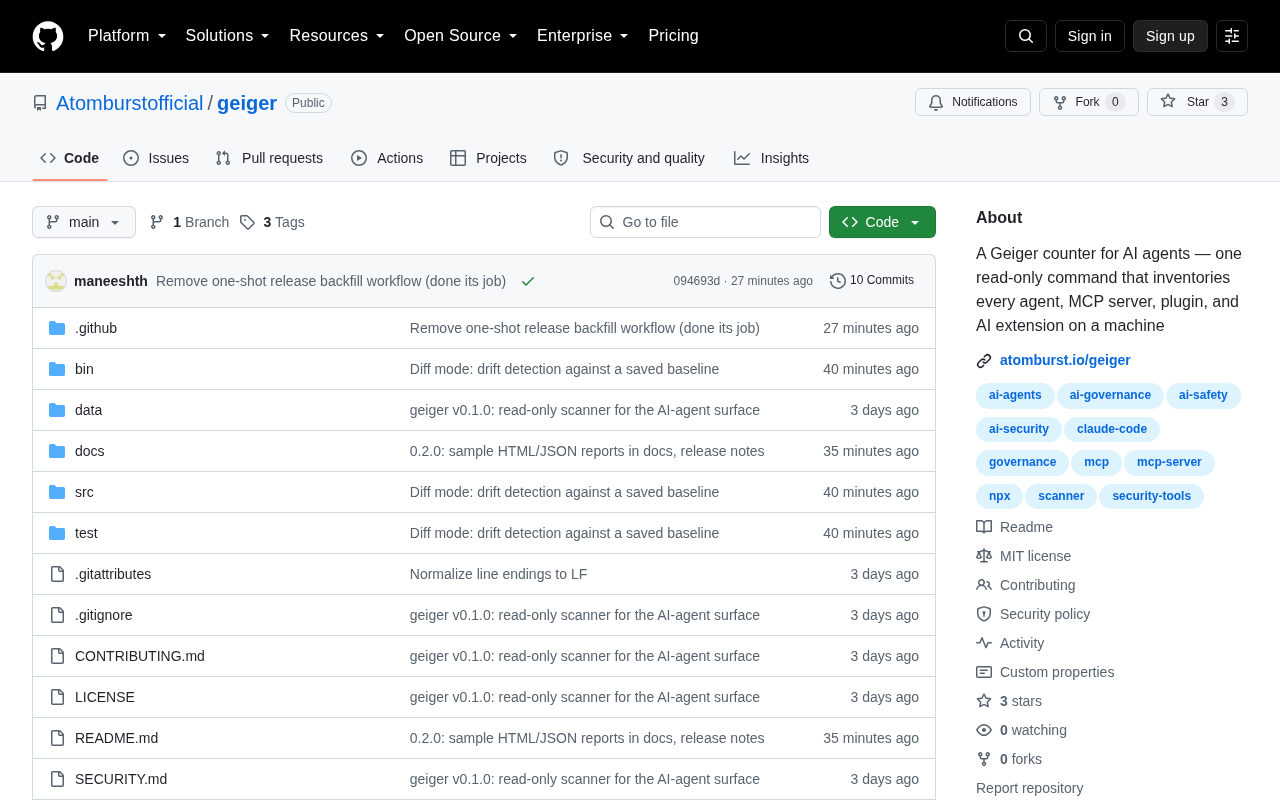
Geiger: A Deep Dive into AI Agent Behavior Monitoring
Deep dive into Geiger, an AI agent monitoring tool. Explore runtime observability, prompt injection risks, and security strategies for local AI agents.
ROS2 Beginner's Guide: Understanding the Core Framework for Robot Development from Scratch
A comprehensive introduction to ROS2 core concepts, version selection, and learning paths. Covers ROS1 vs ROS2 differences, Humble vs Jazzy comparison, and version compatibility tips for beginners.