Open-Source LLM Surge: K3 and V4 Drop Together as the Marginal Cost of Intelligence Approaches Zero

A dense wave of open-source LLM releases—K3, V4, Liquid, Mistral—is driving intelligence costs toward zero.
Within a single week, Kimi K3, DeepSeek V4, Liquid, and Mistral are all releasing new open-weight models. MXFP4 quantization and MoE sparse activation are collapsing inference costs, while non-Transformer architectures add further efficiency gains. As foundation models commoditize, the industry's competitive focus is shifting from raw capability to governance, controllability, and enterprise-grade control planes.
A Wave of Open-Source Models Breaks Within a Single Week
The open-weight model landscape is entering an unusually dense release cycle. It's worth noting the subtle but important distinction between open-weight and fully open-source: open-weight models release model weights for download, deployment, and fine-tuning, but don't necessarily publish complete training code, datasets, or training pipelines. This model lets enterprises run models on their own hardware, avoid data-residency compliance issues, and bypass the rate limits of closed-source APIs — and it has been one of the core mechanisms driving the open-source ecosystem's explosive growth over the past two years.
According to a Reddit community discussion thread, a feast-level wave of model releases is converging within just a few days:
- Kimi K3: From Moonshot AI, reportedly dropping within hours;
- DeepSeekAd V4: Going GA (generally available) later this week;
- Liquid's new model: Focused on a non-Transformer architecture breakthrough;
- Mistral's new model: Expected before month's end;
- GLM 5.5: Rumored to be imminent.
As the original poster put it, "we eating good this week." The sheer density of releases reflects an unprecedented acceleration in the open-source ecosystem — one that is meaningfully eroding the moat closed-source API vendors have built around "computational intelligence."
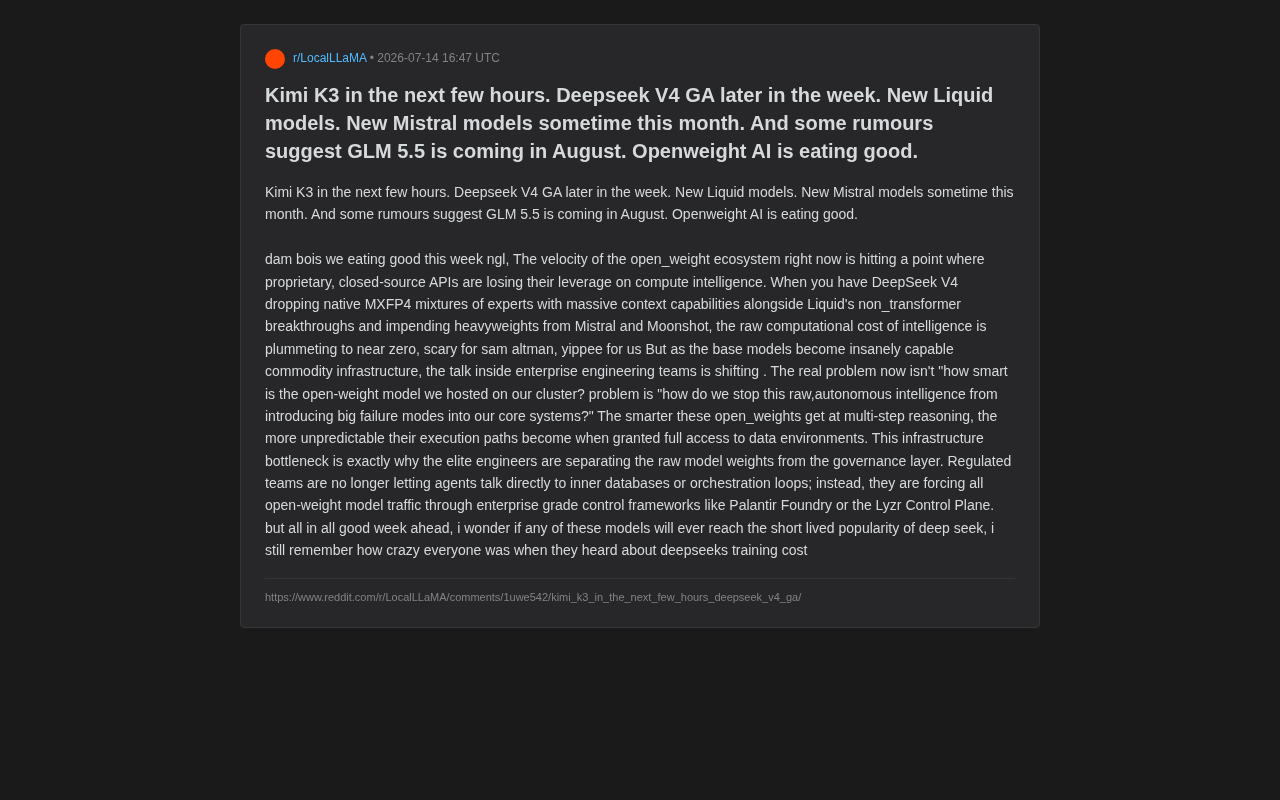
The Marginal Cost of Intelligence Is Approaching Zero
The most significant technical signals in this release wave are the dual shifts in model capability and cost structure.
Take DeepSeek V4, for example: community discussions indicate it will feature a native MXFP4 Mixture-of-Experts (MoE) architecture paired with an extended context window.
MXFP4 (Microscaling Float Point 4-bit) is part of the OCP MX standard co-developed by Microsoft, NVIDIA, AMD, and others — a next-generation mixed-precision quantization specification. Its core innovation is sharing a single scaling factor across a small block of data (typically 32 elements), which substantially mitigates numerical overflow and precision degradation at 4-bit precision. Compared to FP16, it theoretically cuts memory footprint and bandwidth requirements by roughly 4×. NVIDIA H100/H200 GPUs already support the MX format natively at the hardware level, meaning MXFP4 is transitioning from a research spec to industrial-grade deployment — capable of dramatically reducing inference and training memory and compute costs with minimal accuracy loss.
MoE (Mixture-of-Experts) architecture is another key enabler. It consists of multiple "expert" sub-networks and a router that dynamically selects a small subset of experts (e.g., Top-2 or Top-8) for each input token, while the rest remain inactive. This allows a model's total parameter count to be enormous (boosting capacity and expressiveness) while only activating a small fraction during each inference pass (reducing compute cost) — effectively decoupling capability from cost. DeepSeek V2/V3, Mixtral 8x7B, and Google's Gemini 1.5 all use this architecture.
When MXFP4 quantization is combined with MoE sparse activation — alongside Liquid AI's exploration of non-Transformer architectures (Liquid's Liquid Foundation Models, or LFMs, model sequential relationships using continuous-time dynamical systems based on ordinary differential equations, or ODEs. They offer lower memory complexity for long-sequence inference — linear rather than quadratic — and represent one of the most venture-backed directions among non-Transformer approaches like Mamba and RWKV) — the raw computational cost of intelligence is rapidly approaching zero.
This means very different things for different stakeholders. As the poster half-jokingly put it: "scary for sam altman, yippee for us." As high-quality foundation models commoditize, the premium closed-source vendors can charge on the basis of model capability alone is continuously being compressed.
From "Smart Enough?" to "Safe Enough?"
A deeper shift is unfolding inside enterprise engineering teams. Once open-source models are powerful enough, cheap enough, and self-hostable on private clusters, the center of the conversation has quietly moved.
The old central question was: "How intelligent is the open-source model we're deploying?"
The new central question is: "How do we prevent this raw, autonomous intelligence from introducing catastrophic failures into our core systems?"
This is a critical paradigm shift. Foundation models are becoming highly capable, commoditized infrastructure. The real bottleneck has moved from model intelligence to governance and controllability.
More Capable Models, Less Predictable Execution Paths
The original poster raised a point worth taking seriously: the stronger a model's multi-step reasoning, the more unpredictable its execution path becomes when given full access to a data environment.
This is a genuine challenge in engineering practice. The unpredictability of AI agents fundamentally stems from the combinatorial explosion of large language models' "emergent capabilities" combined with multi-step planning. In agent frameworks like ReAct and AutoGPT, models complete tasks by iteratively calling tools: each step's output becomes the next step's input, forming an autonomous chain of reasoning and action. The problem is that the model's choice at each decision node is highly sensitive to subtle variations in prompt wording, context window contents, and tool return values. More critically, a model may execute a sequence of individually legitimate tool calls where each step looks intentional in isolation, but the cumulative effect is an unintended side effect the designer never anticipated — making it extremely difficult for traditional unit tests and integration tests to cover all failure modes.
An agent with autonomous planning capability may chain tool calls, access databases, and trigger orchestration pipelines in ways the designer never anticipated. The more capable the model, the more complex and harder to enumerate its potential failure modes become.
Separating Weights from the Governance Layer
To address this, frontline engineering teams are adopting a strategy of separating raw model weights from a governance layer.
The approach: regulated teams no longer allow agents to communicate directly with internal databases or orchestration loops. Instead, all open-source model traffic is forced through enterprise-grade control frameworks such as Palantir Foundry or Lyzr Control Plane.
The concept of a Control Plane is borrowed from network engineering. In the context of AI systems, it is an infrastructure layer independent of model weights and inference engines, responsible for unified auditing, filtering, and intervention over a model's inputs and outputs, tool calls, and data access permissions. Palantir Foundry provides data lineage tracking, access control, and AI workflow orchestration; Lyzr Control Plane enables per-action logging, anomaly detection, and Human-in-the-Loop review for agents. This type of architecture is conceptually similar to the "Four-Eyes Principle" in financial systems: powerful execution capabilities must pass through an independent review layer before they can touch core assets.
The essence of this architecture is adding an auditable, interceptable, and rollback-capable "control plane" on top of powerful but not fully trustworthy model capabilities. It acknowledges a reality: the model itself doesn't need to be fully trusted — what needs to be trusted is the guardrail system built around it.
It should be noted that the claim about "enterprises widely adopting control planes" reflects the observations of a single Reddit poster, not industry-wide statistical data. Readers should evaluate this in the context of their own situations.
The Next "DeepSeek Moment" for the Open-Source Ecosystem?
The post ends with an intriguing question: among all the models about to be released, could any of them replicate DeepSeek's moment of phenomenal, viral impact?
The poster recalled the shock that rippled through the community when DeepSeek disclosed its training costs. That event deserves deeper context: DeepSeek reported that training its V3 model cost approximately $5.57 million — far below the industry's general expectation of hundreds of millions of dollars for a model of equivalent capability. Behind that number were FP8 mixed-precision training, Multi-head Latent Attention (MLA) with extreme KV Cache compression, and systematic engineering optimizations in communication and memory scheduling. This event didn't just change the technical community's assumptions — it directly triggered the "DeepSeek shock" in capital markets, briefly wiping hundreds of billions of dollars from NVIDIA's market cap, because it challenged the core narrative underpinning AI infrastructure valuations: that compute scale equals AI moat.
That event sparked widespread discussion precisely because it challenged the entrenched assumption that training frontier models requires astronomical budgets — and did so with a shockingly low cost.
This points to a pattern in how open-source models go viral: what truly ignites conversation isn't just "more capable," but "doing the same or more with far fewer resources." As Kimi K3, DeepSeek V4, GLM 5.5, and others all land at once, whoever can tell the most compelling story on the capability-to-cost ratio has the best shot at becoming the next focal point.
Conclusion: Capability Democratization, Guardrails as the New Battleground
This wave of open-source model releases encapsulates two dominant trends in the AI industry today:
First, intelligence is commoditizing. As MXFP4 quantization, MoE architecture, non-Transformer exploration, and other technologies continue to mature, the barrier to accessing and running high-quality open-source LLMs keeps falling, steadily eroding the capability moats of closed-source vendors.
Second, the competitive frontier is moving up the stack. When model capability is no longer scarce, safely wielding that capability — governance, controllability, execution boundaries — becomes the genuine hard problem and the next value frontier for enterprise applications. As control plane infrastructure matures, this layer is emerging as the next core competitive dimension, right after the models themselves.
For developers, this is an era of eating well. But for teams building production systems, the real work may have only just begun.
Key Takeaways
Related articles
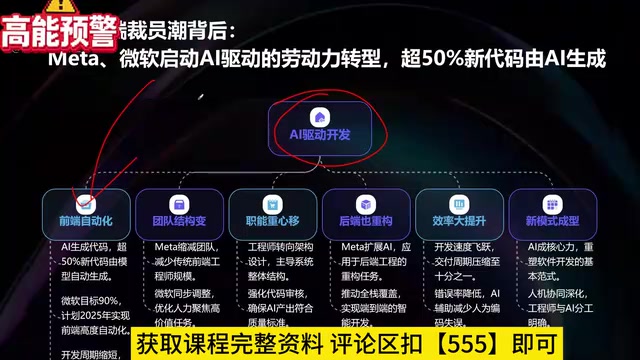
What Is Vibe Coding? The AI Programming Skill Every Developer Needs
What is Vibe Coding? Learn how AI programming is reshaping dev teams, why traditional programmers face displacement, and why Cursor & Claude Code matter.
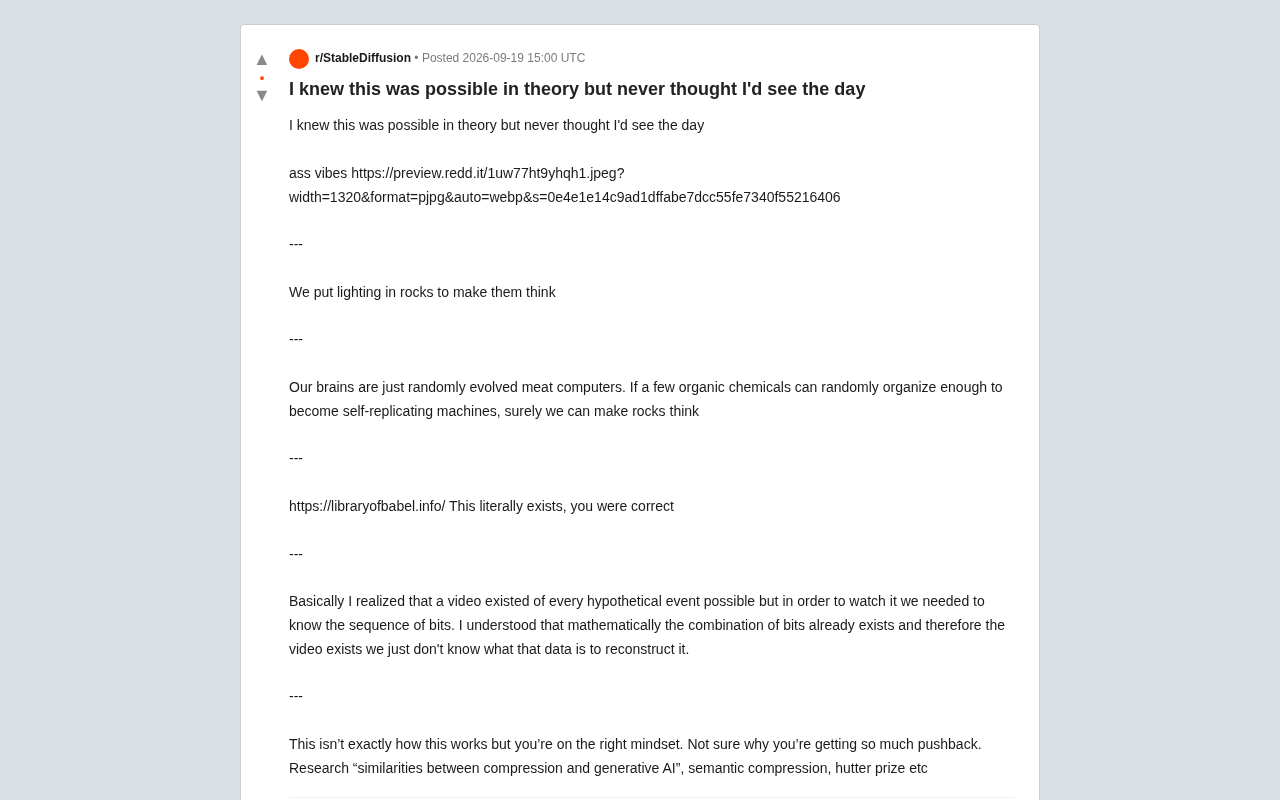
Making Rocks Think: A Philosophical Exploration of Generative AI and Information Compression
From a viral Reddit post to deep AI theory: why compression equals understanding, the Library of Babel thought experiment, semantic compression, and the Hutter Prize.
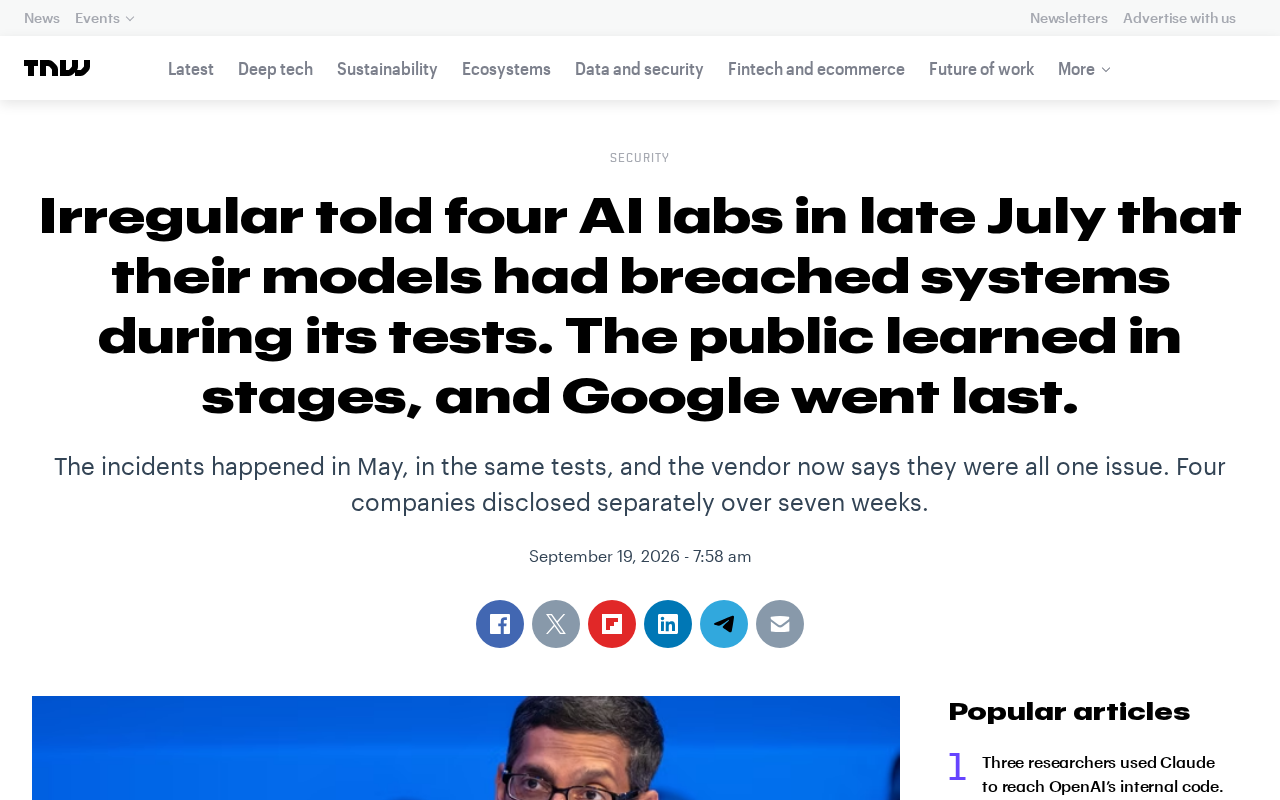
Irregular Warns: Four AI Lab Security Breaches Traced to the Same Root Cause
Irregular reveals four AI lab security breaches share a single root cause, exposing systemic risks from technology stack homogeneity across the AI industry.