OpenAI and Anthropic Restrict Smart TV Reverse Engineering, Sparking AI Ethics Debate
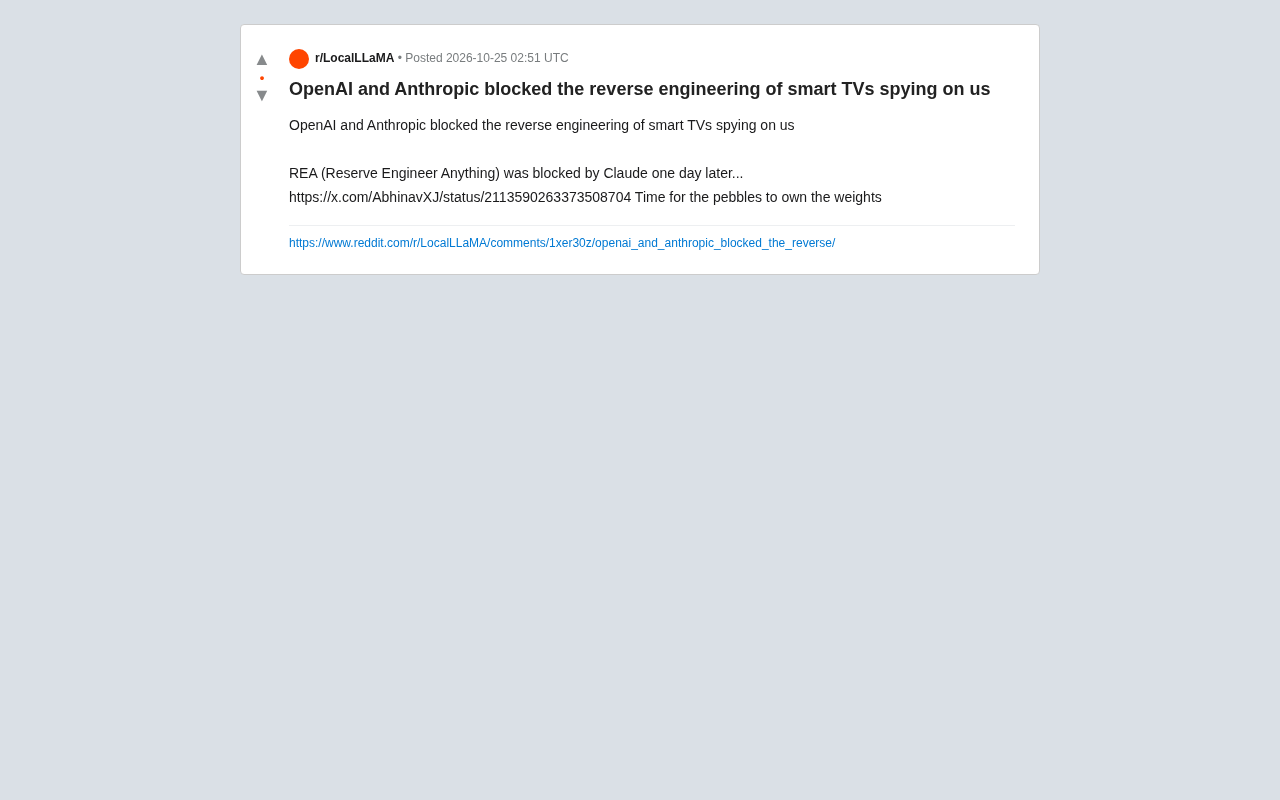
The REA reverse engineering project was banned by Claude one day after launch, igniting a debate over AI safety policy and open research.
The article starts from a Reddit discussion and recounts how a reverse engineering project called REA was blocked by Anthropic just one day after launching on Claude. The project aimed to analyze smart TV data collection and expose privacy risks, with reverse engineering being the key means of auditing such closed-source devices. It notes that OpenAI and Anthropic's usage policies typically prohibit using models for reverse engineering or circumventing security measures, creating tension with legitimate security research. Community views are divided: some say companies have the right to set boundaries to avoid legal risk, others criticize the restrictions as stifling innovation and worsening power concentration. The article concludes with balanced paths such as transparent policies, dedicated security research channels, and third-party audits.
Recently, a discussion originating from Reddit has drawn attention: OpenAI and Anthropic have been accused of restricting research into smart TV reverse engineering, with the related project REA (Reserve Engineer Anything) being blocked just one day after launching on Claude. This reflects the deeper tension between safety and openness in AI models.
Event Recap: The REA Project Gets Blocked
According to a Reddit user, a reverse engineering project called REA (Reserve Engineer Anything) became unusable just one day after launching on Claude. The project aimed to analyze the data collection behavior of smart TVs and expose their potential privacy snooping issues. A link to the tweet (https://x.com/AbhinavXJ/status/2113590263373508704) shows that the developer expressed dissatisfaction with Anthropic's blocking action and called to "let the pebbles own the weights" (Time for the pebbles to own the weights), hinting at concerns over the centralization of control over AI models.
The incident quickly gained traction in the community, with users discussing how AI companies use their usage policies to restrict specific application scenarios, especially those involving hardware reverse engineering and privacy research.
Reverse Engineering refers to the technical process of inferring a product's internal structure, operating principles, and data processing logic by analyzing its firmware, binary programs, communication protocols, or hardware circuits when no source code or design documentation is available. In the field of security research, reverse engineering is a core means of auditing the privacy behavior of closed-source devices: researchers can use it to confirm whether a device collects and uploads data without the user's knowledge, or to discover undocumented debugging interfaces and backdoors. Common tools include firmware extraction, traffic packet capture, disassembly, and dynamic debugging. It is worth noting that the legality of reverse engineering varies considerably across jurisdictions, and is usually closely tied to whether technological protection measures are circumvented, whether trade secrets are involved, and whether the purpose is security research or infringing reproduction—one of the reasons AI vendors tend to be conservative on related requests.
Privacy Risks of Smart TVs and the Value of Reverse Engineering
Smart TVs commonly include built-in microphones, cameras, and network modules, and their data collection practices have long been opaque. Reverse engineering is a key means for security researchers to audit device privacy practices. By analyzing firmware and communication protocols, researchers can reveal whether devices upload user data without consent.
However, AI companies tend to be cautious about such requests. The usage policies of OpenAI and Anthropic typically prohibit using their models for reverse engineering, circumventing security measures, or infringing intellectual property. This leaves security researchers facing compliance risks when using AI to assist with analysis.
The Conflict Between AI Companies' Safety Strategies and Open Research
Both OpenAI and Anthropic emphasize the responsible deployment of AI to prevent misuse. But this incident highlights the tension between safety strategies and open research: on the one hand, companies need to prevent their models from being used for malicious purposes; on the other hand, excessive restrictions may hinder legitimate security audits and academic research.
Community views are clearly divided. Some users believe AI companies have the right to set usage boundaries to protect themselves from legal risks; others criticize such restrictions as stifling innovation and concentrating power in the hands of a few companies.
Model Weights are the set of parameters retained by a neural network after training is complete, determining the model's behavior and capabilities, and are typically regarded as an AI company's most core asset. Open-source models publish their weights, allowing anyone to download, run locally, and fine-tune them; closed-source models only provide inference services through an API, with the weights still controlled by the company. So-called "owning the weights" means having the final say over the model's capability boundaries, usage conditions, and review rules. When researchers' work depends on a closed-source API, once a request is judged to violate the usage policy, the research chain is immediately interrupted and becomes difficult to reproduce or migrate. This is precisely the technical root of the community's concern about "power being concentrated in a few companies": the more concentrated the model weights, the less control external researchers have over the tools, and the fewer alternative paths are available.
Future Outlook: The Path to Balance
As AI models become more capable, how to strike a balance between safety and openness will remain an ongoing challenge. Possible solutions include: establishing more transparent usage policies, providing dedicated channels for security research, and promoting the development of industry standards. For IoT devices such as smart TVs, independent third-party audit mechanisms are also urgently in need of improvement.
This incident reminds us that AI is not just a technical issue but also a governance issue. In an era of increasingly concentrated model weights, ensuring research freedom and the public's right to know requires joint efforts from multiple parties.
Acceptable Use Policy (AUP) is a contractual document through which AI companies constrain the purposes of model use, typically listing prohibited behaviors in clause form, such as circumventing security measures, unauthorized penetration testing, infringing intellectual property, or violating privacy. Unlike law, AUPs are unilaterally formulated and interpreted by vendors, enforced through request blocking, account bans, and API key revocation, and often lack prior notice and appeal mechanisms. This leaves security researchers facing "compliance uncertainty" when conducting legitimate audits: the same request may receive different judgments across different models and at different times. Improvement directions being explored in the industry include: establishing verifiable identity channels for vulnerability research and privacy audits, issuing more detailed research exemption clauses, and providing specific reasons and review processes when blocking, thereby reducing collateral damage to legitimate research while preventing misuse.
One-line Summary
One day after launch, the REA reverse engineering project was banned by Claude, sparking a debate over AI safety strategies versus open research.
Paragraph Summary
Starting from a Reddit discussion, the article recounts how a reverse engineering project called REA was blocked by Anthropic just one day after launching on Claude. The project aimed to analyze the data collection behavior of smart TVs and expose their privacy snooping risks, and reverse engineering is precisely the key means of auditing such closed-source devices. The article points out that the usage policies of OpenAI and Anthropic typically prohibit models from being used for reverse engineering, circumventing security measures, and similar scenarios, creating tension between safety strategies and legitimate security research. Community views are divided: some argue companies have the right to set usage boundaries to avoid legal risks, while others criticize the restrictions as stifling innovation and exacerbating power concentration. The article concludes by proposing balanced paths such as establishing transparent policies, dedicated channels for security research, and third-party audit mechanisms.
Related articles
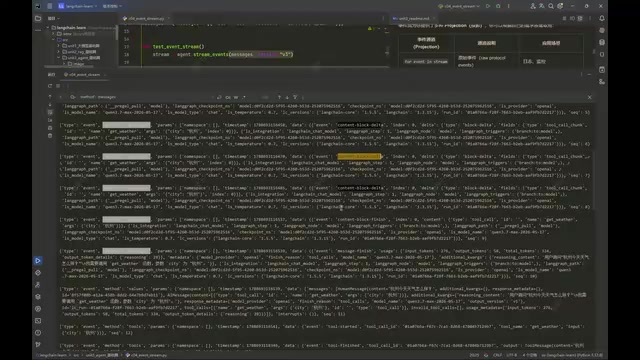
LangChain Agent Event Streaming Explained: A Practical Guide
A deep dive into LangChain 1.3's Event Streaming feature, covering the six event types—Raw, Messages, Tool Calls, Values, Custom, and Interleave—and key practical tips for Agent developers.
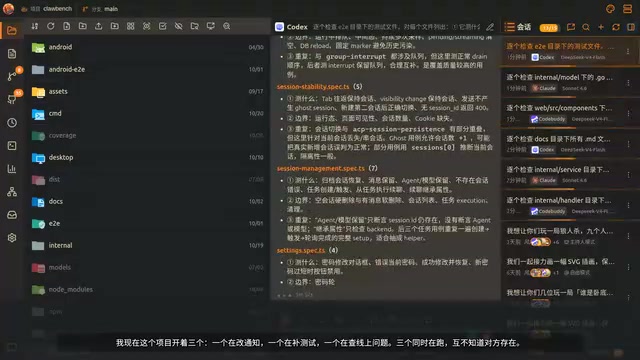
ClawBench Multi-threaded Parallel Development: Three Layers That Keep AI from Stepping on Each Other
How does ClawBench enable parallel development? Bilibili creator Long Ze demonstrates six simultaneous AI sessions, cross-project switching, and Worktree branch isolation across three layers, plus how server-side execution lets phones run AI tasks.

NVIDIA Astra and the Isaac Toolchain: Can One Person Build a Robot?
NVIDIA's GPT-6 Astra, combined with Isaac Lab, Newton, and Isaac Lab Arena, lets developers build robot simulation worlds, train skills, and run large-scale evaluations via prompts—lowering the barrier to robotics development.