OpenAI and Broadcom Unveil Jalapeño Chip: Built Exclusively for LLM Inference
OpenAI and Broadcom Unveil Jalapeño Ch…
OpenAI and Broadcom launch Jalapeño, a custom ASIC built specifically for large language model inference.
OpenAI has partnered with Broadcom to release Jalapeño, a custom ASIC purpose-built for LLM inference workloads. Targeting performance, efficiency, and scale, the chip reflects OpenAI's push to vertically integrate hardware and software, reduce dependence on NVIDIA, and cut the massive ongoing costs of serving billions of AI requests daily.
OpenAI Enters Custom Silicon: Introducing Jalapeño
OpenAI and semiconductor giant Broadcom have jointly released a custom AI chip called Jalapeño, purpose-built for large language model (LLM) inference workloads. This move marks OpenAI's formal expansion from a pure software and model company into the hardware layer — an effort to gain greater control over a critical link in the AI compute supply chain.
Unlike general-purpose compute accelerators such as NVIDIA GPUs, Jalapeño was designed from the ground up with a singular focus: inference rather than training. As the user base for products like ChatGPT continues to scale, inference has become OpenAI's largest and most sustained source of compute expenditure. Unlike training, which is a one-time cost, inference runs 24/7 in real time — meaning even a small reduction in per-unit cost gets dramatically amplified across billions of requests.
Why Focus on Inference Rather Than Training?
Inference Is the True Cost Bottleneck at Scale
Training a frontier model is undeniably expensive, but what ultimately determines whether a business can sustain itself is the cost of every inference behind every user conversation. When hundreds of millions of users send billions of requests per day, a chip's energy efficiency (performance per watt) and throughput directly determine the service's gross margin.
The Economics of Inference Costs: Industry estimates suggest that processing a single complex GPT-4-level conversation costs roughly $0.01 to $0.05 on the server side. When daily active users number in the tens of millions — each initiating dozens of requests per day — inference costs alone could run into the millions of dollars daily. Even a 20% improvement in chip efficiency translates to hundreds of millions of dollars in annual savings at this scale. This is precisely why marginal improvements in inference efficiency carry strategic weight for OpenAI — they directly affect API pricing competitiveness, the sustainability of free-tier users, and the long-term gross margin ceiling of the entire business. From this perspective, Jalapeño isn't just a technical project; it's a financial decision.
Jalapeño's core design revolves around three keywords: Performance, Efficiency, and Scale. To understand this design philosophy, one must first understand the unique computational characteristics of Transformer architectures during inference. Unlike the large-batch matrix multiplications typical of training, inference — especially autoregressive generation — is largely a token-by-token sequential process. Computational density is relatively low, but the demand on memory bandwidth is extreme: generating each token requires loading the full model weights from memory (for a model with hundreds of billions of parameters, this means moving hundreds of gigabytes of data). This characteristic means the performance bottleneck in inference is typically not compute (FLOPS) but memory bandwidth. Chips designed specifically for inference tend to prioritize on-chip SRAM capacity, HBM bandwidth configuration, and KV Cache management — rather than simply stacking more compute units. By optimizing hardware at the silicon level for the inference characteristics of Transformer architectures, purpose-built chips can theoretically deliver far greater inference density per watt than general-purpose GPUs.
ASIC vs. General-Purpose GPU: A Fundamental Design Philosophy Divide
Jalapeño is an ASIC (Application-Specific Integrated Circuit), and its design philosophy differs fundamentally from that of NVIDIA GPUs. The core strength of a GPU lies in its programmability — thousands of parallel compute cores can flexibly handle everything from game rendering to scientific computing, and the CUDA ecosystem has built up over a decade of software moats. However, this very generality is a source of efficiency loss: large amounts of transistor area and power consumption go toward supporting features that will never be triggered in an inference workload. ASICs take the opposite approach, hard-coding every logic unit to a specific computation pattern, trading flexibility for extreme energy efficiency. For workloads like inference — where the load pattern is relatively fixed — this trade-off is economically very compelling.
Breaking Free from Single-Vendor Dependence on NVIDIA
The AI compute market is highly concentrated today, with NVIDIA effectively monopolizing the supply of high-end accelerators. Prices are steep, and supply lead times frequently become bottlenecks for scaling. OpenAI's decision to co-develop a custom chip with Broadcom is fundamentally a strategic move toward supply chain diversification and cost control.
Broadcom's capabilities in custom ASICs are often underestimated, but its track record is formidable. As one of the world's leading semiconductor design companies, Broadcom has deep expertise in networking chips, storage controllers, and custom ASICs. In the AI wave, Broadcom is perhaps best known for its collaboration with Google on the TPU (Tensor Processing Unit) series — a partnership dating back to around 2015 that has spanned multiple generations, enabling Google to deploy massive amounts of custom compute in its data centers. Broadcom's core competency lies in translating a customer's architectural requirements into manufacturable silicon, with critical support in advanced packaging and high-speed interconnects (such as SerDes technology). For OpenAI, partnering with Broadcom means it can focus on the algorithmic layer of chip architecture design while handing off the complex physical implementation to an experienced partner — an ideal path to realizing its hardware ambitions.
The Deeper Shift in the AI Chip Landscape
In-House Chip Development Has Become an Industry Trend
OpenAI is not alone. Google has TPUs, Amazon has Trainium and Inferentia, Meta has MTIA, and Microsoft has the Maia chip. Leading AI players are converging on vertical integration of software and hardware — and the underlying logic is consistent: when model architecture and workload patterns are stable enough, custom silicon can deliver efficiency advantages that general-purpose hardware simply cannot match.
Apple Silicon (the M-series chips) provides a highly persuasive reference point for this logic. By developing its own chips, Apple deeply integrated the CPU, GPU, Neural Engine, and Unified Memory Architecture, allowing MacBooks to dramatically outperform x86 competitors of the same era in performance-per-watt. The key insight: when you control both the software stack and the hardware design, you can eliminate the abstraction layer overhead between them and achieve co-optimization. Jalapeño's arrival further confirms that this trend is spreading from hyperscale cloud providers to AI-native companies. For OpenAI, owning the inference chip means being able to co-optimize the full "model–compiler–hardware" stack with much greater precision — using the specific computation graph characteristics of its own models to guide the chip's datapath design, while the chip's hardware characteristics in turn influence quantization strategies, operator fusion approaches, and even architectural choices. This kind of closed-loop optimization is a competitive moat that neither a pure software company nor a pure hardware company can build alone.
What Jalapeño Means for NVIDIA
In the short term, Jalapeño is unlikely to shake NVIDIA's dominance in the training market — training workloads demand far more generality and rely far more heavily on the mature CUDA ecosystem. But in inference — the market with the greatest incremental growth — the rise of purpose-built chips will gradually divert a portion of demand. Over the long term, this is healthy for the entire compute industry: more diverse supply and more robust competition will ultimately drive AI services toward greater accessibility.
Questions Worth Watching
Timeline and Production Volume: There is typically a one-to-two-year gap between a chip announcement and large-scale production deployment. Whether Jalapeño can come online in time to support OpenAI's inference load remains to be seen.
Real-World Efficiency Numbers: The performance and efficiency gains claimed officially need to be validated in actual production environments — not just benchmark results.
Ecosystem Compatibility: Whether the custom chip can smoothly support existing models and toolchains will directly affect its practical value. This point is especially critical — the NVIDIA CUDA ecosystem, built over more than a decade, has mature compilers, debugging tools, and operator libraries. A new chip requires substantial software investment to close that gap.
Jalapeño represents a significant step for OpenAI in asserting compute sovereignty. As competition over model capabilities gradually plateaus, the next battleground will be who can deliver intelligence to users at greater scale, lower cost, and higher efficiency. Hardware is once again moving to the center of the AI story.
Related articles
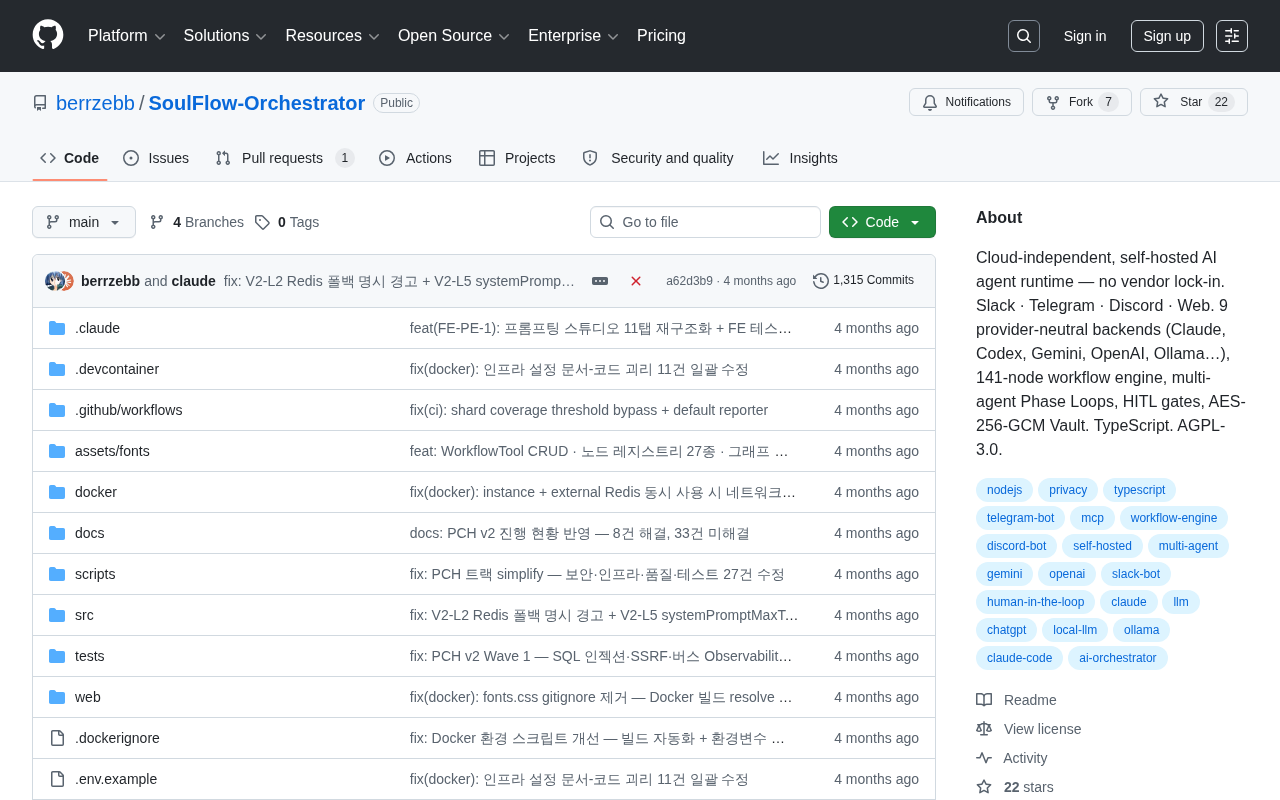
SoulFlow-Orchestrator: A Self-Hosted, Vendor-Lock-In-Free AI Agent Runtime
SoulFlow-Orchestrator is an open-source, self-hosted AI agent runtime with no vendor lock-in. Supports 9 neutral backends (Claude, OpenAI, Ollama), 141-node workflow engine, multi-agent loops, and HITL gates.
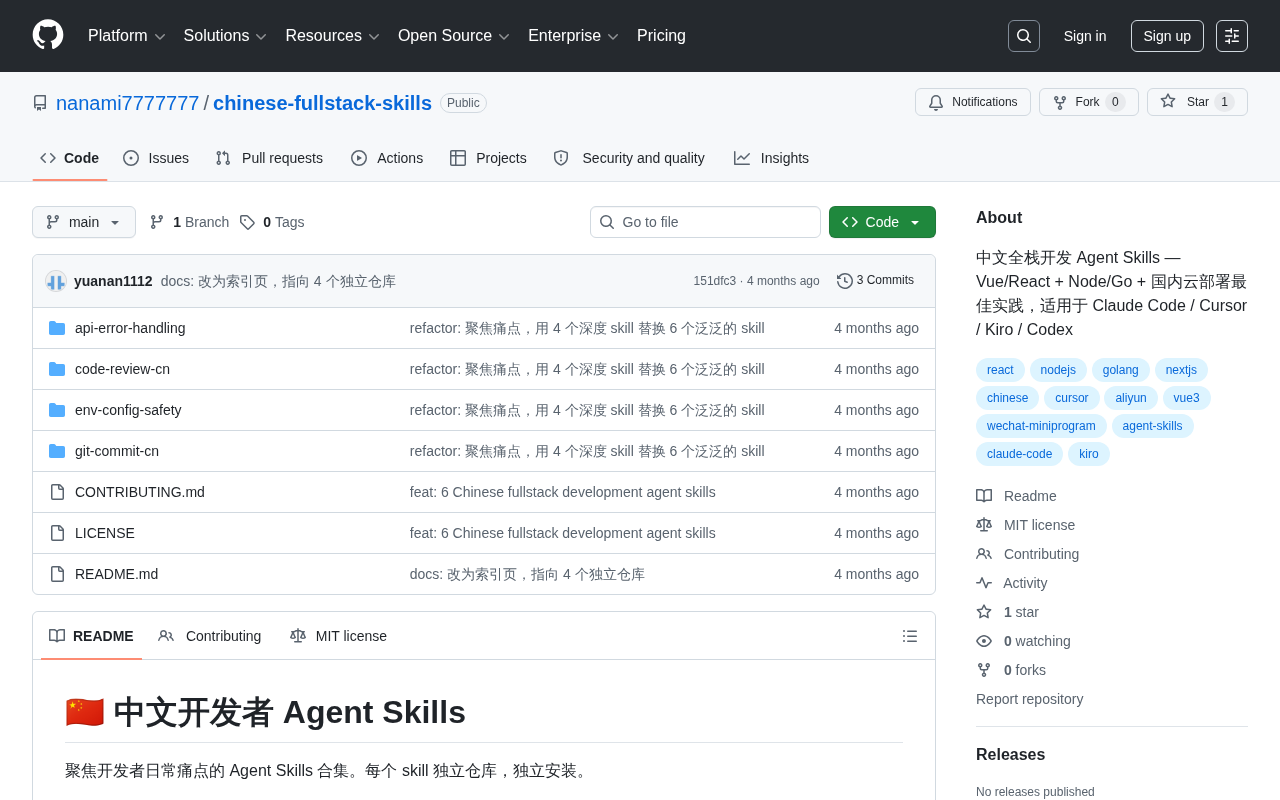
Chinese Full-Stack Agent Skills: A Skill Library Tailored for Domestic AI-Assisted Development
chinese-fullstack-skills is an Agent Skills library for Chinese full-stack development, covering Vue/React, Node/Go, and domestic cloud deployment best practices. Compatible with Claude Code, Cursor, Kiro, and Codex.
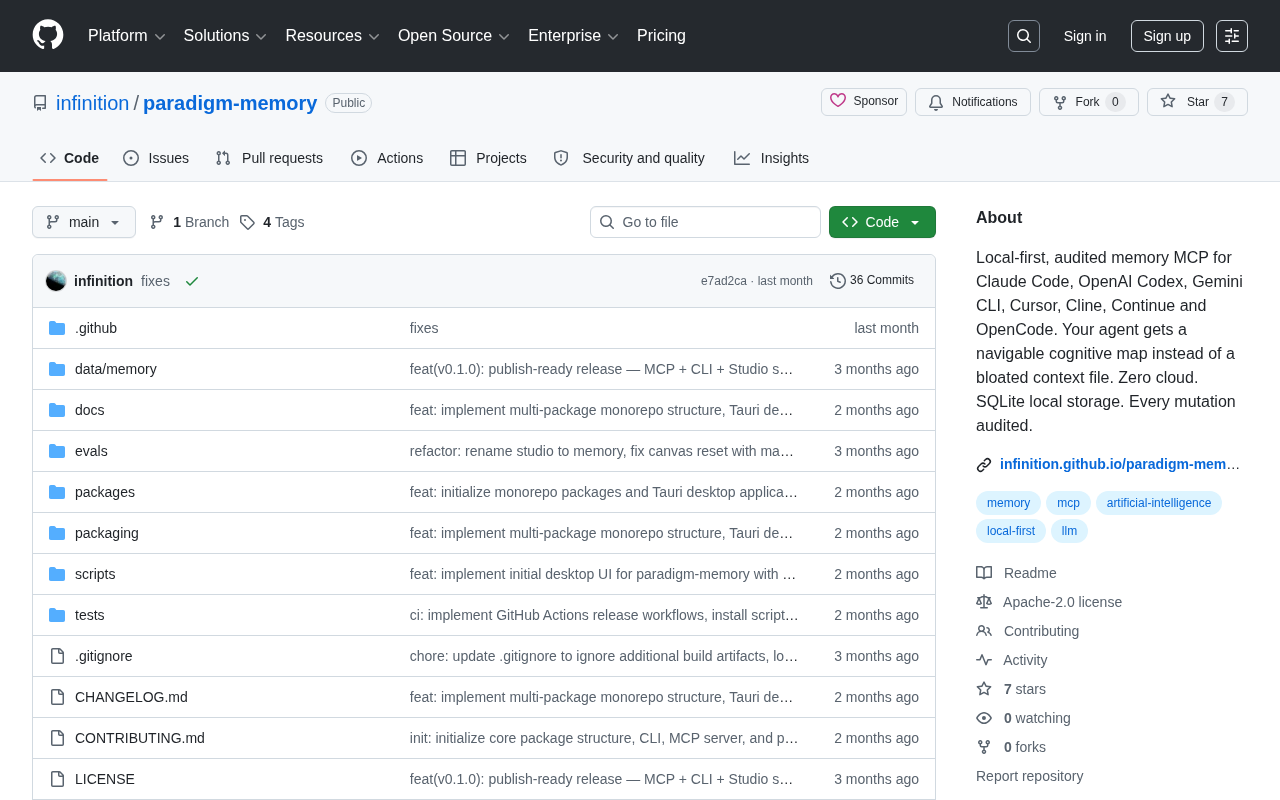
Paradigm Memory: A Local-First Memory System for AI Coding Assistants
paradigm-memory is a local MCP memory tool for Claude Code, Cursor, and Cline. It uses SQLite local storage, zero cloud, full audit trails, and a navigable cognitive map instead of bloated context files.