OpenAI Board Member Christiano: AI Accidents Could Become the Leading Cause of Death for Most People
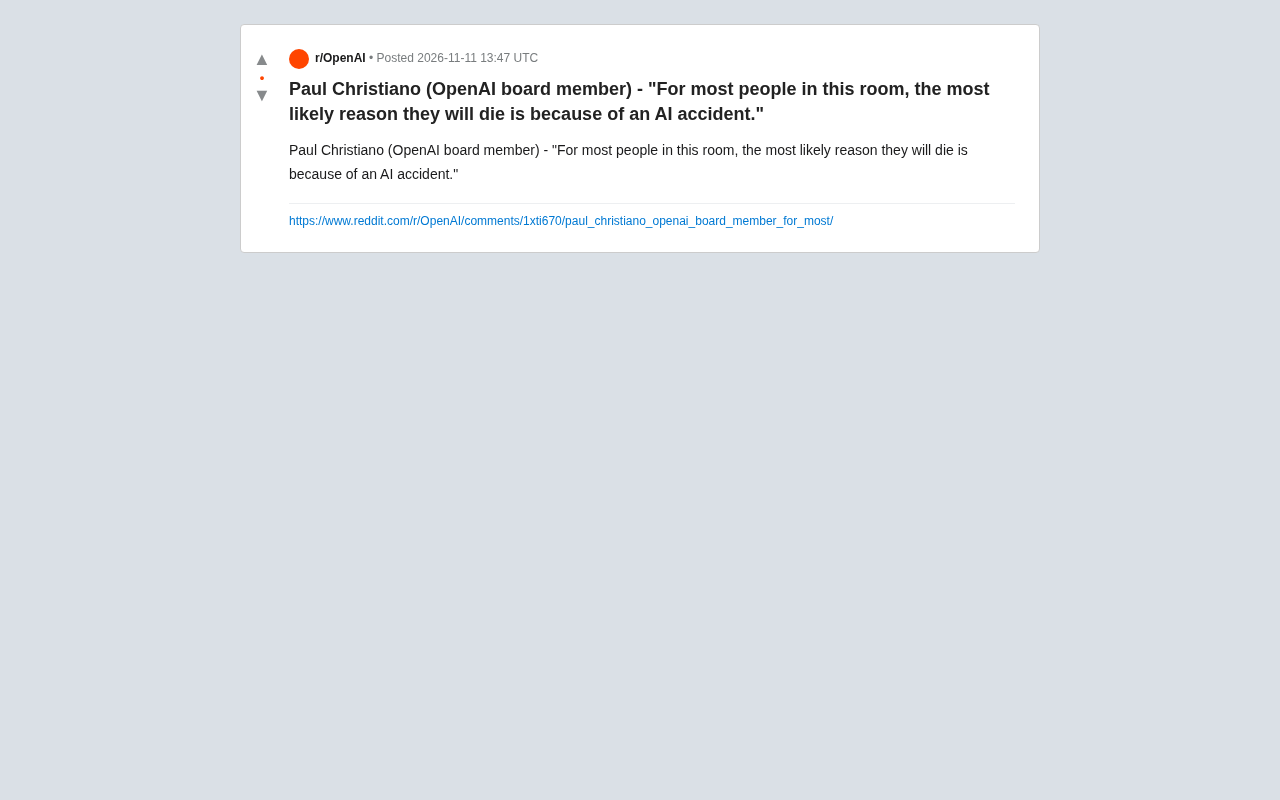
OpenAI board member Christiano said AI accidents are the audience's most likely cause of death, sparking controversy over safety communication.
The article centers on a controversial statement by OpenAI board member and Alignment Research Center founder Paul Christiano: he said that for the audience, the most likely cause of death is an AI accident. It notes that Christiano's identity gives the warning weight, but the assertion compresses AI risk from an abstract "human extinction" narrative into a personal probability judgment for a specific group—rhetorically powerful but lacking public quantitative derivation. The controversy is polarized: supporters see it as an industry wake-up call, opponents criticize it as lacking testable evidence and prone to emotional mobilization. The article concludes that the episode reflects a precision gap in frontier AI risk communication: internal technical discussion tends to become extreme when exported outward, and balancing clear risk explanation with not relying on fear to win trust remains unsolved.
A Statement That Ignited Controversy
A transcript circulating on Reddit shows that OpenAI board member Paul Christiano once told an audience: "For most people in this room, the most likely reason they will die is an AI accident." The sentence had no decoration, no prefatory framing—it placed the ultimate risk of human-machine relations directly at the personal level: not a distant sci-fi scenario, but the potential endpoint of life for the listeners themselves.
Christiano is no fringe prophet. He was one of OpenAI's early core researchers and a leading figure in the field of AI alignment, later founding the Alignment Research Center (ARC). That identity gives the statement far more weight than ordinary tech commentary: it comes from someone deeply involved in frontier model development who has long studied "how to make AI systems reliably do what we want them to do."
Why This Statement Is More Jarring Than "AI Threat" Rhetoric
From Abstract Risk to Personal Probability
Public discussion of AI risk usually stays at two levels: first, social impacts such as unemployment, privacy, and bias; second, grand narratives like "human extinction." Christiano's phrasing skips the middle ground and converts risk directly into a ranking of death probabilities for individual listeners. Whether this conversion is statistically rigorous is debatable, but its rhetorical effect is powerful—it forces everyone to turn AI safety from a "public issue" into a "private matter."
Interestingly, the word "most likely" implies a comparison: beyond conventional causes of death such as disease, accidents, and aging, AI accidents are ranked ahead. This is clearly a judgment aimed at a specific group (tech conference attendees, practitioners), not a conclusion from global population statistics. The original remarks gave no specific probability figures and no derivation, which is also why they are easily distorted in circulation.
AI Alignment is the core background of Christiano's research stance. It refers to the technical problem of ensuring that AI systems' goals and behaviors are consistent with human intentions and values. As model capabilities increase, alignment difficulty grows exponentially: a system that performs well in training may, after deployment, produce catastrophic consequences due to a tiny deviation in its objective function. Christiano is one of the early founders of this field; frameworks he proposed, such as "Iterated Amplification" and "AI safety via Debate," aim to let humans maintain oversight even when model capabilities surpass their own. The core assumption of alignment research is: the stronger the capability, the greater the cost of deviation, so alignment must be solved before capability leaps. This background explains why Christiano treats AI accidents as a personal-level risk—he is concerned not with the flaws of current models, but with hard-to-correct goal misalignment in future superhuman systems.
The Internal Logic of an Alignment Researcher
Understanding this statement requires returning to Christiano's research stance. The alignment problem concerns: as model capabilities increase, how do we ensure their goals are consistent with human intentions? Under the strong alignment assumption, a system far more capable than humans may cause irreversible consequences even with only a tiny goal deviation. Christiano has long advocated a cautious attitude toward such risks, and his public remarks have consistently carried a "low probability but enormous consequences" tone.
Put back into this framework, the statement is more like a probabilistic reminder: when tail risk is severe enough, even if the probability is not high, it deserves to be treated as a top priority. The problem is that in public communication, the words "most likely" are stripped of their probabilistic context and sound like a deterministic prophecy.
Tail Risk is a key concept for understanding Christiano's probabilistic perspective. In statistics, tail risk refers to events with extremely low probability but extremely severe consequences once they occur. Christiano's argument is: even if the probability of an AI accident is only 1% or lower, because the consequence is civilization-level irreversible damage, its expected loss remains enormous and should therefore be treated as a top priority. This "low probability but enormous consequences" framework has precedents in finance and engineering safety (such as nuclear power plant safety design), but in public communication, once "most likely" is stripped of its probabilistic context, listeners easily mistake it for a deterministic prophecy. Christiano has long argued that research on strong AI should adopt a "precautionary default," that is, defer deployment when safety proof is insufficient. This stance distinguishes him from optimistic accelerationists and explains why his warnings carry unique weight in the industry.
Two Sides of the Controversy: Vigilance or Alarmism
Discussion around the statement shows clear divisions. Supporters argue that a blunt warning from an insider is exactly the wake-up call the industry needs most—if even those involved in building the systems assess the risk this way, the public has reason to demand stricter safety standards and transparency. Opponents point out that such statements lack testable quantitative grounding, easily slide into emotional mobilization, and may divert attention from more realistic and urgent AI harms (such as disinformation, autonomous weapons, and economic shocks).
The two positions are not entirely opposed. Even without accepting the ranking of "leading cause of death," one can agree with the core appeal behind it: AI safety should not be treated as an add-on after R&D is complete. Conversely, even while acknowledging the risk, there is reason to demand more precise language in public discussion, to avoid compressing complex probabilistic judgments into a sensational assertion.
Implications for the Industry and the Public
The real value of this statement lies not in whether it "got it right," but in the communication gap it exposes: risk discussion about frontier AI has long taken place inside technical circles, and what reaches the outside often consists only of extreme short phrases. For practitioners, this means risk communication needs to be taken more seriously in terms of precision; for the public, when facing such assertions, rather than taking sides, it is better to ask three questions—what assumptions is this judgment based on? Which group is it aimed at? Under what conditions does it hold?
Christiano's statement is a mirror, reflecting the tension in the entire industry's safety narrative: it must explain the risk clearly, yet cannot rely on fear to win trust. No one has truly handled this balance well yet.
One-line Summary
OpenAI board member Christiano said AI accidents are the most likely cause of death for the audience, sparking controversy over safety communication.
Paragraph Summary
The article centers on a controversial statement by OpenAI board member and Alignment Research Center founder Paul Christiano: he said that for the audience, the most likely cause of death is an AI accident. The article notes that Christiano's identity gives his warning considerable weight, but the assertion compresses AI risk from an abstract "human extinction" narrative into a personal probability judgment aimed at a specific group; it is rhetorically powerful yet lacks public quantitative derivation. The controversy around the statement is polarized: supporters see it as a wake-up call for the industry, while opponents criticize it for lacking testable evidence and easily sliding into emotional mobilization. The article ultimately argues that the episode reflects a precision gap in frontier AI risk communication—internal technical discussion tends to become extreme when exported outward, and the balance between explaining risk clearly and not relying on fear to win trust has not yet been handled well by anyone.
Related articles
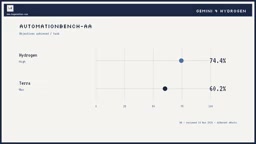
Gemini 4 Hydrogen In-Depth Review: Real Value Beyond Cost-Effectiveness
Based on Artificial Analysis selection data and hands-on feedback, this review unpacks the Gemini 4 Hydrogen value paradox: high scores don't equal high value, performance splits across automation workflows and coding tasks, pricing and Google subscription bundles are separate ledgers, and SynthID output labeling could be a dealbreaker.
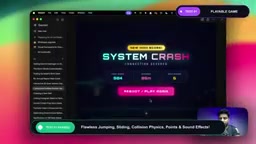
Gemini 4 Hydrogen Five Extreme Tests: 96.7% Accuracy and One-Prompt Website Building
A YouTube creator runs five extreme tests on Gemini 4 Hydrogen: single-prompt game generation, 3D solar system simulation, 30-minute video timestamp localization, converting a 287-page report into an interactive dashboard, and 96.7% accuracy in hallucination resistance.

Gemini 4 Hydrogen Released: A 2.5x Faster Everyday AI Model
Google releases Gemini 4 Hydrogen, claiming 2.5x the speed of Gemini 3.8 Flash, with four-tier thinking control, a million-token context, and Orchestrator multi-model collaboration. API pricing is $1.50 per million input tokens.